What Is IoT Integration in Robotics? A Complete Beginner’s Guide
The world of robotics is changing rapidly. Robots are no longer isolated machines that perform repetitive tasks based solely on pre-programmed instructions. Today’s robotic systems are becoming smarter, more connected, and increasingly capable of making informed decisions in real time. One of the most important technologies driving this transformation is the Internet of Things, commonly known as IoT. IoT integration in robotics combines the physical capabilities of robots with the connectivity and data-sharing power of IoT networks. This integration allows robots to communicate with sensors, machines, cloud platforms, software systems, and even other robots. The result is a new generation of intelligent automation capable of adapting to changing environments, learning from data, and collaborating across entire digital ecosystems. From manufacturing facilities and warehouses to hospitals, farms, retail stores, and smart cities, IoT-enabled robots are revolutionizing how businesses operate. These connected machines can monitor conditions, share information, optimize workflows, and respond dynamically to real-world situations. For beginners, the concept of IoT integration in robotics may seem complex. However, understanding the fundamentals is easier than many people realize. At its core, IoT integration is about creating communication pathways that allow robots to access information beyond what they can observe on their own. This comprehensive guide explains what IoT integration in robotics is, how it works, why it matters, and how it is shaping the future of automation across industries around the world.
A: It is the process of connecting robots to sensors, devices, networks, software platforms, and data systems.
A: IoT helps robots communicate, share data, receive updates, coordinate tasks, and become easier to monitor.
A: No. Robotics focuses on machines that act physically, while IoT focuses on connected devices and data exchange.
A: They may collect location, battery status, movement, sensor readings, errors, images, temperature, and task progress.
A: Not always, but cloud platforms help with storage, dashboards, analytics, updates, and fleet coordination.
A: Edge computing keeps fast decisions close to the robot, reducing delay and improving reliability.
A: It is used in manufacturing, logistics, healthcare, agriculture, retail, construction, energy, and inspection.
A: Security, integration complexity, network reliability, data management, costs, and worker training are common challenges.
A: It can be secure when systems use encryption, authentication, access controls, updates, and monitoring.
A: IoT integration helps robots become connected, visible, coordinated, and smarter within larger automation systems.
Understanding the Internet of Things
Before exploring IoT integration in robotics, it is important to understand what IoT actually means.
The Internet of Things refers to a vast network of physical devices connected through the internet. These devices can collect, transmit, receive, and share data with one another. Examples include smart thermostats, wearable fitness trackers, industrial sensors, connected vehicles, smart appliances, and environmental monitoring systems.
Each IoT device gathers information from its environment and communicates that information through a connected network. The data can then be analyzed, processed, and used to improve decision-making or automate actions.
In simple terms, IoT allows physical objects to become part of a digital communication ecosystem.
When robots are integrated into this ecosystem, they gain access to information and intelligence that significantly expand their capabilities.
What Is IoT Integration in Robotics?
IoT integration in robotics refers to the process of connecting robotic systems to IoT networks so they can communicate with other devices, systems, and platforms.
Instead of operating independently, IoT-enabled robots become active participants in connected environments. They can gather data from sensors, exchange information with machines, access cloud-based services, and collaborate with other robots.
This connectivity allows robots to make smarter decisions based on a broader understanding of their surroundings.
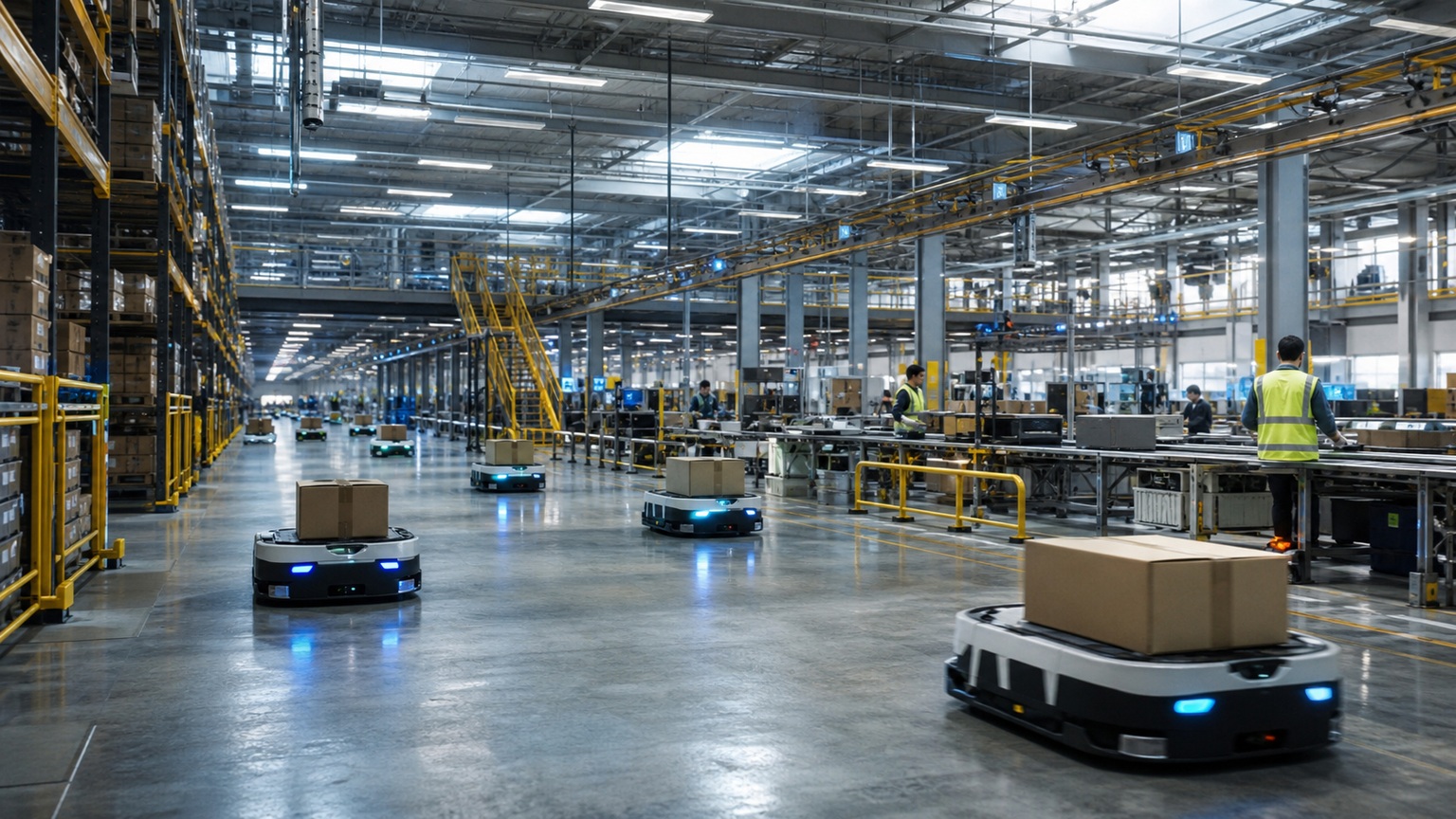
For example, a warehouse robot may receive inventory information from smart shelves, navigation updates from connected sensors, and workflow instructions from cloud-based management software. By combining these data sources, the robot can operate more efficiently than it could using onboard information alone.
IoT integration transforms robots from isolated machines into intelligent components of larger automated systems.
How IoT Integration Works in Robotics
The process begins with data collection.
Robots are equipped with sensors, cameras, lidar systems, GPS modules, microphones, and other devices that gather information about their environment. IoT devices throughout the operational area also collect valuable data.
This information is transmitted through communication networks such as Wi-Fi, Ethernet, Bluetooth, cellular networks, or 5G infrastructure.
The data may then be processed locally through edge computing systems or transmitted to cloud platforms for more advanced analysis.
Artificial intelligence algorithms analyze the information and generate insights or instructions. These results are then delivered back to the robot, allowing it to take appropriate actions.
This continuous cycle of sensing, communicating, analyzing, and responding creates a highly dynamic and intelligent automation environment.
The robot is no longer limited to what it can directly observe. Instead, it can leverage data from an entire connected ecosystem.
The Evolution from Traditional Robotics to Connected Robotics
Traditional robots were designed to operate within controlled environments. They followed predefined instructions and performed repetitive tasks with remarkable precision.
However, these systems had significant limitations.
Most traditional robots lacked awareness beyond their immediate surroundings. They could not easily adapt to changing conditions or access information from external sources.
IoT integration changed this paradigm.
By connecting robots to networks of devices and sensors, engineers created systems capable of responding dynamically to real-world situations.
Today’s connected robots can monitor environmental conditions, communicate with other machines, access cloud-based intelligence, and continuously update their understanding of the world around them.
This evolution represents one of the most significant advancements in the history of robotics.
Key Components of IoT-Enabled Robotic Systems
Several technologies work together to enable IoT integration in robotics.
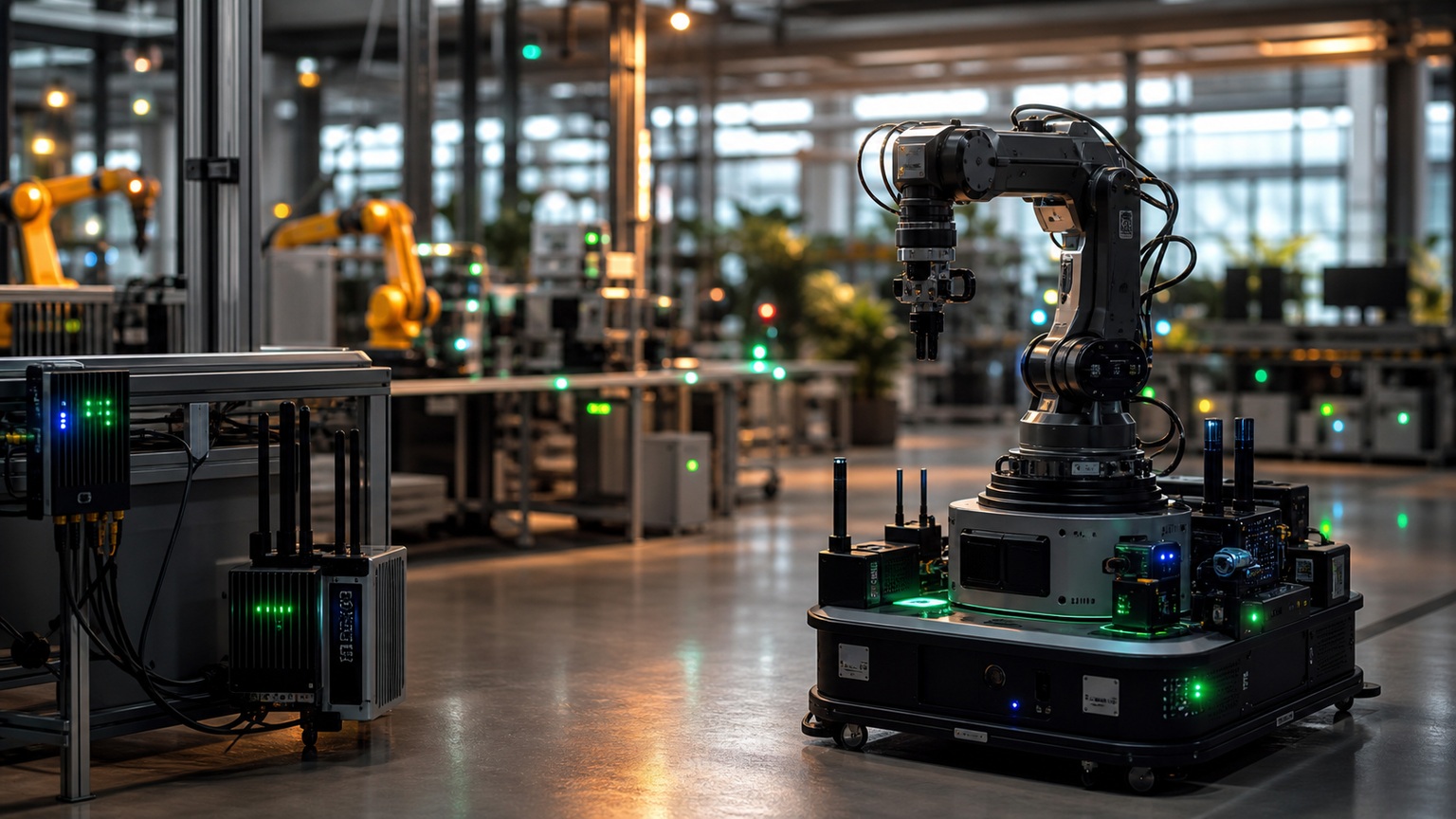
The robot itself serves as the physical platform. It may include motors, actuators, sensors, cameras, processors, and communication hardware.
IoT devices provide additional data sources. These devices can monitor temperature, humidity, location, movement, equipment status, inventory levels, and countless other variables.
Communication networks enable data exchange between robots and connected systems. High-speed connectivity ensures information can be transmitted quickly and reliably.
Cloud platforms provide storage, analytics, and artificial intelligence capabilities. They allow robots to access advanced computing resources that may exceed onboard processing limitations.
Artificial intelligence and machine learning systems transform raw data into meaningful insights that support decision-making and automation.
Together, these components create intelligent robotic ecosystems capable of operating with remarkable efficiency and adaptability.
Why IoT Integration Matters
The importance of IoT integration lies in its ability to enhance robotic intelligence.
Without connectivity, robots rely solely on local information. While this may be sufficient for certain applications, it limits flexibility and responsiveness.
IoT integration allows robots to access real-time information from multiple sources simultaneously.
This broader awareness improves navigation, decision-making, efficiency, and overall performance.
Organizations also gain greater visibility into robotic operations. Managers can monitor performance, analyze productivity, identify inefficiencies, and make data-driven improvements.
As businesses become increasingly digital, IoT integration is helping robots play a more strategic role in modern operations.
The Role of Artificial Intelligence
Artificial intelligence significantly amplifies the value of IoT integration.
Connected robots generate enormous volumes of data through sensors and interactions. AI systems analyze this information to identify patterns, make predictions, and optimize performance.
Machine learning algorithms enable robots to improve continuously based on experience.
For example, a warehouse robot may learn more efficient routes over time by analyzing operational data collected from thousands of previous tasks.
Computer vision systems help robots recognize objects, navigate environments, and perform inspections with increasing accuracy.
Natural language processing enables voice interactions and human-robot communication.
The combination of AI and IoT creates intelligent robotic systems capable of adapting to changing circumstances and making increasingly sophisticated decisions.
IoT Integration in Manufacturing
Manufacturing is one of the most prominent examples of IoT-enabled robotics.
Modern factories use connected robots to perform assembly, packaging, inspection, welding, and material handling tasks.
IoT sensors monitor equipment performance, production conditions, and operational efficiency. Robots access this information to optimize workflows and respond to changing production demands.
Predictive maintenance systems analyze equipment data and identify potential failures before they occur. This reduces downtime and improves productivity.
Connected robots also support flexible manufacturing by enabling rapid adjustments to production lines and processes.
As smart factories continue evolving, IoT integration is becoming a fundamental component of industrial automation.
IoT Integration in Warehousing and Logistics
Warehousing and logistics operations rely heavily on real-time information and efficient coordination.
IoT-enabled robots help manage inventory, transport goods, fulfill orders, and optimize storage systems.
Connected shelves, RFID tags, environmental sensors, and inventory tracking systems provide continuous streams of data.
Robots use this information to locate products, determine optimal routes, and coordinate activities with other machines.
Managers gain real-time visibility into warehouse operations, enabling faster decision-making and improved efficiency.
As e-commerce continues growing, IoT-integrated robotics is becoming essential for modern supply chain management.
IoT Integration in Healthcare
Healthcare organizations are increasingly adopting IoT-connected robotic systems.
Hospitals use robots for medication delivery, patient monitoring, sanitation, logistics support, and telemedicine applications.
Connected medical devices continuously collect patient data, allowing robots to access critical information when needed.
Telepresence robots enable remote consultations between patients and healthcare specialists located in different regions.
Surgical robotics can integrate imaging systems, diagnostic data, and AI-powered analytics to support medical procedures.
These capabilities improve operational efficiency while enhancing patient care and healthcare accessibility.
IoT Integration in Agriculture
Agriculture is undergoing a technological transformation driven by IoT-enabled robotics.
Modern farms use connected sensors to monitor soil conditions, weather patterns, moisture levels, crop health, and environmental factors.
Robotic systems access this information to automate irrigation, fertilization, planting, and harvesting activities.
Precision agriculture relies on data-driven decision-making to maximize yields while minimizing resource consumption.
Farmers can monitor operations remotely through connected platforms and receive actionable insights based on real-time data.
This approach improves productivity, sustainability, and profitability across agricultural operations.
Smart Buildings and Facility Management
Connected robotics is also transforming building management and facility operations.
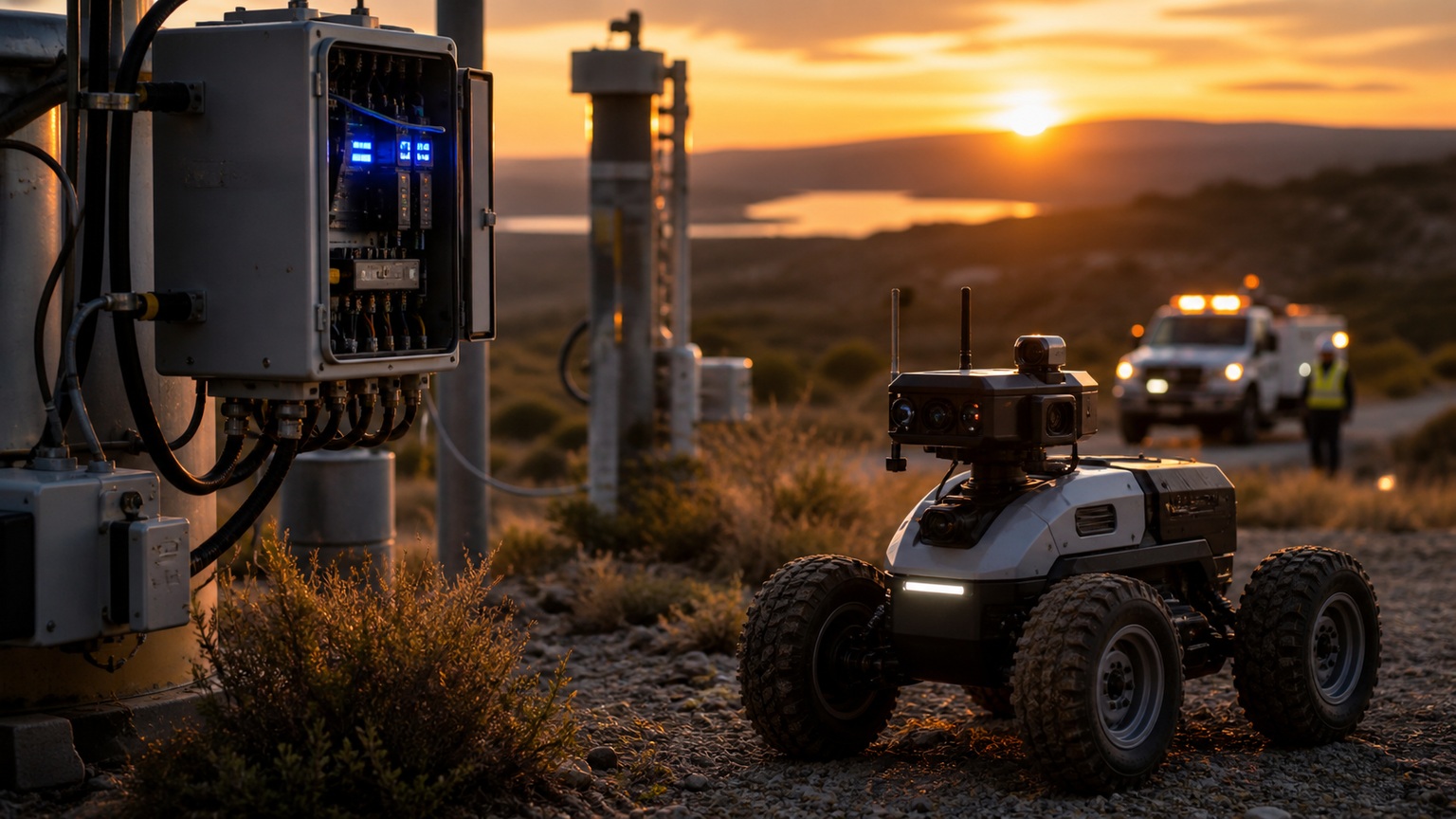
Robots can perform cleaning, security patrols, maintenance inspections, and environmental monitoring tasks.
IoT sensors throughout buildings collect information about occupancy, air quality, energy usage, and equipment status.
Connected robots use this data to prioritize activities and optimize resource utilization.
Facility managers gain greater visibility into building performance while reducing operational costs.
As smart buildings become more common, robotic systems will play increasingly important roles in maintaining efficient and sustainable environments.
Benefits of IoT Integration in Robotics
The advantages of IoT integration extend across numerous industries and applications.
One major benefit is improved operational efficiency. Connected robots can make better decisions based on real-time information and broader situational awareness.
Enhanced data collection provides valuable insights that support process optimization and strategic planning.
Predictive maintenance reduces downtime and extends equipment lifespan.
Remote monitoring capabilities allow organizations to manage robotic systems across multiple locations.
Scalability becomes easier because connected systems can be expanded without extensive infrastructure changes.
Most importantly, IoT integration enables continuous improvement through data-driven learning and adaptation.
Challenges of IoT Integration
Despite its many advantages, IoT integration presents several challenges.
Cybersecurity remains one of the most significant concerns. Connected robots must be protected against unauthorized access, malware, and cyberattacks.
Data privacy is another important issue, particularly in industries handling sensitive information.
Connectivity limitations can affect performance in remote areas or environments with unreliable network infrastructure.
System integration may also be complex. Organizations must ensure compatibility between robots, IoT devices, software platforms, and communication protocols.
Managing large volumes of data requires appropriate storage, analytics, and governance strategies.
Addressing these challenges is essential for successful IoT-enabled robotic deployments.
The Importance of 5G Connectivity
The rollout of 5G networks is accelerating the growth of IoT integration in robotics.
Compared to previous wireless technologies, 5G offers significantly higher speeds, lower latency, greater reliability, and increased device capacity.
These improvements enable robots to exchange information more quickly and efficiently.
Real-time communication becomes practical for applications such as autonomous vehicles, industrial automation, and remote operations.
The ability to support massive numbers of connected devices is particularly valuable for large-scale IoT deployments.
As 5G infrastructure expands globally, it will continue driving innovation in connected robotics.
The Future of IoT Integration in Robotics
The future of IoT-enabled robotics is incredibly promising.
Advancements in artificial intelligence, cloud computing, edge computing, wireless communications, and sensor technology are creating new possibilities for connected automation.
Future robots will become more autonomous, collaborative, and capable of understanding complex environments.
Entire fleets of robots may work together through shared intelligence platforms, learning collectively and adapting continuously.
Smart cities, intelligent transportation systems, advanced healthcare networks, and autonomous industrial operations will increasingly rely on connected robotic ecosystems.
The integration of robotics and IoT is not simply enhancing existing automation—it is redefining what automation can achieve.
Conclusion
IoT integration in robotics represents one of the most significant technological advancements in modern automation. By connecting robots to networks of sensors, devices, cloud platforms, and intelligent systems, organizations can create machines that are smarter, more efficient, and far more adaptable than traditional robotic solutions.
From manufacturing and logistics to healthcare, agriculture, facility management, and smart city development, IoT-enabled robots are transforming industries through real-time communication, data-driven decision-making, and continuous learning. These connected systems provide greater operational visibility, enhanced efficiency, improved productivity, and new opportunities for innovation.
While challenges such as cybersecurity, connectivity, and integration complexity remain important considerations, ongoing technological advancements are rapidly addressing these concerns. The growth of artificial intelligence, cloud computing, edge processing, and 5G connectivity is accelerating the capabilities of connected robotic systems.
For beginners seeking to understand the future of robotics, IoT integration is an essential concept. As automation continues evolving, the ability for robots to communicate, collaborate, and learn through connected networks will play a central role in shaping the next generation of intelligent machines and transforming industries around the world.