How Connected Robots Are Transforming Modern Industries
The robotics revolution is no longer confined to science fiction, advanced research laboratories, or highly specialized manufacturing plants. Today, robots are becoming an integral part of everyday business operations across countless industries. What makes this new generation of robots particularly powerful is not simply their ability to move, lift, inspect, or assemble—it is their ability to connect. Connected robots are changing the way businesses operate by combining physical automation with digital intelligence. Through cloud computing, artificial intelligence, the Internet of Things (IoT), edge computing, and high-speed communication networks, robots can now share information, learn from one another, adapt to changing conditions, and make increasingly sophisticated decisions in real time. Unlike traditional robots that worked in isolation, connected robots function as part of larger digital ecosystems. They communicate with sensors, machines, databases, cloud platforms, and even other robots to perform tasks more efficiently and intelligently. This connectivity is creating unprecedented opportunities for innovation, productivity, and operational excellence. From manufacturing facilities and warehouses to hospitals, farms, retail stores, and smart cities, connected robots are transforming how industries function and compete. Organizations that embrace these technologies are discovering new ways to increase efficiency, improve safety, reduce costs, and unlock valuable insights through data-driven automation. As technology continues to evolve, connected robotics is becoming one of the most important forces shaping the future of business and industry. Understanding how these systems work and where they are making the greatest impact is essential for anyone interested in the next generation of automation.
A: Connected robots are machines linked to networks, sensors, software platforms, cloud systems, or other robots.
A: They improve productivity, safety, coordination, data visibility, and automation flexibility.
A: Manufacturing, logistics, healthcare, agriculture, construction, retail, energy, and inspection-heavy fields benefit strongly.
A: They move goods, optimize routes, reduce manual travel, coordinate tasks, and speed up order fulfillment.
A: They coordinate production, support quality control, reduce downtime, and connect with industrial systems.
A: They can be, when designed with sensors, safety standards, local controls, and proper worksite planning.
A: Not always, but cloud systems help with monitoring, analytics, fleet learning, and remote updates.
A: Well-designed robots switch to safe local behavior, continue limited tasks, or pause until connectivity returns.
A: Integration, cybersecurity, network reliability, worker training, and cost planning are major challenges.
A: They will become more collaborative, more intelligent, more secure, and more deeply integrated into modern industry.
What Are Connected Robots?
Connected robots are robotic systems that communicate with external devices, software platforms, networks, and cloud services. Instead of relying solely on onboard computing and local programming, they leverage connectivity to access additional intelligence, computing power, and information.
These robots gather data from sensors and environmental inputs, transmit information to connected systems, receive instructions or insights in return, and adjust their actions accordingly. Connectivity allows them to operate as part of a broader ecosystem rather than functioning as standalone machines.
The rise of connected robotics has been driven by several technological advancements, including faster internet connections, cloud computing infrastructure, artificial intelligence, machine learning, IoT devices, and 5G communication networks.
Together, these technologies enable robots to perform tasks that would be difficult or impossible using isolated systems alone.
The Evolution of Robotics in Industry
Industrial robotics has come a long way since the first robotic arms appeared on assembly lines decades ago.
Early robots excelled at repetitive tasks but lacked flexibility. They followed predefined instructions and struggled to adapt when conditions changed. Any modifications required extensive reprogramming and human intervention.
As digital technologies matured, robots began incorporating sensors, computer vision systems, and more sophisticated control mechanisms. These enhancements improved performance but still relied heavily on local processing.
The emergence of connectivity changed everything.
By connecting robots to cloud platforms and intelligent networks, businesses gained access to real-time analytics, remote monitoring, predictive maintenance, centralized management, and collective learning capabilities.
This shift transformed robots from isolated automation tools into intelligent participants within connected operational ecosystems.
Today, connected robots are driving a new era of industrial innovation across nearly every major sector of the global economy.
Why Connectivity Changes Everything
Connectivity fundamentally expands what robots can accomplish.
A traditional robot can only act on information available within its local environment. A connected robot can access data from across an entire facility, organization, or even a global network.
For example, a robot in a warehouse may receive inventory updates from cloud databases, navigation guidance from IoT sensors, and workflow instructions from centralized management systems. By combining these information sources, the robot can make better decisions and operate more efficiently.
Connectivity also enables collaboration. Multiple robots can coordinate tasks, avoid conflicts, share resources, and exchange knowledge in real time.
This level of communication creates smarter systems capable of adapting dynamically to changing conditions.
The result is a more flexible, efficient, and intelligent approach to automation.
Connected Robots in Manufacturing
Manufacturing remains one of the most significant beneficiaries of connected robotics.
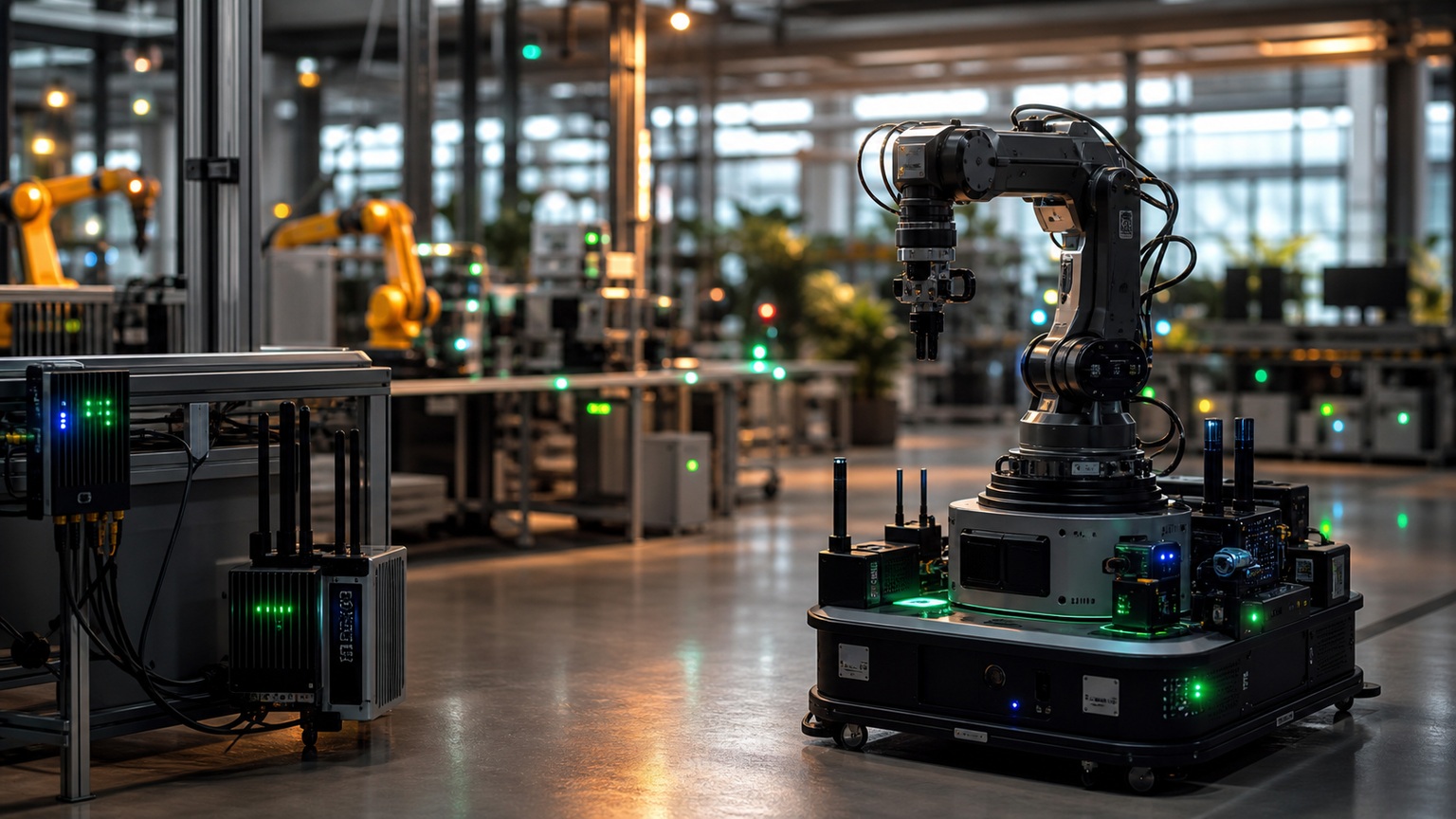
Modern factories are evolving into highly connected environments where machines, sensors, production equipment, and robotic systems communicate continuously.
Connected robots can monitor production conditions, analyze workflow performance, and adjust operations based on real-time information. They are no longer limited to performing repetitive tasks but can actively contribute to process optimization.
One of the most valuable applications is predictive maintenance. Sensors embedded within robotic equipment collect operational data related to temperature, vibration, energy consumption, and performance metrics.
Cloud-based analytics systems examine this information and identify potential failures before they occur. Maintenance teams can address issues proactively, reducing costly downtime and extending equipment lifespan.
Connected robots also enable greater manufacturing flexibility. Production lines can adapt quickly to changing product requirements, customer demands, and market conditions.
As Industry 4.0 continues expanding, connected robotics is becoming a cornerstone of smart manufacturing strategies.
Revolutionizing Warehousing and Logistics
The explosive growth of e-commerce has created unprecedented demand for efficient logistics operations.
Connected robots are helping warehouses and distribution centers meet these challenges by automating inventory management, order fulfillment, transportation, and storage optimization.
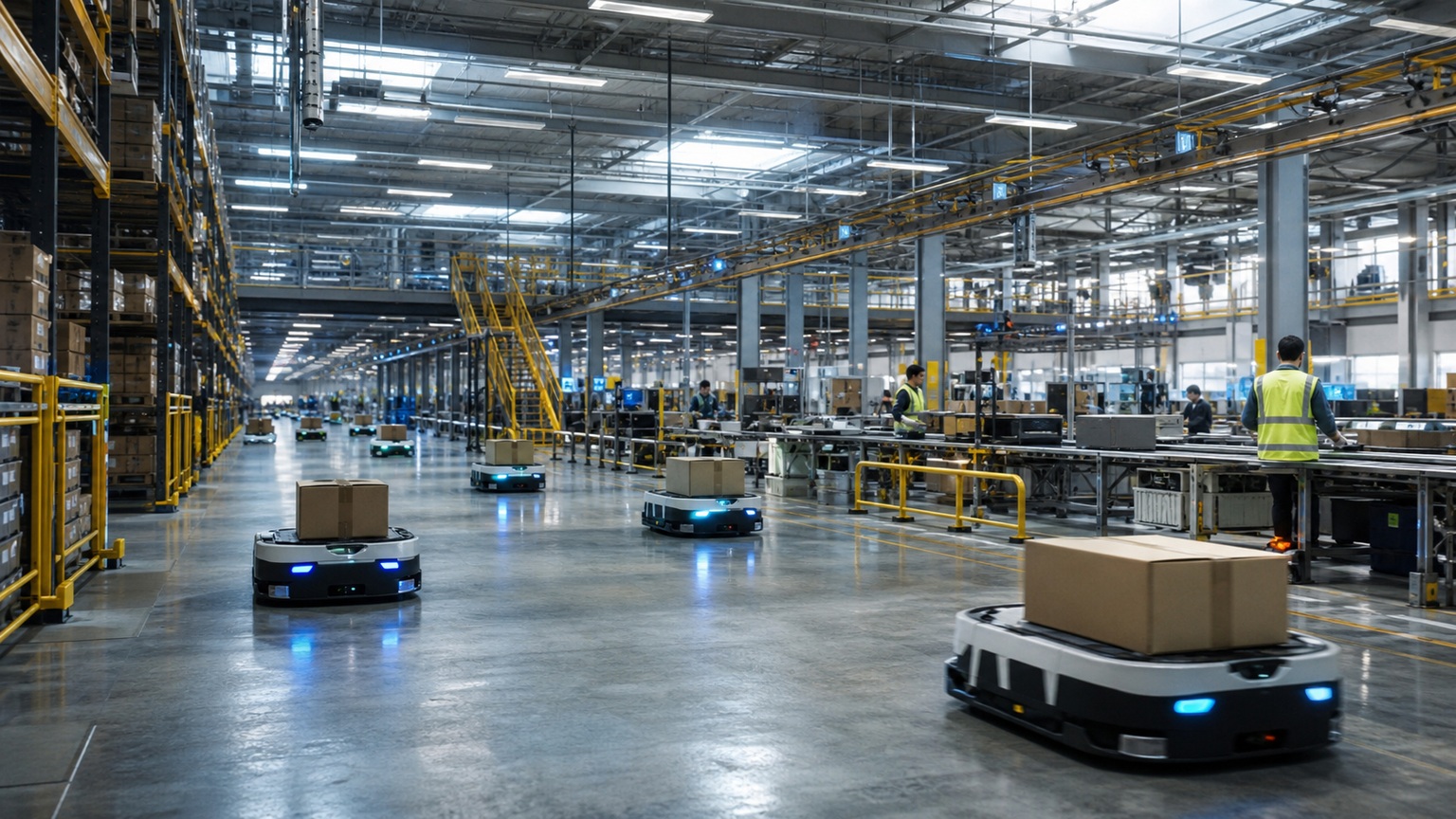
Autonomous mobile robots navigate facilities using real-time data from sensors, mapping systems, and cloud platforms. They transport products, replenish inventory, and assist human workers with repetitive tasks.
Because these robots are connected, they can coordinate movements across entire facilities. They know where inventory is located, which orders require fulfillment, and how to avoid congestion in high-traffic areas.
Real-time communication enables logistics systems to operate with remarkable precision and efficiency.
Connected delivery robots and autonomous vehicles are also beginning to transform last-mile logistics, creating new opportunities for faster and more cost-effective delivery services.
Improving Healthcare Through Connected Robotics
Healthcare is experiencing a major transformation through the adoption of connected robotic technologies.
Hospitals and medical facilities increasingly use robots for patient care, logistics, sanitation, diagnostics, and surgical support.
Connected robots can access medical databases, patient records, treatment guidelines, and diagnostic tools through secure networks. This access improves decision-making and operational efficiency.
Telepresence robots allow healthcare professionals to interact with patients remotely. Specialists located thousands of miles away can conduct consultations, monitor conditions, and collaborate with local providers.
Surgical robotics represents another groundbreaking application. Connected systems can integrate imaging data, artificial intelligence insights, and real-time collaboration tools that support complex medical procedures.
As healthcare systems face growing patient populations and workforce shortages, connected robots are helping improve care delivery while reducing operational burdens.
Transforming Agriculture with Smart Robotics
Agriculture has traditionally relied heavily on manual labor and experience-based decision-making. Connected robotics is introducing a new level of precision and efficiency.
Modern agricultural robots monitor crops, analyze soil conditions, manage irrigation systems, identify pests, and automate harvesting operations.
IoT sensors distributed throughout fields continuously collect environmental data. Connected robots access this information and make informed decisions about resource allocation and crop management.
Farmers can monitor operations remotely through cloud-based platforms and receive actionable insights derived from real-time analytics.
This approach reduces waste, improves yields, conserves resources, and supports more sustainable farming practices.
As global food demand continues increasing, connected robotics will play a crucial role in helping agriculture become more productive and resilient.
Enhancing Retail Operations
Retail businesses are also embracing connected robotic technologies to improve customer experiences and operational efficiency.
Inventory management robots can scan shelves, identify stock shortages, verify pricing accuracy, and update inventory systems automatically.
Connected customer service robots assist shoppers by answering questions, providing directions, and recommending products based on available data.
Warehouse automation supports omnichannel retail strategies by ensuring accurate inventory tracking and rapid order fulfillment.
Retailers benefit from improved operational visibility, better resource allocation, and enhanced customer satisfaction.
As consumer expectations continue evolving, connected robotics will help retailers remain competitive in increasingly complex markets.
The Role of Artificial Intelligence
Artificial intelligence is one of the primary forces powering connected robotics.
AI enables robots to process information, recognize patterns, understand environments, and make decisions based on data. Connectivity amplifies these capabilities by providing access to larger datasets and more powerful computing resources.
Machine learning algorithms help robots improve through experience. Data collected across entire robotic fleets can be aggregated and analyzed to enhance performance continuously.
Computer vision systems allow robots to recognize objects, navigate environments, and inspect products with increasing accuracy.
Natural language processing enables human-robot communication through voice commands and conversational interfaces.
The combination of AI and connectivity is creating robotic systems that become smarter, more capable, and more autonomous over time.
Cloud Robotics and Shared Intelligence
One of the most exciting developments in connected robotics is the rise of cloud robotics.
Cloud robotics allows robots to access centralized computing resources, storage systems, and artificial intelligence models through internet connectivity.
Instead of relying solely on onboard processors, robots can leverage powerful cloud infrastructure for complex tasks.
Perhaps the greatest advantage is shared intelligence.
When one connected robot learns a new skill or encounters a unique situation, that knowledge can be uploaded to the cloud and distributed across other robots.
This collective learning accelerates innovation and enables entire robotic fleets to improve continuously.
The more robots contribute to the network, the more valuable the shared intelligence becomes.
Connected Robots and Workplace Safety
Safety is another area where connected robotics is making a significant impact.
Industrial environments often involve hazardous conditions, heavy machinery, dangerous materials, and repetitive tasks that increase injury risks.
Connected robots can perform dangerous operations while reducing human exposure to hazardous environments.
Real-time monitoring systems provide visibility into equipment performance and workplace conditions. If anomalies are detected, robots can alert operators or take corrective action automatically.
Collaborative robots, often called cobots, work alongside human employees while continuously monitoring their surroundings.
These systems help create safer, more efficient workplaces while reducing accident rates and operational risks.
The Rise of Smart Cities
Connected robotics is also contributing to the development of smart cities.
Urban environments are becoming increasingly interconnected through sensors, communication networks, and intelligent infrastructure.
Robots may assist with public transportation, infrastructure inspections, waste management, environmental monitoring, emergency response, and public safety operations.
Because these robots are connected to citywide systems, they can access real-time information and coordinate activities more effectively.
Smart city initiatives are creating opportunities for connected robotics to improve quality of life, increase efficiency, and support sustainable urban development.
The integration of robotics into connected city ecosystems represents one of the most exciting frontiers in modern automation.
Challenges Facing Connected Robotics
Despite its many benefits, connected robotics faces several challenges.
Cybersecurity remains one of the most significant concerns. Connected systems must be protected against unauthorized access, data breaches, and cyberattacks.
Privacy considerations also become increasingly important as robots collect and process large amounts of information.
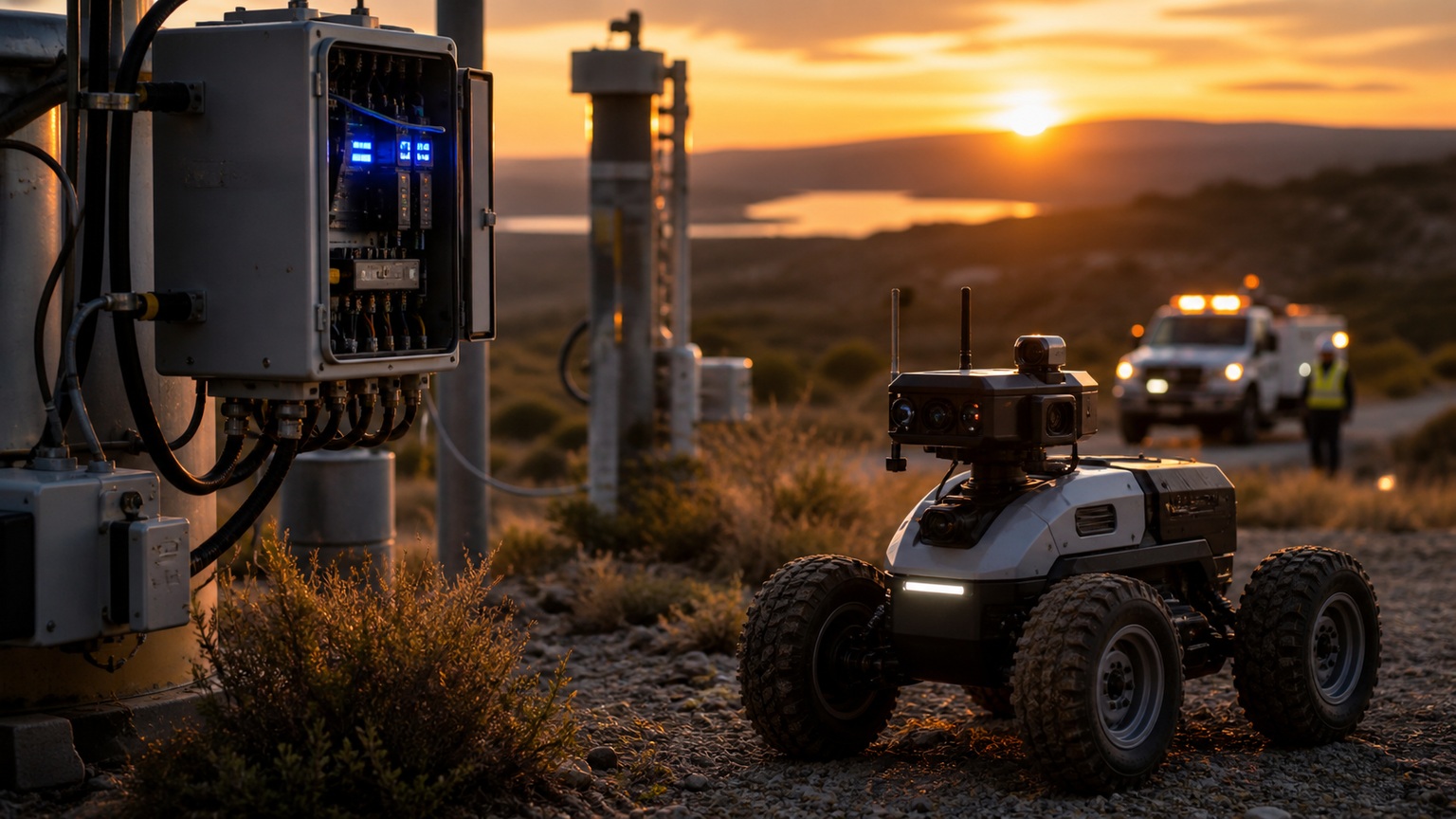
Connectivity reliability can affect performance in remote locations or environments with limited network infrastructure.
Integration complexity presents another challenge. Organizations must ensure compatibility between robotic systems, software platforms, communication protocols, and existing operational technologies.
Addressing these issues requires careful planning, robust security strategies, and ongoing investment in infrastructure.
Economic Benefits of Connected Robotics
The economic advantages of connected robotics are substantial.
Organizations can improve productivity, reduce labor-intensive tasks, minimize downtime, and optimize resource utilization.
Predictive maintenance reduces repair costs and prevents unexpected equipment failures.
Automation improves consistency, accuracy, and quality control while enabling businesses to scale operations more effectively.
Data generated by connected robots provides valuable insights that support strategic decision-making and continuous improvement.
As technology costs continue declining and capabilities continue expanding, connected robotics is becoming increasingly accessible to organizations of all sizes.
The Future of Connected Robotics
The future of connected robotics is extraordinarily promising.
Advances in artificial intelligence, IoT, cloud computing, edge processing, and communication technologies will continue expanding what robots can achieve.
Future robotic systems will become more autonomous, collaborative, and adaptive. They will operate within vast interconnected ecosystems where information flows seamlessly between devices, machines, and organizations.
Robots may eventually function as intelligent digital teammates capable of coordinating complex operations across global networks.
As connectivity improves and technologies mature, the boundaries between physical automation and digital intelligence will continue to blur.
The result will be a new generation of robotic systems capable of transforming industries in ways that are only beginning to emerge today.
Conclusion
Connected robots are redefining what automation means in the modern world. By combining physical capabilities with digital connectivity, these systems are creating smarter, faster, and more adaptive solutions across virtually every industry.
From manufacturing and logistics to healthcare, agriculture, retail, and smart cities, connected robots are improving efficiency, enhancing safety, reducing costs, and enabling entirely new business models. Their ability to communicate, collaborate, learn, and share information gives them capabilities far beyond those of traditional robotic systems.
As technologies such as artificial intelligence, cloud computing, IoT, edge computing, and 5G continue evolving, connected robotics will become even more powerful and widespread. Organizations that embrace these innovations will be better positioned to compete in an increasingly automated and data-driven economy.
The future of industry will not be built by isolated machines working alone. It will be powered by connected robots operating within intelligent networks, transforming how businesses operate and how societies function. The connected robotics revolution is already underway, and its impact will continue shaping the future for decades to come.