

On Robot Streets, connectivity isn’t just about getting online—it’s about giving robots a shared nervous system that links every sensor, actuator, and data stream into one responsive, intelligent network. “Connectivity and IoT Integration” is where cables, circuits, and cloud all meet, turning stand-alone machines into collaborative teammates that can sense, adapt, and coordinate in real time. Here, we dive into the protocols that keep robots talking, the gateways that bridge factory floors to dashboards, and the IoT platforms that turn raw telemetry into decisions. From Wi-Fi and 5G to industrial Ethernet, edge computing, and digital twins, this sub-category explores the glue that holds modern robotics ecosystems together. Whether you’re wiring up your first sensor cluster, building a fleet of connected bots, or tightening the cybersecurity around your networked machines, you’ll find guides, breakdowns, and practical checklists designed to keep your robots in sync, online, and always ready for the next command. We’ll also zoom out to map future networks, troubleshoot real-world bottlenecks, and show where human operators fit into the loop in fast-changing environments.
A: Start with TCP/IP basics, then explore MQTT, REST APIs, and one industrial fieldbus used in your environment.
A: Check roaming settings, channel overlap, antenna placement, and whether heavy machinery is creating interference.
A: Wi-Fi is common indoors; private 5G shines for wide areas, dense fleets, or low-latency mobility.
A: Use a separate VLAN, strong WPA3 or wired links, certificates, and locked-down admin accounts from day one.
A: Not necessarily; many systems run primarily at the edge and sync summaries or logs to cloud services.
A: It’s a virtual model of your robot or cell that stays up to date via live IoT telemetry.
A: Use a broker, central configuration, standardized topics, and automation for provisioning and updates.
A: Good designs include fail-safe behaviors, local watchdogs, and clear alerts when links are lost.
A: Evaluate protocol support, security, cost, integration options, and how easily it models your robot assets.
A: Decide early—operations, IT, or product teams—and document roles for governance, retention, and access.

The Future of Connectivity and IoT in Robotics
A clear beginner explanation of The Future of Connectivity and IoT in Robotics, with plain-English robotics context, practical examples, and useful details for curious beginners.
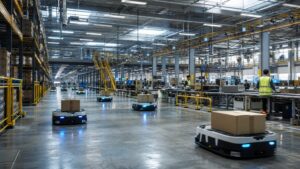
How Connected Robots Are Transforming Modern Industries
A clear human impact of How Connected Robots Are Transforming Modern Industries, with plain-English robotics context, practical examples, and useful details for curious beginners.

What Is IoT Integration in Robotics? A Complete Beginner’s Guide
A clear design tradeoffs of What Is IoT Integration in Robotics? A Complete Beginner’s Guide, with plain-English robotics context, practical examples, and useful details for curious beginners.