

On Robot Streets, “Power Systems and Batteries” is where the heartbeat of every bot lives. Slick autonomy, gorgeous motion planning, and brilliant AI don’t matter if your robot browns out halfway through a mission. This sub-category dives into the unseen grid of voltage rails, DC-DC converters, battery packs, and safety systems that keep robots alive, stable, and mission-ready. Here, you’ll explore how different chemistries—lithium-ion, LiFePO₄, NiMH, supercaps—change everything from runtime to weight to fire risk. We’ll unpack battery management systems, fuse strategies, and wiring layouts that survive vibration, heat, and field abuse. You’ll find practical guides on sizing packs, calculating current draw, handling inrush, and designing chargers that play nicely with fleets instead of fighting them. Whether you’re powering a palm-sized rover, a warehouse hauler, or a field robot that must brave the outdoors all day, this hub gives you diagrams, failure stories, and real-world tuning tips. The goal: bots that don’t just boot—but keep going, safely and predictably.
A: Multiply average current by mission time, add headroom for peaks, aging, and cold-weather derating.
A: Lithium-ion for energy density, LiFePO₄ for safety and cycle life, NiMH or lead-acid for budget builds.
A: Design for stall current, add bulk caps near drivers, and keep logic on a separate regulated rail.
A: Yes with proper connectors, precharge, and BMS support—otherwise you risk arcing and resets.
A: Often yes, using power-path management so chargers and loads share the pack safely.
A: Let the BMS handle it; periodic full charges help keep cell voltages aligned.
A: Log voltage, current, and temperature continuously and review graph traces after test runs.
A: Keep them cool, dry, and around 40–60% charge, with periodic health checks.
A: Normal aging, deep cycles, and heat reduce capacity—track state-of-health to plan replacements.
A: Use proper fusing, BMS, insulated tools, and clear labeling; treat packs as high-energy devices.
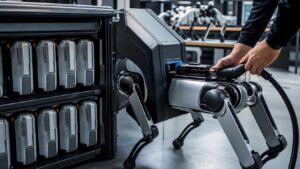
The Future of Power Systems and Batteries in Robotics
A forward-looking guide to how robot power systems may evolve through better batteries, charging docks, power electronics, telemetry, and fleet energy planning.

How Robot Batteries Work: Everything You Need to Know
Robot batteries explained clearly, including cells, packs, voltage, capacity, discharge, battery management, charging, safety, and runtime.
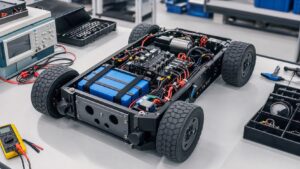
What Are Robot Power Systems? A Complete Beginner’s Guide
A beginner-friendly guide to robot power systems, from batteries and voltage rails to protection circuits, charging, heat, and design tradeoffs.