

On Robot Streets, “Agricultural Robots” is where soil, sun, and circuits meet. Out in the fields, robots are scouting for pests, mapping moisture, and harvesting delicate crops with a level of precision no human crew could maintain around the clock. From autonomous tractors carving perfect rows to nimble fruit-picking arms and weed-zapping rovers, these machines are reshaping how the world grows food. This hub digs into the tech behind next-generation farming: sensors that read plant stress, GPS and RTK guidance that keep machines on track to the centimeter, and AI models that can tell a healthy leaf from a problem patch at a glance. You’ll find articles on designing rugged field robots, integrating drones with ground fleets, managing massive farm datasets, and making robotics work for small farms as well as mega-operations. Whether you care about yields, labor shortages, sustainability, or all three, this space shows how agricultural robots are turning every row into a data-rich, precisely managed system—feeding more people with fewer resources.
A: Repetitive, labor-heavy tasks like weeding, mowing, and harvesting specialty crops.
A: No—good mapping and robust drivetrains can handle real-world ruts, slopes, and uneven rows.
A: Yes—modular tools and flexible software let one platform switch between multiple tasks and crops.
A: They combine GNSS guidance, stored field boundaries, and sometimes roadside beacons or landmarks.
A: Well-designed robots continue their route offline and sync data when the link returns.
A: Smaller, service-based models and shared fleets are emerging for mid-size and small farms.
A: Preventive upkeep before planting and harvest plus quick-swap spares keep downtime low.
A: Yes—precision spot-spraying, mechanical weeding, and targeted treatment all cut inputs.
A: Basic tech literacy, calibration, and troubleshooting; vendors often provide training and remote support.
A: Start with a narrow, high-pain task, pilot on a single field, and expand as confidence grows.
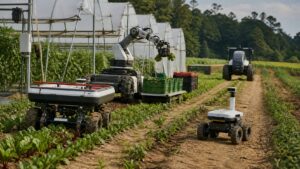
The Different Types of Agricultural Robots Explained
Agricultural robots include scouting rovers, weeding machines, harvest robots, drones, autonomous tractors, dairy robots, and greenhouse systems.
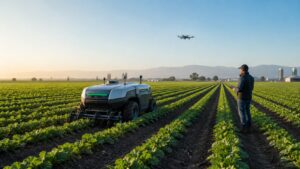
How Agricultural Robots Are Transforming Modern Farming
Agricultural robots are changing farming by improving labor planning, precision, crop monitoring, input use, and the timing of field operations.
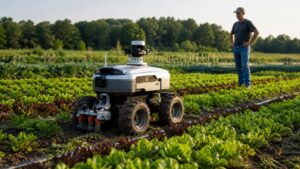
What Are Agricultural Robots? A Complete Beginner’s Guide
Agricultural robots help farms sense crops, move through fields, weed, harvest, spray, monitor livestock, and reduce repetitive labor.