

On Robot Streets, “Industrial Robots” is where sparks fly, conveyor belts hum, and arm after precise arm keeps the modern world moving. From towering six-axis welders to compact cobots that share a bench with human teammates, industrial robots are the muscle behind everything from cars and phones to packaged snacks and medical devices. This hub unpacks the real machines behind the buzzwords. You’ll explore how robots are specced, programmed, and deployed on factory floors, in micro-fulfillment centers, and inside spotless cleanrooms. We’ll connect motors, gearboxes, and safety scanners to the software that choreographs entire lines—vision-guided pickers, AGVs and AMRs, palletizing arms, and more. Whether you’re designing your first workcell, optimizing an existing plant, or just obsessed with how things are made, these articles show you how industrial robots turn repetition into reliability and chaos into flow. Step inside, follow the motion paths, and see how carefully engineered movements power the products that roll out to the streets every day.
A: Repetitive, high-volume tasks such as palletizing, welding, and machine tending are strong starters.
A: Not always—cobots and advanced safety systems can enable open or semi-open layouts when designed correctly.
A: With proper maintenance, arms often run for a decade or more across millions of cycles.
A: Yes—recipe-based programming and quick-change tooling support frequent product and fixture changes.
A: Compare total project cost against labor savings, scrap reduction, uptime gains, and quality improvements.
A: Smaller, easier-to-deploy systems now target mid-size manufacturers and even job shops.
A: Basic programming, safety awareness, and troubleshooting; integrators can help with complex cells.
A: Yes, with risk assessments, cobots, safety-rated sensors, and clear procedures.
A: Pick a well-defined, repetitive task, run a small cell, and expand once metrics are proven.
A: Choose platforms with open interfaces, spare payload, and flexible programming for long-term growth.
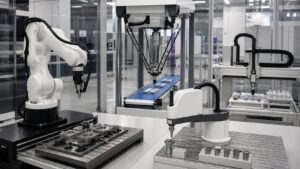
The Different Types of Industrial Robots and Their Best Uses
A practical guide to major industrial robot types, including articulated, SCARA, delta, cartesian, gantry, collaborative, and mobile robots.
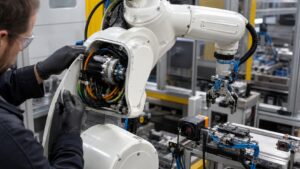
How Industrial Robots Work: Components, Sensors, and Motion Explained
A clear explanation of how industrial robots work through joints, actuators, controllers, sensors, end effectors, motion paths, and safety systems.
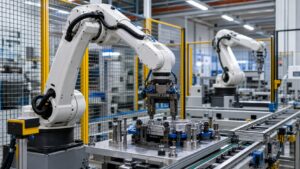
What Are Industrial Robots? A Complete Beginner’s Guide
A beginner-friendly guide to industrial robots, explaining what they are, how they work, where they are used, and what makes them dependable in factories.