The Future of Robotic Manipulation and Gripping Technology
Robots have become remarkably skilled at moving, navigating, analyzing data, and performing repetitive tasks with incredible precision. Yet one of the greatest challenges in robotics has always been deceptively simple: picking things up. For humans, grasping an object is second nature. We can effortlessly pick up a fragile egg, twist open a bottle cap, fold a shirt, stack boxes, or thread a needle. Behind these seemingly simple actions lies an extraordinary combination of vision, touch, force control, spatial awareness, and decision-making. Replicating these capabilities in machines has proven to be one of the most complex problems in robotics. Today, however, robotic manipulation and gripping technology are advancing at an unprecedented pace. Driven by breakthroughs in artificial intelligence, computer vision, soft robotics, sensor technology, machine learning, and advanced materials, robots are becoming increasingly capable of handling objects with human-like dexterity. From warehouse fulfillment centers and manufacturing plants to hospitals, laboratories, farms, and even homes, robotic gripping systems are transforming how machines interact with the physical world. The future promises robots that can manipulate objects of varying shapes, sizes, textures, and fragility with remarkable precision and adaptability. As industries pursue greater automation and labor shortages continue affecting global markets, robotic manipulation is emerging as one of the most important frontiers in modern robotics. Understanding its evolution provides valuable insight into the future of intelligent automation.
A: It is a robot’s ability to physically interact with objects by grasping, moving, rotating, placing, or assembling them.
A: A gripper is an end-of-arm tool that lets a robot hold, lift, move, or manipulate objects.
A: Objects vary in shape, weight, texture, stiffness, position, and fragility, making reliable grasping challenging.
A: Soft grippers use flexible materials that conform around objects, making them useful for delicate or irregular items.
A: Tactile sensing gives robots touch-like feedback about pressure, slip, contact, texture, and grip stability.
A: AI helps robots recognize objects, choose grasp points, learn from failures, and improve picking accuracy over time.
A: It is used in manufacturing, warehouses, agriculture, food handling, healthcare, labs, logistics, and home robotics.
A: Grippers will become more adaptive, sensor-rich, gentle, precise, and capable of handling many object types.
A: Some will, but many industrial robots will use specialized grippers because they are faster, cheaper, and more reliable.
A: Great manipulation depends on the right mix of gripper design, sensors, AI, motion control, and real-world testing.
What Is Robotic Manipulation?
Robotic manipulation refers to a robot’s ability to physically interact with objects in its environment.
This includes grasping, holding, moving, rotating, assembling, sorting, stacking, and manipulating items in controlled ways. Robotic manipulation typically involves robotic arms, end effectors, grippers, sensors, actuators, and sophisticated control systems working together.
Unlike simple movement or navigation, manipulation requires robots to understand object characteristics and adjust their actions accordingly.
A robot may need to determine an object’s location, shape, weight, texture, orientation, and fragility before deciding how to grasp it safely.
Successful manipulation depends on both mechanical design and intelligent decision-making.
As robotic systems become more advanced, manipulation capabilities are increasingly becoming the defining factor that separates basic automation from truly intelligent robotics.
Understanding Robotic Gripping Technology
At the heart of robotic manipulation lies gripping technology.
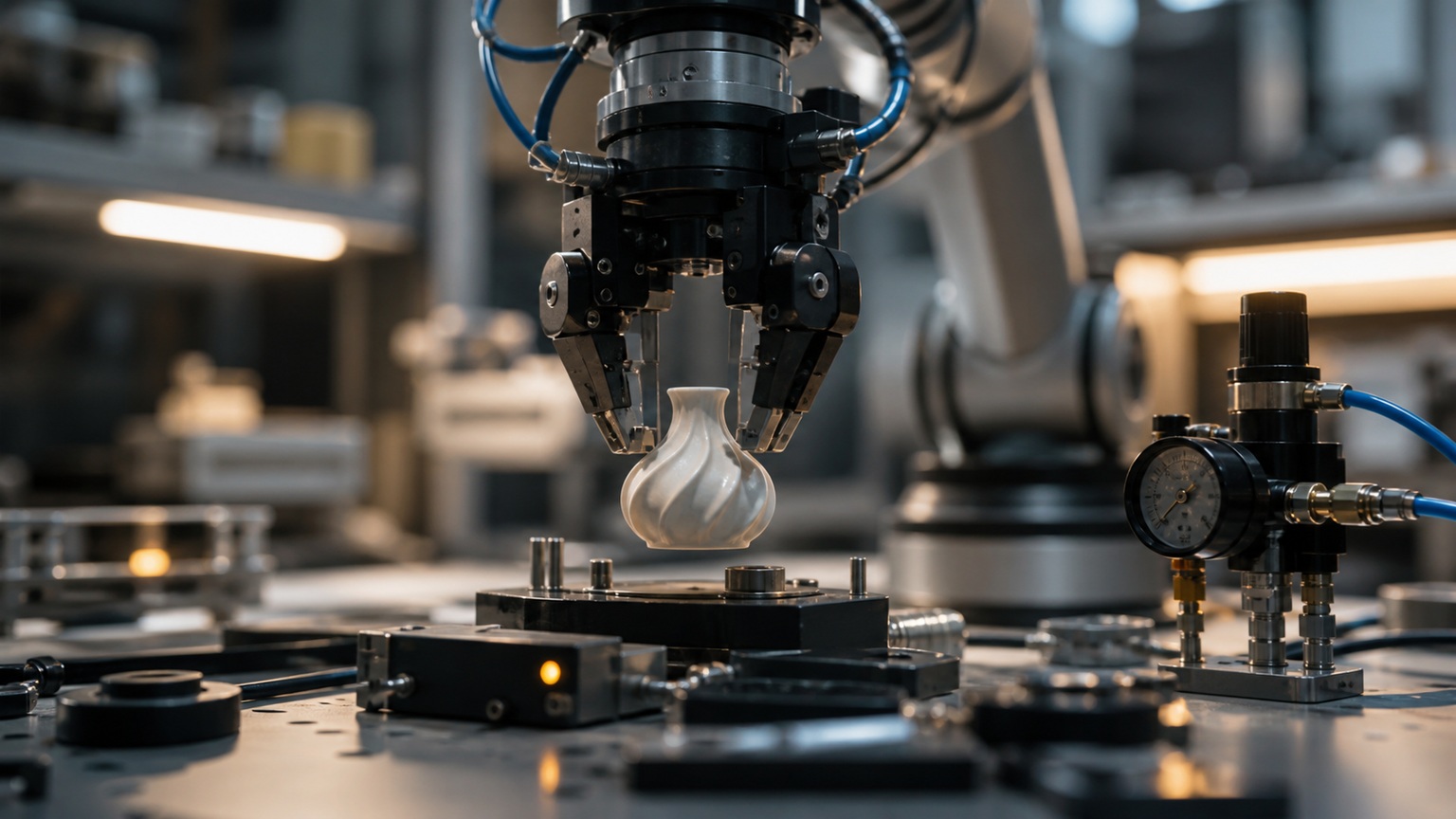
A robotic gripper functions much like a human hand. It serves as the interface between the robot and the object being manipulated.
Traditional robotic grippers were relatively simple devices designed for repetitive industrial tasks. They typically used rigid fingers or clamps that could securely grasp standardized objects under predictable conditions.
While highly effective in structured manufacturing environments, these systems struggled when handling irregular, delicate, or unfamiliar objects.
Modern gripping technologies are becoming far more sophisticated.
Today’s robotic grippers may incorporate tactile sensors, adaptive materials, force-feedback systems, machine learning algorithms, and flexible structures that allow them to handle a wide variety of objects safely and efficiently.
The evolution of gripping technology is expanding the range of tasks robots can perform across industries.
Why Manipulation Has Been a Difficult Challenge
One of the reasons robotic manipulation remains challenging is the incredible complexity of the physical world.
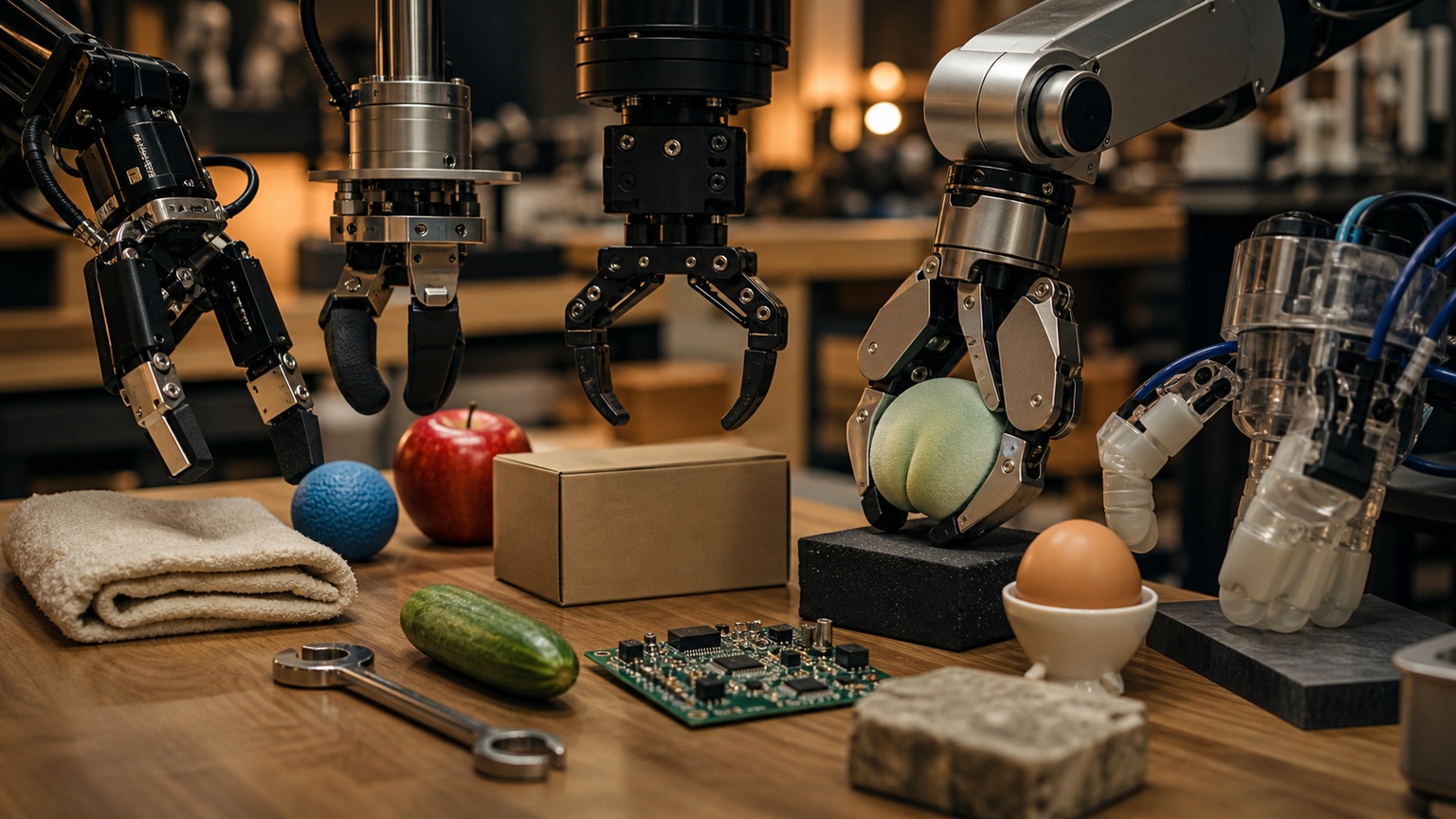
Objects vary enormously in size, shape, weight, texture, rigidity, and fragility. A robot may encounter a cardboard box, a glass vial, a ripe tomato, a metal component, or a piece of fabric—all requiring different handling strategies.
Humans solve these challenges effortlessly because our brains continuously integrate information from vision, touch, and proprioception.
Robots traditionally lacked this level of sensory awareness and adaptability.
Even identifying the best grasp point on an unfamiliar object can be difficult. Determining how much force to apply without crushing or dropping the object adds another layer of complexity.
As a result, robotic manipulation has often been described as one of the last major hurdles in achieving truly versatile automation.
The Evolution of Industrial Grippers
The earliest industrial robots relied primarily on mechanical grippers designed for highly repetitive tasks.
These systems excelled in environments where object characteristics remained consistent. Automotive manufacturing, electronics assembly, and packaging operations benefited significantly from such robots.
However, traditional grippers had limited flexibility.
A gripper optimized for one object often struggled with others. Changing production requirements frequently required new tooling and extensive reconfiguration.
As manufacturing evolved toward greater customization and flexibility, demand grew for more adaptable gripping solutions.
Engineers began developing multi-purpose grippers capable of handling broader ranges of objects without extensive modifications.
This shift marked the beginning of a new era in robotic manipulation technology.
The Rise of Adaptive Grippers
Adaptive grippers represent one of the most significant advancements in robotic gripping.
Unlike rigid grippers that rely on fixed geometries, adaptive grippers adjust their shape and grip strategy based on the object being handled.
These systems use flexible fingers, compliant materials, and intelligent control mechanisms to conform to object surfaces.
Instead of requiring precise positioning, adaptive grippers accommodate variations automatically.
This flexibility makes them particularly valuable in industries where objects differ significantly in size and shape.
Warehouse automation, e-commerce fulfillment, agriculture, and food processing all benefit from adaptive gripping technologies.
By reducing complexity and increasing versatility, adaptive grippers are helping robots operate more effectively in dynamic environments.
Soft Robotics and the Future of Gripping
One of the most exciting developments in robotic manipulation is the emergence of soft robotics.
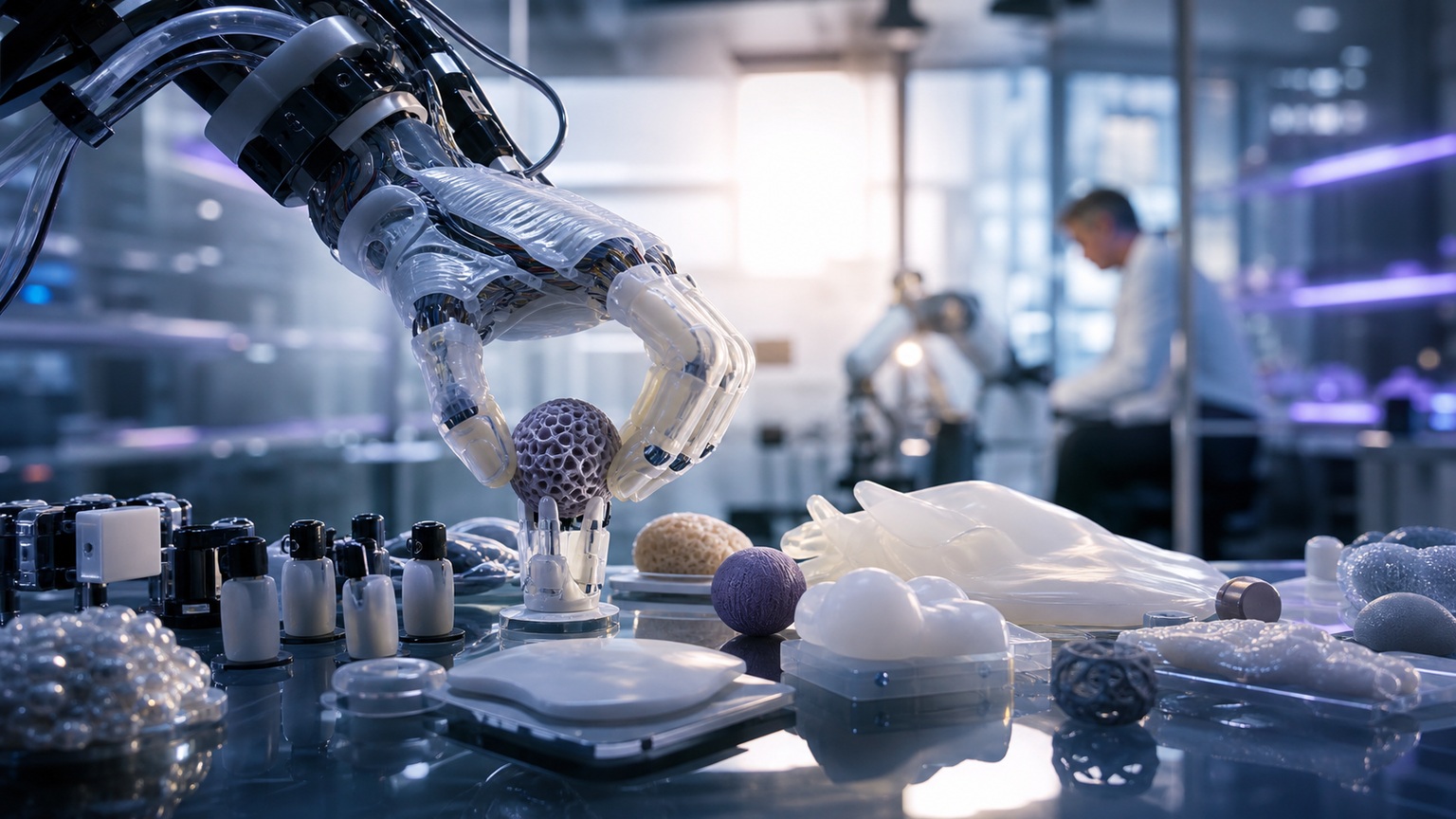
Traditional robotic grippers are typically constructed from rigid materials such as metal and hard plastics. Soft robotic grippers use flexible materials including silicone, elastomers, and advanced polymers.
These materials allow grippers to deform around objects, creating secure and gentle grasps.
Soft robotic systems are particularly useful for handling delicate items such as fruits, vegetables, medical specimens, baked goods, and fragile consumer products.
Because soft grippers distribute force more evenly, they reduce the risk of damage while improving adaptability.
Researchers continue developing innovative soft robotic designs inspired by biological systems such as octopus tentacles, elephant trunks, and human hands.
These bio-inspired approaches are pushing the boundaries of what robotic gripping systems can achieve.
Artificial Intelligence and Intelligent Grasping
Artificial intelligence is revolutionizing robotic manipulation.
Rather than relying solely on preprogrammed instructions, modern robots increasingly use machine learning algorithms to determine how best to interact with objects.
AI systems analyze visual data, predict object characteristics, and identify optimal grasp strategies.
Machine learning enables robots to improve through experience. By analyzing thousands or even millions of successful and unsuccessful grasp attempts, robotic systems become increasingly skilled at handling unfamiliar objects.
Deep learning models can identify subtle patterns that would be difficult to program manually.
As AI capabilities continue advancing, robots are becoming better at making real-time decisions in complex environments.
This intelligence is essential for achieving human-like manipulation skills.
Computer Vision and Object Recognition
Robotic manipulation depends heavily on understanding the surrounding environment.
Computer vision provides this capability by allowing robots to perceive and interpret visual information.
Modern vision systems use cameras, depth sensors, lidar, and advanced image-processing algorithms to identify objects and determine their position, orientation, and characteristics.
AI-powered computer vision can recognize thousands of object types and distinguish between items with remarkable accuracy.
This information helps robots determine where to grasp an object and how to manipulate it safely.
As computer vision technologies improve, robotic manipulation becomes more reliable and adaptable across a broader range of applications.
Tactile Sensing and the Sense of Touch
Vision alone is not enough for sophisticated manipulation.
Humans rely heavily on touch when handling objects. We instinctively adjust grip force, detect slippage, and respond to subtle physical feedback.
Robots are increasingly gaining similar capabilities through tactile sensing technologies.
Advanced tactile sensors can measure pressure, force distribution, vibration, texture, and contact location.
These sensors provide real-time feedback that helps robots maintain secure grips while avoiding excessive force.
Researchers are developing electronic skins and highly sensitive tactile systems that closely mimic human touch.
As tactile sensing improves, robots will become more capable of performing delicate and precise manipulation tasks.
Gripping Technology in Manufacturing
Manufacturing remains one of the largest adopters of advanced gripping technologies.
Modern factories increasingly require flexible automation systems capable of handling diverse products and changing production schedules.
Adaptive grippers allow robots to switch between tasks without extensive reconfiguration.
AI-powered manipulation systems improve assembly accuracy and reduce production errors.
Connected robotic systems can share data, optimize workflows, and continuously improve performance.
These capabilities help manufacturers increase efficiency while maintaining product quality and operational flexibility.
Warehouse Automation and E-Commerce Fulfillment
The rapid growth of e-commerce has created enormous demand for advanced robotic manipulation.
Fulfillment centers process millions of products with varying shapes, sizes, and packaging configurations.
Traditional automation struggled with this diversity, but modern robotic gripping systems are changing the landscape.
AI-powered picking robots can identify products, determine appropriate grasp points, and handle inventory with increasing speed and accuracy.
Advanced grippers enable robots to process mixed inventory efficiently, reducing labor requirements and improving order fulfillment performance.
As online retail continues expanding, robotic manipulation will play an increasingly important role in logistics operations.
Agricultural Applications
Agriculture presents unique challenges for robotic gripping systems.
Many crops are fragile, irregularly shaped, and sensitive to damage.
Harvesting robots must handle fruits and vegetables carefully while operating in unpredictable outdoor environments.
Soft robotic grippers are proving especially valuable in these applications.
By gently conforming to produce surfaces, they enable automated harvesting without compromising product quality.
Combined with computer vision and AI, agricultural robots are becoming increasingly capable of performing tasks traditionally requiring human dexterity.
These advancements are helping address labor shortages while improving agricultural efficiency.
Healthcare and Medical Robotics
Healthcare represents another field where advanced manipulation capabilities are critical.
Surgical robots require exceptional precision when handling delicate tissues and medical instruments.
Laboratory automation systems manipulate samples, test tubes, and diagnostic materials.
Rehabilitation and assistive robotics depend on safe, adaptive interactions with patients.
Improved gripping technologies enhance safety, precision, and versatility across these applications.
As medical robotics continues evolving, manipulation capabilities will remain a central area of innovation.
Human-Robot Collaboration
The future workplace will increasingly involve collaboration between humans and robots.
Collaborative robots, often called cobots, are designed to work alongside people safely and efficiently.
Advanced gripping systems play a vital role in enabling these interactions.
Adaptive force control, tactile sensing, and intelligent manipulation allow robots to handle shared tasks with greater awareness and responsiveness.
Instead of replacing human workers entirely, many robotic systems will augment human capabilities by performing repetitive, physically demanding, or highly precise tasks.
This collaborative approach is reshaping modern automation strategies across industries.
Emerging Technologies Shaping the Future
Several emerging technologies are accelerating progress in robotic manipulation.
Advanced materials are enabling more durable and flexible gripper designs.
Artificial intelligence continues improving grasp planning and object recognition capabilities.
Cloud robotics allows robots to share manipulation experiences and learn collectively.
Edge computing supports faster decision-making in time-sensitive applications.
3D vision systems provide increasingly accurate environmental awareness.
Digital twins enable virtual testing and optimization of manipulation strategies before deployment.
Together, these technologies are creating a new generation of intelligent robotic systems capable of unprecedented levels of dexterity.
Challenges That Remain
Despite significant progress, important challenges remain.
Replicating the full dexterity of the human hand remains extremely difficult.
Handling highly deformable objects such as fabrics, cables, and flexible materials continues to challenge robotic systems.
Cost can also be a barrier, particularly for advanced manipulation technologies involving sophisticated sensors and AI capabilities.
Environmental variability introduces additional complexity, especially in outdoor applications.
Researchers and engineers continue working to overcome these limitations through innovation and interdisciplinary collaboration.
The Future Outlook for Robotic Manipulation
The future of robotic manipulation is extraordinarily promising.
As AI, computer vision, tactile sensing, soft robotics, and advanced materials continue evolving, robots will become increasingly capable of interacting with the physical world.
Future robotic systems may perform tasks that currently require highly skilled human dexterity, including intricate assembly, delicate medical procedures, advanced agricultural harvesting, and complex household activities.
Robots will become more adaptable, more intelligent, and more capable of learning from experience.
Rather than being limited to structured environments, they will operate effectively in dynamic, unpredictable settings.
This evolution will unlock new opportunities for automation across virtually every industry.
Conclusion
Robotic manipulation and gripping technology represent one of the most exciting frontiers in modern robotics. While moving through an environment is important, the ability to interact with objects intelligently is what truly expands a robot’s usefulness and versatility.
Advancements in adaptive grippers, soft robotics, artificial intelligence, computer vision, tactile sensing, and cloud-based learning are transforming robotic manipulation from a highly specialized capability into a practical solution for real-world applications. Industries ranging from manufacturing and logistics to healthcare, agriculture, and retail are already benefiting from these innovations.
Although challenges remain, the pace of technological progress continues to accelerate. Robots are becoming increasingly capable of handling objects with precision, care, and adaptability that once seemed impossible. As these technologies mature, robotic manipulation will play a central role in the future of automation, enabling machines to perform more complex tasks and collaborate more effectively with humans.
The future of robotics is not simply about movement or intelligence. It is about interaction. And as gripping technology continues to evolve, robots are steadily gaining the ability to engage with the physical world in ways that bring them closer than ever to human capability.