Introduction: Understanding the Technology That Allows Machines to Move on Their Own
Autonomous navigation is one of the most transformative technologies of the modern era. It powers self-driving cars, warehouse robots, delivery drones, agricultural machines, robotic vacuum cleaners, and even planetary rovers exploring distant worlds. At its core, autonomous navigation enables a machine to determine where it is, understand its surroundings, decide where it needs to go, and move safely toward its destination without direct human control. Just a few decades ago, the idea of machines independently navigating complex environments seemed like science fiction. Today, autonomous navigation systems are becoming increasingly common in homes, businesses, factories, hospitals, and transportation networks around the world. These intelligent systems are changing the way work is performed, goods are transported, and services are delivered. For beginners, autonomous navigation may seem like a complicated concept involving advanced robotics and artificial intelligence. However, the basic principles are surprisingly easy to understand. Autonomous navigation combines sensors, software, mapping technologies, positioning systems, and decision-making algorithms that work together to help machines move intelligently through the world. This guide explores everything beginners need to know about autonomous navigation, including how it works, the technologies behind it, its applications, benefits, challenges, and what the future may hold.
A: It is a machine’s ability to move through an environment on its own using sensors, maps, software, and control systems.
A: Not exactly. AI may be part of it, but navigation also depends on sensors, mapping, planning, localization, and mechanical control.
A: Not always. Many can navigate locally, though internet access may help with updates, monitoring, cloud maps, or fleet coordination.
A: It compares sensor data with maps, GPS, landmarks, beacons, wheel movement, or LiDAR scans to estimate its position.
A: The robot detects it, updates its local plan, slows down, stops, or finds another route.
A: SLAM lets a robot build a map of an unknown place while also figuring out where it is inside that map.
A: Yes. Indoor systems often use LiDAR, cameras, beacons, QR codes, floor markers, or prebuilt maps instead of GPS.
A: Sensor fusion combines data from several sensors so the robot can make better decisions than it could with one sensor alone.
A: Mistakes can come from poor sensor data, bad lighting, map errors, software limits, unexpected obstacles, or unusual environments.
A: It is used in cars, drones, delivery robots, warehouse robots, farm equipment, hospital robots, mining vehicles, and home robots.
What Is Autonomous Navigation?
Autonomous navigation is the ability of a robot, vehicle, drone, or machine to move from one location to another without continuous human guidance. Rather than being controlled manually through a remote control, joystick, or steering wheel, the machine independently makes decisions about its movement based on information collected from its environment.
To navigate successfully, an autonomous system must continuously answer several important questions. It must determine its current location, understand what surrounds it, identify its destination, calculate a safe path, avoid obstacles, and adapt when conditions change.
Humans perform these tasks naturally using vision, hearing, memory, and experience. Autonomous systems achieve similar results through sophisticated combinations of hardware and software.
The ultimate goal of autonomous navigation is to allow machines to operate safely, efficiently, and reliably without requiring constant human supervision.
Why Autonomous Navigation Matters
Autonomous navigation is important because it dramatically expands what machines can accomplish. Traditional machines require direct control from an operator. Every movement must be commanded by a human. Autonomous systems remove many of these limitations.
In warehouses, autonomous robots can transport products continuously throughout the day. In hospitals, robotic assistants can deliver supplies without staff intervention. On farms, autonomous machinery can plant, monitor, and harvest crops with remarkable precision.
The benefits extend beyond convenience. Autonomous navigation can improve safety by reducing human error, increase productivity through continuous operation, lower costs by automating repetitive tasks, and enhance efficiency by optimizing routes and workflows.
As industries increasingly embrace automation, autonomous navigation is becoming one of the foundational technologies driving innovation across nearly every sector of the global economy.
The Building Blocks of Autonomous Navigation
Autonomous navigation relies on several core technologies working together seamlessly. Each component plays a critical role in helping machines understand and interact with their environment.
Sensors serve as the machine’s eyes, ears, and other senses. Positioning systems help determine location. Mapping technologies create digital representations of surroundings. Navigation software plans routes. Artificial intelligence helps interpret information and make decisions.
When combined, these technologies allow machines to perform tasks that previously required human judgment and situational awareness.
Understanding each component individually provides a clearer picture of how autonomous navigation actually works.
Sensors: How Machines Perceive the World
The first step in autonomous navigation is perception. A machine cannot navigate effectively unless it can gather information about its surroundings.
Sensors provide this critical environmental awareness. They continuously collect data about nearby objects, distances, movement, terrain, and environmental conditions.
Cameras are among the most recognizable sensors used in autonomous systems. Similar to human vision, cameras capture images and video that can be analyzed to identify roads, obstacles, people, signs, and landmarks.
Lidar technology has become a cornerstone of modern autonomous navigation. Lidar uses laser pulses to measure distances and generate highly detailed three-dimensional maps. By scanning millions of points every second, lidar provides an accurate representation of the surrounding environment.
Radar sensors use radio waves to detect objects and measure their speed and distance. Unlike cameras and lidar, radar performs exceptionally well in rain, fog, snow, and other adverse weather conditions.
Ultrasonic sensors emit sound waves and measure their reflections. These sensors are often used for short-range obstacle detection and parking assistance.
Inertial Measurement Units, commonly known as IMUs, measure acceleration, orientation, and rotational movement. They help machines track motion even when external references are temporarily unavailable.
Together, these sensors create a detailed understanding of the world around the autonomous system.
Localization: Knowing Where You Are
One of the most important aspects of navigation is localization. Localization refers to the process of determining a machine’s position within an environment.
Humans rely on familiar landmarks, maps, and memory to understand where they are. Autonomous systems use mathematical models and sensor data to achieve the same objective.
Global Positioning System technology, or GPS, is commonly used for outdoor localization. GPS satellites transmit signals that allow receivers to estimate geographic coordinates.
While GPS works well outdoors, it often struggles indoors or in areas surrounded by tall buildings. For this reason, autonomous systems frequently combine GPS with other localization methods.
Wheel encoders measure wheel rotation to estimate distance traveled. Cameras identify landmarks. Lidar systems compare observations to existing maps. Inertial sensors track movement and orientation.
By combining multiple data sources, autonomous systems achieve highly accurate positioning even in challenging environments.
Mapping: Creating a Digital Understanding of the Environment
A map provides the foundation for intelligent navigation. Just as humans use maps to plan journeys, autonomous systems rely on digital maps to understand their surroundings.
Maps can be created in advance or generated in real time. Some environments, such as warehouses and factories, often use preloaded maps. Other environments may be unknown and require dynamic mapping during operation.
Modern mapping systems create highly detailed digital representations that include walls, pathways, furniture, equipment, roadways, intersections, and other environmental features.
As a machine explores an area, it continuously updates its map to reflect new information. This capability allows autonomous systems to adapt when environments change.
Accurate maps improve navigation efficiency, support route planning, and help prevent collisions.
What Is SLAM?
One of the most important technologies in autonomous navigation is Simultaneous Localization and Mapping, commonly known as SLAM.
SLAM enables a machine to build a map while simultaneously determining its own location within that map. This is especially useful when operating in previously unknown environments.
Imagine entering a building for the first time without a floor plan. You would gradually learn the layout while keeping track of your position. SLAM allows autonomous systems to perform a similar process.
As the machine moves, sensors collect information about nearby features. Algorithms analyze this information to estimate position while constructing a map of the environment.
Every new observation improves both the map and the machine’s understanding of its location. Over time, the navigation system becomes increasingly accurate.
SLAM technology is widely used in robotic vacuum cleaners, warehouse robots, drones, self-driving vehicles, and exploration robots.
Path Planning: Finding the Best Route
Once a machine understands its location and environment, it must determine how to reach its destination.
This process is called path planning.
Path planning involves calculating the safest, fastest, or most efficient route between two points. The optimal route depends on the machine’s objectives and environmental conditions.
A warehouse robot may prioritize speed. A delivery robot may prioritize safety around pedestrians. A planetary rover may prioritize energy efficiency to conserve battery power.
Navigation algorithms evaluate countless possible routes and select the one that best satisfies the mission requirements.
Importantly, path planning is not a one-time event. Autonomous systems continuously reevaluate routes as conditions change, ensuring they can adapt to unexpected situations.
Obstacle Detection and Avoidance
Real-world environments are unpredictable. People move unexpectedly, objects are relocated, and new hazards appear without warning.
Autonomous navigation systems must be capable of detecting obstacles and responding appropriately.
Sensor data is constantly analyzed to identify objects that could interfere with movement. Once an obstacle is detected, the navigation system evaluates possible actions.
The machine may slow down, stop completely, change direction, or generate an entirely new route.
Modern obstacle avoidance systems can react within milliseconds. This rapid response is essential for maintaining safety in dynamic environments.
Whether navigating a crowded hospital corridor or a busy city street, obstacle avoidance is one of the most critical aspects of autonomous operation.
The Role of Artificial Intelligence
Artificial intelligence significantly enhances autonomous navigation capabilities.
While sensors provide raw information, AI helps transform that information into meaningful understanding.
Machine learning algorithms enable systems to recognize objects, classify environments, identify patterns, and predict future events. For example, an autonomous vehicle can distinguish between pedestrians, cyclists, vehicles, and stationary objects.
Deep learning models process vast amounts of sensor data and identify complex relationships that traditional programming approaches might miss.
Artificial intelligence also helps autonomous systems improve over time. By learning from previous experiences, navigation systems become increasingly efficient and reliable.
The integration of AI is one of the primary reasons autonomous navigation technology has advanced so rapidly in recent years.
Common Applications of Autonomous Navigation
Autonomous navigation has expanded into a wide range of industries and applications.
Self-driving vehicles are among the most visible examples. These systems use advanced navigation technologies to travel safely on roads while responding to traffic conditions and obstacles.
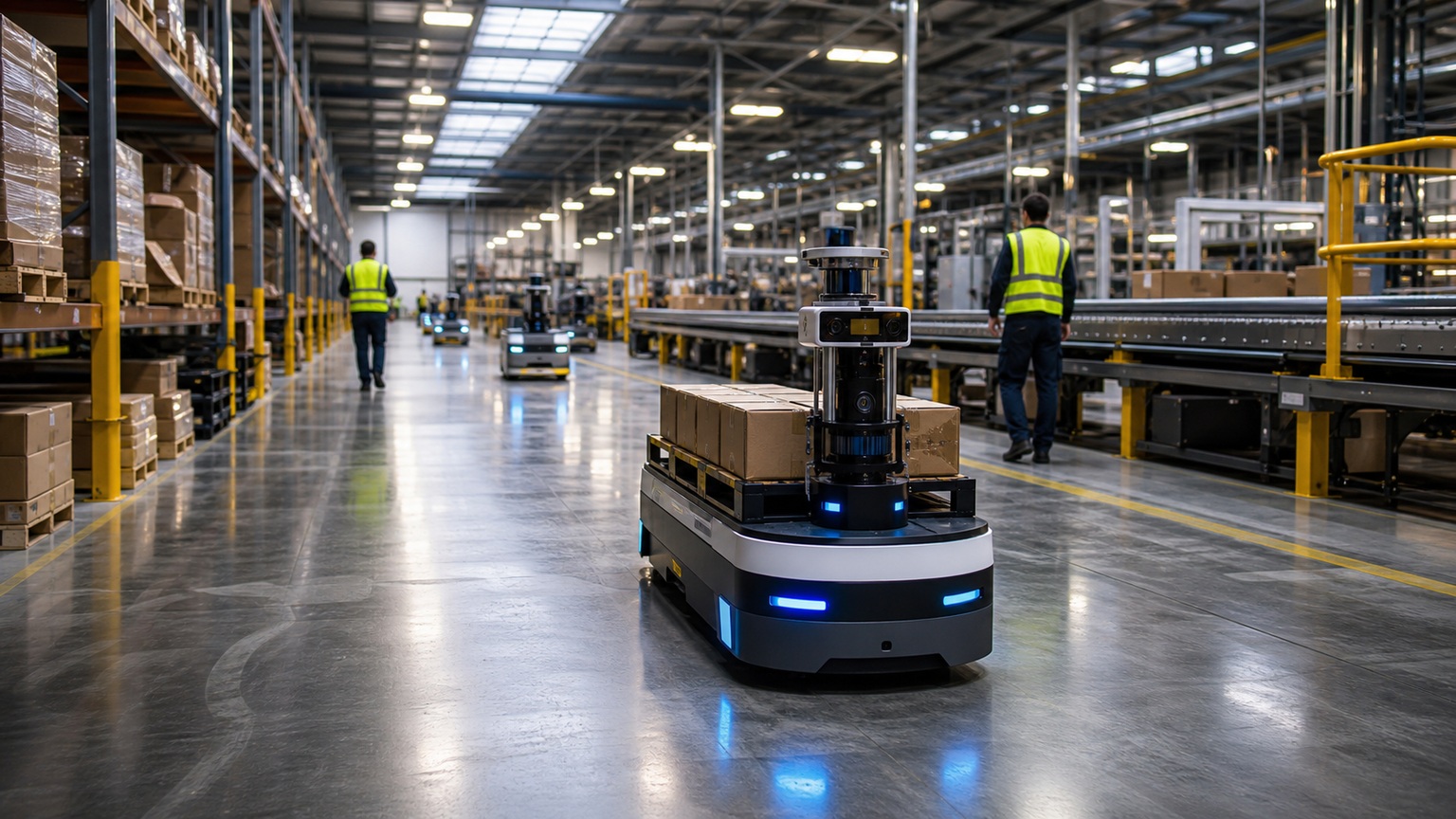
Warehouse automation represents another major application. Autonomous mobile robots transport inventory, optimize workflows, and improve operational efficiency.
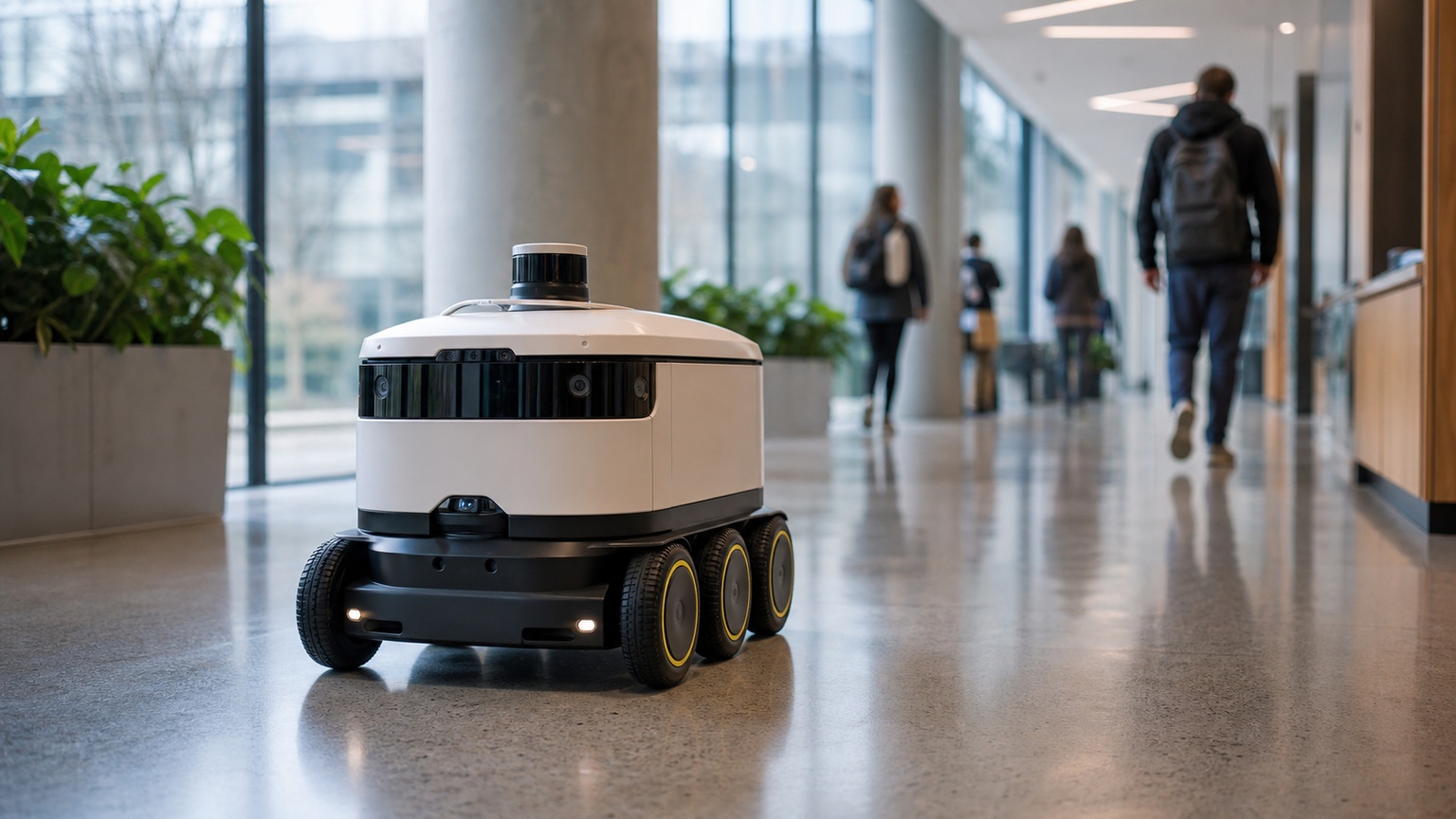
Healthcare facilities increasingly deploy navigation-enabled robots to transport medications, laboratory samples, and medical equipment.
Agriculture benefits from autonomous tractors, harvesters, and monitoring systems capable of navigating large fields with remarkable precision.
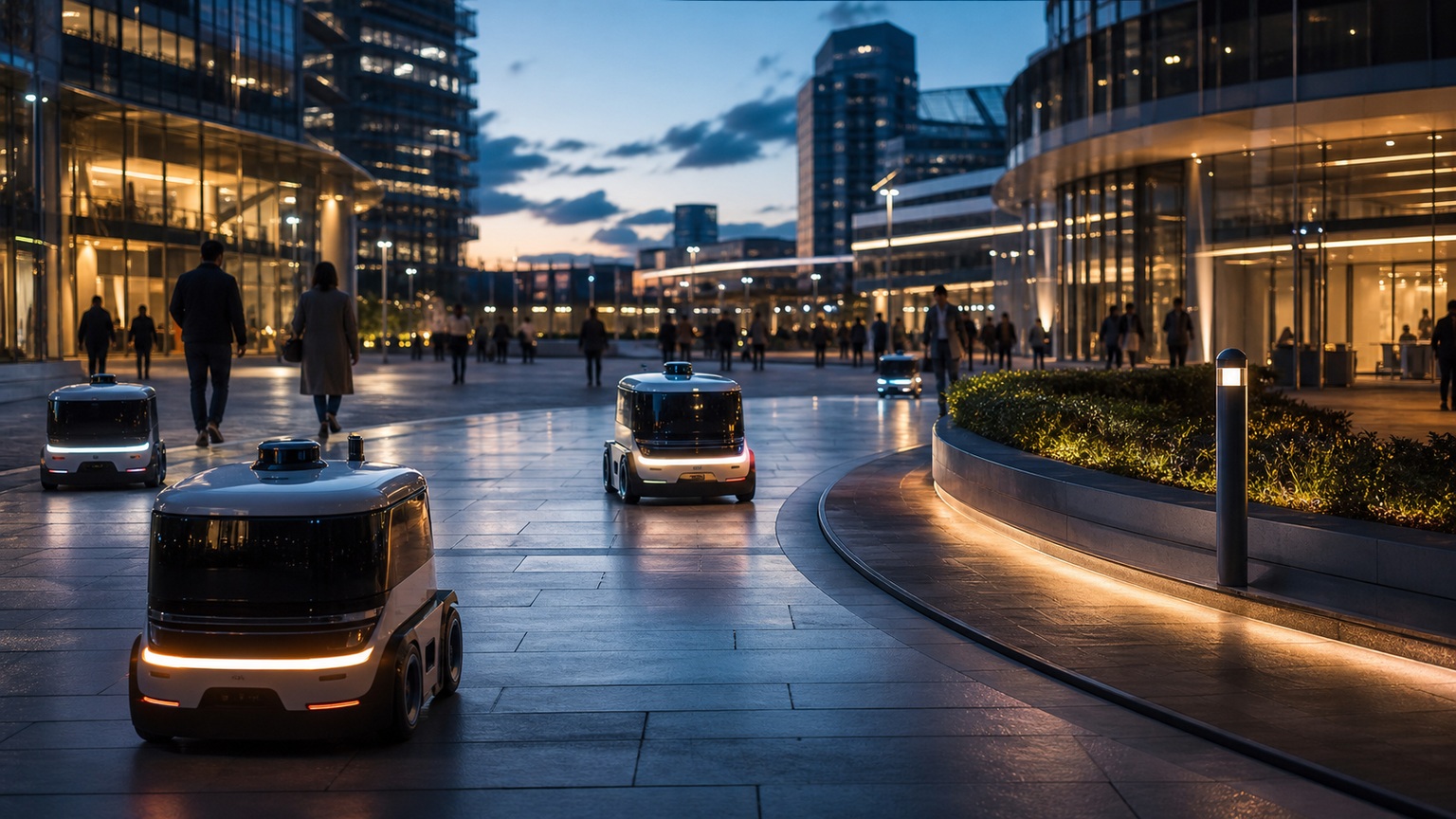
Delivery robots and drones are transforming last-mile logistics by autonomously transporting packages to customers.
Robotic vacuum cleaners demonstrate autonomous navigation in everyday homes, mapping rooms and cleaning efficiently without direct supervision.
Even space exploration depends heavily on autonomous navigation. Planetary rovers operate millions of miles from Earth and must make many navigation decisions independently.
Benefits of Autonomous Navigation
The advantages of autonomous navigation extend far beyond automation alone.
Efficiency is perhaps the most obvious benefit. Machines can operate continuously, reducing delays and increasing productivity.
Accuracy is another major advantage. Autonomous systems can follow precise routes and perform repetitive tasks with remarkable consistency.
Safety improvements are particularly important in hazardous environments. Autonomous machines can perform dangerous tasks while minimizing human exposure to risk.
Cost reduction often follows increased efficiency and reduced labor requirements. Businesses can streamline operations while maintaining high performance levels.
Scalability allows organizations to expand operations without proportionally increasing workforce requirements.
These benefits explain why autonomous navigation continues gaining momentum across industries worldwide.
Challenges and Limitations
Despite impressive progress, autonomous navigation is not without challenges.
Environmental complexity remains a significant obstacle. Weather conditions, poor lighting, reflective surfaces, and crowded spaces can interfere with sensor performance.
Computational requirements are substantial. Processing massive volumes of sensor data in real time demands powerful hardware and sophisticated software.
Safety standards must be exceptionally high, particularly in applications involving public interaction.
Cybersecurity concerns also require attention. Connected autonomous systems must be protected against unauthorized access and malicious attacks.
Additionally, regulatory frameworks continue evolving as governments work to establish guidelines for autonomous technologies.
Researchers and engineers continue addressing these challenges through ongoing innovation and development.
The Future of Autonomous Navigation
The future of autonomous navigation is extraordinarily promising.
Advancements in artificial intelligence, sensor technology, machine learning, robotics, and computing power are accelerating progress at an unprecedented pace.
Future systems will likely possess greater environmental awareness, improved decision-making capabilities, and enhanced adaptability. Robots will become more capable of understanding human behavior, predicting environmental changes, and collaborating with other machines.
Autonomous vehicles, drones, service robots, and industrial systems will continue expanding into new applications and industries.
As navigation technology becomes more reliable and affordable, autonomous systems will become increasingly integrated into daily life.
The coming decades may witness a transformation similar to the rise of the internet or smartphones, with autonomous navigation serving as a foundational technology for the next generation of intelligent machines.
Conclusion
Autonomous navigation is the technology that allows robots, vehicles, drones, and machines to move independently without continuous human control. Through the integration of sensors, localization systems, mapping technologies, SLAM algorithms, path planning software, obstacle avoidance mechanisms, and artificial intelligence, autonomous systems can perceive their surroundings, understand their position, make decisions, and safely navigate complex environments.
From robotic vacuum cleaners and warehouse robots to self-driving cars and planetary explorers, autonomous navigation is already reshaping industries around the globe. Its ability to improve efficiency, enhance safety, reduce costs, and automate complex tasks makes it one of the most influential technologies of the modern age.
For beginners, understanding autonomous navigation provides valuable insight into how intelligent machines operate and why they are becoming increasingly important. As technology continues advancing, autonomous navigation will play a central role in the future of robotics, transportation, logistics, healthcare, agriculture, and countless other fields, helping create a smarter, more connected, and more automated world.