The Future of Autonomous Navigation in Robotics
One of the most remarkable achievements in modern robotics is the ability of machines to move through the world independently. Whether it is a warehouse robot transporting inventory, a self-driving vehicle navigating city streets, a drone inspecting infrastructure, or a planetary rover exploring distant terrain, autonomous navigation is the technology that makes intelligent movement possible. For decades, robots were largely confined to controlled environments where their movements followed predefined paths. They could perform repetitive tasks efficiently, but they struggled when conditions changed or unexpected obstacles appeared. Today, advances in artificial intelligence, sensor technology, machine learning, computer vision, edge computing, and connectivity are enabling robots to navigate increasingly complex environments with minimal human intervention. Autonomous navigation is no longer a niche capability reserved for research laboratories or highly specialized applications. It has become one of the most important areas of innovation in robotics, with implications for manufacturing, logistics, healthcare, agriculture, transportation, defense, construction, and countless other industries. As technology continues evolving, robots are gaining the ability to perceive their surroundings, understand changing conditions, make intelligent decisions, and move safely through dynamic environments. The future promises autonomous systems that can operate almost anywhere, adapting to challenges in real time while collaborating with humans and other machines. This transformation is reshaping the role of robotics across society and opening new possibilities for automation that were once considered impossible.
A: It is a robot’s ability to move from one place to another without constant human control.
A: They use localization methods based on maps, sensors, landmarks, GPS, encoders, and sensor fusion.
A: SLAM means simultaneous localization and mapping, where a robot maps an area while tracking its own position.
A: Common sensors include cameras, LiDAR, radar, ultrasonic sensors, GPS, IMUs, and wheel encoders.
A: GPS is limited indoors, layouts change, people move unpredictably, and spaces can be crowded or cluttered.
A: They detect objects with sensors, predict motion, adjust speed, reroute, or stop when needed.
A: AI helps robots recognize objects, predict movement, improve decisions, and adapt to changing environments.
A: Yes. Connected fleets can use shared maps so one robot’s learning benefits many others.
A: Logistics, manufacturing, healthcare, agriculture, delivery, security, inspection, mining, and retail all use it.
A: Autonomous navigation combines sensing, mapping, localization, planning, control, and safety into one system.
What Is Autonomous Navigation?
Autonomous navigation refers to a robot’s ability to move through an environment without direct human control.
Rather than following fixed instructions or predefined routes, autonomous robots continuously gather information about their surroundings, analyze conditions, and determine the best path toward a goal.
To accomplish this, robots must answer several critical questions. They need to know where they are, understand what surrounds them, identify obstacles, determine where they need to go, and decide how to get there safely and efficiently.
This process requires the integration of sensors, mapping systems, artificial intelligence algorithms, control systems, and computational resources.
When these technologies work together effectively, robots can navigate environments that are constantly changing and often unpredictable.
The result is a machine capable of independent movement and intelligent decision-making.
Why Autonomous Navigation Matters
Navigation is one of the most fundamental capabilities in robotics.
A robot may possess advanced manipulation skills, powerful computing resources, and sophisticated artificial intelligence, but without reliable navigation, its usefulness remains limited.
Autonomous navigation enables robots to perform tasks across large environments without requiring continuous supervision.
In warehouses, robots can transport inventory efficiently. In hospitals, they can deliver supplies and medications. In agriculture, they can monitor crops and perform field operations. In transportation, they can move people and goods autonomously.
The ability to navigate independently increases productivity, reduces labor demands, improves operational efficiency, and expands the range of environments where robots can operate.
As industries seek greater automation, autonomous navigation is becoming a key enabling technology.
The Evolution of Robotic Navigation
Early robotic navigation systems were relatively simple.
Many robots followed fixed tracks, magnetic strips, wires embedded in floors, or predefined coordinate systems. These methods worked well in structured environments but lacked flexibility.
Any changes to the environment often required manual adjustments and reprogramming.
As computing power increased, robots began incorporating sensors that allowed them to detect obstacles and respond to environmental changes.
The development of simultaneous localization and mapping, commonly known as SLAM, represented a major breakthrough. Robots could now build maps of unfamiliar environments while simultaneously determining their own position within those maps.
Advances in artificial intelligence, machine learning, and computer vision further expanded robotic capabilities.
Today’s autonomous systems can operate in environments that would have been impossible for earlier generations of robots to navigate.
Understanding the Core Components of Autonomous Navigation
Successful autonomous navigation depends on several interconnected technologies.
Sensors provide environmental awareness by collecting information about obstacles, surfaces, objects, and movement.
Localization systems help robots determine their position within an environment.
Mapping technologies create digital representations of surroundings.
Path planning algorithms identify optimal routes to desired destinations.
Control systems execute navigation decisions and adjust movements in real time.
Artificial intelligence analyzes incoming data and supports decision-making under changing conditions.
Together, these components create intelligent navigation systems capable of adapting to dynamic environments.
The future of autonomous navigation depends on continuous improvements across all of these areas.
The Role of Sensors in Robotic Navigation
Sensors serve as the eyes, ears, and awareness systems of autonomous robots.
Without sensors, robots would have little understanding of the world around them.
Modern navigation systems often combine multiple sensor types to achieve greater accuracy and reliability.
Cameras provide visual information about objects, people, and environmental features.
Lidar systems use laser pulses to create highly detailed three-dimensional maps.
Radar systems detect objects and measure distances under challenging weather conditions.
Ultrasonic sensors help identify nearby obstacles.
Inertial measurement units track movement and orientation.
GPS technology supports outdoor positioning.
By combining information from multiple sensors, robots develop a comprehensive understanding of their surroundings.
This sensor fusion approach is becoming increasingly important as autonomous systems move into more complex environments.
Simultaneous Localization and Mapping (SLAM)
One of the most important innovations in autonomous navigation is SLAM technology.
SLAM enables robots to build maps of unknown environments while simultaneously determining their own location within those maps.
Imagine a robot entering a building it has never seen before. It must explore the space, identify landmarks, create a map, and track its position as it moves.
SLAM algorithms make this possible.
The technology continuously updates environmental models while correcting positioning errors.
This capability allows robots to operate effectively even when detailed maps are unavailable.
Future advancements in SLAM will improve navigation accuracy, reduce computational requirements, and enable operation in increasingly complex environments.
Artificial Intelligence and Navigation Intelligence
Artificial intelligence is rapidly becoming the foundation of advanced autonomous navigation.
Traditional navigation systems relied heavily on predefined rules and programmed behaviors. While effective in structured settings, these approaches struggled with uncertainty and unexpected situations.
AI allows robots to interpret sensor data, recognize patterns, predict outcomes, and make intelligent decisions.
Machine learning algorithms help robots learn from experience and improve navigation performance over time.
Computer vision systems enable object recognition, scene understanding, and environmental interpretation.
Deep learning models support obstacle detection, route optimization, and dynamic decision-making.
As AI technologies continue evolving, autonomous robots will become increasingly capable of navigating complex real-world environments with minimal human intervention.
Computer Vision and Environmental Awareness
Computer vision has become one of the most transformative technologies in robotic navigation.
By processing visual information from cameras, robots can understand their surroundings in ways that closely resemble human perception.
Computer vision systems identify roads, pathways, obstacles, signs, equipment, people, and countless other environmental features.
Advanced algorithms allow robots to interpret scenes, estimate distances, and recognize changes in their environment.
These capabilities are particularly important for autonomous vehicles, drones, service robots, and collaborative industrial systems.
As computer vision technology continues improving, robots will gain increasingly sophisticated situational awareness.
This enhanced understanding will support safer and more efficient navigation.
Autonomous Navigation in Warehousing and Logistics
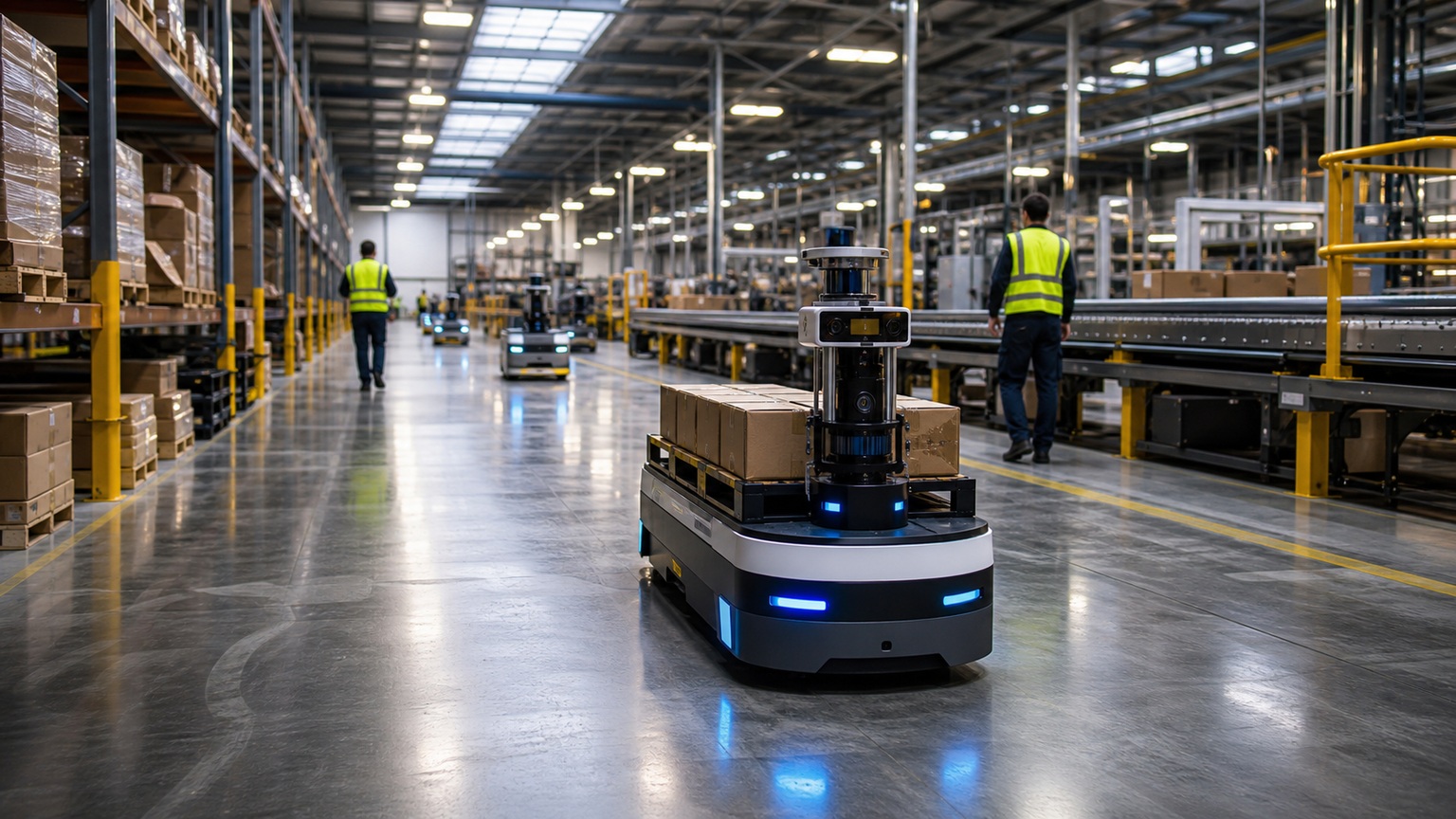
Warehouses have become one of the most successful applications of autonomous navigation technology.
Autonomous mobile robots move inventory, transport products, replenish stock, and assist with order fulfillment operations.
These robots navigate dynamic environments filled with shelves, workers, equipment, and constantly changing inventory layouts.
Advanced navigation systems allow them to optimize routes, avoid obstacles, and coordinate activities with other robots.
As e-commerce demand continues growing, autonomous navigation is helping logistics companies increase efficiency while reducing operational costs.
Future warehouse robots will become even more intelligent, adaptive, and collaborative.
The Rise of Autonomous Delivery Robots
The future of logistics extends beyond warehouses and into public spaces.
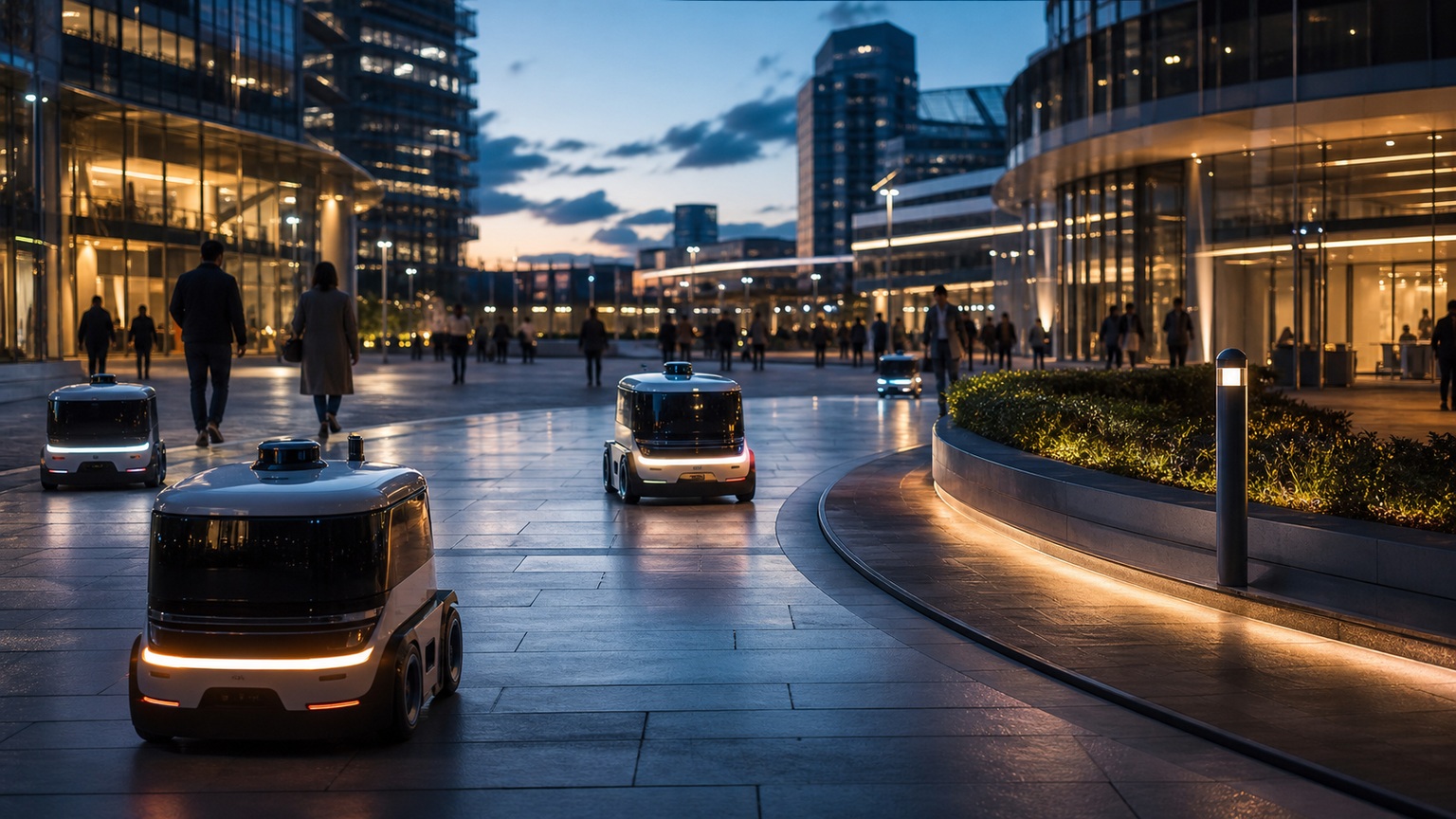
Autonomous delivery robots are beginning to transform how goods are transported to consumers.
These robots must navigate sidewalks, parking lots, neighborhoods, and urban environments while interacting safely with pedestrians and vehicles.
Successful navigation requires sophisticated perception systems, route planning algorithms, and real-time decision-making capabilities.
As connectivity, mapping technologies, and AI continue advancing, delivery robots will become increasingly common in cities worldwide.
Their ability to operate autonomously could significantly reshape last-mile logistics and urban commerce.
Autonomous Navigation in Healthcare
Hospitals and healthcare facilities are increasingly adopting autonomous robotic systems.
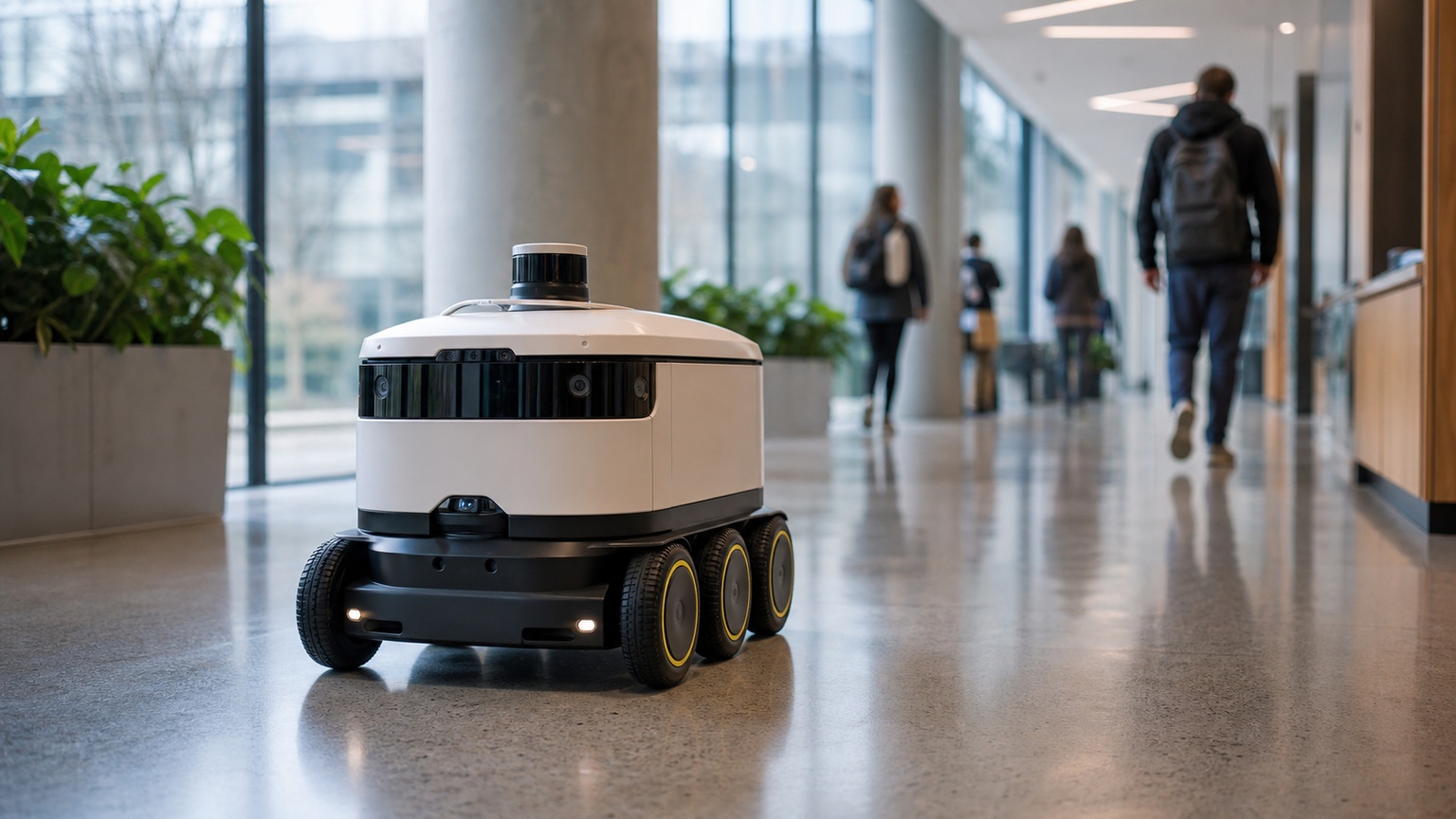
Navigation-enabled robots transport medications, medical supplies, laboratory samples, and equipment throughout healthcare environments.
These facilities present unique challenges, including crowded hallways, moving personnel, changing room configurations, and strict safety requirements.
Autonomous navigation allows robots to operate efficiently while minimizing disruptions to patients and staff.
Future healthcare robots may support additional functions such as patient assistance, facility monitoring, and emergency response.
Improved navigation capabilities will play a central role in expanding these applications.
Agricultural Navigation Systems
Agriculture represents another major opportunity for autonomous navigation.
Modern farms cover vast areas and often involve complex operating conditions.
Autonomous tractors, harvesters, drones, and field-monitoring robots rely on navigation systems to perform tasks with precision.
GPS technology, computer vision, and environmental sensors help agricultural robots follow optimal routes and avoid obstacles.
As precision agriculture continues advancing, navigation systems will enable increasingly efficient use of land, water, fertilizer, and labor resources.
The future of farming will be heavily influenced by autonomous robotic systems capable of operating independently across large agricultural environments.
Autonomous Drones and Aerial Robotics
Aerial robotics is one of the fastest-growing areas of autonomous navigation.
Drones are being used for infrastructure inspections, environmental monitoring, surveying, agriculture, public safety, and package delivery.
Unlike ground robots, drones must navigate three-dimensional environments while accounting for weather conditions, airspace regulations, and flight dynamics.
Advanced navigation systems allow drones to avoid obstacles, maintain stable flight, and complete missions with minimal human oversight.
Future aerial robots will become increasingly autonomous, enabling broader adoption across commercial and industrial sectors.
The Impact of 5G and Connectivity
Connectivity is becoming increasingly important in autonomous navigation.
The expansion of 5G networks provides faster communication speeds, lower latency, and greater reliability.
Connected robots can access cloud-based resources, share information with other systems, and receive real-time updates about environmental conditions.
Vehicle-to-vehicle communication and robot-to-infrastructure communication are creating new opportunities for collaborative navigation.
Connected navigation systems allow robots to benefit from collective intelligence and shared situational awareness.
As communication technologies improve, autonomous systems will become more coordinated and effective.
Edge Computing and Real-Time Decision Making
Many navigation decisions must occur within milliseconds.
Waiting for cloud-based processing may introduce unacceptable delays in critical situations.
Edge computing addresses this challenge by bringing computational resources closer to the robot.
Instead of sending all data to distant servers, robots can process information locally and make immediate decisions.
This approach improves responsiveness and reliability while reducing dependence on network connectivity.
The combination of edge computing and artificial intelligence is enabling faster and more capable autonomous navigation systems.
Human-Robot Collaboration and Shared Spaces
The future of robotics involves increasing interaction between humans and autonomous machines.
Robots will not operate exclusively in isolated environments. They will share workplaces, hospitals, warehouses, public spaces, and homes with people.
Navigating safely around humans requires sophisticated perception and decision-making capabilities.
Future navigation systems will recognize human intentions, predict movement patterns, and adjust behavior accordingly.
Collaborative environments demand navigation technologies that prioritize safety, trust, and smooth interaction.
Achieving this balance will be a major focus of future robotics development.
Challenges Facing Autonomous Navigation
Despite significant progress, autonomous navigation still faces important challenges.
Dynamic environments remain difficult to predict. Unexpected obstacles, changing conditions, and unusual scenarios can complicate decision-making.
Weather conditions such as rain, fog, snow, and dust may interfere with sensor performance.
GPS limitations can affect outdoor positioning accuracy.
Cybersecurity concerns become increasingly important as navigation systems become more connected.
Regulatory requirements and public acceptance also influence adoption.
Researchers continue working to overcome these obstacles through improved algorithms, sensors, and system designs.
The Future Outlook for Autonomous Navigation
The future of autonomous navigation is extraordinarily exciting.
Advances in artificial intelligence, machine learning, computer vision, sensor technology, connectivity, and computing infrastructure are accelerating progress at an unprecedented pace.
Future robots will navigate environments with greater confidence, accuracy, and adaptability.
They will understand context, anticipate challenges, collaborate with other systems, and make increasingly sophisticated decisions.
Autonomous navigation will expand beyond industrial settings into transportation networks, healthcare facilities, smart cities, homes, and public spaces.
As these technologies mature, robots will become trusted partners capable of operating independently across a vast range of applications.
Conclusion
Autonomous navigation is one of the most transformative technologies in modern robotics. By enabling robots to move independently through complex environments, it unlocks new possibilities for automation across virtually every industry.
From warehouses and hospitals to farms, drones, autonomous vehicles, and smart cities, navigation systems are allowing robots to perform tasks with increasing intelligence and efficiency. Advances in artificial intelligence, computer vision, SLAM, sensor technology, connectivity, and edge computing are driving this progress forward at remarkable speed.
Although challenges remain, the future of autonomous navigation is filled with opportunity. Robots are becoming more capable of understanding their surroundings, adapting to change, and making intelligent decisions in real time. As these technologies continue evolving, autonomous navigation will play a central role in shaping the future of robotics and automation.
The next generation of robots will not simply follow instructions. They will perceive, analyze, decide, and move through the world with a level of independence that once existed only in imagination. The future of autonomous navigation is not just about helping robots find their way—it is about enabling them to become intelligent participants in the environments they serve.