
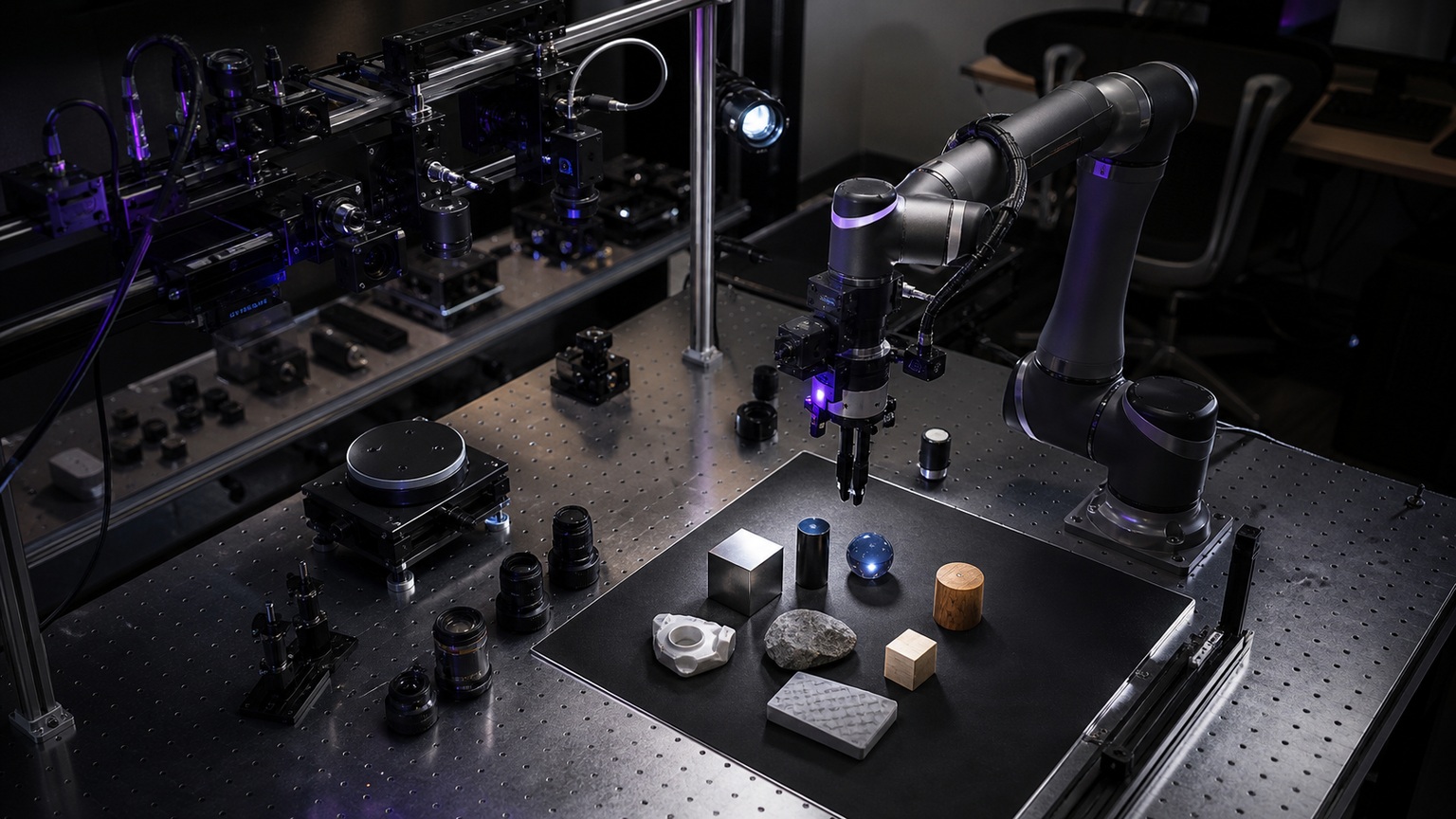
Giving Machines the Power of Sight
One of the most fascinating aspects of modern robotics is the ability of machines to perceive and understand the world around them. Whether it is a self-driving car identifying pedestrians, a warehouse robot locating packages, a drone navigating through a forest, or a robotic surgeon assisting during a delicate procedure, all of these systems rely on a remarkable capability known as computer vision and perception. For humans, seeing feels effortless. Our eyes gather information, our brains interpret it, and we instantly recognize people, objects, colors, movement, and depth. We can walk through a crowded room, avoid obstacles, identify familiar faces, and make decisions based on what we observe. Replicating this seemingly simple process in a machine has proven to be one of the greatest challenges in robotics and artificial intelligence. Computer vision and robotic perception allow robots to transform raw visual data into meaningful understanding. These technologies give machines the ability to recognize objects, estimate distances, track movement, interpret environments, and make intelligent decisions based on what they observe. In many ways, perception serves as the foundation for autonomous behavior. Without the ability to perceive the world, a robot would have no awareness of its surroundings and no way to navigate safely or perform useful tasks. As robotics continues to advance, computer vision is becoming increasingly sophisticated. Today’s robots can identify thousands of object categories, understand complex scenes, recognize human gestures, and even predict future movements. Understanding how robots see the world provides a fascinating glimpse into one of the most important technologies shaping the future of automation.
A: It is the use of cameras and software to help robots interpret images, recognize objects, and understand scenes.
A: No. Perception can include LiDAR, radar, sonar, touch sensors, microphones, IMUs, and other sensor types.
A: They use algorithms or AI models trained to detect patterns, shapes, textures, colors, and learned object features.
A: Depth perception is the ability to estimate how far away objects are from the robot.
A: They need it to navigate, avoid hazards, pick up objects, inspect parts, follow people, and react to changing environments.
A: Yes, if they use infrared cameras, thermal cameras, LiDAR, radar, or other sensors that do not depend on visible light.
A: Lighting changes, reflections, shadows, motion blur, clutter, unusual object angles, and limited training data can all cause errors.
A: It is the process of dividing an image into meaningful regions, such as floor, wall, person, road, or obstacle.
A: Combining sensors improves reliability because each sensor sees the world in a different way.
A: Robots will become better at understanding context, predicting movement, learning from fewer examples, and working safely around people.
What Is Computer Vision?
Computer vision is a field of artificial intelligence that enables computers and robots to interpret and understand visual information from the world. The goal is to allow machines to process images and video in ways that resemble human vision.
When a robot captures an image using a camera, it does not immediately understand what it is seeing. The image consists only of millions of pixels arranged in patterns of color and brightness. Computer vision algorithms analyze those pixels and transform them into meaningful information.
For example, a robot may capture an image of a warehouse aisle. Through computer vision, it can identify shelves, packages, forklifts, workers, and pathways. It can estimate distances, determine object sizes, recognize movement, and understand how different elements relate to one another.
Computer vision serves as the bridge between visual data and intelligent action. It allows robots to move beyond simply recording images and begin understanding the world in a meaningful way.
Understanding Robotic Perception
While computer vision focuses on interpreting visual information, robotic perception is a broader concept. Perception refers to a robot’s ability to gather, process, and understand information from multiple sensors.
Humans rely on more than vision alone. We use hearing, touch, balance, and spatial awareness to understand our surroundings. Similarly, robots often combine visual data with information from other sensors.
Cameras provide images. Lidar generates three-dimensional maps. Radar measures distance and speed. Ultrasonic sensors detect nearby obstacles. Inertial measurement units track motion and orientation.
Perception systems integrate all of this information into a unified understanding of the environment. Rather than relying on a single source of data, robots combine multiple perspectives to create a more accurate representation of reality.
This comprehensive understanding allows robots to make better decisions and operate more safely in complex environments.
Cameras: The Eyes of Modern Robots
The most recognizable component of robotic vision is the camera. Cameras function as the primary visual sensors for many autonomous systems.
Modern robots often use high-resolution digital cameras capable of capturing detailed images and video streams. These cameras continuously collect visual information about the surrounding environment.
Some robots use a single camera, while others employ multiple cameras positioned around the machine. Multiple cameras provide broader coverage and allow robots to observe their surroundings from different angles.
Stereo vision systems use two cameras placed a fixed distance apart, similar to human eyes. By comparing the images captured by each camera, robots can estimate depth and determine the distance to objects.
Advanced robotic platforms may incorporate dozens of cameras to achieve near-complete environmental awareness. Self-driving vehicles, for example, frequently rely on multiple cameras positioned around the vehicle to monitor traffic, road signs, pedestrians, and lane markings.
The camera serves as the starting point for visual perception, but capturing images is only the beginning of the process.
Beyond Cameras: Additional Vision Sensors
While cameras are incredibly important, many robots require additional sensing technologies to achieve reliable perception.
Lidar has become one of the most influential technologies in autonomous robotics. Lidar systems emit laser pulses and measure the time required for those pulses to return after reflecting off nearby objects. This process creates highly detailed three-dimensional representations of the environment.
Unlike traditional cameras, lidar provides precise distance measurements. This capability allows robots to determine exactly how far away objects are located.
Radar offers another valuable sensing technology. Using radio waves, radar can detect objects and measure their speed even in poor visibility conditions. Rain, fog, snow, and darkness often affect cameras and lidar, but radar continues functioning effectively.
Depth cameras combine visual imaging with distance measurement. These sensors provide both traditional images and depth information, helping robots understand the three-dimensional structure of their surroundings.
Together, these technologies provide a richer understanding of the environment than cameras alone could achieve.
Turning Pixels Into Meaning
One of the greatest challenges in computer vision is transforming raw images into useful information.
When humans look at a chair, they immediately recognize it as a chair. A robot sees only patterns of pixels. Computer vision algorithms must analyze those patterns and determine what objects are present.
Image processing techniques serve as the first stage of this transformation. These methods enhance image quality, reduce noise, adjust lighting, and highlight important features.
The system then identifies edges, shapes, textures, and color patterns. These visual features provide clues about the objects within the image.
Artificial intelligence models analyze these features and compare them against learned patterns. Through training, the system learns to recognize thousands of different objects and environmental characteristics.
This process allows robots to move from simple image capture to meaningful understanding.
Object Detection: Identifying What Is Present
Object detection is one of the most important tasks in robotic perception.
Object detection systems identify and locate specific objects within an image. Instead of merely recognizing that an object exists, these systems determine exactly where it is located.
For example, a warehouse robot may identify boxes, shelving units, forklifts, and workers within a single image. The system draws virtual boundaries around each object and classifies them according to category.
This capability allows robots to interact intelligently with their surroundings. A robotic arm can locate a product for picking. A delivery robot can avoid pedestrians. A self-driving car can recognize vehicles, cyclists, and traffic signs.
Modern object detection systems are powered by deep learning algorithms that have been trained using millions of labeled images.
As training datasets grow and AI models improve, object detection accuracy continues to advance dramatically.
Image Recognition and Classification
Closely related to object detection is image classification.
Image classification involves identifying the primary subject or category represented within an image. Instead of locating multiple objects, the goal is to determine what the image contains overall.
For example, a system may classify an image as containing a dog, bicycle, building, or tree.
Classification serves as a foundation for many higher-level perception tasks. Robots use classification systems to identify equipment, products, materials, environmental features, and operational conditions.
Industrial robots can classify manufacturing components. Agricultural robots can distinguish between crops and weeds. Medical robots can assist in analyzing diagnostic imagery.
These capabilities allow robots to make informed decisions based on visual information.
Depth Perception: Understanding Three-Dimensional Space
Humans naturally perceive depth, allowing us to estimate distances and move safely through our environment. Robots require similar capabilities.
Depth perception enables robots to understand how far away objects are located and how they are positioned within three-dimensional space.
Stereo cameras achieve depth perception by comparing images captured from slightly different viewpoints. The differences between these images reveal distance information.
Lidar systems directly measure object distances through laser reflections. Depth cameras generate distance maps that describe the spatial structure of a scene.
Accurate depth perception is essential for navigation, obstacle avoidance, object manipulation, and interaction with the environment.
Without depth perception, robots would struggle to judge distances and perform tasks safely.
Motion Tracking and Object Tracking
The world is constantly changing. People move, vehicles travel, and objects shift positions. Robots must monitor these changes continuously.
Motion tracking allows robots to detect movement within their environment. Object tracking extends this capability by following specific objects over time.
For example, a warehouse robot may track a worker walking through an aisle. A self-driving vehicle may monitor nearby cars and pedestrians. A security robot may follow suspicious activity.
Tracking systems estimate object positions, velocities, and movement patterns. This information helps robots predict future behavior and make safer navigation decisions.
The ability to track moving objects is critical for operating in dynamic environments.
Artificial Intelligence and Deep Learning
The rapid advancement of robotic vision is largely driven by artificial intelligence and deep learning.
Traditional computer vision systems relied heavily on manually programmed rules. Engineers had to specify exactly how objects should be recognized and classified.
Deep learning introduced a new approach. Instead of relying on handcrafted rules, neural networks learn directly from data.
By analyzing millions of training examples, deep learning models discover complex visual patterns automatically. These systems become increasingly accurate as they encounter more data.
Modern deep learning models can identify faces, interpret scenes, recognize emotions, estimate object poses, and understand environmental context.
The combination of AI and computer vision has transformed robotic perception from a specialized capability into a powerful foundation for autonomy.
Scene Understanding: Seeing the Bigger Picture
Recognizing individual objects is important, but true perception requires understanding how those objects relate to one another.
Scene understanding allows robots to interpret entire environments rather than isolated objects.
For example, a robot entering a kitchen may recognize cabinets, appliances, countertops, chairs, and tables. More importantly, it understands that these objects collectively form a kitchen environment.
Scene understanding provides context that improves decision-making. A robot can infer likely object locations, predict human behavior, and navigate more intelligently.
This higher level of perception moves robots closer to human-like environmental awareness.
Applications of Computer Vision in Robotics
Computer vision has become essential across nearly every area of robotics.
Self-driving vehicles use perception systems to understand roads, traffic signals, pedestrians, and surrounding vehicles. These systems make countless decisions every second based on visual information.
Warehouse robots identify inventory, navigate aisles, and coordinate logistics operations. Agricultural robots monitor crop health, identify weeds, and optimize harvesting activities.
Medical robots assist surgeons by providing enhanced visual guidance and precision. Manufacturing robots inspect products for defects and ensure quality standards are met.
Security robots monitor facilities, detect unusual activity, and provide situational awareness. Delivery robots navigate sidewalks and public spaces while avoiding obstacles.
Even robotic vacuum cleaners use computer vision to map rooms and optimize cleaning routes.
Virtually every autonomous robot relies on perception technologies to perform its tasks effectively.
Challenges in Robotic Vision
Despite tremendous progress, robotic vision remains a challenging field.
Lighting conditions can significantly affect image quality. Shadows, glare, darkness, and reflections may complicate visual interpretation.
Weather conditions create additional difficulties for outdoor robots. Rain, fog, snow, and dust can reduce sensor performance.
Object appearance varies dramatically depending on angle, distance, and environmental conditions. A robot must recognize objects even when they appear different from training examples.
Processing large volumes of visual data in real time requires significant computational resources. Autonomous systems must analyze information quickly enough to support immediate decision-making.
Researchers continue developing new algorithms, sensors, and AI models to overcome these challenges.
The Future of Robotic Perception
The future of robotic vision is incredibly exciting. Advances in artificial intelligence, sensor technology, edge computing, and machine learning are pushing perception capabilities to new levels.
Future robots will likely possess richer environmental understanding, stronger reasoning capabilities, and improved adaptability. They will better understand human behavior, recognize subtle environmental changes, and collaborate more naturally with people.
Sensor fusion techniques will continue improving, allowing robots to combine information from multiple sources more effectively. AI systems will become increasingly capable of interpreting complex scenes and making sophisticated decisions.
As perception technology evolves, robots will become more autonomous, more reliable, and more useful across a growing range of industries and applications.
Conclusion
Computer vision and perception form the foundation of modern robotics. They allow machines to move beyond simple automation and develop a meaningful understanding of the world around them. Through cameras, lidar, radar, depth sensors, artificial intelligence, and advanced perception algorithms, robots can identify objects, estimate distances, track movement, understand environments, and make intelligent decisions.
From self-driving cars and warehouse robots to agricultural machines and medical assistants, computer vision is transforming how robots operate across countless industries. These technologies enable machines to navigate safely, interact intelligently, and perform increasingly sophisticated tasks without constant human supervision.
As robotics and artificial intelligence continue advancing, the ability of robots to see and understand the world will become even more powerful. The future promises machines with perception capabilities that rival—and in some specialized applications may even exceed—human abilities. Understanding how robots see the world provides valuable insight into one of the most important technological revolutions of our time.

