The Remarkable Journey Toward Truly Independent Robots
Autonomous robots represent one of the most exciting technological achievements of the modern era. Unlike traditional machines that require constant human control, autonomous robots can perceive their surroundings, make decisions, adapt to changing conditions, and move through complex environments without direct human intervention. From warehouse robots transporting inventory and self-driving vehicles navigating city streets to planetary rovers exploring distant worlds, these intelligent systems are transforming industries and redefining what machines can accomplish. The question many people ask is surprisingly simple: how do autonomous robots know where they are going? The answer involves a sophisticated combination of sensors, artificial intelligence, mapping technologies, navigation algorithms, and real-time decision-making systems. Together, these components allow robots to understand their environment, determine their position, plan routes, avoid obstacles, and safely reach their destinations. As robotics technology continues advancing, autonomous navigation is becoming increasingly accurate, reliable, and efficient. Understanding how robots navigate independently provides valuable insight into one of the most important innovations shaping the future of automation.
A: They use maps, sensors, localization, and path-planning algorithms to choose and follow a route.
A: No. Indoor robots often use LiDAR, cameras, beacons, SLAM, or floor markers instead.
A: SLAM means Simultaneous Localization and Mapping, a method for building a map while tracking position inside it.
A: Yes, if they use sensors like LiDAR, radar, infrared, sonar, or depth cameras that do not rely only on visible light.
A: They detect movement, predict possible paths, slow down, stop, or reroute around humans.
A: Sensor fusion improves reliability because each sensor has strengths and weaknesses.
A: It may relocalize using landmarks, return to a known point, stop safely, or request human help.
A: Many are highly independent, but some still use remote monitoring or human override for difficult situations.
A: Weather, changing terrain, moving vehicles, poor GPS signals, lighting changes, and unpredictable obstacles.
A: Robots will become better at understanding context, predicting motion, sharing maps, and navigating safely around people.
What Is Autonomous Navigation?
Autonomous navigation refers to a robot’s ability to move through an environment without continuous human guidance. Instead of relying on remote controls or predefined movement patterns, autonomous robots analyze their surroundings and determine the best path to achieve a specific objective.
Navigation involves much more than simply moving forward. A robot must answer several critical questions continuously. Where am I? What is around me? Where do I need to go? What obstacles might prevent me from getting there? What is the safest and most efficient route?
Humans perform these tasks naturally using vision, memory, and experience. Robots accomplish the same goals through sophisticated hardware and software systems working together in real time. Every second, an autonomous robot gathers information from sensors, processes data, updates its understanding of the environment, and adjusts its movements accordingly.
This capability allows robots to operate in warehouses, hospitals, factories, farms, homes, construction sites, airports, and even outer space without requiring a human operator to control every movement.
The Role of Sensors: A Robot’s Eyes and Ears
Sensors form the foundation of autonomous navigation. Without sensors, a robot would have no awareness of its surroundings and would be unable to navigate safely.
Cameras are among the most commonly used sensors in autonomous robots. Similar to human eyes, cameras capture visual information about the environment. Advanced computer vision systems analyze these images to identify objects, recognize landmarks, detect obstacles, and understand spatial relationships.
Lidar technology has become particularly important in autonomous navigation. Lidar, which stands for Light Detection and Ranging, uses laser beams to measure distances to surrounding objects. By rapidly scanning thousands or even millions of points every second, lidar creates highly detailed three-dimensional maps of the environment.
Radar sensors complement lidar by using radio waves to detect objects and measure their distance and speed. Radar performs especially well in challenging weather conditions such as rain, fog, and snow, where cameras and lidar may experience limitations.
Ultrasonic sensors provide another layer of environmental awareness. These sensors emit sound waves and measure how long it takes for the echoes to return. They are commonly used for close-range obstacle detection and parking assistance.
Inertial Measurement Units, often called IMUs, help robots understand their motion. These devices combine accelerometers and gyroscopes to measure acceleration, orientation, and rotational movement. IMUs allow robots to track movement even when external references are temporarily unavailable.
Together, these sensors create a comprehensive picture of the world around the robot, providing the raw information necessary for autonomous decision-making.
Understanding Position Through Localization
One of the greatest challenges in autonomous navigation is determining exactly where the robot is located at any given moment. This process is known as localization.
Humans use familiar landmarks, road signs, and memory to understand their location. Robots use mathematical algorithms and sensor data to accomplish the same task.
Global Positioning System technology is often used for outdoor navigation. GPS allows robots to estimate their geographic location using signals from satellites orbiting Earth. While GPS works well in open outdoor environments, its accuracy can be limited and it often performs poorly indoors.
For this reason, autonomous robots frequently combine GPS with additional localization methods. Cameras, lidar systems, wheel encoders, and inertial sensors work together to provide more precise position estimates.
Wheel encoders track how far the robot has traveled by measuring wheel rotations. Although useful, small errors can accumulate over time, causing position estimates to drift.
To address this challenge, robots continuously compare sensor observations with known environmental features. By identifying recognizable landmarks and matching them to stored maps, robots can refine their position estimates and maintain accurate navigation.
This ongoing process enables robots to know their location with remarkable precision, even in dynamic and unfamiliar environments.
Mapping the Environment
Before a robot can navigate effectively, it often needs a map of its surroundings. Mapping allows robots to understand the layout of an environment and identify navigable paths.
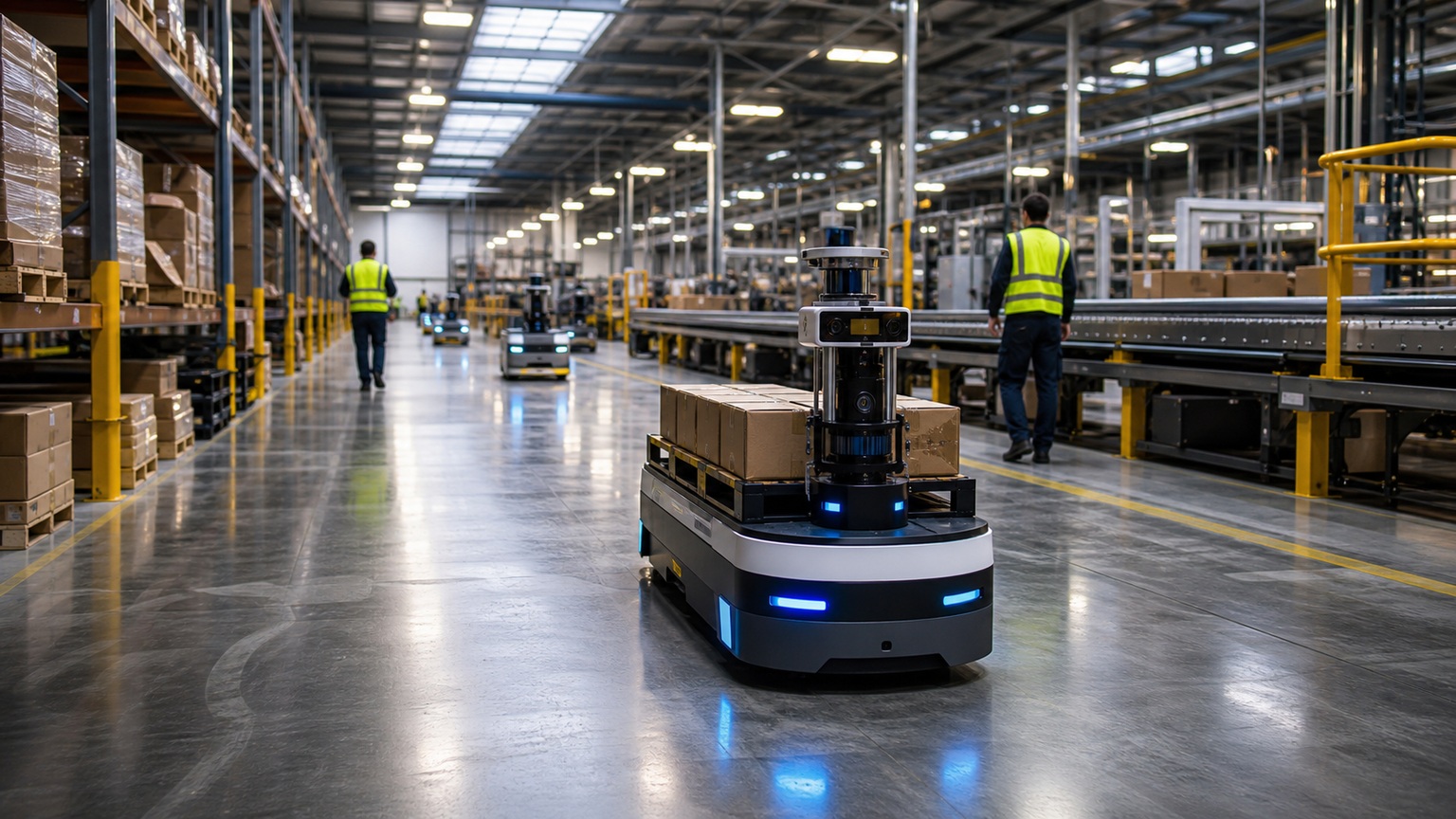
Some robots operate using preexisting maps created before deployment. For example, warehouse robots may use detailed digital maps of storage facilities.
However, many autonomous robots must create maps while exploring unknown environments. This capability is especially important for search-and-rescue robots, planetary rovers, and autonomous vehicles operating in changing conditions.
Modern robots use sensor data to construct digital representations of their surroundings. Lidar scans, camera images, radar measurements, and depth information are combined to generate highly detailed maps.
These maps often include walls, obstacles, pathways, doors, furniture, equipment, and other important environmental features. As robots continue exploring, they constantly update these maps to reflect new information and environmental changes.
Accurate mapping provides the foundation for intelligent route planning and safe navigation.
SLAM: Simultaneous Localization and Mapping
One of the most important breakthroughs in robotics navigation is a technology known as Simultaneous Localization and Mapping, commonly abbreviated as SLAM.
SLAM solves two interconnected problems at the same time. First, the robot must determine its location. Second, it must create a map of an unknown environment.
At first glance, these tasks seem impossible. To know its location, a robot needs a map. To create a map, the robot must know its location. SLAM addresses this challenge by continuously estimating both simultaneously.
As the robot moves, it collects sensor data and identifies environmental features. Advanced algorithms analyze these observations to estimate position while gradually building a map. Each new observation helps improve both localization accuracy and map quality.
SLAM has become a cornerstone technology in autonomous robotics. It enables robotic vacuum cleaners to navigate homes, warehouse robots to operate efficiently, and autonomous vehicles to understand complex surroundings.
Without SLAM, many of today’s most advanced autonomous systems would not be possible.
Path Planning: Choosing the Best Route
Once a robot knows where it is and understands its environment, it must determine how to reach its destination. This process is called path planning.
Path planning involves calculating an optimal route from the robot’s current position to a desired goal. The chosen path must balance efficiency, safety, energy consumption, and environmental constraints.
Robots use sophisticated algorithms to evaluate potential routes. These algorithms consider factors such as distance, obstacle locations, terrain characteristics, traffic conditions, and operational priorities.
In a warehouse, a robot may choose the shortest path to retrieve inventory. In a hospital, a delivery robot may prioritize routes that avoid crowded hallways. A self-driving vehicle may select routes based on traffic patterns and road conditions.
Path planning is not a one-time calculation. Autonomous robots continuously reevaluate their routes as new information becomes available. If an obstacle appears or conditions change, the robot can generate a new path almost instantly.
This adaptability allows robots to function effectively in dynamic real-world environments.
Obstacle Detection and Avoidance
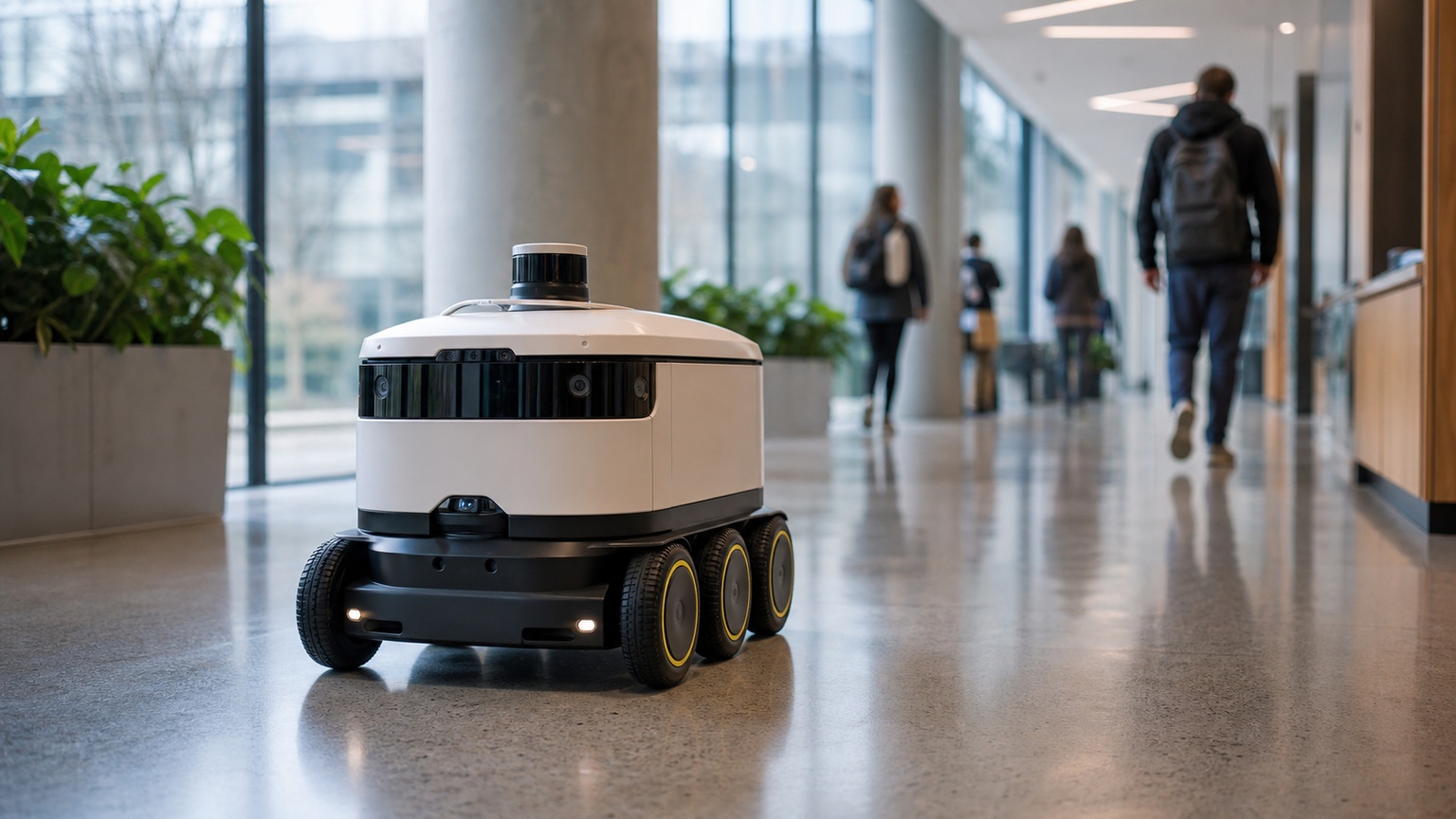
Real-world environments are rarely predictable. People move unexpectedly, objects get relocated, and conditions constantly change. Autonomous robots must therefore be capable of detecting and avoiding obstacles in real time.
Obstacle detection begins with sensor data collection. Cameras, lidar, radar, and ultrasonic sensors continuously monitor the surrounding environment.
Artificial intelligence and computer vision systems analyze this data to identify potential hazards. These may include people, vehicles, equipment, furniture, animals, or temporary obstructions.
Once an obstacle is detected, the robot evaluates potential responses. It may slow down, stop, change direction, or calculate an alternative route.
The challenge lies in making these decisions quickly and safely. In many applications, robots have only fractions of a second to react.
Advanced navigation systems prioritize collision avoidance above all other objectives. Safety mechanisms ensure robots maintain appropriate distances from obstacles and operate within acceptable risk levels.
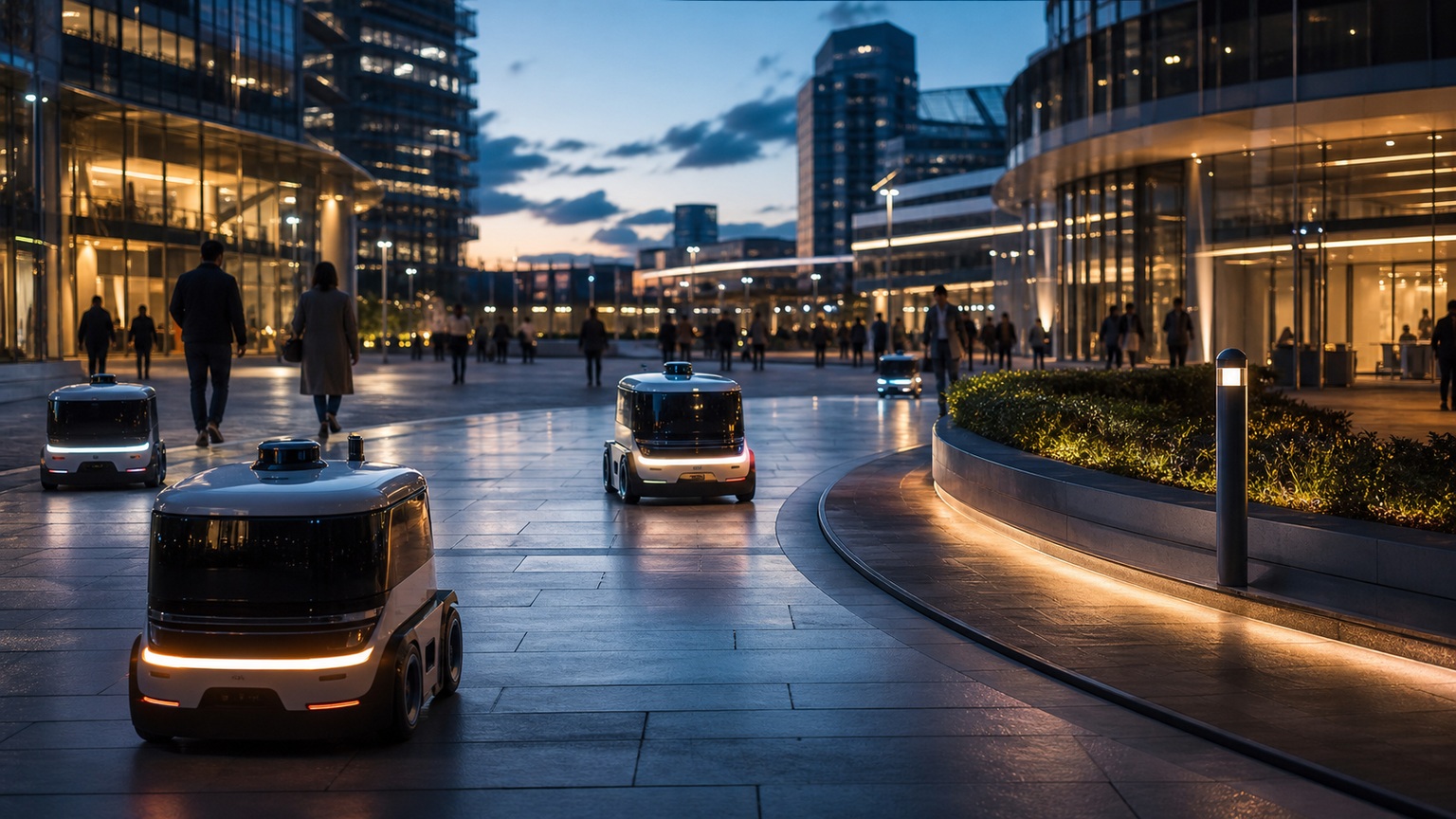
This capability allows autonomous systems to coexist safely alongside humans in shared environments.
Artificial Intelligence and Decision-Making
Artificial intelligence plays a critical role in autonomous navigation. While sensors provide information about the environment, AI helps robots interpret that information and make intelligent decisions.
Machine learning algorithms enable robots to recognize objects, classify environments, predict movement patterns, and adapt to changing conditions.
For example, a robot may learn to distinguish between a stationary wall and a moving person. It may predict where pedestrians are likely to walk or recognize areas that frequently experience congestion.
Deep learning models can process enormous amounts of visual and sensor data, identifying patterns that would be difficult to program manually.
AI also helps robots improve over time. By analyzing previous experiences and outcomes, autonomous systems can refine navigation strategies and become more efficient.
As artificial intelligence continues advancing, robots are becoming increasingly capable of handling complex and unpredictable scenarios with minimal human involvement.
Navigating Dynamic Environments
One of the most impressive aspects of autonomous robotics is the ability to operate in environments that constantly change.
Unlike controlled factory settings, real-world environments are filled with uncertainty. Doors open and close. People walk through hallways. Vehicles change lanes. Furniture gets moved.
Autonomous robots must continuously update their understanding of these changing conditions.
Dynamic navigation systems rely on constant sensor feedback. Instead of following rigid predefined paths, robots make real-time adjustments based on current observations.
Predictive algorithms further enhance performance by anticipating future events. If a pedestrian appears likely to cross the robot’s path, the robot can adjust its movement before a potential conflict occurs.
This ability to adapt makes autonomous robots practical for everyday applications and enables safe operation in complex environments.
Autonomous Navigation Across Industries
The impact of autonomous navigation extends across countless industries.
In logistics and warehousing, autonomous mobile robots transport inventory, fulfill orders, and optimize supply chain operations. Their ability to navigate independently increases efficiency while reducing labor-intensive tasks.
Healthcare facilities use autonomous robots to deliver medications, laboratory samples, and medical supplies. Navigation systems allow these robots to move safely through busy hospital corridors.
Agricultural robots navigate fields to monitor crops, plant seeds, apply treatments, and harvest produce. Autonomous navigation helps farmers improve productivity while reducing resource consumption.
Construction sites increasingly employ autonomous machines capable of surveying land, transporting materials, and performing repetitive tasks with minimal supervision.
Transportation represents one of the most visible applications. Self-driving vehicles rely on sophisticated navigation systems to operate safely in urban environments.
Even space exploration depends heavily on autonomous navigation. Robotic rovers exploring distant planets must make independent decisions because communication delays make real-time human control impractical.
Challenges Facing Autonomous Navigation
Despite remarkable progress, autonomous navigation still faces significant challenges.
Environmental complexity remains a major obstacle. Weather conditions, poor lighting, reflective surfaces, and crowded spaces can complicate sensor performance.
Computational demands also present difficulties. Processing enormous amounts of sensor data in real time requires powerful hardware and efficient algorithms.
Safety remains a top priority. Autonomous systems must achieve extremely high levels of reliability before widespread deployment in critical applications.
Cybersecurity represents another concern. Connected robotic systems must be protected from unauthorized access and malicious interference.
Researchers continue developing innovative solutions to address these challenges and improve navigation performance across diverse operating environments.
The Future of Autonomous Robot Navigation
The future of autonomous navigation promises extraordinary advancements. Emerging technologies in artificial intelligence, sensor design, edge computing, and machine learning are enabling robots to navigate with greater intelligence and precision than ever before.
Future robots will likely possess enhanced environmental awareness, improved predictive capabilities, and stronger collaboration skills. Swarms of robots may coordinate navigation collectively, sharing information and optimizing movements as a group.
Advances in sensor fusion will create richer and more accurate environmental models. Improved AI systems will allow robots to understand context, interpret human behavior, and make increasingly sophisticated decisions.
As these technologies mature, autonomous robots will become an integral part of daily life, working alongside humans in homes, workplaces, cities, and beyond.
Conclusion
Autonomous robot navigation represents one of the most impressive achievements in modern robotics. Through a combination of sensors, localization systems, mapping technologies, SLAM algorithms, path planning methods, obstacle avoidance capabilities, and artificial intelligence, robots can move through complex environments without human intervention.
What once seemed like science fiction has become reality. Autonomous robots now deliver packages, assist healthcare workers, manage warehouses, explore distant planets, and support countless industries around the world.
As technology continues to evolve, autonomous navigation will become even more accurate, intelligent, and adaptable. The robots of tomorrow will not simply follow instructions—they will perceive, reason, learn, and navigate independently in ways that continue to reshape the future of automation. Understanding how these remarkable systems work provides a glimpse into a world where intelligent machines and humans collaborate to achieve levels of productivity, safety, and innovation never before possible.