Service Robots Help People Outside Traditional Factory Cells
Service robots are robots designed to perform useful tasks for people in homes, hospitals, hotels, offices, stores, schools, airports, restaurants, public spaces, and other non-industrial environments. They may deliver items, clean floors, guide visitors, inspect spaces, assist staff, support healthcare work, or help with routine chores. Unlike many industrial robots, service robots often share spaces with people, so navigation, safety, usability, and clear behavior matter as much as mechanical performance.
A: It performs a useful task for people outside a traditional industrial cell.
A: No. Most successful designs match the task rather than a human body.
A: Homes, hospitals, hotels, offices, stores, campuses, restaurants, and public facilities.
A: Shared spaces change constantly and include people who are not trained operators.
A: Many service robots must move safely through human environments.
A: Through compartments, buttons, lights, sounds, apps, staff workflows, or simple signals.
A: Sensors, maps, images, and records need limits and protection.
A: They prioritize shared-space behavior and service workflows over fenced production speed.
A: A clear task, reliable operation, safe behavior, and easy human handoff.
A: What service does the robot provide, and who benefits from it?
Service Robots Are Task Helpers
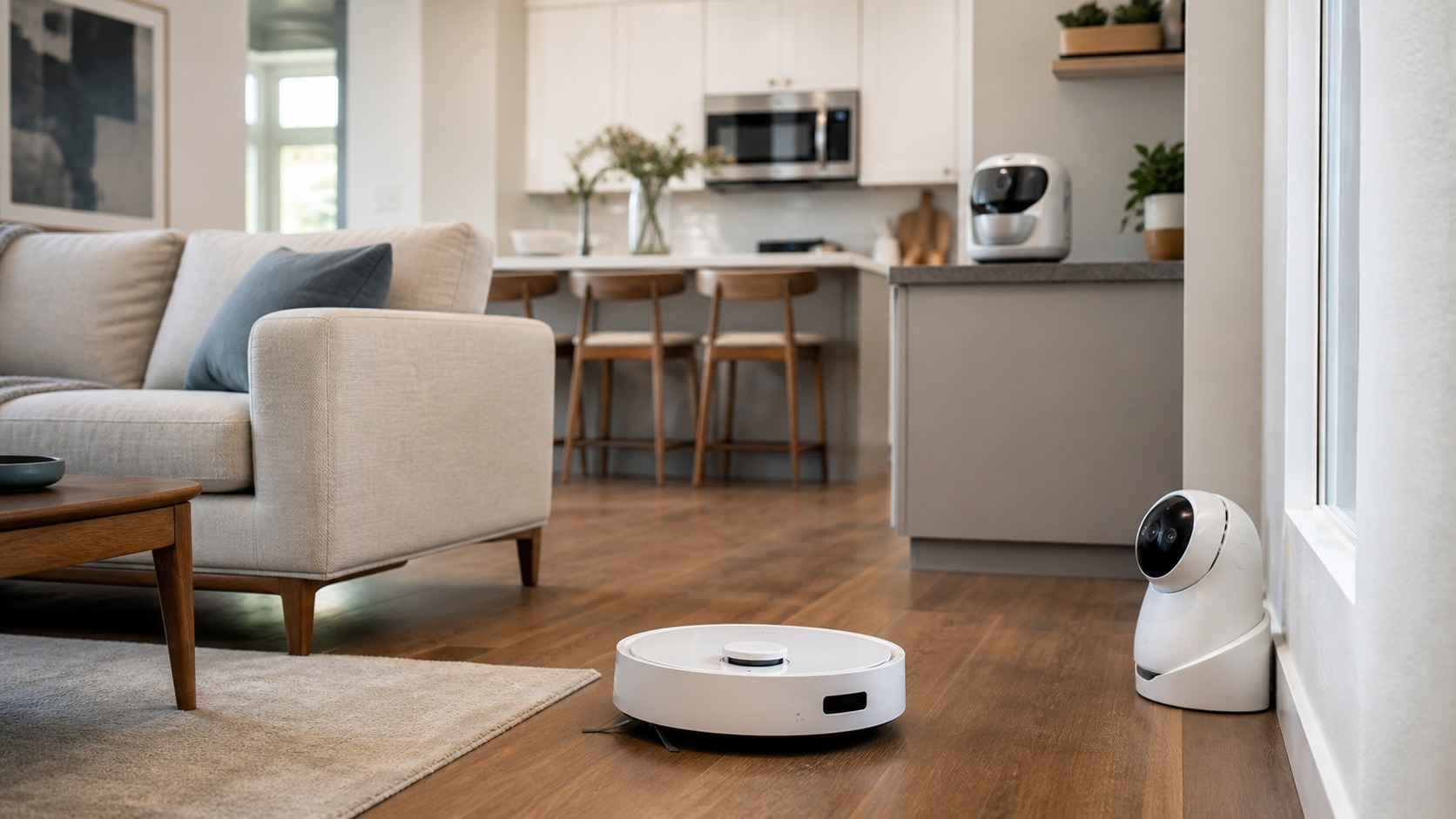
A service robot is best understood by the task it supports. A delivery robot moves supplies. A cleaning robot covers floors. A telepresence robot carries a video presence. A hospital robot may transport medication or linens. A reception robot may guide visitors or answer simple questions. That is why service robots often look modest compared with science fiction expectations. A reliable shelf, compartment, brush, dock, or navigation base can provide more value than a humanoid shape that does not improve the task.
The category is broad because service work is broad. Some service robots are mobile bases with shelves, while others are arms, carts, cleaning machines, inspection platforms, or assistive devices. Their shared purpose is helping people or organizations complete practical tasks.
Beginners should avoid imagining service robots only as humanoids. Most useful service robots are specialized shapes designed around a clear job. Wheels, shelves, brushes, compartments, sensors, docks, and simple interfaces often matter more than a human-like appearance.
That practical focus is what separates a service robot from a novelty. The robot needs to reduce work, improve consistency, support staff, or provide access in a way people actually value.
Service robots are also judged by how little disruption they create. A robot that blocks a hallway, confuses visitors, or needs constant rescue may technically perform a task while failing the service. The useful robot blends into the workflow enough that people feel helped rather than managed by the machine. The best designs make the service obvious: carry this, clean that, guide here, inspect there, or connect this person to that place. That service clarity also helps people forgive the robot's limits. Users are more patient when they know exactly what the robot is supposed to do and what remains a human responsibility.
Where Service Robots Work
Service robots appear in hospitals, hotels, offices, warehouses, restaurants, grocery stores, airports, campuses, labs, museums, homes, and outdoor delivery routes. Each environment creates different navigation, safety, cleaning, privacy, and reliability needs. The same robot design may need changes from one site to another. Floor surfaces, elevators, door widths, staff routines, privacy rules, and visitor behavior all shape whether the service feels smooth.
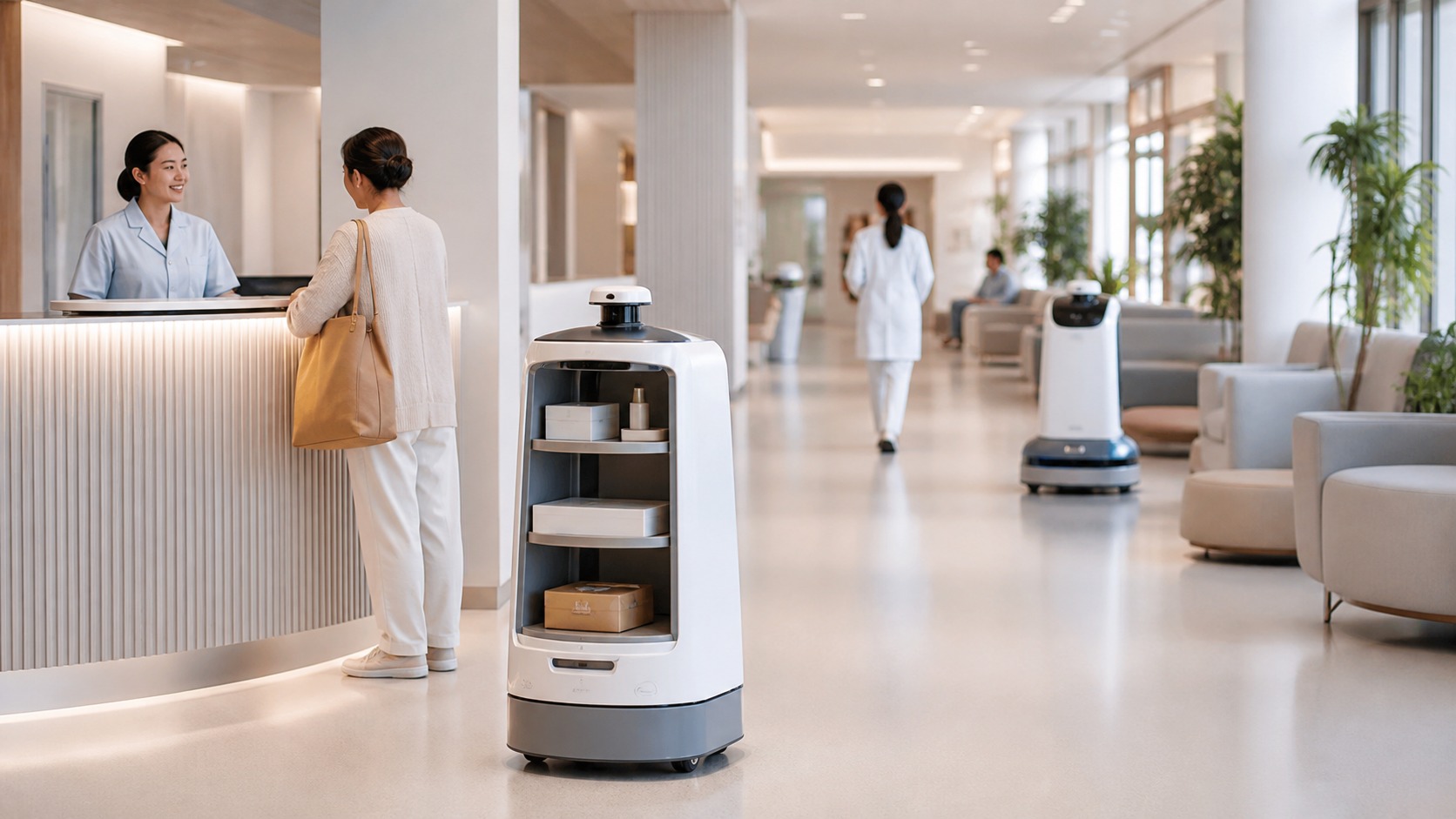
A hospital delivery robot needs quiet operation, secure compartments, elevator integration, and predictable behavior near patients. A retail cleaning robot needs obstacle detection, floor coverage, and simple staff handoff. The place shapes the robot.
Different places also create different expectations for behavior. A hotel robot should feel welcoming and easy to understand. A hospital robot should be quiet, reliable, and respectful of sensitive areas. An office robot should avoid interrupting people while still completing scheduled work. A robot that fits one hospital wing may need route changes, compartment changes, or different signals in another building. Site fit includes details that look small until deployment: flooring, noise, door hardware, cleaning schedules, network coverage, elevator access, and staff routines.
Navigation Is a Core Skill
Many service robots move through spaces designed for people rather than machines. They need to detect obstacles, plan routes, avoid collisions, pass through narrow areas, dock for charging, and recover when paths are blocked. Sensors such as lidar, cameras, bump sensors, depth sensors, wheel encoders, and IMUs help with this work. Route planning also has to respect social expectations. A robot should not cut people off, crowd a doorway, or block a desk while calculating its next step. Polite movement is part of service quality.
Navigation is not only finding a path on a map. The robot must behave politely around people, slow down when uncertain, avoid surprising movement, and handle changing layouts. A chair, cart, suitcase, spill, or crowd can change the route at any moment.
This is why service robots often move more cautiously than factory robots. Their environment is less controlled, and the people around them may not be trained operators.
A good service robot makes its intentions readable. Smooth stops, clear turns, gentle speeds, and predictable docking all help people feel comfortable sharing space.
Navigation also includes recovery. The robot needs a plan for blocked hallways, elevator delays, low battery, closed doors, and people standing in its path. A service robot that waits politely, reroutes, or asks for help at the right time feels much more capable than one that simply stops. People read motion socially, so hesitation, crowding, speed, and stopping distance all affect trust. A robot that moves safely but awkwardly can still create friction. A robot that moves predictably gives people time to understand and pass around it.
Human Interaction Shapes Success
Service robots often succeed or fail through ordinary human interaction. People need to understand what the robot is doing, when to move around it, how to request help, how to retrieve items, and who to call when something goes wrong. Interaction design also includes handoff moments. People need to know when the robot has arrived, which compartment to open, what action completes the task, and what to do if the robot cannot continue.
The interface may be as simple as lights, sounds, buttons, compartments, or a small app. The important part is clarity. A robot that performs the task but confuses staff can create more work than it removes.
Human interaction design can be simple and still effective. A clear light, a gentle sound, an obvious compartment, or a predictable pause may communicate enough. The goal is not to entertain people; the goal is to make the service easy to complete. When the handoff is clear, people do not need special training to benefit from the robot. The handoff is often the moment that decides whether the robot saves labor or creates labor. If people must guess what to do, the workflow is not finished.
Service Robots Need Reliable Operations
A useful service robot must handle charging, scheduling, cleaning, maintenance, software updates, maps, user permissions, and support. The robot is not finished when it completes a demo route. It must fit into daily operations. Good operations planning also defines success metrics. Time saved, missed deliveries, cleaning coverage, staff interruptions, and rescue events tell a clearer story than novelty alone.
Operations are especially important because service robots often support busy staff. A nurse, housekeeper, store associate, or facilities worker does not want to become a robot technician during a shift. The robot should recover gracefully and report problems clearly.
Reliability includes the boring details: wheels that survive floors, sensors that stay clean, docks that align well, compartments that latch, and logs that explain failures. These details turn a promising machine into a dependable helper.
Service robots also need clear boundaries. People should know what the robot does, what it does not do, and when human judgment remains necessary.
Operations also determine whether staff accept the robot after the first week. Someone must know how to clean it, charge it, update maps, respond to alerts, and decide when a task belongs to a person instead. A service robot needs ownership inside the organization. Without ownership, even a good robot can become an abandoned device parked beside a charger. Operational planning also includes fallback paths. Staff need to know what happens when the robot is charging, offline, blocked, or carrying the wrong item.
Safety and Privacy Are Central
Service robots work near people, so safety begins with speed, stopping behavior, obstacle detection, surface design, stability, and predictable motion. The robot should avoid collisions, prevent tipping, and reduce pinch or trip hazards. Security matters alongside privacy. A connected robot should have controlled accounts, update practices, network protections, and limits on who can view or command it.
Privacy also matters. Robots with cameras, microphones, maps, delivery records, or location data may operate in sensitive spaces. Good service design limits data collection, protects access, and explains what is being used.
Privacy decisions should match the environment. A robot in a lobby, hospital, hotel corridor, or school may pass through spaces where people do not expect detailed recording. Limiting unnecessary data helps the robot feel less intrusive. Clear privacy rules also help staff answer questions from visitors, patients, residents, or customers. Privacy choices should be documented in language normal users can understand, not hidden inside technical settings.
How Service Robots Differ From Industrial Robots
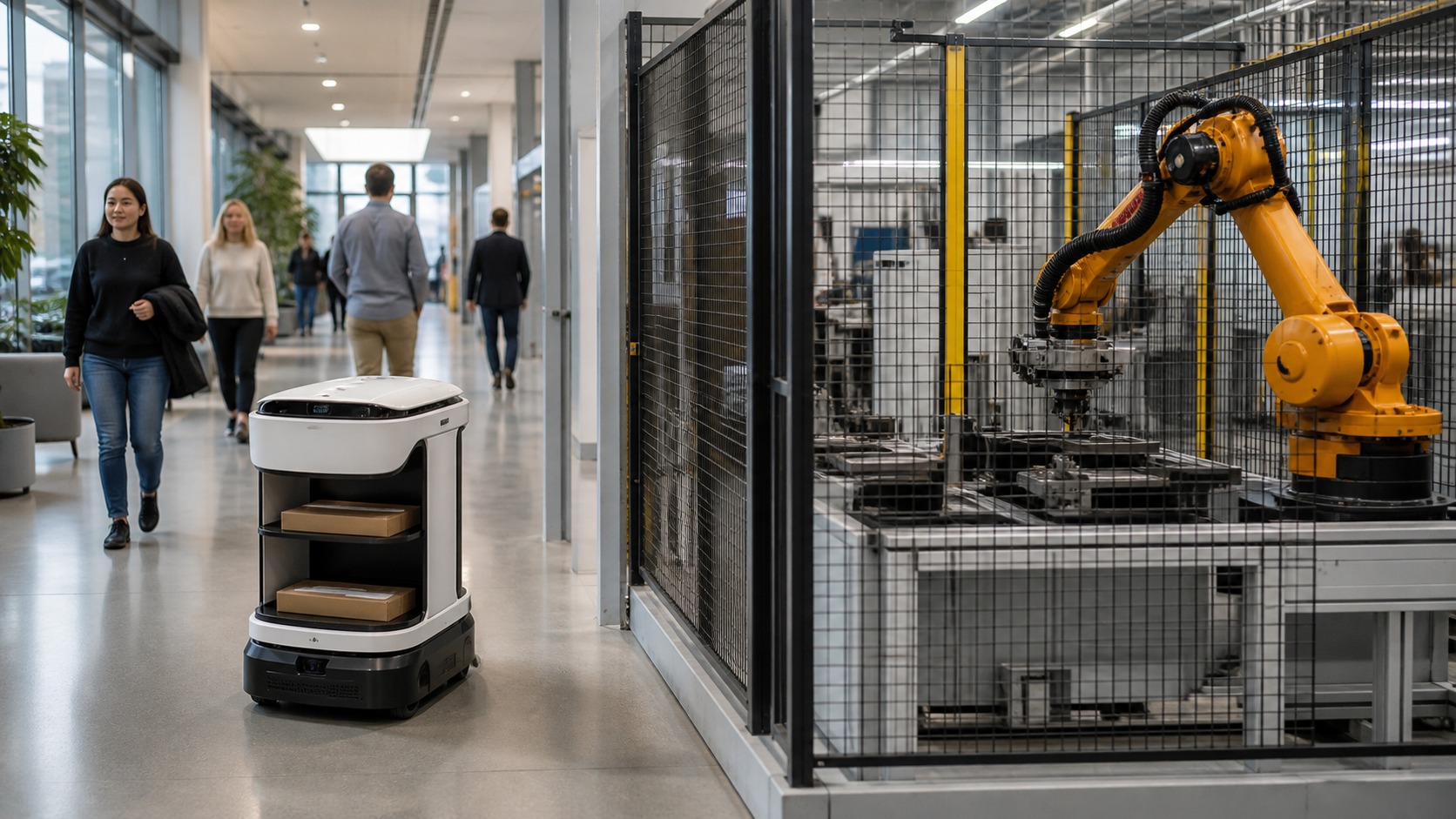
Industrial robots usually work in controlled cells around defined parts and trained personnel. Service robots often work in changing spaces around the general public, customers, staff, patients, guests, or residents. That calm failure behavior is part of the product. A robot that stops neatly at the side, signals its condition, and waits for the right help is easier to accept than one that creates uncertainty.
That difference changes priorities. Industrial robots often optimize speed, payload, precision, and process repeatability. Service robots emphasize navigation, human comfort, autonomy, access, uptime, easy support, and safe behavior in shared spaces.
There is overlap. A hospital delivery robot still needs industrial-grade reliability. A warehouse service robot may connect to operational systems. But the service category places human-facing behavior at the center.
A service robot must not only perform the job; it must fit socially and operationally into the place where the job happens.
The difference is visible during exceptions. Industrial robots often stop inside a controlled cell and wait for trained staff. Service robots may stop in a hallway, lobby, or home where untrained people are nearby. Their failure behavior needs to be understandable and calm. That difference makes communication and physical behavior part of the service robot's core engineering. Service robots live in social spaces, so their design has to account for attention, confusion, accessibility, and ordinary human impatience.
The Beginner's Takeaway
Service robots are practical helpers built for tasks around people. They deliver, clean, guide, inspect, assist, and support routine work in environments that change more than factory cells. This question keeps the category grounded. Service robots are not valuable because they are robots; they are valuable when the service improves.
The best service robots are not defined by looking futuristic. They are defined by clear tasks, safe navigation, simple interaction, reliable operations, and a real reduction in workload.
For beginners, the key question is simple: what useful service does the robot provide, and how smoothly does it fit into the human environment around that service? A useful service robot earns acceptance through ordinary reliability. When that reliability is present, the robot stops being a spectacle and starts becoming infrastructure. The service becomes normal, staff plan around it, and the robot earns its place through ordinary usefulness. That is the real test for a machine working around people in busy shared spaces where patience is limited and work continues every day reliably enough.