Domestic Robots Bring Automation Into Everyday Homes
Domestic robots are robots designed to help with household tasks, home monitoring, personal assistance, cleaning, lawn care, companionship, or routine convenience. The most familiar example is the robot vacuum, but the category also includes pool cleaners, lawn robots, home security robots, assistive devices, kitchen tools, window cleaners, and emerging household helpers. Domestic robots matter because they bring robotics into spaces that are personal, cluttered, and constantly changing.
A: It is designed for household tasks, home support, or personal living spaces.
A: Yes. It senses, navigates, acts, docks, and repeats a household task.
A: Usually not. They reduce routine effort but still need setup and maintenance.
A: Homes change constantly and contain people, pets, clutter, thresholds, and fragile objects.
A: Task fit, home layout, privacy settings, noise, support, and maintenance effort.
A: Good designs include obstacle detection, stable motion, protected mechanisms, and clear stopping behavior.
A: Maps, cameras, audio, accounts, and cloud storage deserve careful review.
A: Narrow repeated tasks such as vacuuming, mowing, pool cleaning, and simple monitoring.
A: Homes require broad judgment, dexterity, and exception handling that remain very hard.
A: Domestic robots work best when they solve one real household problem reliably.
Domestic Robots Are Home Task Machines
A domestic robot is built around a household job. It may clean floors, mow grass, monitor a room, carry small items, help with reminders, entertain children, support older adults, or automate a narrow kitchen task. The robot does not need to be humanoid to be domestic. The home also creates emotional expectations. People want technology that feels safe, quiet, predictable, and respectful of personal space. A domestic robot has to fit the household, not just complete a technical task.
Most domestic robots are specialized. A vacuum robot is shaped around floor coverage, dust handling, obstacle avoidance, and docking. A lawn robot is shaped around outdoor navigation, blades, boundary control, and weather exposure. A companion robot is shaped around interaction and presence.
This specialization is practical. Homes contain furniture, rugs, thresholds, pets, toys, cords, stairs, lighting changes, and family routines. A focused robot has a better chance of handling one job well than pretending to do everything.
Beginners should judge domestic robots by the chore they reduce, the setup they require, and the trouble they avoid creating. A home robot succeeds when daily life feels easier, not when the machine looks impressive.
Domestic robots also have to respect personal routines. A vacuum that runs during a meeting, a mower that starts during outdoor play, or a security robot that sends too many alerts can become annoying even when it works technically. Home robots need automation that feels adjustable and considerate. That is why domestic robot design includes sound, docking location, cleaning steps, alerts, and appearance alongside sensors and motors. A domestic robot also competes with the simplest alternative: doing the chore manually. The robot has to save enough time or effort to justify its cost, space, and maintenance.
Robot Vacuums Made the Category Familiar
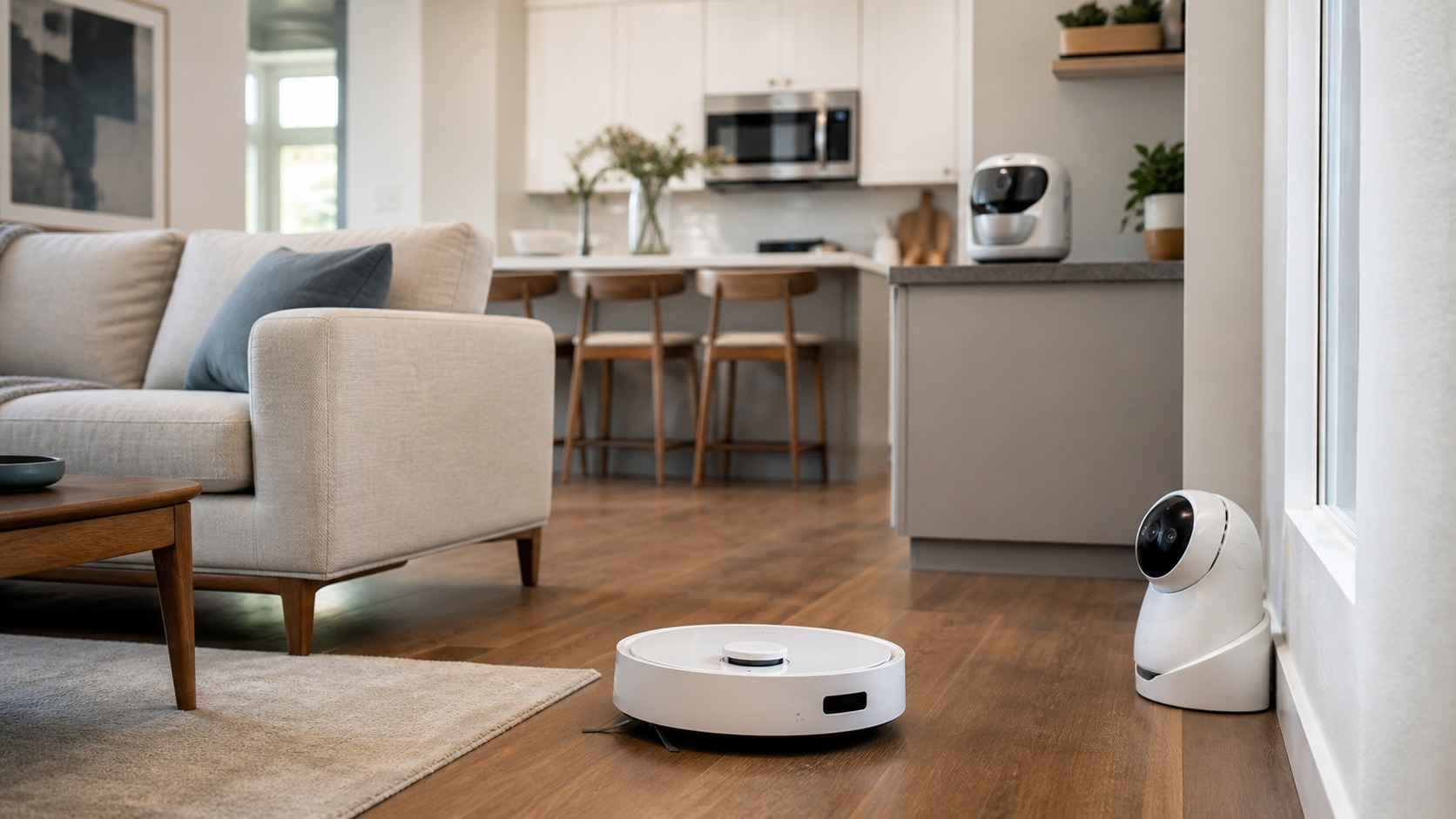
Robot vacuums are the best-known domestic robots because they solve a frequent household task with a compact machine. They navigate rooms, avoid many obstacles, collect dust, return to docks, and often map cleaning zones. This practical partnership is part of the category. The robot automates repeated work, while the household adjusts small habits that help the robot succeed.
Their limits are just as instructive as their strengths. They may struggle with cords, small objects, certain rugs, pet messes, stairs, or cluttered floors. The home still needs preparation and occasional human judgment.
Robot vacuums also taught consumers a realistic lesson about autonomy. The robot can handle routine floor coverage, but the home still affects the result. Picking up cords, clearing small objects, maintaining brushes, and choosing dock placement all change performance. This partnership does not make the robot less real; it makes the automation realistic for a lived-in space. Vacuum robots also show how maps and schedules can make a narrow robot feel more capable. The robot is not generally intelligent, but it can organize one repeated job around rooms and routines.
Outdoor and Utility Robots Extend the Idea
Domestic robots are not limited to indoor floors. Robotic lawn mowers, pool cleaners, gutter devices, window cleaners, and outdoor security robots all apply automation to home maintenance. These robots face weather, dirt, uneven surfaces, sunlight, water, and outdoor safety issues. Outdoor and utility robots also need clear boundaries around people, pets, and property. A mower or pool cleaner may be automated, but the household still needs safe setup and supervision rules.
Outdoor robots often need more rugged hardware than indoor robots. A lawn robot must handle grass, slopes, moisture, boundaries, charging, and blade safety. A pool robot must survive water, chemicals, debris, and retrieval.
These machines show how much the environment shapes the robot. The domestic label does not mean simple; it means the robot works in a household context.
The best utility robots reduce chores without demanding constant attention. If setup and rescue take more time than the chore, the benefit fades quickly.
Outdoor robots add safety questions that indoor robots may not face. Blades, water, slopes, sunlight, weather sealing, and boundary control all require careful design. A household robot may be small, but it still interacts with real hazards. Good setup should make these rules visible enough that everyone in the household understands the safe operating area. For outdoor robots, installation quality matters. Boundary setup, dock placement, slopes, drainage, obstacles, and seasonal changes can decide whether the system feels helpful or fussy.
Smart-Home Connections Add Convenience
Domestic robots increasingly connect with phones, voice assistants, schedules, cameras, lights, locks, and other smart-home systems. These connections can make robots easier to schedule, monitor, and coordinate with household routines. The best smart-home connection is often a simple one. Scheduling, do-not-disturb windows, maintenance alerts, and clear maps usually matter more than flashy features.
Integration is useful when it reduces friction. A vacuum that avoids cleaning during dinner, a lawn robot that pauses during rain, or a security robot that alerts the homeowner about an unusual event can feel practical.
Smart-home features should be judged by whether they reduce effort. A phone notification, map, schedule, or voice command is useful when it helps the household manage the robot. Extra controls become clutter when they make a simple chore feel more complicated. A simple, dependable routine usually beats a complicated feature that nobody in the home wants to manage. Smart-home integration also creates dependency. If an app, account, or cloud service becomes unreliable, the household should still have a simple way to control the robot.
Homes Are Hard Robot Environments
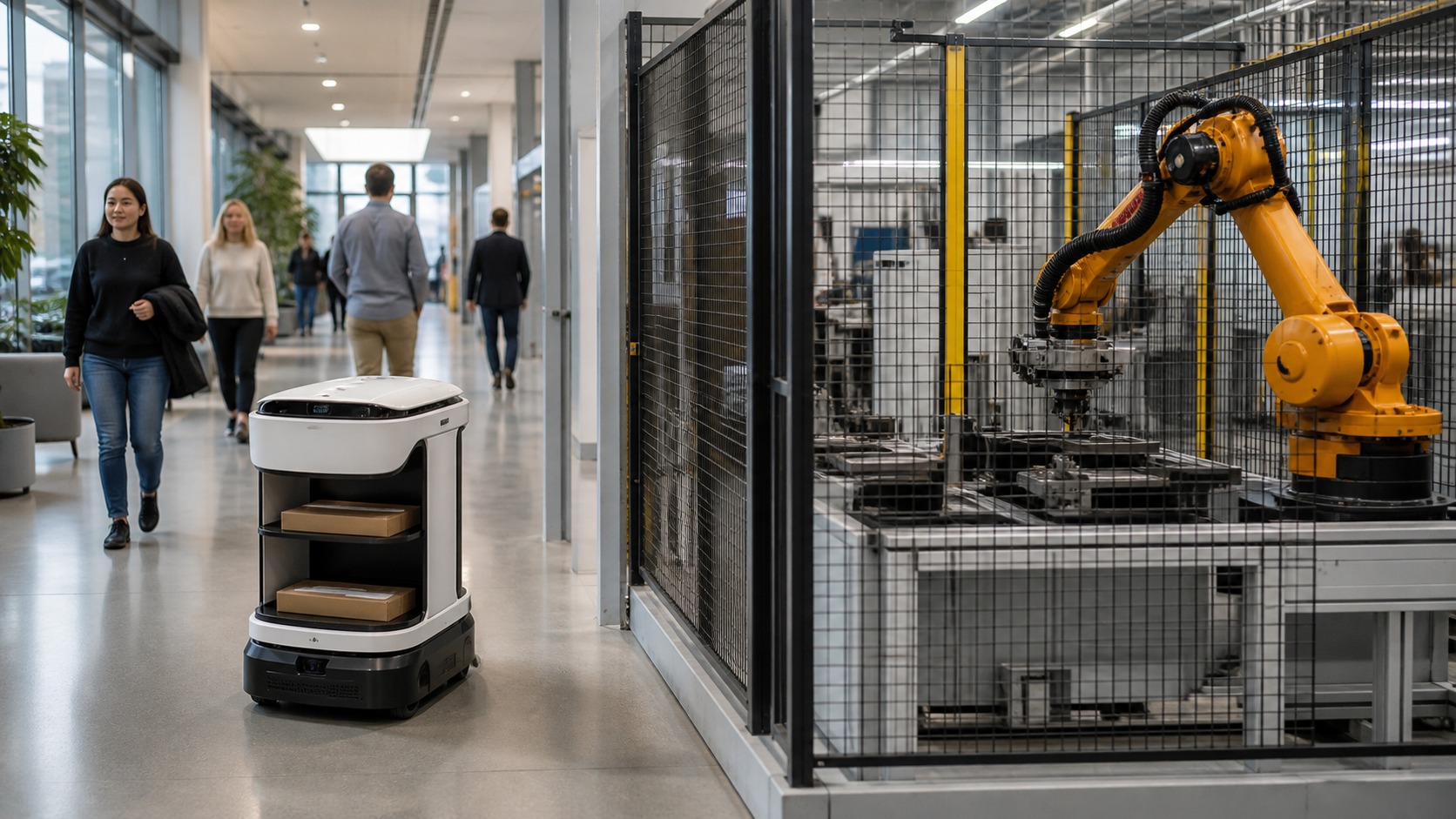
Homes are difficult for robots because they are inconsistent. Furniture moves, shoes appear in hallways, pets cross paths, children leave toys out, lighting changes, and people expect the robot to stay out of the way. A factory cell is designed for a robot; a home is designed for people. This is especially true because homes are full of sentimental or fragile objects. A domestic robot has to avoid creating new chores, damage, or anxiety while trying to remove old chores.
This means domestic robots need tolerant navigation and clear failure behavior. A good home robot should stop safely, ask for help when stuck, avoid damaging belongings, and resume without demanding expert troubleshooting.
The robot also needs to be physically acceptable. Noise, size, smell, cleaning effort, charging location, and appearance all affect whether people keep using it.
Domestic robotics is therefore as much about habits as hardware. The robot must fit into how people already live.
Home robots also need to be easy to forgive. People are more patient with a robot that stops safely, explains the problem clearly, and resumes after simple help. They are less patient with a machine that fails silently or makes a bigger mess. Trust grows when the robot fails gently and when recovery takes seconds rather than a troubleshooting session. A good domestic robot protects the home first and completes the task second. Scratched furniture, tangled cords, frightened pets, or messy failures defeat the point of convenience.
Privacy and Security Matter at Home
Domestic robots may collect maps, images, audio, schedules, cleaning history, location data, or interaction records. Because the home is private, these data choices matter. People need to know what is captured, where it is stored, and who can access it. These questions are not only for technical users. Anyone bringing a robot into a home deserves plain-language controls over sensing, storage, accounts, and sharing.
Security also matters because connected robots sit on home networks. Good domestic robot design includes software updates, account protection, local controls where possible, and clear privacy settings.
Privacy settings deserve attention before the robot becomes part of the household routine. A buyer should know whether maps leave the home, whether cameras are active, how accounts are protected, and how long data is stored. The more intimate the space, the more important those controls become. A household should also understand who receives alerts, who can view maps, and what happens when the robot is sold, reset, or replaced.
What Domestic Robots Do Well Today
Today's domestic robots are strongest at narrow, repeated tasks. Vacuuming, mopping, pool cleaning, lawn mowing, simple monitoring, and scheduled routines are good examples. These jobs have enough structure for automation and enough repetition to be worth help. That is why realistic expectations matter. A narrow domestic robot can be excellent at its narrow job and still be a poor substitute for broad human judgment.
They are weaker at broad household judgment. Picking up varied clutter, cooking complete meals, folding laundry reliably, caring for children, or managing unpredictable chores remains much harder than marketing sometimes suggests.
That gap does not make domestic robots unimportant. It means the category advances through specific useful jobs rather than one universal home helper.
The most valuable domestic robots usually disappear into routine. They run, dock, alert when necessary, and quietly reduce the amount of work people notice.
Current domestic robots are therefore useful in focused ways. They are not general household workers, but they can remove some repetitive friction from daily life. That narrower success is still meaningful when the task repeats every day or every week. A realistic product description should explain both the useful routine and the situations that still need a person. Domestic robotics will keep expanding, but progress is likely to arrive as better narrow helpers before it arrives as one all-purpose household machine.
What to Know Before Buying or Building
Domestic robots should be evaluated by task fit, home layout, maintenance, privacy, noise, replacement parts, support, and realistic expectations. A robot that works beautifully in one home may struggle in another because the floors, furniture, pets, thresholds, or routines are different. When the match is good, a domestic robot becomes part of the background rhythm of the home rather than a project that constantly asks for attention.
For buyers, the best question is not whether the robot is advanced. The best question is whether it handles a specific household job with less effort than the old method.
For builders, domestic robots teach a humbling lesson: homes are full of edge cases. Good design keeps the robot simple enough to be trusted, safe enough to share space, and useful enough to earn its dock. That quiet usefulness is the real promise of domestic robotics. The best domestic robot is easy to live with: useful on ordinary days, understandable on bad days, and quiet enough to remain welcome. It should reduce household friction without turning the home into a maintenance project. The more personal the space, the more that balance matters for long-term trust and everyday use in the household over time, especially with family routines, shared expectations, pets, guests, changing schedules, busy weekdays, and weekends.