What Are Robot Grippers? A Complete Beginner’s Guide
Robots have become an essential part of modern life. They assemble cars, package products, sort warehouse inventory, assist surgeons, harvest crops, and even help explore distant planets. While robotic systems come in many shapes and sizes, they all share one common challenge: interacting with the physical world. For a robot to perform useful work, it must be able to grasp, hold, move, and manipulate objects. This is where robot grippers come into play. Often referred to as the “hands” of a robotic system, grippers are the tools that allow robots to physically engage with their environment and complete real-world tasks. Without a gripper, even the most advanced robotic arm would have limited functionality. It could move from one position to another, but it would be unable to pick up a product, assemble a component, sort a package, or handle a delicate object. The gripper is what transforms robotic movement into meaningful action. Over the years, robot grippers have evolved from simple mechanical devices into sophisticated systems capable of adapting to different shapes, textures, weights, and materials. Today’s grippers often incorporate sensors, artificial intelligence, computer vision, and advanced materials that allow robots to perform increasingly complex tasks with remarkable precision. For beginners entering the world of robotics, understanding robot grippers is an important first step. This guide explains what robot grippers are, how they work, the different types available, and why they play such a critical role in modern automation.
A: Robot grippers are tools that allow robots to grab, hold, move, and release objects.
A: Sometimes, but many grippers are simpler tools designed for specific industrial tasks.
A: A two-finger parallel-jaw gripper is one of the most common and beginner-friendly types.
A: It uses suction cups to pick up items that can form a stable seal.
A: Soft grippers are used for delicate, irregular, flexible, or easily damaged objects.
A: Match the gripper to the object’s shape, weight, surface, fragility, speed, and work environment.
A: Not always, but sensors improve reliability by detecting contact, pressure, slip, and object presence.
A: Weak force, poor alignment, low friction, bad suction, fast motion, or the wrong gripper type can cause drops.
A: Not reliably. Most robots need task-specific grippers or tool-changing systems for different items.
A: Robot grippers turn robot movement into useful work by physically connecting the robot to the object.
What Is a Robot Gripper?
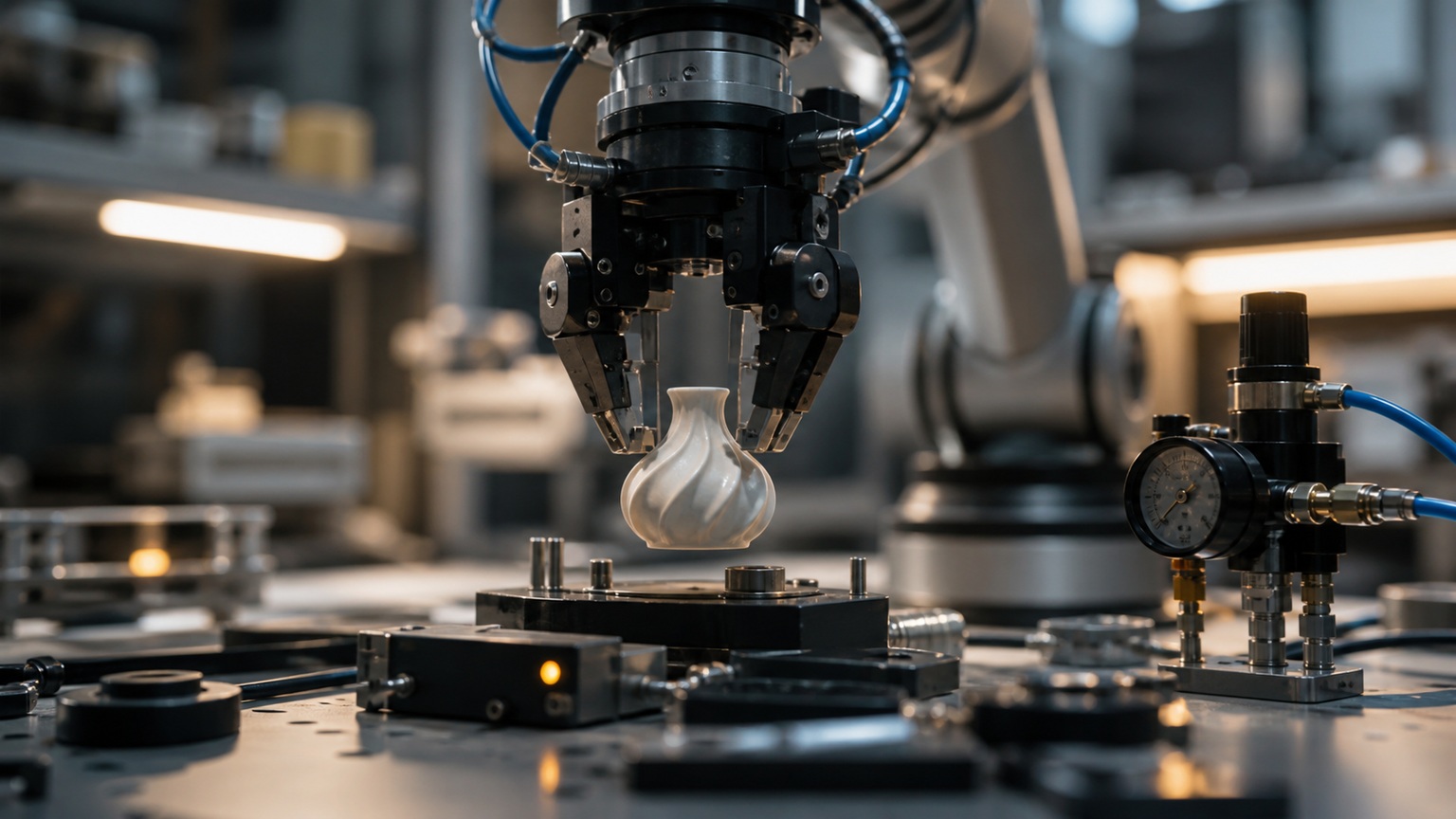
A robot gripper is a specialized device attached to the end of a robotic arm that allows the robot to grasp and manipulate objects.
In robotics, the gripper is often referred to as an end effector because it is the component that directly interacts with the environment. While the robotic arm provides movement and positioning, the gripper performs the actual task of holding, moving, or releasing an object.
Much like a human hand, a robot gripper acts as the point of contact between the machine and the outside world.
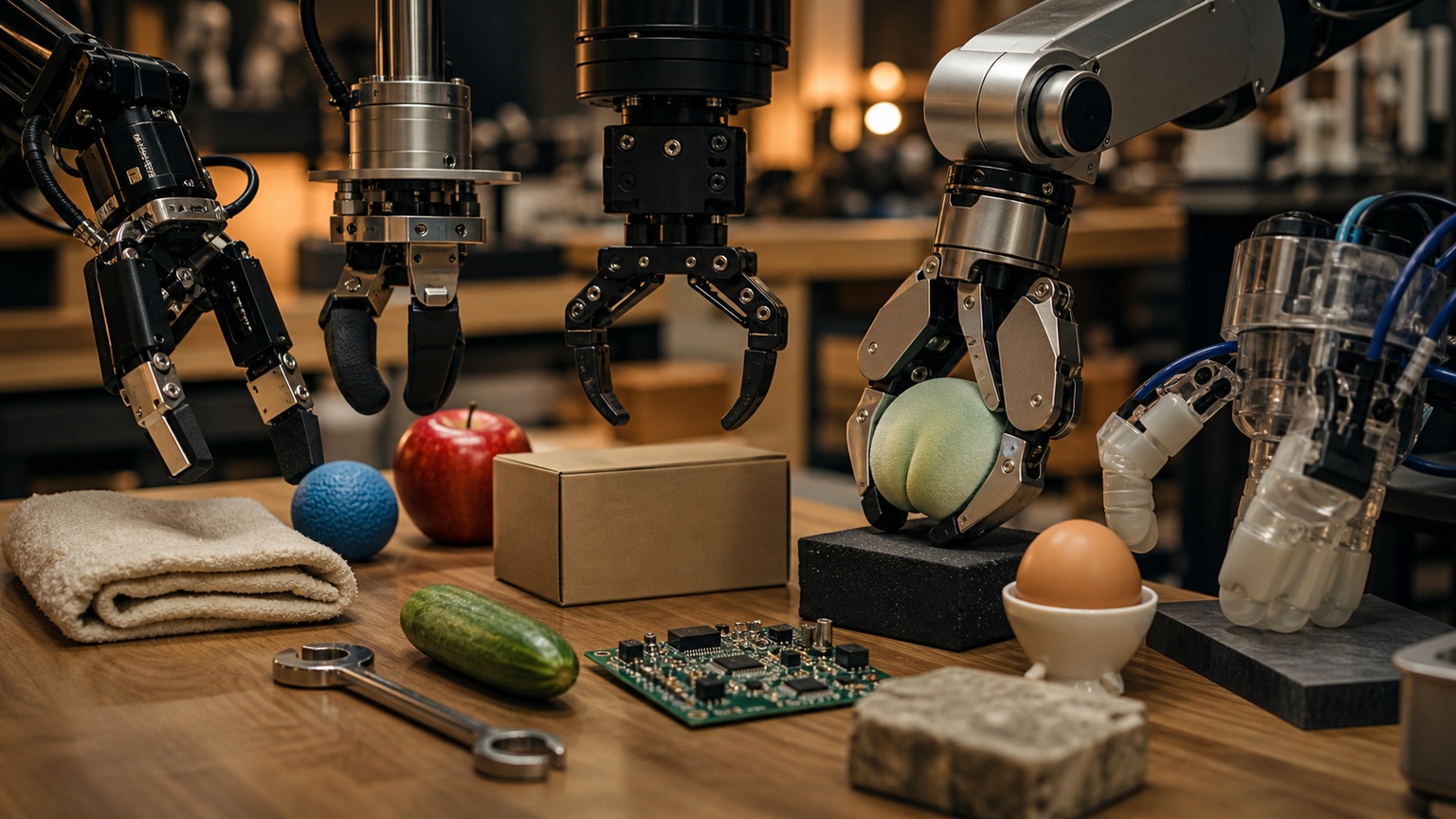
Different tasks require different gripping solutions. A factory robot lifting heavy metal parts requires a very different gripper than a robot harvesting strawberries or assisting in a surgical procedure.
Because robots are used in such a wide variety of applications, grippers come in many different forms and designs.
Despite these differences, all robot grippers share the same fundamental goal: securely and efficiently handling objects.
Why Robot Grippers Are Important
Robot grippers are among the most important components in any robotic system because they determine what the robot can physically accomplish.
Imagine a robot working in a warehouse. It must identify products, pick them up, move them, and place them into containers. Without a suitable gripper, none of these tasks would be possible.
Similarly, a manufacturing robot assembling electronic devices requires an extremely precise gripper capable of handling delicate components without causing damage.
The effectiveness of a robotic system often depends on the capabilities of its gripper. Even the most advanced artificial intelligence and navigation systems become far less useful if the robot cannot interact effectively with physical objects.
As automation expands into new industries, the demand for versatile and intelligent gripping systems continues to grow.
The Basic Function of a Robot Gripper
At its simplest level, a robot gripper performs three primary actions.
First, it approaches an object. The robotic arm positions the gripper so it can interact with the target item.
Second, it grasps the object. The gripper applies force in a controlled manner to secure the item without damaging it.
Third, it manipulates and releases the object. The robot moves the item to its desired location and then releases it safely.
While these actions may seem straightforward, performing them reliably requires sophisticated engineering.
The robot must determine where the object is located, how much force to apply, how to compensate for variations in shape and size, and how to maintain stability throughout the movement.
Modern grippers accomplish these tasks using advanced mechanical designs, sensors, and software systems.
The Evolution of Robot Grippers
The earliest industrial robots used relatively simple gripping systems designed for repetitive manufacturing tasks.
These grippers often consisted of two rigid jaws that opened and closed to grasp standardized objects. Because production environments were highly controlled, these basic designs worked effectively.
However, as robots began moving into more dynamic environments, limitations became apparent.
Warehouses, hospitals, farms, and retail operations require robots to handle a wide variety of objects. Shapes, sizes, materials, and conditions can change constantly.
To meet these challenges, engineers developed more advanced gripping technologies capable of adapting to different situations.
Today’s robot grippers are smarter, more flexible, and significantly more capable than their predecessors.
The field continues evolving rapidly as researchers seek to create robotic systems with human-like dexterity.
Main Components of a Robot Gripper
Although gripper designs vary considerably, most systems include several key components.
The gripping mechanism is the part that physically contacts the object. Depending on the design, this may consist of fingers, suction cups, magnetic surfaces, or flexible materials.
Actuators provide the force required for gripping. These devices convert energy into movement and allow the gripper to open, close, or adjust its position.
Sensors collect information about pressure, force, object position, and contact conditions. This feedback helps the robot make intelligent decisions during manipulation tasks.
Control systems coordinate movements and process sensor data to ensure accurate operation.
Together, these components allow grippers to perform a wide range of handling tasks across different industries.
Mechanical Grippers
Mechanical grippers are the most common type of robot gripper.
These systems use fingers or jaws that physically close around an object to create a secure grip.
Two-finger grippers are particularly popular because of their simplicity and effectiveness. Three-finger and multi-finger designs provide additional flexibility when handling irregularly shaped items.
Mechanical grippers are widely used in manufacturing, packaging, assembly, and material handling operations.
Their popularity stems from their reliability, durability, and ability to perform repetitive tasks with high precision.
While newer gripping technologies continue to emerge, mechanical grippers remain a cornerstone of industrial automation.
Pneumatic Grippers
Pneumatic grippers use compressed air to generate movement and gripping force.
When air pressure is applied, cylinders or pistons cause the gripping mechanism to open or close.
Pneumatic systems are known for their speed, simplicity, and reliability. They are particularly effective in high-speed manufacturing environments where repetitive operations occur continuously.
Many factories already use compressed air systems, making pneumatic grippers a practical and cost-effective solution.
Although they may offer less precise control than some alternatives, pneumatic grippers continue to be widely used across industrial applications.
Electric Grippers
Electric grippers use motors and electronic control systems to perform gripping operations.
One of their greatest advantages is precision.
Electric grippers allow fine control over force, speed, and positioning. This makes them ideal for applications involving delicate or variable objects.
Unlike pneumatic systems, electric grippers can easily adjust grip strength based on object characteristics.
This capability improves flexibility and enables robots to perform a broader range of tasks.
As automation becomes more sophisticated, electric grippers are becoming increasingly popular in advanced robotic systems.
Vacuum Grippers
Vacuum grippers use suction to grasp objects.
Rather than closing fingers around an item, these systems create negative pressure that causes suction cups to adhere to surfaces.
Vacuum grippers are commonly used for handling flat or lightweight objects such as boxes, glass panels, sheet metal, and packaged products.
They are particularly valuable in warehousing, logistics, packaging, and electronics manufacturing.
One major advantage of vacuum grippers is speed. They can quickly attach to and release objects without requiring precise finger positioning.
This efficiency makes them ideal for many automated material handling operations.
Magnetic Grippers
Magnetic grippers use magnetic force to lift and manipulate metal objects.
These systems may use permanent magnets or electromagnets depending on the application.
Magnetic grippers are widely used in industries that handle steel, iron, and other ferrous materials.
Automotive manufacturing, metal fabrication, and heavy industrial operations often rely on magnetic gripping solutions.
Their simplicity and effectiveness make them valuable tools for specialized applications involving metallic components.
Soft Robotic Grippers
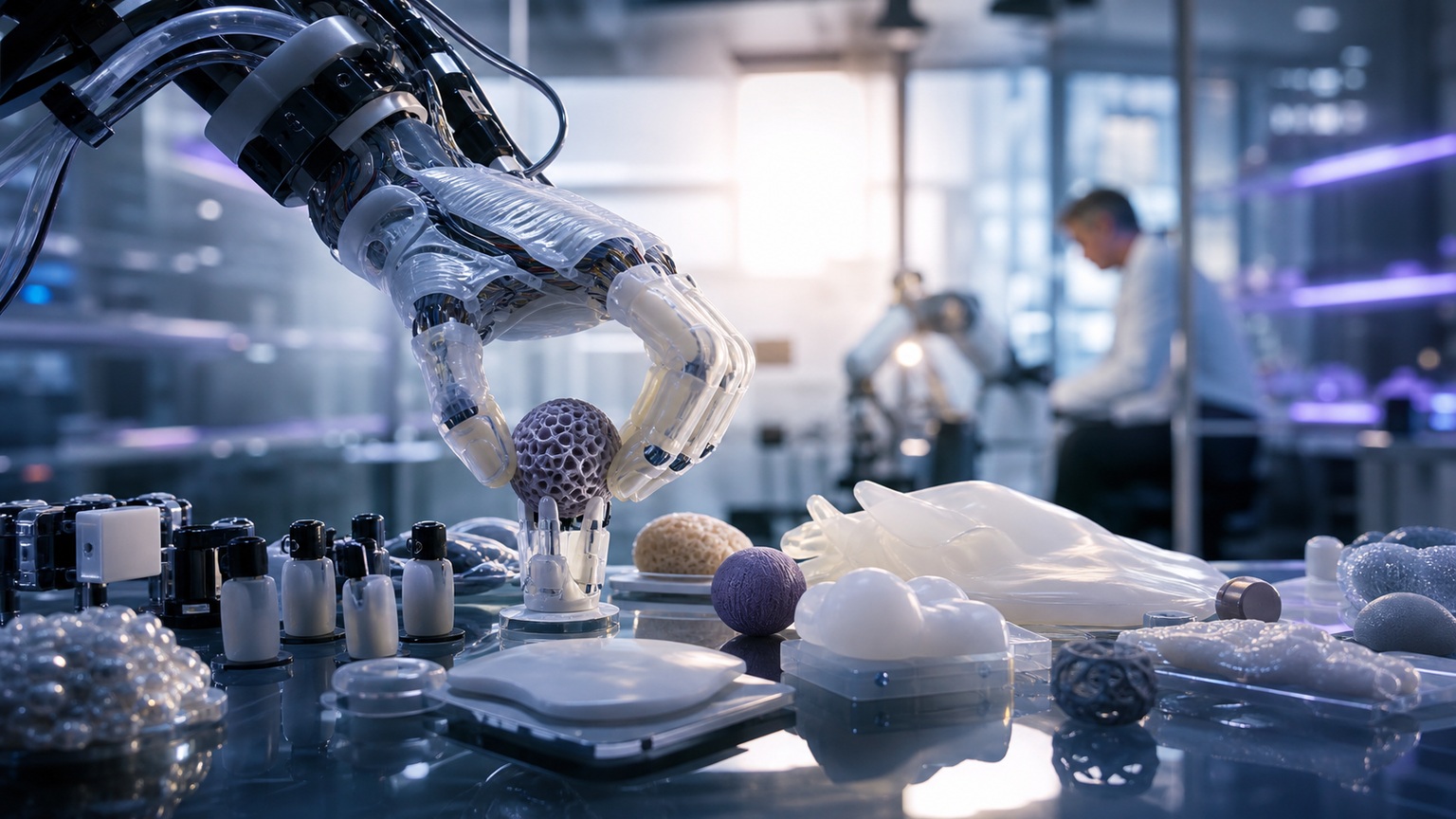
Soft robotic grippers represent one of the most exciting developments in modern robotics.
Unlike traditional rigid grippers, soft grippers are made from flexible materials that conform to object surfaces.
This adaptability allows them to handle delicate and irregularly shaped items safely.
Soft robotic grippers are increasingly used in agriculture, food processing, healthcare, and consumer goods industries.
For example, a soft gripper can gently pick ripe fruit without bruising it or handle fragile baked goods without causing damage.
Inspired by biological systems such as human hands and octopus tentacles, soft robotics is helping robots achieve new levels of versatility and safety.
Adaptive Grippers
Adaptive grippers automatically adjust their grip based on object characteristics.
Instead of requiring precise positioning and predefined object dimensions, these systems accommodate variation naturally.
Adaptive grippers are particularly useful in environments where robots encounter many different products.
Warehouse automation provides a perfect example. A robot may need to handle books, electronics, clothing, toys, and household items within the same shift.
Adaptive gripping technologies enable robots to perform these tasks without constant reconfiguration.
This flexibility reduces operational complexity and improves efficiency.
How Sensors Improve Robot Grippers
Modern robot grippers often include advanced sensor technologies that dramatically improve performance.
Force sensors measure gripping pressure and help prevent objects from being crushed or dropped.
Position sensors track finger movements and ensure accurate grasping.
Tactile sensors provide information about surface texture, contact points, and pressure distribution.
Vision systems help robots identify objects, determine orientations, and select optimal grasp points.
These sensors give robots greater awareness of their environment and enable more intelligent decision-making.
As sensor technology continues advancing, robotic gripping capabilities are becoming increasingly sophisticated.
Artificial Intelligence and Smart Gripping
Artificial intelligence is playing a major role in the evolution of robot grippers.
Traditional systems relied on predefined instructions and structured environments. AI-enabled robots can analyze unfamiliar situations and adapt dynamically.
Machine learning algorithms allow robots to improve through experience.
By studying thousands of grasping attempts, robotic systems learn which strategies work best for different objects.
Computer vision powered by deep learning enables robots to recognize products and identify optimal gripping locations automatically.
These technologies are helping robots handle increasingly complex tasks that were once considered too difficult for automation.
Applications of Robot Grippers
Robot grippers are used in virtually every major industry.
Manufacturing facilities rely on them for assembly, packaging, welding, inspection, and material handling.
Warehouses use robotic grippers to pick products, organize inventory, and fulfill orders.
Agricultural robots harvest crops and handle produce.
Healthcare organizations use robotic grippers in surgical systems, laboratory automation, and rehabilitation equipment.
Electronics manufacturers depend on highly precise grippers for handling sensitive components.
Retail, food processing, aerospace, construction, and logistics industries also benefit from advanced gripping technologies.
Their versatility makes robot grippers essential tools for modern automation.
Challenges in Robotic Gripping
Despite significant progress, robotic gripping remains a complex engineering challenge.
Objects vary enormously in size, shape, weight, texture, and fragility.
Soft materials such as fabrics and flexible packaging can be particularly difficult to handle.
Environmental conditions such as dust, moisture, and lighting variations may also affect performance.
Creating grippers that combine strength, adaptability, speed, and precision remains an ongoing area of research.
Engineers continue developing innovative solutions to address these challenges and expand robotic capabilities.
The Future of Robot Grippers
The future of robot grippers is incredibly promising.
Advancements in artificial intelligence, soft robotics, tactile sensing, machine learning, and advanced materials are driving rapid innovation.
Future grippers may closely resemble human hands in terms of dexterity and adaptability.
Robots will become increasingly capable of handling unfamiliar objects, adjusting grip force automatically, and learning from experience.
Cloud robotics may allow robots to share knowledge across global networks, accelerating learning and improving performance.
As automation expands into new industries, advanced gripping technologies will become even more important.
Conclusion
Robot grippers are the essential tools that allow robots to interact with the physical world. Acting as the robotic equivalent of a human hand, they enable machines to grasp, hold, move, manipulate, and release objects with precision and control.
From traditional mechanical grippers to advanced soft robotic systems powered by artificial intelligence, gripping technology has evolved dramatically. Modern grippers are helping robots perform increasingly sophisticated tasks across manufacturing, logistics, healthcare, agriculture, retail, and countless other industries.
Understanding what robot grippers are and how they work provides valuable insight into one of the most important areas of robotics. As technology continues advancing, grippers will become more intelligent, adaptable, and capable of handling the complexities of real-world environments.
The future of robotics depends not only on movement and computation but also on interaction. Robot grippers are at the center of that interaction, making them one of the most critical and fascinating technologies in modern automation. Their continued development will play a major role in shaping the next generation of intelligent machines and connected robotic systems.