How Robot Grippers Work: Everything You Need to Know
When most people think about robots, they often imagine robotic arms assembling cars, warehouse robots moving products, or futuristic humanoid machines performing complex tasks. While these robots may differ dramatically in appearance and function, they all rely on one critical component to interact with the physical world: the gripper. A robot gripper serves as the robot’s hand. It is the device responsible for grasping, holding, moving, manipulating, and releasing objects. Without a gripper, even the most advanced robotic arm would struggle to perform useful work. Whether lifting heavy industrial parts, sorting packages in a fulfillment center, handling delicate medical instruments, or harvesting fresh produce, robot grippers make physical interaction possible. Over the years, robotic gripping technology has evolved from simple mechanical claws into sophisticated systems equipped with sensors, artificial intelligence, soft materials, and adaptive control mechanisms. Modern grippers can handle objects of different sizes, shapes, weights, and textures with remarkable precision. As automation continues expanding across manufacturing, logistics, healthcare, agriculture, and countless other industries, understanding how robot grippers work has become increasingly important. These devices are often the difference between a robot that can perform a single repetitive task and one that can operate flexibly in dynamic environments. This comprehensive guide explores how robot grippers work, the various types available, their key components, and the technologies shaping the future of robotic manipulation.
A: It is the tool on the end of a robot arm that grabs, holds, moves, or releases objects.
A: They use fingers, suction, magnets, soft materials, or force control to secure objects.
A: Parallel-jaw grippers are very common because they are simple, reliable, and versatile.
A: Use vacuum gripping for items with surfaces that can form a strong suction seal.
A: They are useful for delicate, irregular, fragile, or easily damaged objects.
A: Sensors help detect contact, pressure, slip, object presence, and grip stability.
A: Grip force is the pressure applied to hold an object securely without damaging it.
A: Grips fail because of poor contact, low friction, bad alignment, weak suction, wrong force, or object movement.
A: Not perfectly. Most robots need a gripper chosen for the object, task, speed, and environment.
A: Robot gripping depends on matching the tool, object, sensor feedback, and motion strategy.
What Is a Robot Gripper?
A robot gripper is an end-of-arm tool attached to the end of a robotic arm. Its primary function is to grasp and manipulate objects during automated processes.
Much like a human hand, a robot gripper acts as the interface between the robot and the physical world. While robotic arms provide movement and positioning, grippers provide interaction.
When a robot picks up a box, assembles a component, transfers a product, or sorts inventory, the gripper performs the actual grasping action.
Different applications require different gripping solutions. Some grippers are designed to handle heavy industrial parts, while others specialize in delicate materials such as food products, medical devices, or electronic components.
The design of a robot gripper often determines the range of tasks a robot can perform effectively.
Why Robot Grippers Are So Important
The ability to grasp objects may seem straightforward, but it represents one of the most complex challenges in robotics.
Humans perform countless gripping tasks every day without conscious thought. We pick up cups, open doors, type on keyboards, tie shoelaces, and carry groceries. Each action requires adjustments in grip force, finger positioning, and object handling.
For robots, these seemingly simple tasks require sophisticated engineering.
Without effective grippers, robots would be unable to interact meaningfully with their environment. They could move around or perform calculations, but they could not manipulate physical objects.
This is why grippers are often considered one of the most important components in robotic systems.
Advances in gripping technology are expanding the capabilities of robots and enabling new forms of automation across industries.
The Basic Working Principle of Robot Grippers
At the most fundamental level, robot grippers work by applying force to an object in a controlled manner.
The gripper moves into position around or against an object. It then applies sufficient force to secure the object without causing damage. Once the object is held securely, the robotic arm moves it to a desired location.
After completing the task, the gripper releases the object by reducing or removing the gripping force.
While this basic principle sounds simple, achieving reliable gripping requires careful coordination between mechanical systems, sensors, control software, and actuators.
The robot must determine where the object is located, how to approach it, how much force to apply, and when to release it.
Modern grippers accomplish these tasks using increasingly advanced technologies.
Main Components of a Robot Gripper
Although gripper designs vary widely, most systems include several core components.
The gripping mechanism is the part that physically contacts the object. This may consist of fingers, pads, suction cups, flexible surfaces, or specialized tools.
Actuators generate movement and gripping force. Depending on the design, actuators may use electric motors, pneumatic systems, hydraulic systems, or other technologies.
Sensors provide feedback about object position, grip strength, pressure, contact points, and environmental conditions.
Control systems coordinate movements and process sensor information to ensure successful grasping operations.
Mounting interfaces connect the gripper to the robotic arm and allow communication between components.
Together, these elements enable precise and reliable object manipulation.
Mechanical Grippers: The Most Common Type
Mechanical grippers are among the most widely used robotic gripping solutions.
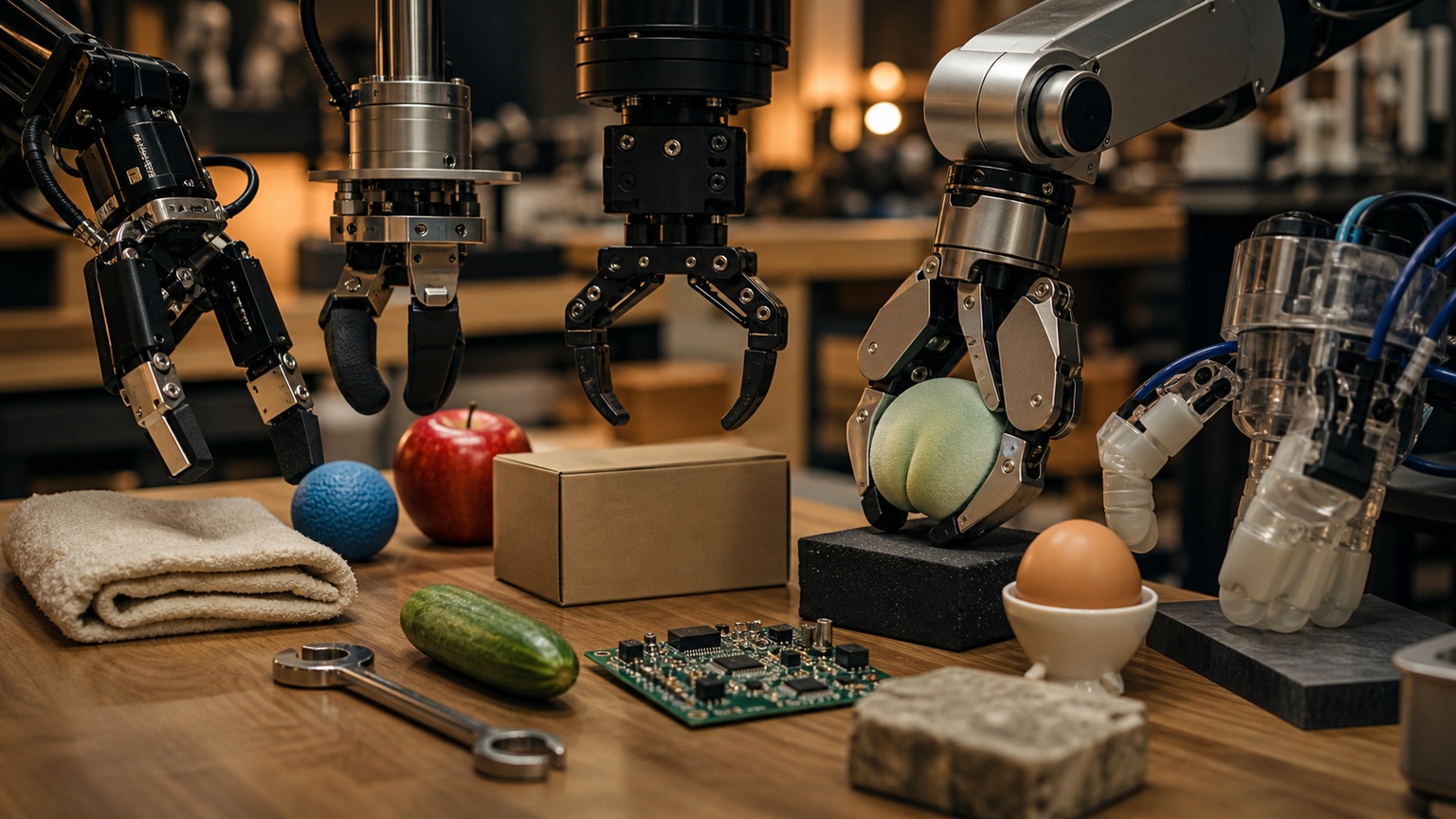
These grippers typically use two or more fingers that close around an object. The fingers apply pressure from opposite sides, creating a secure grip through friction and force.
Two-finger grippers are common in industrial environments because of their simplicity, reliability, and effectiveness. Three-finger and multi-finger designs provide additional flexibility for handling irregularly shaped objects.
Mechanical grippers are used extensively in manufacturing, packaging, assembly, machine tending, and material handling applications.
Their popularity stems from their durability, relatively low cost, and ability to perform repetitive tasks with high accuracy.
Despite newer technologies entering the market, mechanical grippers remain essential components of industrial automation systems.
Pneumatic Grippers
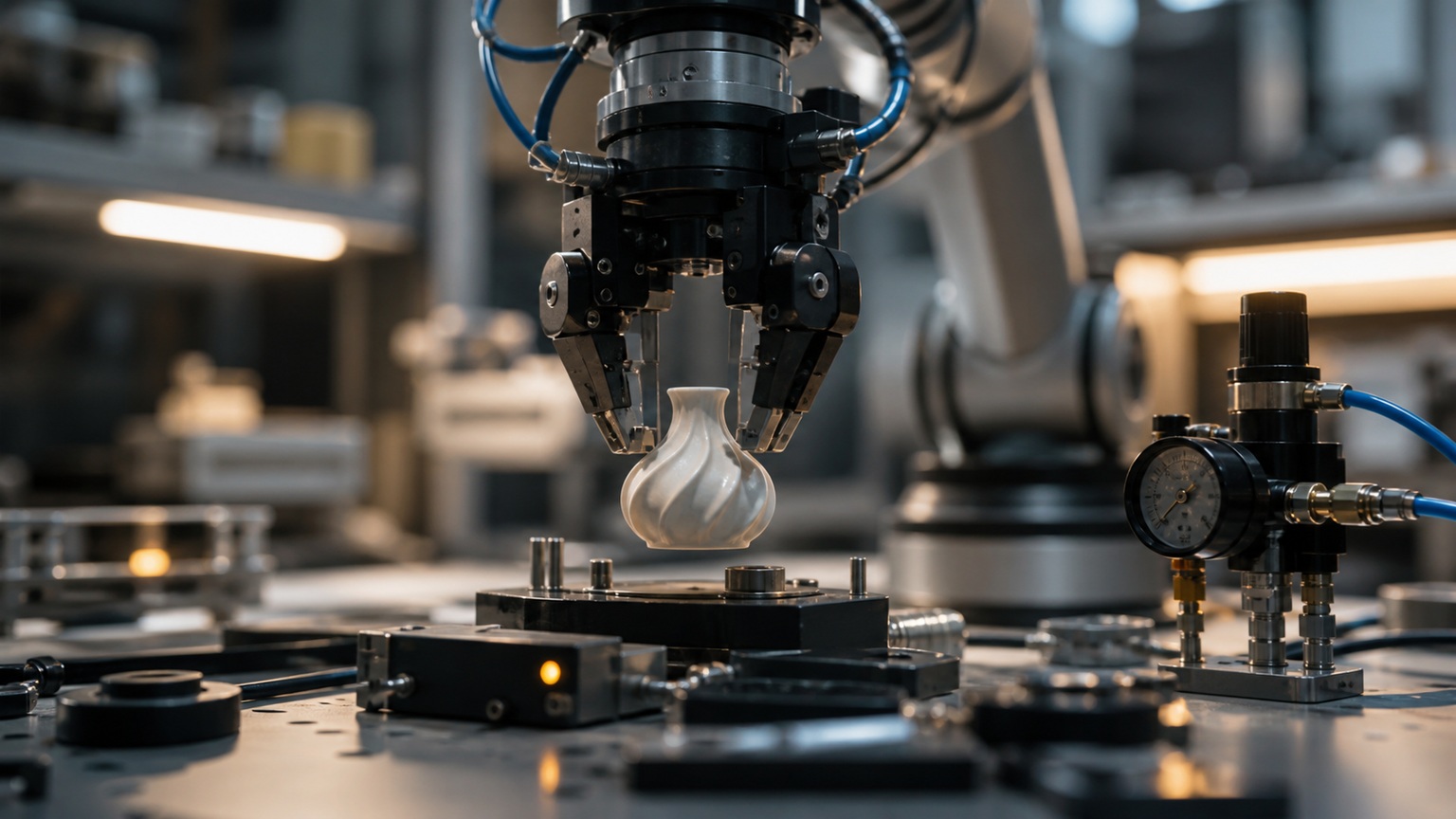
Pneumatic grippers use compressed air to generate movement and gripping force.
When air pressure is applied, pneumatic cylinders open or close the gripping mechanism. These systems are widely used because they offer fast operation, simple control, and reliable performance.
Pneumatic grippers are particularly common in manufacturing environments where compressed air infrastructure already exists.
Their ability to perform rapid repetitive motions makes them ideal for assembly lines, packaging systems, and high-speed production processes.
However, pneumatic systems may provide less precise force control compared to some electric alternatives.
Even so, their affordability and efficiency continue to make them popular choices across many industries.
Electric Grippers
Electric grippers use motors and electronic control systems to generate gripping force.
Unlike pneumatic grippers, electric models allow highly precise control over position, speed, and force. This makes them particularly useful for delicate handling applications.
Electric grippers can adjust gripping pressure dynamically based on object characteristics.
For example, they may apply gentle force when handling fragile components and stronger force when lifting heavier items.
Because they offer advanced programmability and detailed feedback capabilities, electric grippers are increasingly popular in modern automation systems.
Their precision and flexibility make them well suited for collaborative robotics, electronics manufacturing, healthcare applications, and advanced assembly operations.
Hydraulic Grippers
Hydraulic grippers use pressurized fluid to generate powerful gripping forces.
These systems are typically used in heavy-duty applications involving large objects, substantial loads, or demanding environments.
Industries such as construction, mining, aerospace, and heavy manufacturing often rely on hydraulic gripping solutions.
Hydraulic systems provide exceptional strength and durability, making them ideal for handling large components and materials.
While they are generally less common than pneumatic and electric grippers, they remain indispensable in applications requiring maximum force output.
Vacuum Grippers
Vacuum grippers operate using suction rather than mechanical fingers.
These systems create negative pressure that allows suction cups to adhere to object surfaces. Once attached, the robot can lift and move the object.
Vacuum grippers are widely used in packaging, logistics, electronics manufacturing, and food processing.
They are particularly effective for handling flat, smooth, lightweight objects such as cardboard boxes, glass panels, metal sheets, and packaged goods.
One major advantage of vacuum grippers is their simplicity. They can grasp objects quickly without requiring precise finger positioning.
As e-commerce and automated fulfillment continue growing, vacuum gripping systems remain highly valuable.
Magnetic Grippers
Magnetic grippers use magnetic force to handle ferrous materials.
Permanent magnets or electromagnets allow robots to lift, transport, and position metal components efficiently.
These grippers are commonly used in automotive manufacturing, metal fabrication, welding operations, and industrial material handling.
Magnetic gripping systems offer fast operation and minimal mechanical complexity.
However, they are limited to materials that respond to magnetic fields.
Despite this limitation, they provide highly effective solutions for specialized industrial applications.
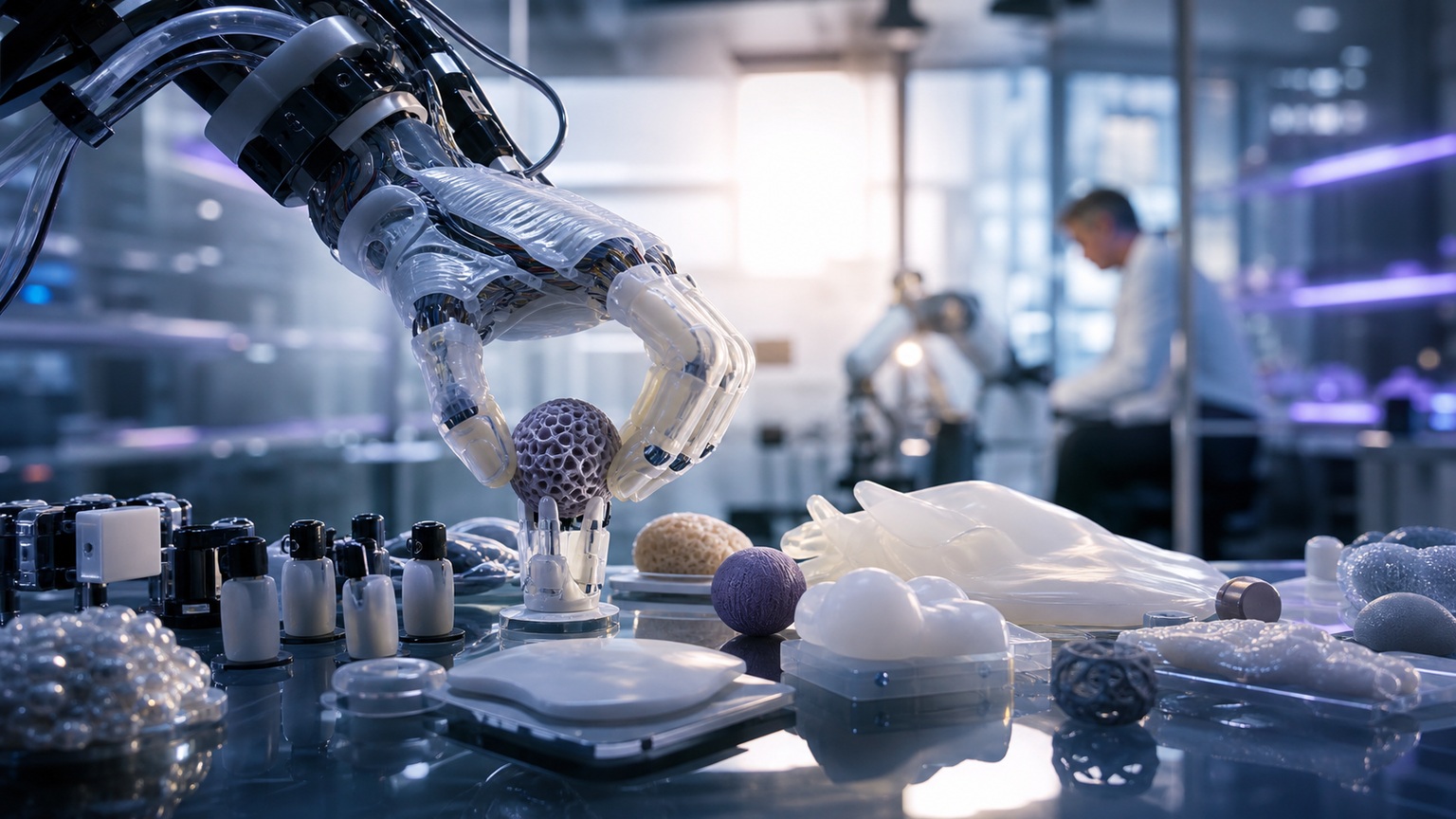
Soft Robotic Grippers
One of the most exciting developments in robotic gripping technology is the emergence of soft robotics.
Traditional grippers use rigid structures that may struggle with delicate or irregularly shaped objects. Soft robotic grippers use flexible materials that conform to object surfaces.
These systems often incorporate silicone, elastomers, flexible polymers, and bio-inspired designs.
Soft grippers distribute force evenly across contact areas, reducing the risk of damage.
They are especially useful in agriculture, food processing, healthcare, and consumer goods handling.
The ability to gently grasp fragile objects represents a major advancement in robotic manipulation capabilities.
Adaptive Grippers and Intelligent Handling
Adaptive grippers are designed to adjust automatically to different object shapes and sizes.
Instead of relying on fixed geometries, they use flexible mechanisms and intelligent control systems to accommodate variation.
This adaptability reduces the need for specialized tooling and allows robots to handle diverse product ranges.
Warehouse automation, logistics, and e-commerce fulfillment benefit greatly from adaptive gripping technologies.
Rather than requiring separate grippers for each product type, adaptive systems can manage many different items using a single solution.
This versatility improves efficiency and reduces operational complexity.
Sensors and Feedback Systems
Modern robot grippers increasingly rely on sensors to improve performance.
Force sensors measure gripping pressure and help prevent excessive force.
Position sensors track finger movements and ensure accurate object handling.
Tactile sensors detect contact points, pressure distribution, and surface characteristics.
Vision systems provide information about object location, orientation, and geometry.
These feedback systems allow robots to adjust actions dynamically and respond to changing conditions.
The addition of sensory awareness significantly enhances reliability and flexibility.
Artificial Intelligence and Smart Gripping
Artificial intelligence is transforming robotic gripping technology.
Traditional grippers followed predefined instructions based on known object characteristics. AI-enabled systems can analyze unfamiliar objects and determine appropriate grasping strategies automatically.
Machine learning algorithms improve performance through experience.
Robots can evaluate thousands of grasp attempts, identify successful patterns, and refine their techniques over time.
Computer vision and deep learning technologies enable robots to recognize objects and predict optimal grasp points.
These capabilities are helping robots handle increasingly complex tasks that were once considered impossible to automate.
Applications Across Industries
Robot grippers are used in virtually every industry where automation plays a role.
Manufacturing facilities rely on grippers for assembly, inspection, welding, and packaging operations.
Warehouses use robotic grippers to pick products, sort inventory, and fulfill customer orders.
Agricultural robots harvest fruits and vegetables using gentle gripping technologies.
Healthcare providers use robotic grippers in surgical systems, laboratory automation, and rehabilitation equipment.
Electronics manufacturers depend on precise gripping systems to handle sensitive components.
Even household service robots increasingly use advanced grippers to perform everyday tasks.
The versatility of modern gripping technology continues expanding its range of applications.
Challenges in Robotic Gripping
Despite remarkable progress, robotic gripping remains a challenging field.
Handling irregularly shaped objects can be difficult, particularly when object characteristics vary significantly.
Fragile materials require precise force control to avoid damage.
Environmental factors such as dust, moisture, temperature changes, and lighting conditions can affect performance.
Soft materials like fabric, cables, and flexible packaging continue presenting challenges for many robotic systems.
Researchers and engineers are actively developing new technologies to address these limitations and improve overall capability.
The Future of Robot Grippers
The future of robotic gripping technology is incredibly promising.
Advances in artificial intelligence, tactile sensing, soft robotics, advanced materials, and machine learning are creating increasingly capable systems.
Future grippers may closely resemble human hands in both dexterity and adaptability.
Robots will likely become better at handling unfamiliar objects, adjusting grip strategies dynamically, and learning from experience.
Cloud robotics may allow robots worldwide to share grasping knowledge and collectively improve performance.
Bio-inspired designs will continue influencing innovation, leading to more flexible and versatile manipulation systems.
As automation expands into new industries and environments, advanced gripping technologies will play a critical role in enabling the next generation of intelligent robots.
Conclusion
Robot grippers are the essential tools that allow robots to interact with the physical world. While robotic arms provide movement and positioning, grippers provide the ability to grasp, hold, manipulate, and release objects with precision and control.
From simple mechanical claws to sophisticated AI-powered adaptive systems, gripping technology has evolved dramatically over the years. Modern grippers incorporate advanced sensors, intelligent software, flexible materials, and innovative designs that enable robots to perform increasingly complex tasks across manufacturing, logistics, healthcare, agriculture, and many other industries.
Understanding how robot grippers work provides valuable insight into one of the most important aspects of robotics. As technology continues advancing, grippers will become more intelligent, adaptable, and capable of handling the diverse challenges of the real world. Their ongoing evolution will help unlock new opportunities for automation and bring robots closer than ever to achieving human-like manipulation capabilities.
The future of robotics depends not only on how robots move or think, but also on how effectively they can interact with the world around them. Robot grippers are at the center of that future, making them one of the most fascinating and important technologies in modern automation.