Medical Robots Support Care, Logistics, Therapy, and Clinical Work
Medical robots are robots used in healthcare settings to support patient care, clinical staff, hospital operations, therapy, diagnostics, rehabilitation, pharmacy work, laboratory processing, and assistive tasks. Some medical robots move supplies through hospitals. Others help patients practice motion, support clinicians during therapy, automate medication handling, disinfect rooms, or position imaging and treatment equipment. The category is broader than surgical robots, and it matters because healthcare depends on accuracy, safety, cleanliness, trust, and careful human oversight.
A: It includes logistics, therapy, pharmacy, labs, cleaning, imaging, surgery, and assistive care.
A: They usually support clinicians and staff rather than replacing professional judgment.
A: They reduce routine transport work and help supplies move through complex buildings.
A: They guide, assist, resist, or measure repeated therapeutic movement.
A: Healthcare robots must fit infection-control routines and tolerate regular disinfection.
A: Routes, access records, patient-related information, images, logs, and accounts.
A: Healthcare combines safety, privacy, hygiene, workflow, trust, and high stakes.
A: Clinicians, staff, patients, operations teams, and support teams all matter.
A: A clear clinical or operational task with measurable benefit.
A: Medical robots automate support tasks in service of care.
Medical Robots Cover More Than Surgery
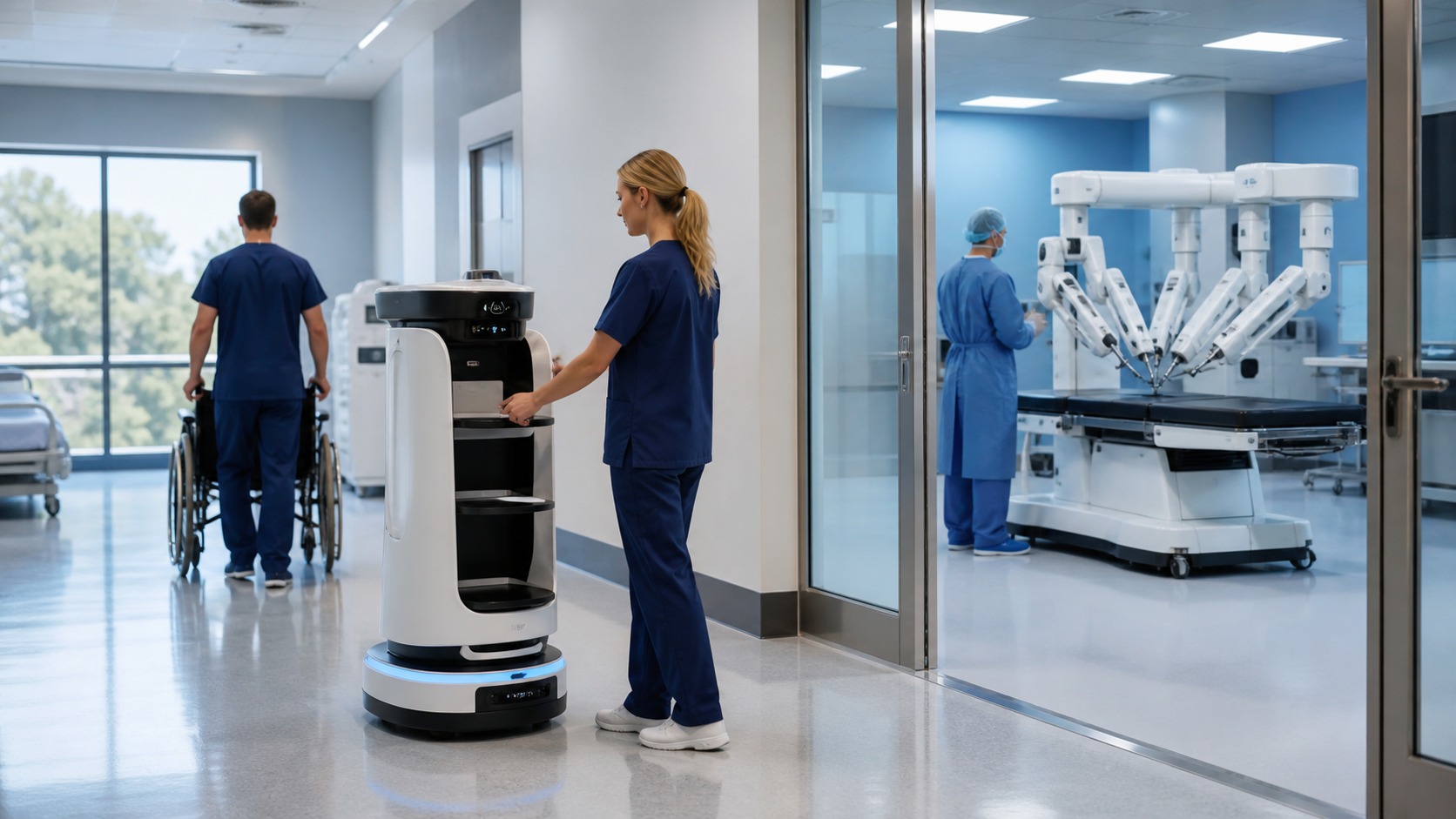
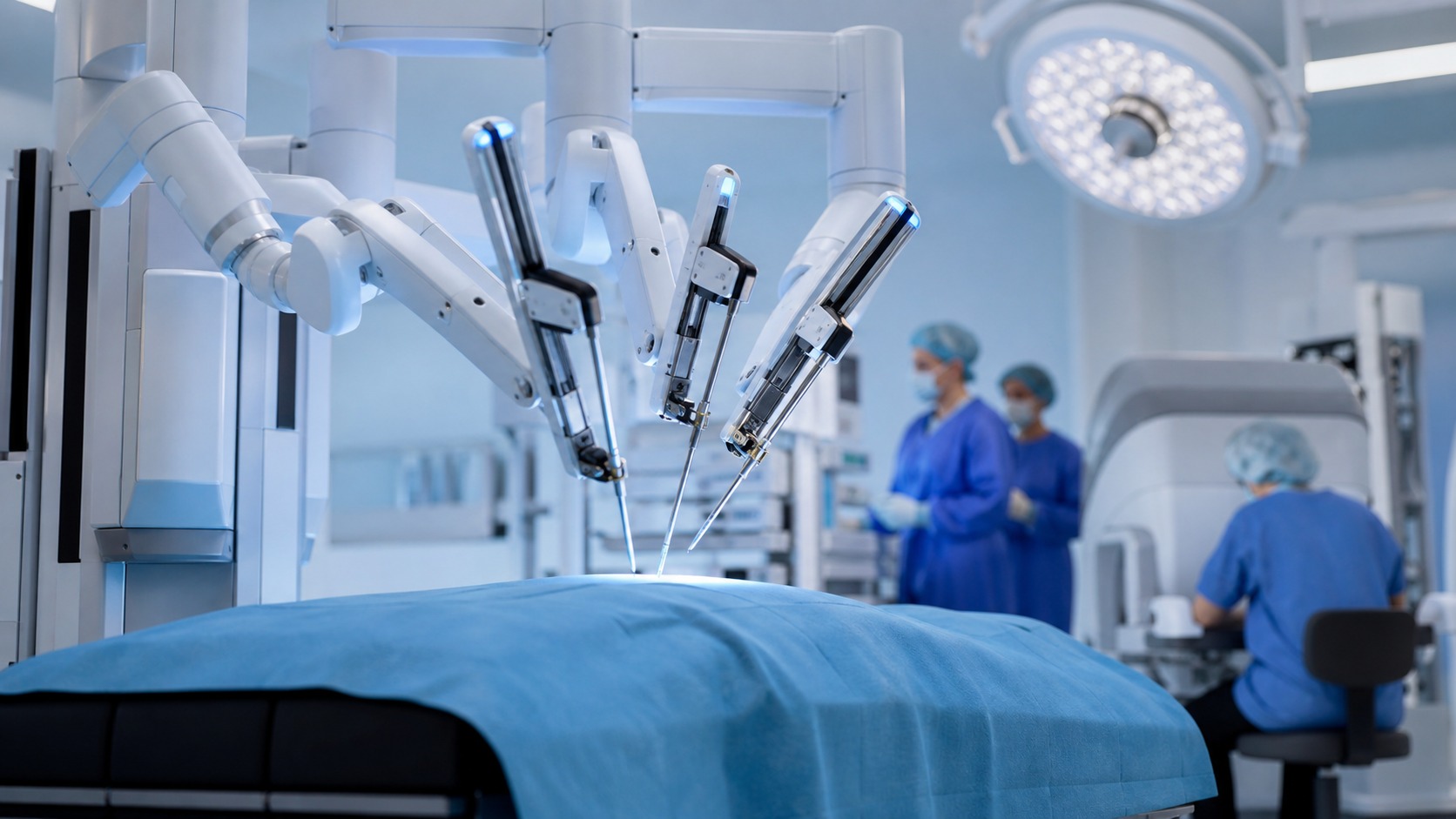
Many beginners hear medical robot and imagine a robot performing an operation. Surgical robots are important, but they are only one part of medical robotics. Hospitals also use robots for delivery, cleaning, pharmacy automation, rehabilitation, laboratory handling, imaging support, telepresence, and patient-assistive tasks.
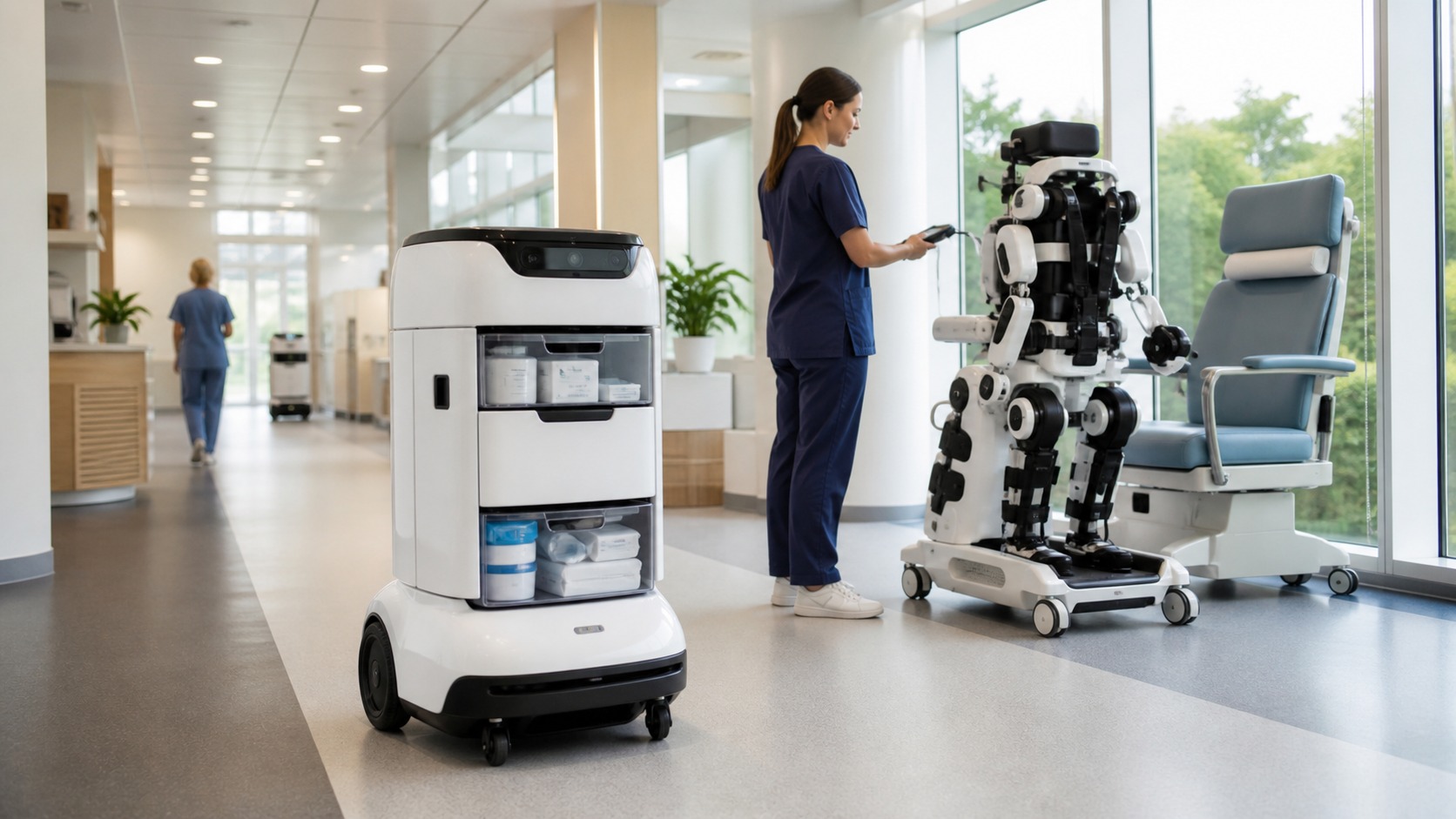
A delivery robot carrying medications or linens is a medical robot because it supports healthcare operations. A rehabilitation robot that guides a patient's arm or leg through repeated exercises is also a medical robot. A pharmacy robot that manages storage and dispensing is part of the same broad field.
The common thread is not one body shape. It is healthcare use. Medical robots must fit clinical workflows, support staff, protect patients, follow hygiene expectations, and create useful records when appropriate.
That context makes the category different from consumer wellness gadgets. A medical environment places stronger demands on reliability, cleaning, privacy, access control, and accountability.
The best beginner definition is simple: a medical robot is a robot used to support health-related work under clinical or care-oriented expectations. That breadth is why medical robotics can feel confusing at first. The same phrase may describe a mobile cart carrying medication, a powered therapy device, a laboratory sample handler, or an imaging support system. The useful way to sort the field is by clinical purpose: what healthcare task does the robot support, who supervises it, what risk does it introduce, and how does it fit into the care workflow? A beginner should also separate medical robots from the science-fiction idea of a robot doctor. Most systems do not diagnose independently, decide treatment, or replace clinical judgment. They support narrower work that already has human ownership. That support might be physical, such as moving a cart or guiding repetitive therapy, or informational, such as keeping samples organized and traceable. The practical question is not whether the robot seems impressive. The better question is whether it makes one part of care more reliable without confusing responsibility. That is why beginners should be cautious with broad claims. A robot in a hospital is not automatically intelligent, clinically proven, or appropriate for every department. Some systems are simple but useful because they remove friction from daily work. Others are advanced but only suitable in narrow settings. The safest way to learn the field is to connect every robot to the task, the user, the patient impact, and the evidence behind its use.
Hospital Logistics Robots Reduce Routine Burden
Hospitals move an enormous amount of material: medications, samples, food, linens, supplies, instruments, waste, and documents. Mobile medical robots can reduce walking time by transporting items between pharmacies, labs, nursing units, storage rooms, and clinical areas.
These robots usually need secure compartments, elevator integration, route planning, docking, staff authentication, and clear delivery records. They do not replace clinical judgment, but they can free staff from routine transport when the workflow is designed well.
Logistics robots also show why medical robotics is operational as much as technical. The robot must arrive at the right place, at the right time, with the right item, and without creating hallway congestion.
A successful deployment depends on maps, charging schedules, infection-control cleaning, staff training, and fallback plans for blocked routes or urgent exceptions. These robots are often valuable because hospitals are full of repeated movement. Staff may walk long distances for supplies, samples, and equipment while also managing interruptions. A logistics robot cannot make clinical decisions, but it can make routine transport more predictable. That predictability matters when nurses, pharmacists, and lab teams need supplies to arrive without pulling people away from patient-facing work. Hospital logistics also show why a robot's surroundings matter. Elevators, doorways, infection-control zones, nurses' stations, pharmacies, and lab intake areas all shape the route. A robot that works beautifully in a demo hallway still needs rules for blocked corridors, urgent traffic, charging, handoffs, and cleaning. Good deployments map those realities before launch. Staff need to know when the robot is the right choice, when a person should intervene, and who owns the exception when a delivery does not go as planned.
Rehabilitation Robots Help Practice Motion
Rehabilitation robots support therapy by helping patients repeat movements with guidance, resistance, measurement, or assistance. They may support gait training, arm movement, hand therapy, balance work, or strength recovery after injury, stroke, surgery, or neurological conditions.
The value is not that the robot replaces a therapist. The value is that it can provide consistent movement support, record progress, adjust assistance, and help patients practice safely under professional supervision.
Rehabilitation is highly individual. A useful robot must adapt to patient size, strength, fatigue, range of motion, pain, and therapy goals. It also needs emergency stops, comfortable interfaces, and clinician control.
Good rehab robots turn repeated practice into measured practice. They help clinicians see how movement changes across sessions instead of relying only on memory or subjective impressions.
That evidence can support better therapy planning, but the human therapist remains central because recovery involves motivation, judgment, comfort, and interpretation. Rehabilitation robots are different because they interact directly with patient bodies and progress. They may measure range, repetition, force, timing, and improvement across sessions. The robot's role is to make practice safer, more consistent, and more measurable, while the therapist interprets the patient as a whole person. Comfort, encouragement, fatigue, fear, and motivation still require human skill. In therapy settings, the robot often creates a record that helps clinicians see patterns over time. A patient might complete more repetitions, show steadier motion, or fatigue at a different point than expected. Those measurements are useful only when a therapist reads them in context. Pain, confidence, diagnosis, recovery stage, and home support all affect the meaning of the data. The robot adds consistency and measurement, while the care team turns those signals into a humane plan. Patients also experience these systems differently from staff. A delivery robot passing through a hallway may be almost invisible after a few days, while a rehabilitation robot may become part of a difficult recovery routine. Design choices such as speed, sound, posture, adjustability, and instructions shape whether the robot feels helpful or intrusive. Medical robotics is therefore partly a human-experience field. The machine has to work in a place where people may be tired, worried, in pain, or under pressure.
Clinical Robots Need Trustworthy Safety Design
Medical robots operate near patients, clinicians, visitors, and sensitive equipment. Safety includes speed limits, force limits, stable bases, smooth surfaces, alarms, access control, emergency stops, cleanable materials, and predictable failure behavior.
Privacy is also part of safety in healthcare. Robots may interact with patient rooms, medication records, location data, images, or clinical logs. Medical robot systems need careful control over what is collected, who can access it, and how long it remains stored.
Hygiene creates another design layer. A robot in a hospital must tolerate cleaning routines, avoid trapping contaminants, and fit infection-control procedures. A helpful robot that is hard to clean may create operational resistance.
Medical robotics therefore combines mechanical engineering, software, clinical workflow, regulatory awareness, cybersecurity, cleaning practice, and human trust. Trustworthy design in medicine also means avoiding unnecessary drama. Hospitals do not need robots that feel mysterious during a busy shift. They need systems that communicate status, tolerate cleaning, protect private information, and make handoffs simple. A robot with a clear compartment, route, log, and alert can be more clinically useful than a more complex robot that nobody wants to own. Privacy and maintenance are just as important as movement. A medical robot may travel through sensitive spaces, carry protected materials, or record information linked to a patient's care. That means access control, logs, cleaning instructions, update schedules, and physical security belong in the conversation from the beginning. A hospital does not simply buy a robot; it adopts another clinical system. The more clearly that system fits existing procedures, the easier it is for staff to trust it during busy work.
Medical Robots Work Best as Clinical Tools
A medical robot is most useful when it is treated as a clinical or operational tool rather than a spectacle. The robot should support a clear task, make work easier to verify, and fit the people who use it every day.
Beginners should ask what healthcare problem the robot solves. Does it reduce walking, improve therapy repetition, handle hazardous cleaning, automate pharmacy storage, extend clinician presence, or make a measurement more consistent?
The answer matters because medical environments are busy and high stakes. A robot that adds complexity without clear benefit will not last, even if the technology is impressive.
The strongest medical robots respect the healthcare team. They help staff do difficult work more consistently while leaving professional judgment, empathy, and responsibility with people.
That balance is the heart of medical robotics: useful automation in service of care. The beginner's takeaway is that medical robots should be judged by healthcare value rather than spectacle. A useful system reduces burden, improves consistency, expands access, supports therapy, protects staff, or helps clinical teams measure something important. The robot is successful when it improves the care environment without hiding responsibility or making daily work harder. For that reason, the best first step is usually modest. A clinic or hospital should identify one painful workflow, define the success measure, and test the robot where real staff use it. Reduced walking, steadier therapy sessions, fewer missed handoffs, cleaner documentation, or better supply availability are more meaningful than novelty. Medical robotics becomes easier to understand once the robot is viewed as part of a care process, not as a personality entering the building. This also explains why implementation matters as much as invention. A promising robot can disappoint if training is rushed, maintenance is unclear, or staff are left to create workarounds alone. A simpler robot can succeed when the workflow is well chosen and ownership is obvious. Medical robotics is not a contest to make the most futuristic device. It is a practical effort to improve care, reduce strain, and make difficult healthcare environments easier to manage. Beginners should also look for evidence that the robot has been tested beyond a sales demonstration. Useful questions include whether staff actually use it after launch, whether patients tolerate it well, whether downtime is manageable, and whether the system improves a measurable care problem. Those plain questions reveal more than dramatic marketing language. They also keep attention on care quality, which is the reason the robot belongs in a healthcare setting at all. When the care goal stays visible, the technology is easier to judge fairly.