Surgical Robots Are One Specialized Type of Medical Robot
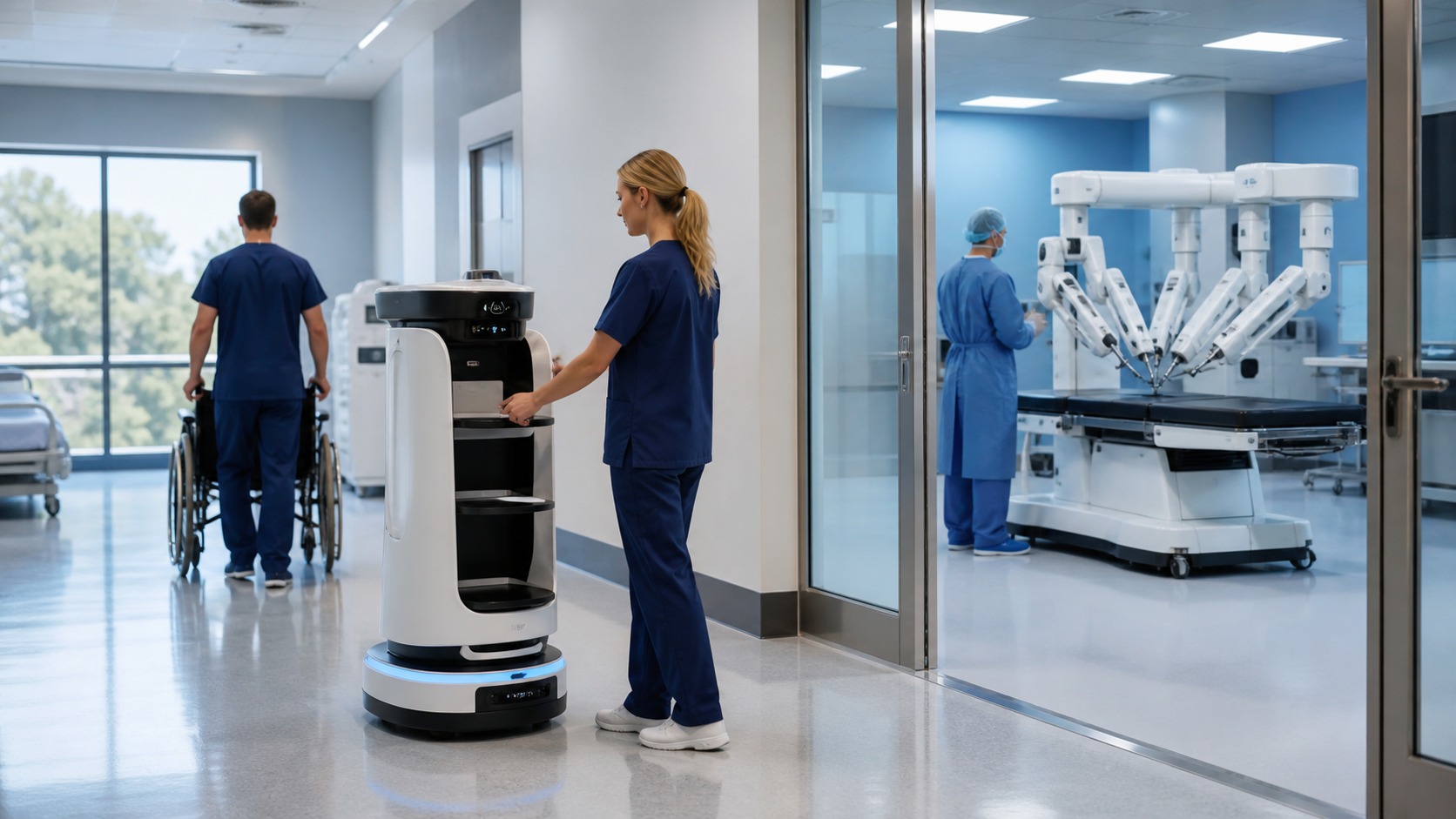
Medical robots and surgical robots are closely related terms, but they do not mean the same thing. Medical robots include a wide range of robots used in healthcare, such as delivery robots, rehabilitation systems, pharmacy automation, disinfection robots, laboratory robots, telepresence systems, and assistive devices. Surgical robots are a specialized subset used to support procedures in the operating room. In simple terms, all surgical robots are medical robots, but many medical robots are not surgical robots.
A: Yes. Surgical robots are a specialized type of medical robot.
A: No. Many support logistics, therapy, pharmacy, labs, cleaning, or assistance.
A: It supports operative procedures through instruments, cameras, positioning, or control systems.
A: It supports healthcare work under clinical, care, or hospital expectations.
A: Nurses, therapists, pharmacists, technicians, physicians, patients, caregivers, or operations staff.
A: Trained surgical teams in operating-room workflows.
A: Different tasks have different safety, training, evidence, and support needs.
A: Use medical robot for the broad category and surgical robot for procedure-specific systems.
A: Ask what healthcare job the robot actually performs.
A: Surgical robots are specialized medical robots, not the entire field.
Medical Robots Are the Broader Category
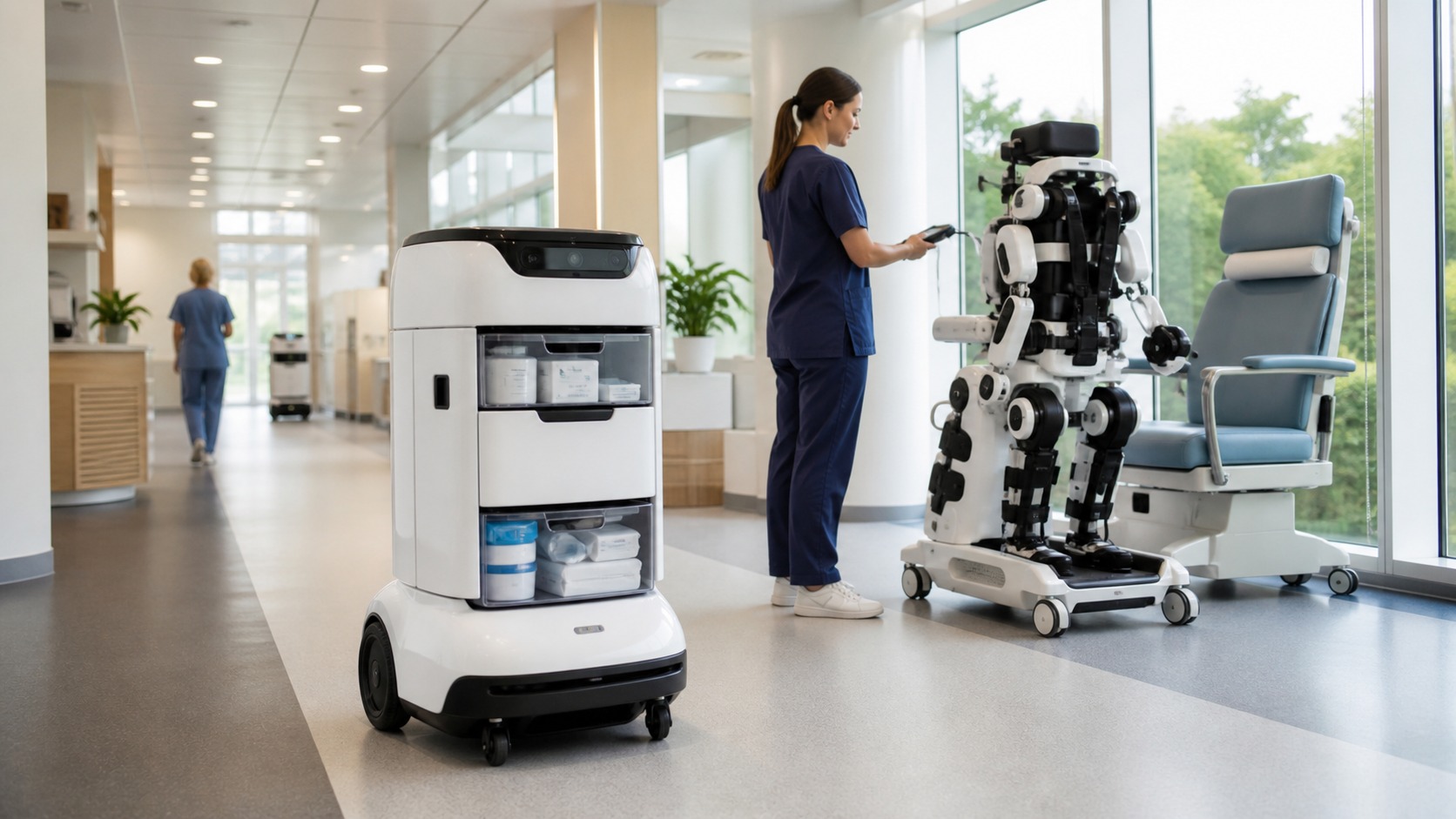
Medical robots are defined by healthcare use. They may support clinical care, hospital operations, therapy, diagnosis, laboratory processing, medication management, mobility, communication, or cleaning. Their tasks can happen in hallways, pharmacies, labs, therapy rooms, patient rooms, or homes.
A medical delivery robot carrying supplies through a hospital is not performing surgery, but it still belongs to medical robotics because it supports healthcare work. A rehabilitation robot helping a patient practice walking also fits the category. So does a pharmacy system that stores and dispenses medication with controlled access.
This broad category exists because healthcare includes far more than procedures. Hospitals and clinics rely on logistics, therapy, documentation, cleaning, measurement, medication handling, and patient support.
Medical robots therefore vary widely in shape. Some look like mobile cabinets, some look like therapy frames, some are automated storage systems, and some are robotic arms or imaging platforms.
The shared requirement is that the robot must fit healthcare expectations for safety, privacy, hygiene, reliability, and human oversight. This broad category can include robots that never enter an operating room. A hospital delivery robot may never touch a patient, yet it affects care by moving supplies reliably. A rehabilitation robot may spend every day with patients, but its purpose is therapy rather than surgery. A pharmacy robot may sit behind the scenes, but it supports medication accuracy and access control. The broad medical category is useful because healthcare has many problems outside the operating room. Supplies need to move, patients need rehabilitation, rooms need support, samples need tracking, and staff need relief from repetitive physical work. A robot that helps with those jobs still belongs in healthcare even if it never holds a surgical instrument. Its success is usually measured through workflow, safety, reliability, staff time, patient comfort, or measurable therapy progress rather than surgical precision. This is why a hospital robotics program usually contains several conversations at once. Operations leaders may care about delivery routes and uptime. Rehabilitation leaders may care about therapy outcomes and patient tolerance. Pharmacy leaders may care about accuracy and secure handling. These are all medical-robot discussions, but they do not share one purchase logic or one success measure.
Surgical Robots Serve the Operating Room
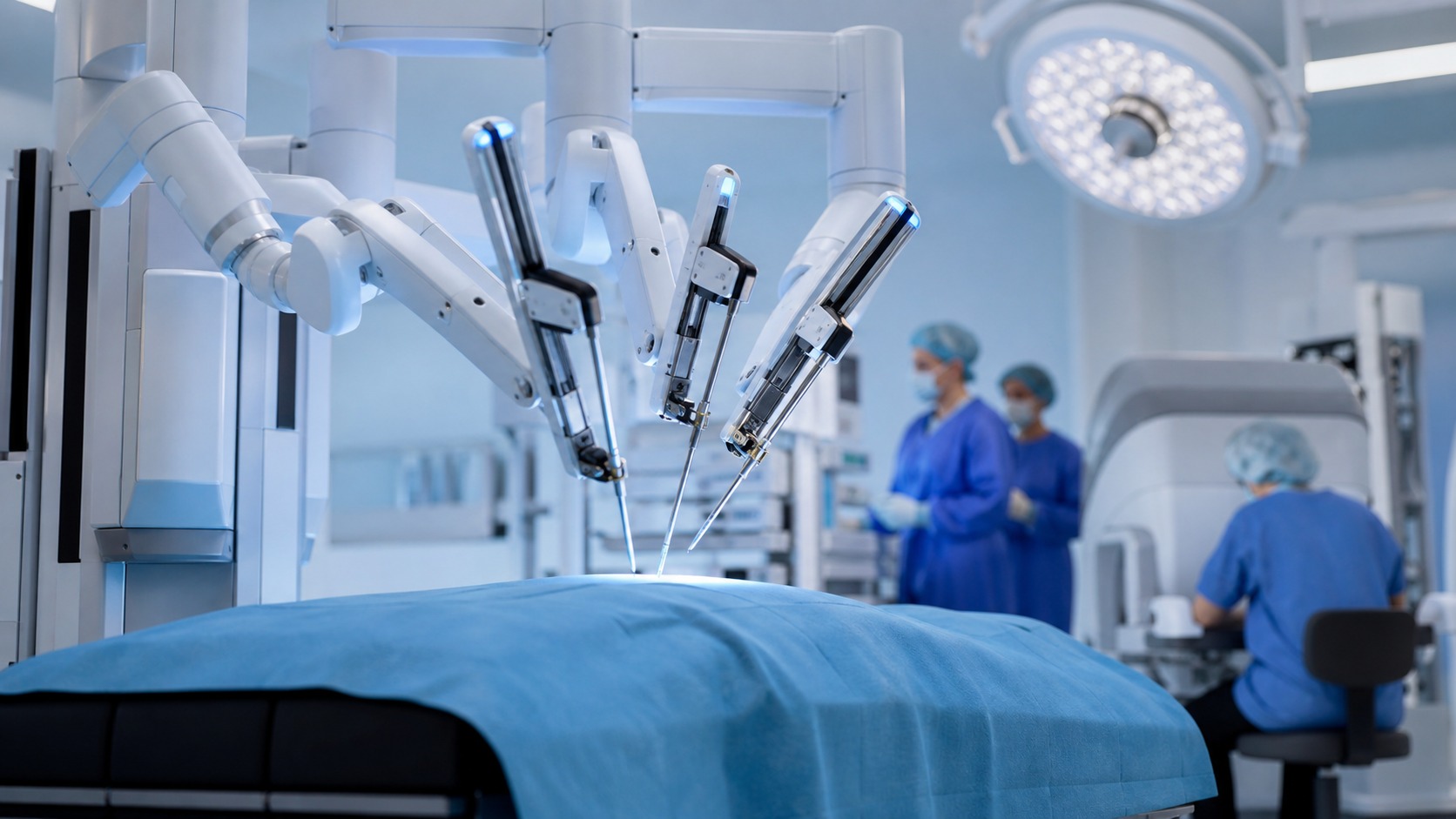
Surgical robots are designed for procedures. They typically help surgeons control instruments, cameras, or positioning systems during operations. The environment is sterile, the workflow is planned carefully, and the users are highly trained clinical teams.
A surgical robot's main job is not hospital delivery or general assistance. Its job is procedure support. It may provide dexterous instrument control, stable visualization, motion scaling, or precise positioning during a specific surgical workflow.
This specialization means surgical robots face different design demands than many other medical robots. Arm positioning, instrument exchange, sterile draping, port geometry, emergency procedures, and surgeon control are central.
The operating room also creates a different risk profile. Surgical robots operate in direct connection with patient treatment, so training, evidence, setup, and team coordination are especially important. Surgical robots are narrower because the operating room narrows the task. Everything revolves around the procedure: sterile setup, patient positioning, instrument control, visualization, team roles, and emergency planning. The robot's value is judged through surgical workflow and clinical outcomes rather than general hospital convenience. Surgical robotics is more specific because it enters a procedural environment with immediate clinical stakes. Sterility, anatomy, anesthesia, instrument control, imaging, and case planning all shape the robot's purpose. A surgical platform may sit idle most of the day and still be valuable if it supports the right procedures well. A general medical robot usually earns value through frequent routine use. That difference changes purchasing, training, staffing, maintenance, and how leaders explain the system to patients.
The Users and Workflows Differ
Medical robots may be used by nurses, pharmacists, therapists, lab technicians, facilities teams, physicians, patients, caregivers, or operations staff. Their interfaces often need to fit busy healthcare routines. A delivery robot handoff should be simple; a therapy robot should be adjustable by clinicians; a pharmacy robot should enforce access rules.
Surgical robots are used by surgical teams. The surgeon controls the procedure, while bedside staff, nurses, anesthesia teams, and technicians support the robotic workflow. The interface can assume specialized training because the operating-room team prepares for that system.
The difference matters because robot design should match the user. A hallway delivery robot with a complicated surgical-style interface would fail staff expectations. A surgical robot with a casual consumer-style interface would be inappropriate for the operating room.
Good medical robotics starts by identifying who uses the robot, what task they perform, and what kind of mistake the design must prevent.
A category name is helpful only when it clarifies those workflow realities. The user difference is often the easiest clue. A medical robot might be used by a therapist, pharmacist, nurse, lab technician, facility team, or patient. A surgical robot is used by a surgical team trained for that platform and procedure. The required interface, documentation, safety checks, and support model follow those users. The supervision model also separates the terms. A delivery robot might be monitored by operations staff, a rehabilitation robot by therapists, a pharmacy robot by medication teams, and a surgical robot by surgeons and operating-room staff. Each group asks different questions. Does the robot protect medication chain of custody? Does it apply force safely? Does it maintain sterile workflow? Does it recover gracefully in a hallway? The right name points attention toward the right owner. The distinction also helps patients understand what they are being told. A patient hearing that a hospital uses medical robots might imagine surgery, even when the robot only delivers supplies. A patient hearing that a procedure uses a surgical robot should understand that the robot is part of the operation itself. Clear wording reduces anxiety because it tells people where the robot fits and what kind of human team remains responsible.
Safety and Regulation Depend on the Task
Both medical and surgical robots need safety, but the details differ. A logistics robot needs safe navigation, secure compartments, cleaning routines, privacy controls, and route recovery. A rehabilitation robot needs force limits, patient fit, clinician control, and therapy documentation.
A surgical robot needs sterile workflow, instrument verification, motion control, emergency stops, port planning, staff training, and evidence for its intended procedures. The risk is tied directly to procedural care.
Regulatory and institutional requirements also depend on intended use. A robot that transports linens is not evaluated the same way as a robot used inside an operation. The claim the robot makes determines much of the scrutiny it deserves.
Beginners should be careful with broad statements about medical robots. The safety question is always: what exactly does this robot do, where does it do it, and what happens if it fails? The failure consequences also differ. A delivery robot stalled in a hallway creates an operational problem. A rehab robot applying force incorrectly creates a patient safety problem. A surgical robot fault during a procedure creates an operating-room problem requiring immediate clinical protocols. The category alone is not enough; the exact task defines the risk. Risk is not simply higher in one category and lower in the other. Risk follows contact, context, urgency, and clinical dependence. A slow transport robot in a quiet corridor has a different risk profile from a powered therapy device touching a recovering limb. A surgical robot has a different profile again because the patient is already in an invasive procedure. The comparison becomes useful when it helps people ask what happens during failure, who responds, and how quickly the team must act.
The Practical Difference
The practical difference is scope. Medical robots cover the healthcare robot landscape. Surgical robots occupy one specialized area inside that landscape. Confusing the two can make discussions too narrow or too dramatic.
If a robot supports hospital logistics, therapy, pharmacy, cleaning, lab work, monitoring, or patient assistance, medical robot is the better broad term. If it supports operative procedures through robotic instruments, cameras, or positioning in the operating room, surgical robot is the more specific term.
This distinction helps buyers, students, and patients ask better questions. A medical robot should be judged by its healthcare task. A surgical robot should be judged by its procedure, evidence, training, and surgical workflow.
The categories are connected, but precision matters. Surgical robotics is not the whole story of medical robotics.
Medical robots support healthcare work in many places. Surgical robots support surgical work in one of the most specialized places. Using the terms carefully helps everyone talk more clearly. Medical robotics is the larger landscape of healthcare automation and assistance. Surgical robotics is one specialized region inside it. When people understand that relationship, they can discuss benefits, risks, costs, and evidence with far more precision. Costs and expectations also differ. A hospital may justify a logistics robot by reducing walking, improving delivery consistency, and helping staff focus on care. A surgical robot usually requires a case-volume plan, surgeon training, instrument budgets, service contracts, and clinical evidence for the procedures it supports. Calling both systems medical robots is technically correct, but not specific enough for decisions. Calling one surgical identifies the narrower setting, the specialized team, and the evidence questions that matter most. For buyers, educators, and curious readers, the simplest rule is to ask where the robot works and what clinical purpose it touches. If the robot supports healthcare broadly, call it medical. If it supports an operation through surgical instruments, visualization, and operating-room workflow, call it surgical. That small vocabulary choice prevents many exaggerated claims and many unnecessary fears. It also makes comparison fairer. A hospital delivery robot should not be judged by surgical precision, and a surgical robot should not be judged by hallway autonomy. Each category has its own environment, supervision model, evidence standard, and maintenance burden. The difference is not about which robot is more advanced; it is about what job the robot is trusted to support. Once that job is named, the rest of the evaluation becomes calmer: who trains on it, who maintains it, who benefits from it, and what proof shows that it improves the work. The distinction also keeps teams from importing the wrong expectations. A service-style medical robot needs operational reliability and staff acceptance; a surgical robot needs procedure-specific competence and clinical governance. That clarity protects budgets, training plans, patient communication, and daily support after the robot is installed. It also helps readers compare news stories without mixing unlike systems or overstating a robot's role.