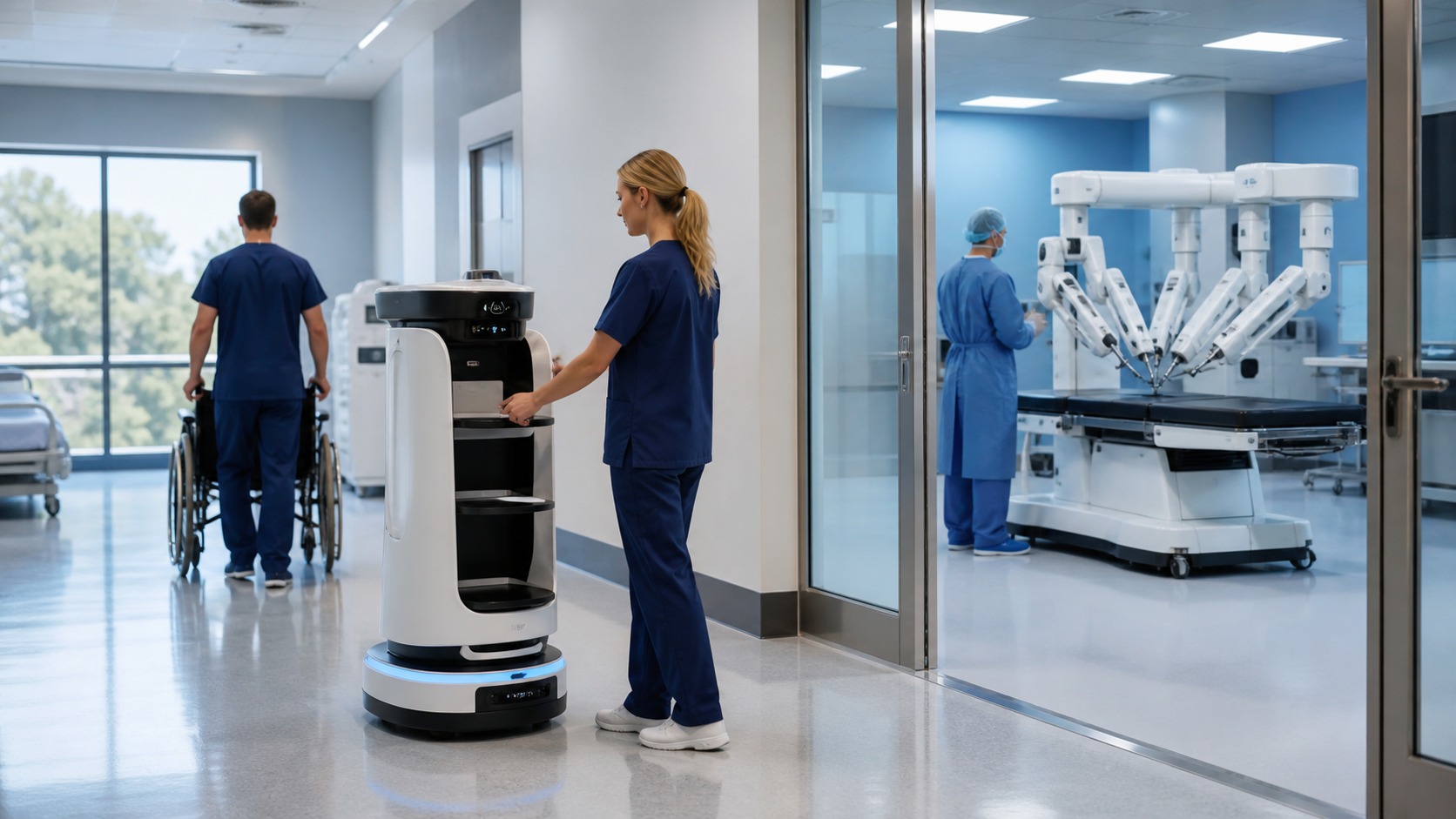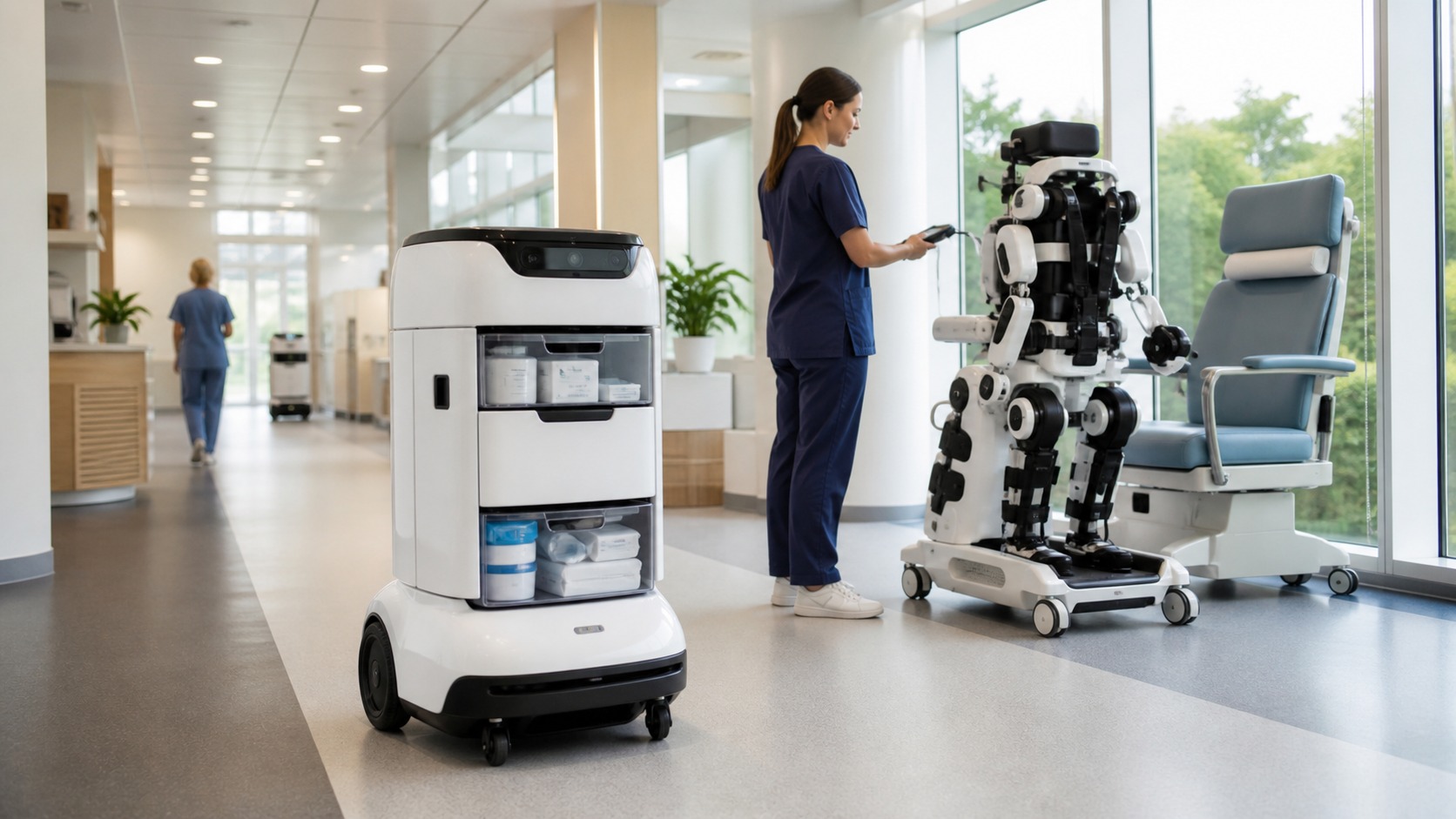
Surgical Robots Extend a Surgeon’s Hands, Eyes, and Control
Surgical robots are medical robotic systems designed to help surgeons perform procedures with controlled instruments, stable visualization, and precise movement. They do not operate independently in the ordinary sense. In most systems, a trained surgeon controls the instruments through a console or interface while robotic arms translate those commands into small, steady motions inside the surgical field. The robot supports the surgical team; it does not replace the responsibility, planning, judgment, or skill of the surgeon.
A: No. A trained surgeon controls the system and remains responsible for decisions.
A: They provide controlled instrument motion, stable positioning, and dexterity through small access points.
A: It translates surgeon input into instrument and camera movement.
A: It turns larger hand movements into smaller instrument movements for fine control.
A: No. Value depends on procedure, patient, evidence, training, and clinical context.
A: Surgeons, nurses, anesthesia staff, assistants, technicians, and other operating-room personnel.
A: Hardware, software, procedures, training, sterile workflow, and human oversight all contribute.
A: Arm position, ports, instruments, and team roles affect the whole procedure.
A: Avoid imagining the robot as an autonomous surgeon.
A: Surgical robots extend surgeon control inside a managed clinical workflow.
A Surgical Robot Is a Team System
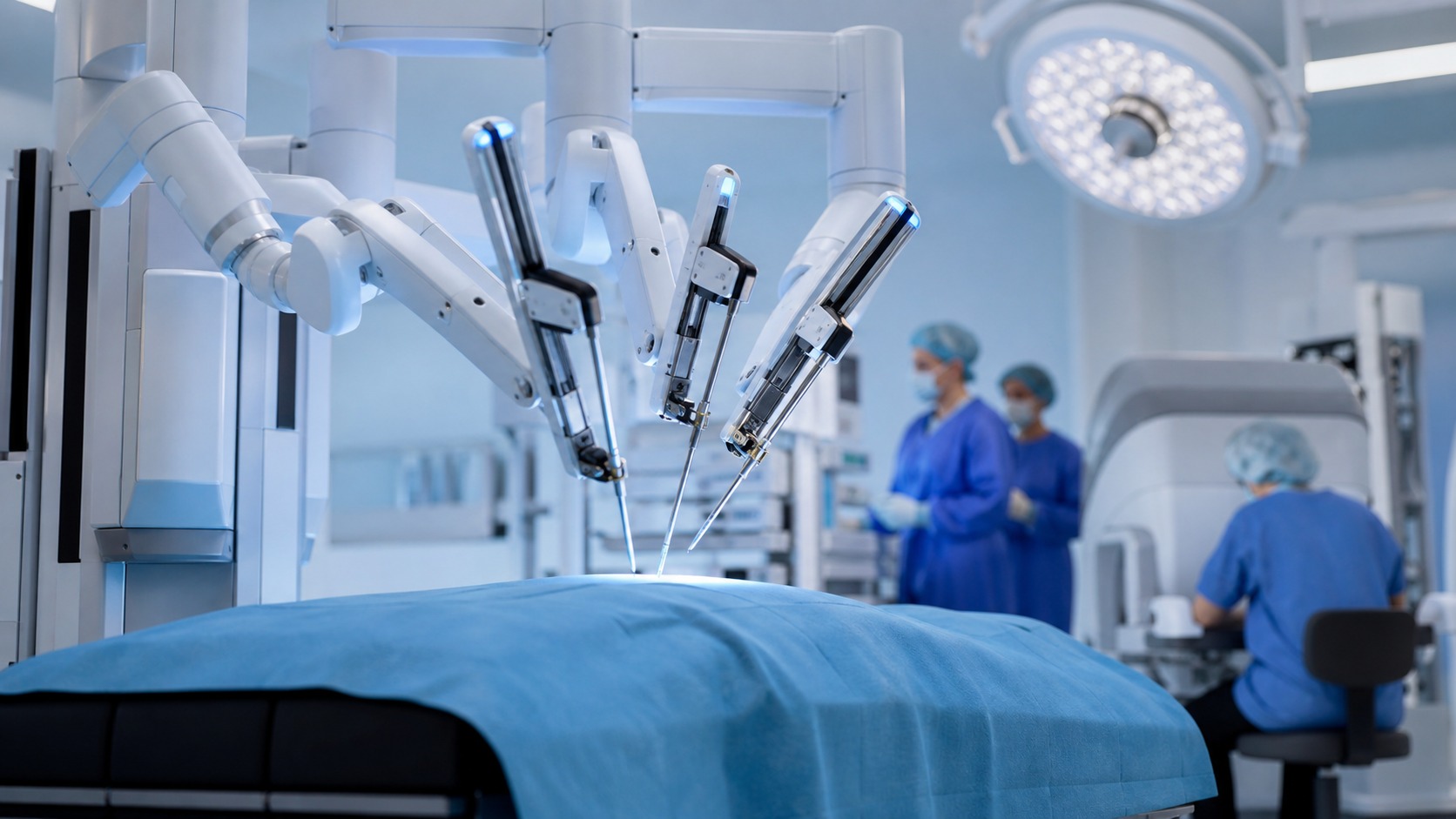
A surgical robot includes more than robotic arms. A typical setup may include a surgeon console, patient-side robotic arms, specialized instruments, a camera or endoscope, displays, foot controls, carts, sterile draping, operating-room staff, and software that coordinates safe motion.
The surgeon remains in control of the procedure. The system translates hand, wrist, and finger movements into instrument motion. It can scale movement, filter small tremors, hold a camera steady, and allow instruments to work through small openings during minimally invasive surgery.
The operating-room team is still essential. Staff position equipment, prepare instruments, monitor the patient, exchange tools, maintain sterile workflow, and respond if the plan changes.
This team structure is important for beginners. The robot is not an independent doctor. It is a controlled surgical platform used by trained professionals inside a tightly managed clinical environment.
That distinction helps avoid both fear and hype. The technology is powerful because it supports skilled human work, not because it removes human accountability. Thinking of surgical robotics as a team system keeps the technology in perspective. The robot provides controlled motion and visualization, but the procedure still depends on patient selection, surgical planning, anesthesia, sterile technique, nursing support, instrument preparation, and communication. A well-run robotic case is coordinated clinical work, not a machine acting alone. The word robotic can make the system sound autonomous, but surgical robots are usually master-controlled instruments. The surgeon sees the operative field, chooses the movement, and responds to anatomy in real time. The robot translates those inputs into refined instrument motion. That distinction matters for consent, training, and public understanding. Patients should know that the platform changes how the surgeon operates; it does not remove the surgeon from the procedure or make the operation automatic. This makes language important. Saying that a robot performed surgery can mislead readers into imagining independent action. A clearer description is that a surgical team performed the procedure using a robotic surgical system. The difference is not just semantic. It preserves accountability, respects the surgeon's role, and helps patients ask better questions about experience, risks, alternatives, and expected benefits.
Robotic Arms Hold Instruments and Cameras
The patient-side arms hold instruments and camera equipment. Each arm must move precisely while respecting the geometry of the patient, ports, operating table, other arms, and staff. The system needs stable positioning because small movements matter in surgery.
Instruments may grasp, cut, cauterize, suture, retract, or manipulate tissue depending on the procedure. The camera provides the surgeon with a magnified view, often with depth perception or enhanced stability compared with handheld approaches.
The arms also need collision avoidance and range limits. A surgical robot works in a crowded sterile space where instrument position, arm clearance, and staff access all matter.
Robotic structure gives the surgeon controlled reach, but safe use depends on planning, setup, calibration, and continuous awareness. The arms must also respect the physical constraints of the operating room. Instruments pass through access points, arms need clearance from one another, and staff need space to work. Setup decisions made before the main procedure can affect reach, comfort, safety, and efficiency. This is why docking and positioning are treated as important clinical workflow steps rather than simple equipment placement. Setup is part of the clinical skill because robotic access depends on geometry. Ports, camera angle, arm spacing, patient position, and instrument length all influence what the team can reach. A poorly planned setup can slow the case or make a movement awkward even when the robot itself is functioning normally. Experienced teams treat the room like an integrated workspace. The robot, table, anesthesia equipment, monitors, instruments, and staff positions all need to support the same operative plan.
The Console Translates Surgeon Motion
At the console, the surgeon controls the robotic instruments through hand controls, foot pedals, and visual feedback. The system maps the surgeon's movements to the tools. Motion scaling can turn a larger hand movement into a smaller instrument movement, which supports fine work.
Tremor filtering can reduce tiny unintended hand motion. Stable camera control can give the surgeon a consistent view. Wristed instruments can provide dexterity inside small spaces where straight manual tools have limits.
These features do not make surgery easy. They change the interface. Surgeons still need anatomy knowledge, procedural judgment, planning, coordination, and extensive training.
The console is therefore a translation layer between human decision-making and robotic motion. It gives the surgeon a different way to control instruments, not a shortcut around expertise.
A useful surgical robot makes precise action more manageable while keeping the surgeon’s attention on the patient and procedure. The console changes the surgeon's interface with the patient. Instead of holding instruments directly at the bedside, the surgeon controls robotic instruments through a mediated system. That mediation can improve ergonomics and fine control, but it also demands training and awareness of what the instruments are doing at the patient side. The surgeon's judgment remains the center of the procedure. The console also changes feedback. Surgeons work through a high-resolution view and precise controls rather than direct handheld instruments. That view can be powerful because small structures become easier to inspect and delicate motions become easier to repeat. At the same time, the surgeon must stay aware of instrument force, tissue response, and what bedside staff are seeing. Robotic surgery is therefore a different interface for skilled surgery, not a shortcut around anatomy or judgment. Training reflects that changed interface. Surgeons and teams practice system setup, camera control, instrument exchange, emergency steps, and procedure-specific movements before relying on the platform in live care. Hospitals also need credentialing rules, case selection standards, and ongoing review. The robot may feel smooth once a team is experienced, but that smoothness comes from preparation. Robotic surgery is learned as a disciplined clinical workflow, not only as a device demonstration.
Safety Comes From Layers of Control
Surgical robots use multiple safety layers. These can include software limits, mechanical constraints, instrument checks, emergency stops, staff procedures, sterile setup, system diagnostics, and surgeon control. The goal is predictable behavior in a high-stakes environment.
The system must know which instruments are installed, how arms are positioned, where motion is allowed, and when a fault requires attention. Staff also need clear procedures for docking, undocking, tool exchange, conversion to another approach, and troubleshooting.
Safety is not only a feature inside the robot. It is the full operating-room workflow around the robot.
This is why surgical robotics depends on training. Teams practice setup, communication, emergency responses, and role assignments so the technology fits the procedure rather than distracting from it. Layered safety also includes knowing how to leave the robotic workflow if needed. Teams prepare for tool issues, equipment faults, patient changes, and conversion to another surgical approach. Those plans are not signs of failure; they are part of responsible robotic surgery. High-stakes technology needs rehearsed alternatives. Safety planning begins long before the first incision. Teams check instruments, confirm software and system status, review patient positioning, prepare backup tools, and agree on communication. During the case, the bedside team remains essential because instruments must be exchanged, the patient must be monitored, and the surgical field must be managed. If the system needs to be undocked or the approach changes, everyone needs practiced roles. The robot adds capability, but teamwork keeps the room resilient.
What Surgical Robots Are Used For
Surgical robots are most often associated with minimally invasive procedures, where instruments and cameras enter through small incisions or ports. They are used across specialties depending on system design, regulatory approvals, surgeon training, and hospital programs.
Potential benefits may include improved dexterity, stable visualization, smaller access points, ergonomic surgeon control, and precise instrument manipulation. Actual outcomes depend on procedure type, patient factors, surgical skill, team training, and evidence from clinical practice.
A beginner should be cautious with broad claims. Surgical robots are tools, not guarantees. Their value must be judged for specific procedures and specific clinical contexts.
The best question is not whether robotic surgery is universally better. The better question is when a robotic system provides a meaningful advantage for the patient, surgeon, and care team.
That careful framing keeps surgical robotics grounded in medicine rather than marketing. For beginners, the most important point is that surgical robots are precise clinical tools. They can offer advantages in selected procedures, but those advantages depend on evidence, training, setup, and patient context. The robot does not make a procedure automatically better. It gives a skilled team a different set of capabilities to use carefully. The value of surgical robotics depends on evidence and fit. Some procedures may benefit from improved dexterity, access, visualization, or surgeon ergonomics, while others may not justify the time, cost, or training burden. Hospitals evaluate outcomes, complication rates, operating time, patient recovery, maintenance needs, and case volume. Beginners should therefore avoid assuming that robotic means best. The more accurate view is that robotic surgery is one carefully chosen tool inside modern surgical care. Cost is part of the beginner picture too. Robotic platforms involve acquisition, service, instruments, training time, room scheduling, and case planning. Those costs can be appropriate when the clinical and operational value is clear, but they should be weighed honestly. A hospital that uses a robot thoughtfully asks where it improves care, where it merely changes the method, and where another approach remains better for the patient. Patients can use the same practical mindset. The useful questions are not whether the operation sounds futuristic, but why this approach was recommended, how often the team performs it, what alternatives exist, and what risks remain. Robotic surgery becomes less mysterious when it is discussed as a clinical method with tradeoffs. The same clarity helps families, too. A loved one may hear the word robot and imagine distance between the surgeon and patient. In practice, the team is still responsible for planning, positioning, monitoring, instrument changes, and response to changing conditions. The technology changes the route through which skill reaches the patient; it does not remove the need for skill. It also does not erase the importance of follow-up care, pathology, pain control, mobility, and recovery instructions. The robot is part of the operation, while healing still depends on the wider medical plan. A thoughtful explanation connects the platform to the whole care path, from selection before surgery to recovery after discharge. That broader view keeps robotic surgery grounded in medicine instead of marketing and helps beginners ask sharper, calmer questions during real consultations.