Following an Order Through a Robotic Fulfillment System
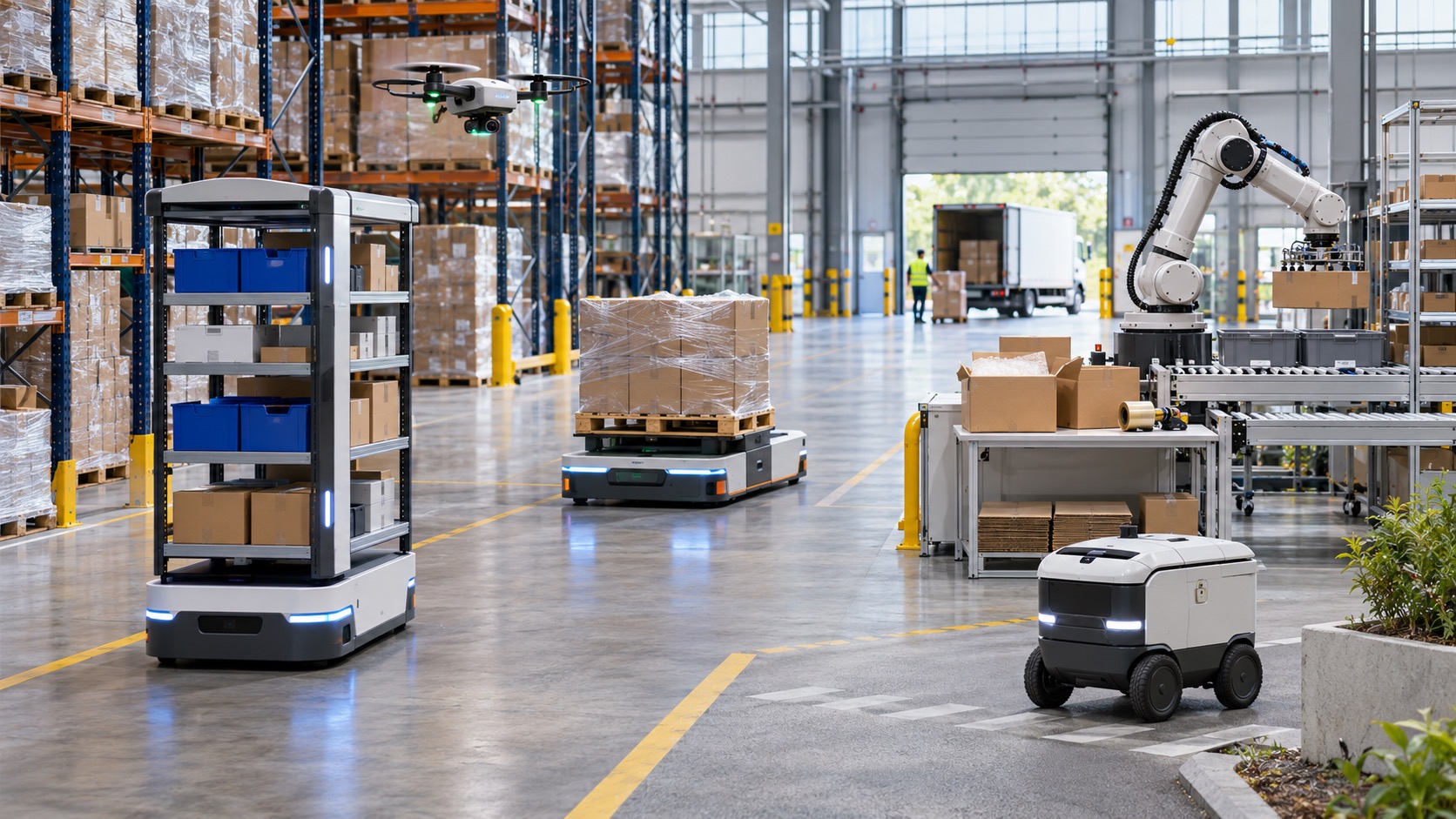
Delivery and warehouse robots are machines that move, handle, identify, or sort goods between receiving and the customer. Some carry entire shelving pods to a picker. Others travel under pallets, tow carts, lift cases, unload trailers, build mixed orders, feed packing stations, or move parcels through a sortation hub. Outdoor delivery robots and autonomous vehicles extend the same flow beyond the building. These systems are often described as labor-saving devices, but their real function is coordination. A robot must know which item or load is needed, where it is now, which route is open, where it should go next, and how its action affects people and equipment nearby. The warehouse management system, order data, inventory accuracy, packaging, network, charging plan, and workstation design are therefore as important as motors and sensors. A capable robot placed inside a disorganized process simply moves confusion faster. A successful system makes the flow of goods more visible, predictable, and safe.
A: An autonomous mobile robot plans routes using onboard sensing and a facility map.
A: An automated guided vehicle usually follows more fixed paths or markers.
A: No. Soft, reflective, tangled, fragile, or irregular items remain difficult.
A: Goods-to-person systems reduce walking and organize work around ergonomic stations.
A: No. Congestion, charging, stations, and downstream capacity create practical limits.
A: Sensors, mapped rules, speed limits, warning signals, and stopping systems manage separation.
A: The system sends them to an exception process for identification and correction.
A: Some fleets integrate with lifts and doors, but the interfaces require careful design.
A: Many use autonomy for routine travel and remote assistance for unusual events.
A: Measure the complete order flow, including travel, waiting, errors, and exceptions.
Receiving: Where Physical Goods Meet Digital Records
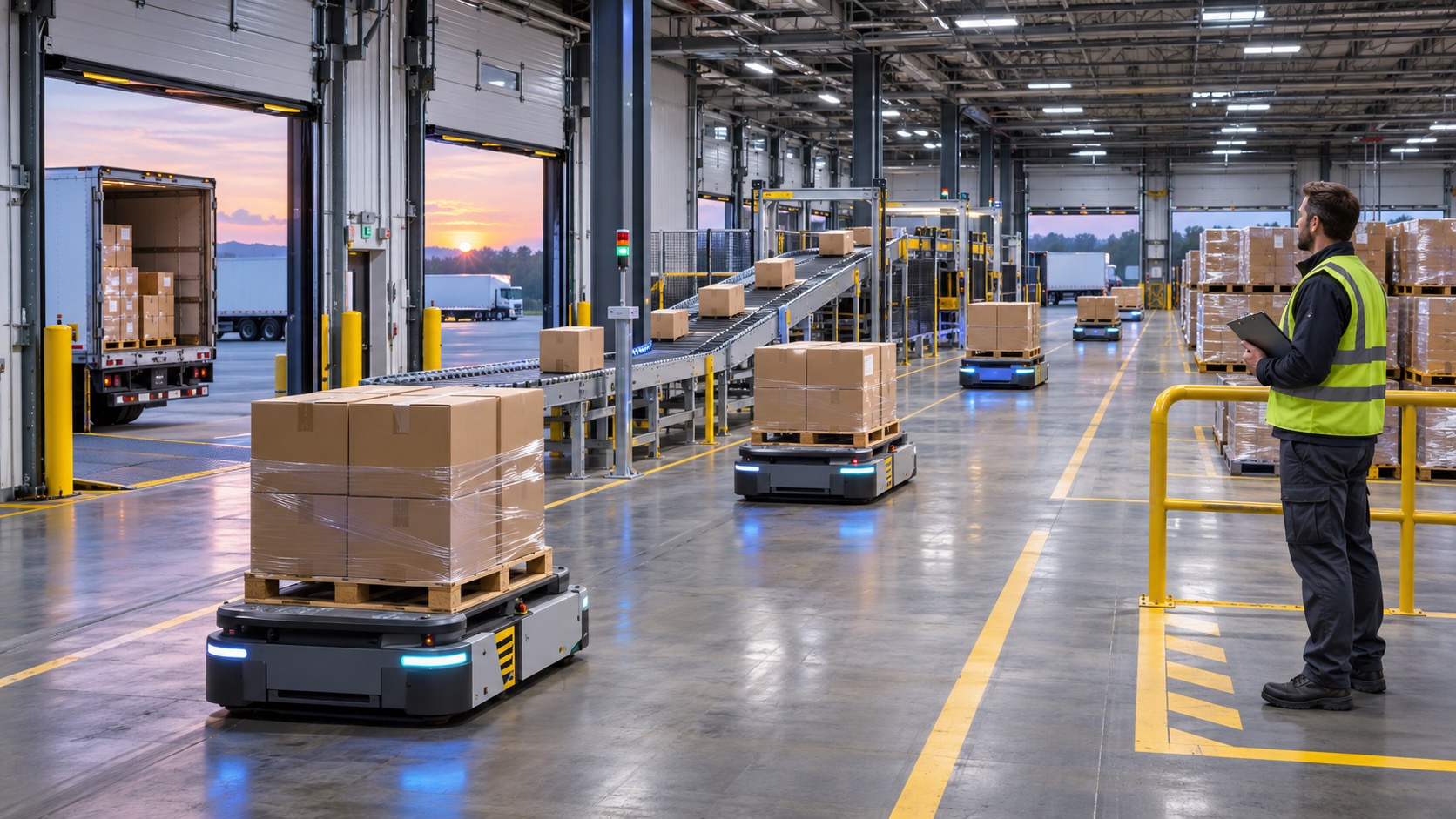
Robotic fulfillment begins when a shipment arrives. Cameras and scanners read labels or identify containers, while dimensioning systems measure size and weight. Robotic arms can unload uniform cartons, and autonomous vehicles move pallets from docks to staging. The system associates each physical unit with an expected purchase order, condition, and destination.
Receiving quality sets the limit for everything downstream. Damaged packaging, unknown items, unreadable codes, and quantity differences need human resolution. If inventory enters the building under the wrong identity or location, later automation can retrieve the wrong product with perfect efficiency.
Storage: Bringing Shelves to People
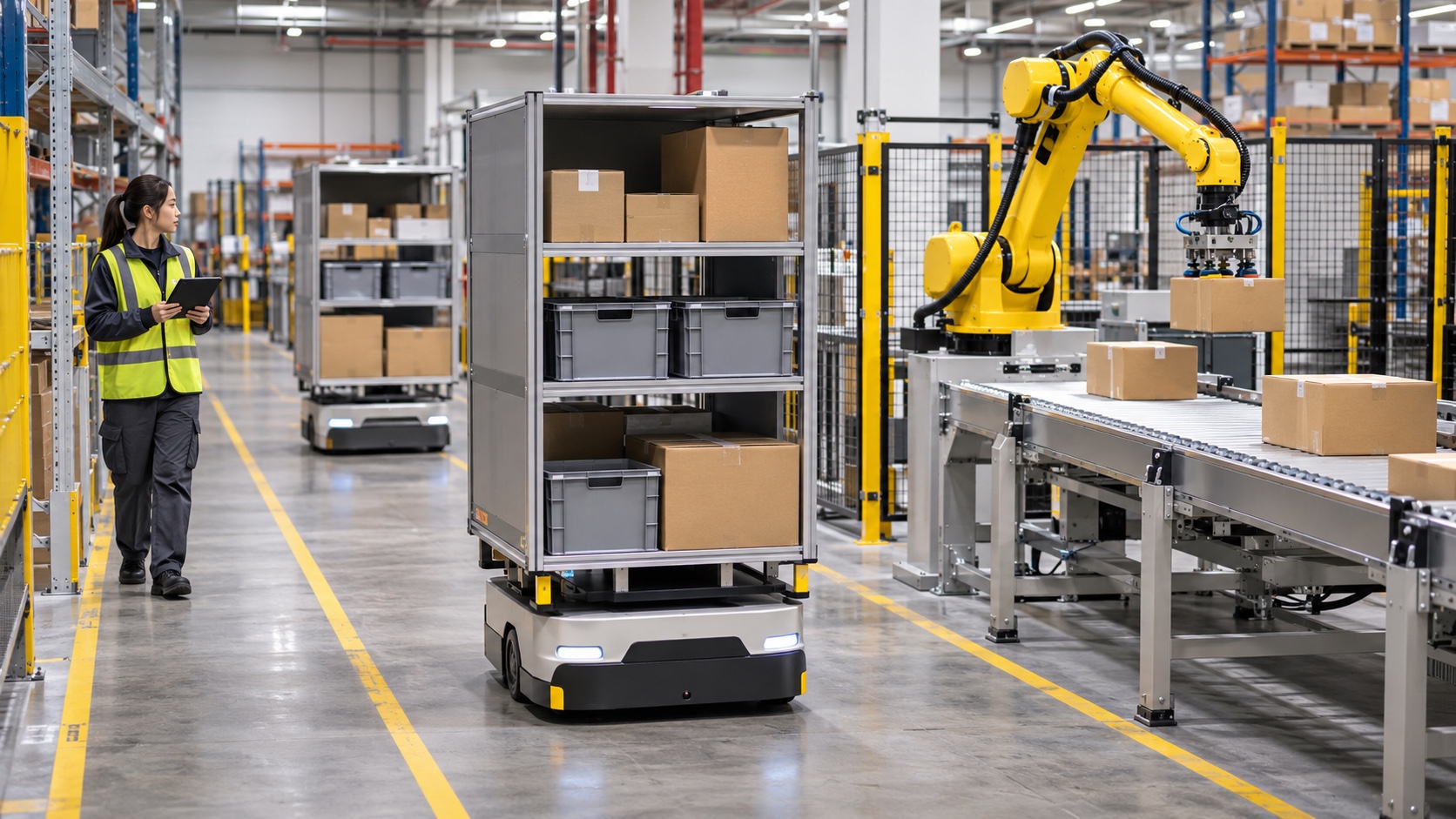
Goods-to-person systems reverse the traditional warehouse walk. Low mobile robots travel under movable shelving pods, lift them slightly, and carry them to a staffed or automated workstation. Software selects which pod and which face should arrive, then returns the shelf to an available location. Storage positions can change dynamically because the system tracks them.
Autonomous Mobile Robots and Automated Guided Vehicles
Automated guided vehicles usually follow fixed paths defined by wires, reflectors, magnetic tape, or known markers. Autonomous mobile robots use onboard sensors and maps to plan routes around changing obstacles. The terms are sometimes used loosely, but the operational distinction matters. Fixed guidance offers predictable movement; flexible navigation adapts more easily when aisles and destinations change.
Both types transport totes, racks, carts, or pallets. Fleet software assigns work and prevents traffic conflicts. A single robot can look efficient while the fleet waits at intersections, chargers, or congested stations. System performance depends on orchestration.
Payload limits include more than weight. A tall or shifting load changes stability and sensor visibility. Fork height, floor transitions, rack clearance, and stopping distance determine whether a route is safe.
Robotic Picking
Picking robots locate an item, choose a grasp, lift it, and place it into an order container. Structured cases such as identical cartons or known bins are easier than a pile of soft, reflective, transparent, tangled, or fragile products. Vision estimates shape and pose, while suction cups, fingers, or adaptive grippers make contact.
Successful picking includes verification. The system may weigh the item, scan a code, or inspect the destination tote. When confidence is low, the robot can present the bin to a person rather than force a risky grasp. Exception handling is a core capability, not evidence that the system failed.
Case Handling, Palletizing, and Depalletizing
Industrial arms stack cases onto pallets according to weight, size, stability, and delivery sequence. Depalletizing reverses the process, often using vision to locate cartons whose positions have shifted in transit. Mixed-case pallets are harder than uniform layers because every placement affects the remaining support and available space.
Conveyors and Robotic Sortation
Conveyors move goods along fixed routes at high volume. Sorters divert parcels toward destinations using belts, shoes, arms, tilting trays, or mobile robots. Scanners identify each parcel before the decision point. Robotic sortation cells can adapt to changing destination patterns without rebuilding a long conveyor network.
The process depends on spacing and readable identity. Two parcels touching may be treated as one, while a damaged label creates an exception. Jam detection and safe access are vital because a blockage can stop a large portion of the building.
Packing and Packaging Automation
Packing systems choose boxes, form cartons, dispense protective material, seal packages, and apply shipping information. Some measure the order and create a right-sized package, reducing empty space and transport volume. Robotic arms place items into the package when product shape and order rules are manageable.
Inventory-Scanning Robots
Mobile scanners travel aisles and read shelf labels, barcodes, radio-frequency tags, or visual features. They compare observed stock with expected records and flag empty locations, misplaced products, or counting differences. Drones can scan high racks where regulations and facility conditions allow.
Inventory robots improve frequency, not certainty by themselves. Occluded items, reflective packaging, crowded shelves, and inconsistent labels create gaps. Human investigation resolves discrepancies and fixes the process that caused them.
Regular scans can reduce the shock of a large annual count. Operations gain smaller, earlier signals about drift and replenishment needs.
Workstations Where People and Robots Meet
A robot often delivers work to a person rather than replacing the station. Ergonomic goods-to-person designs keep frequently used areas within comfortable reach, present clear instructions, and prevent the next container from arriving before the current action is safe. Sensors and software verify picks without forcing awkward motion.
Fleet Management and Traffic Control
Fleet software assigns tasks based on location, priority, battery state, payload, congestion, and workstation demand. It reserves paths, manages intersections, and sends robots to chargers. The best route for one unit may be harmful to the system if it blocks many others.
Simulation and operational data help planners adjust aisle direction, station placement, charging locations, and fleet size. Adding robots beyond a certain point can reduce throughput when traffic and queues dominate.
Safety Around People
Warehouse robots use scanners, bumpers, speed limits, warning signals, and emergency stops. Facilities separate some high-speed automated zones with fencing, while collaborative mobile robots operate in shared aisles under stricter speed and stopping rules. Risk assessment considers load, braking, blind corners, pinch points, forks, dropped goods, and human behavior.
Charging and Energy Strategy
Robots may opportunity-charge during idle moments, rotate through fixed stations, or exchange batteries. The fleet manager balances immediate work against future energy needs. Too few chargers create queues; too many consume valuable floor space and electrical capacity.
Battery health changes with age, temperature, and duty cycle. Maintenance teams monitor capacity and retire packs before unexpected shutdowns disrupt traffic. Fire protection and safe handling procedures reflect the chemistry and scale of the system.
From Warehouse Door to Local Delivery
Autonomous delivery robots travel on sidewalks, campuses, or private sites carrying small orders. Road vehicles handle larger loads under different regulatory and safety requirements. Drones serve selected routes where payload, weather, airspace, and landing conditions permit.
Last-mile environments are less structured than warehouses. Curbs, crowds, animals, weather, blocked paths, theft, and address ambiguity require cautious behavior and remote assistance. The delivery is complete only when the right recipient can access the goods securely.
Packaging and order timing connect indoor and outdoor automation. A delivery robot cannot compensate for an order that missed its departure window or a parcel too large for its compartment.
Choosing a Useful Automation Target
Good candidates have repeatable flow, measurable volume, stable load characteristics, and enough travel or handling to justify the system. Managers map the current process before selecting technology. They examine peaks, exceptions, product variety, labor availability, building constraints, and service requirements.
What Beginners Should Remember
A warehouse robot is one node in a fulfillment network. Its output depends on accurate inventory, clear identities, ready workstations, maintained routes, trained employees, and software that balances the entire operation. The most important performance measure is not how fast a robot travels in an empty aisle. It is whether customer orders move through the complete process accurately, safely, and predictably.
Automation works best when exceptions have an intentional destination. People should not be forced to improvise every time a label is damaged, a product changes shape, or an aisle becomes blocked. A mature system uses robots for repeatable movement and handling while directing uncertain cases to workers with the information and authority to resolve them.
Integrating Robots With Warehouse Software
Physical automation depends on several layers of software. The warehouse management system owns inventory and order priorities. A warehouse control or execution layer releases work and balances stations. Fleet software translates assignments into robot routes, traffic reservations, and charging decisions. Equipment controllers handle immediate motion and safety. Integration must preserve one trustworthy identity for the order, item, container, location, and task as information passes between layers. Delays or duplicate messages can send two robots for one load or leave a completed movement invisible to inventory. Teams test not only normal transactions but cancellations, substitutions, short picks, damaged goods, network interruptions, and restarted equipment. Time synchronization and logs help investigators reconstruct what happened. Software changes should be staged because a small interface alteration can affect the whole building. Good integration also gives employees a clear view of responsibility: whether an order is waiting for stock, a robot, a workstation, quality review, packaging, or a carrier cutoff. Without that visibility, automation can hide the queue rather than remove it.
Planning Capacity for Peaks and Exceptions
Warehouses rarely operate at one steady rate. Promotions, holidays, inbound delays, labor availability, and carrier schedules create sharp peaks. Designers size robots, chargers, stations, buffers, and network capacity around a demand profile rather than an average day. They also examine recovery after a disruption, because a fleet may need extra capacity to clear accumulated work.
Exceptions consume different resources from normal orders. A damaged parcel needs inspection, a missing item needs inventory research, and a failed grasp may need a person at a special station. If exception capacity is too small, uncertain work piles up until it blocks ordinary flow. A resilient design preserves manual paths, identifies priority rules, and trains workers to restart safely. The aim is not maximum automation percentage. It is a system that continues serving customers when product mix, demand, or equipment condition departs from the plan.
Maintenance Determines Whether Automation Is Available
Warehouse robots accumulate long travel distances and frequent cycles. Wheels wear, lenses collect dust, grippers lose sealing performance, batteries age, and conveyors drift out of alignment. Preventive maintenance uses mileage, cycle count, temperature, fault history, and inspection rather than waiting for a breakdown during peak demand. Facilities need safe service bays, spare units, stocked wear parts, configuration backups, and technicians who can distinguish mechanical, electrical, network, and software faults. Availability also depends on disciplined cleaning and prompt repair of damaged floors, racks, labels, and doors. The goal is not to eliminate failure. It is to detect degradation early, isolate affected equipment, and keep the rest of the fulfillment system operating while repairs proceed.
Building Design Can Limit the Robot Fleet
Columns, rack spacing, floor joints, fire doors, lifts, mezzanines, and dock geometry define where robots can travel and turn. Early facility design can protect routes and service access.
Existing buildings require more compromise. Managers may use smaller units, one-way aisles, transfer stations, or manual bridges where full automation would demand disruptive reconstruction.