Agricultural Robots Bring Automation Into Fields, Barns, and Greenhouses
Agricultural robots are robots used to support farming, crop care, livestock work, greenhouse production, field scouting, harvesting, weeding, spraying, planting, and farm monitoring. They combine mobility, sensors, software, tools, and farm knowledge to perform or assist with practical agricultural tasks. Some move through open fields. Others work inside orchards, barns, vineyards, dairies, or greenhouses. For beginners, the key idea is that agricultural robots are not one machine type. They are a family of tools built around farm problems: labor shortages, timing pressure, crop variability, chemical use, data collection, and the need to work safely around plants, soil, animals, equipment, and people.
A: No. The category includes scouts, weeders, harvesters, sprayers, drones, barn robots, and greenhouse systems.
A: Farms combine living plants, rough ground, changing weather, dust, mud, animals, workers, and seasonal urgency.
A: Vegetables, fruit, vineyards, orchards, row crops, greenhouse plants, nurseries, and dairy operations all use robotics.
A: They usually automate selected tasks while farmers still plan, supervise, repair, interpret data, and make decisions.
A: It improves one real farm job at the right crop stage, speed, reliability, and cost.
A: Weeding, spraying, scouting, irrigation response, and harvesting all depend on biological timing.
A: Autonomy varies from supervised assistance to planned routes and more independent field operation.
A: Check task fit, crop fit, support, cleaning, safety, service, and economics before judging features.
A: Sensors help robots understand rows, plants, soil, animals, obstacles, and changing field conditions.
A: Start with one targeted farm job where better timing, labor support, or precision creates value.
Agricultural Robots Are Designed Around Farm Work
A farm robot starts with a farming task, not with the robot itself. The task might be finding weeds, moving through crop rows, picking fruit, monitoring plant health, feeding animals, cleaning a barn, or collecting field data. The robot's design follows the crop, terrain, season, and workflow.
That makes agricultural robotics different from indoor automation. Fields are uneven, dusty, wet, bright, windy, and constantly changing. Plants grow, leaves overlap, soil shifts, mud sticks to wheels, and weather changes the plan. A farm robot needs to handle a living environment rather than a fixed factory cell.
Agricultural robots also need to fit farm timing. A weeding robot is most useful when weeds are small. A harvest robot matters when fruit is ripe. A scouting robot matters when early detection changes treatment. The calendar is part of the system.
The practical question is always whether the robot improves a real farm job at the right time. Farm work also includes economic pressure that shapes the robot from the start. A robot must fit the cost of the crop, the value of the task, the speed of the season, and the labor available to support it. A slow robot might still be useful for high-value specialty crops but impractical for broad low-margin work. A rugged machine with modest intelligence might beat a delicate advanced system if it keeps working through dust, heat, and long days. Agricultural robots also need to respect farm diversity. A small organic vegetable farm, a large grain operation, a greenhouse nursery, a dairy, and an orchard all make different demands on automation. The robot's size, power, navigation, cleaning needs, and service model should match that setting. Beginners should be skeptical of any claim that treats farming as one uniform environment. Farm robots also need to fit how equipment moves between places. A machine may work well inside one field but still need a trailer, charging plan, wash area, and safe storage. If moving the robot takes too much time, the benefit shrinks. Practical design includes the ordinary logistics around the job.
Sensors Help Robots Understand Crops and Conditions
Farm robots often use cameras, depth sensors, lidar, GPS, wheel encoders, inertial sensors, soil sensors, thermal sensors, or multispectral imaging. These sensors help the robot see rows, detect plants, estimate position, identify weeds, judge fruit, measure canopy health, or monitor animals.
Sensor work is hard because farms are visually messy. A crop plant and a weed can look similar. Fruit can hide behind leaves. Dust can cover lenses. Bright sun can create harsh shadows. Wet soil can change traction. A system that performs well in one field may need adjustment in another.
This is why agricultural robots often combine sensing with careful constraints. A robot might operate only in certain row spacings, crop stages, weather conditions, or field layouts. Good farm robotics respects those limits instead of pretending every field is the same. Positioning is especially important outdoors. Indoor robots can often rely on controlled layouts, but farm robots may combine GPS, wheel odometry, cameras, row detection, lidar, and maps to stay oriented. Trees, tunnels, greenhouses, hills, and dense crop canopies can all interfere with signals or visibility. The robot needs a practical way to know where it is, where the crop is, and where it should not go. That location awareness underpins almost every farm task. Data collection also needs a purpose. A robot can gather images, maps, and sensor readings, but the farm still needs to decide what those signals mean. If crop stress is detected, someone must decide whether to irrigate, scout, spray, wait, or ignore the alert. Agricultural robots are strongest when they connect measurement to a practical decision. Weather adds another layer. Rain, heat, fog, wind, dust, and changing sunlight all affect sensors and schedules. A robot does not need to work in every condition, but the farm needs to know its operating window. Honest limits are better than vague promises because they let the farmer plan around the machine.
Robots Use Tools to Act on the Farm
Agricultural robots are valuable when they connect sensing to action. A scouting robot that only collects images can still help, but many farm robots also carry tools. Those tools might cut weeds, apply spray precisely, pick produce, transport crates, plant seeds, prune vines, feed animals, or clean barn areas.
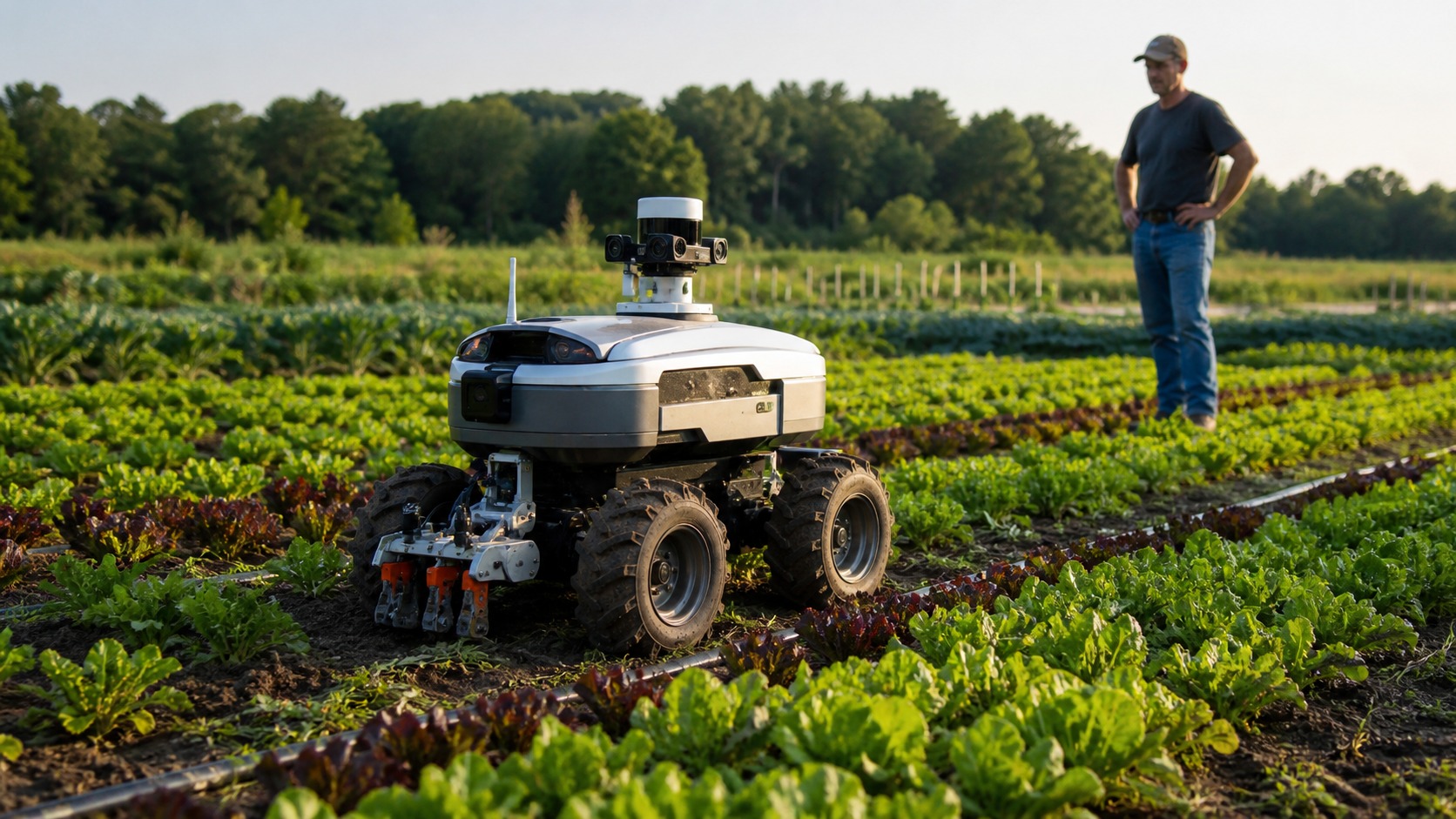
The tool is often the hardest part. Moving through a row is one challenge; touching a plant without damaging it is another. A harvester needs to recognize ripe produce, reach it, grip it, detach it, and place it gently. A weeding robot needs to remove weeds without injuring the crop.
Precision matters because farms deal with living products. A bruised strawberry, broken stem, compacted soil patch, or overapplied chemical has real cost. Agricultural robots need mechanical design that is practical, not just clever.
The best systems match the tool to the crop and the workflow. A robot built for lettuce weeding is not automatically useful for apples, dairy barns, or vineyards. Tool design is where farm knowledge becomes visible. A weeding tool must understand row spacing and root risk. A sprayer must consider drift, coverage, nozzle placement, and weather. A harvesting gripper must match the fruit, stem, ripeness, and container. A transport robot must handle paths, gates, mud, and crate weight. Agricultural robotics succeeds when the machine respects agronomy and daily farm practice, not only robotics theory. Human supervision remains part of many systems. A farm robot may handle a row pass while a person sets boundaries, monitors progress, moves it between blocks, clears obstacles, or checks results. This partnership is normal. The goal is useful automation, not a fantasy of a farm that runs without skilled people. Some farm robots are designed for assistance rather than full task ownership. A cart robot may follow workers, a platform may position people more comfortably, and a scouting robot may mark locations for later human inspection. These systems still count as agricultural robots when they improve farm work. Full independence is not required for practical value.
Common Farm Uses Are Expanding
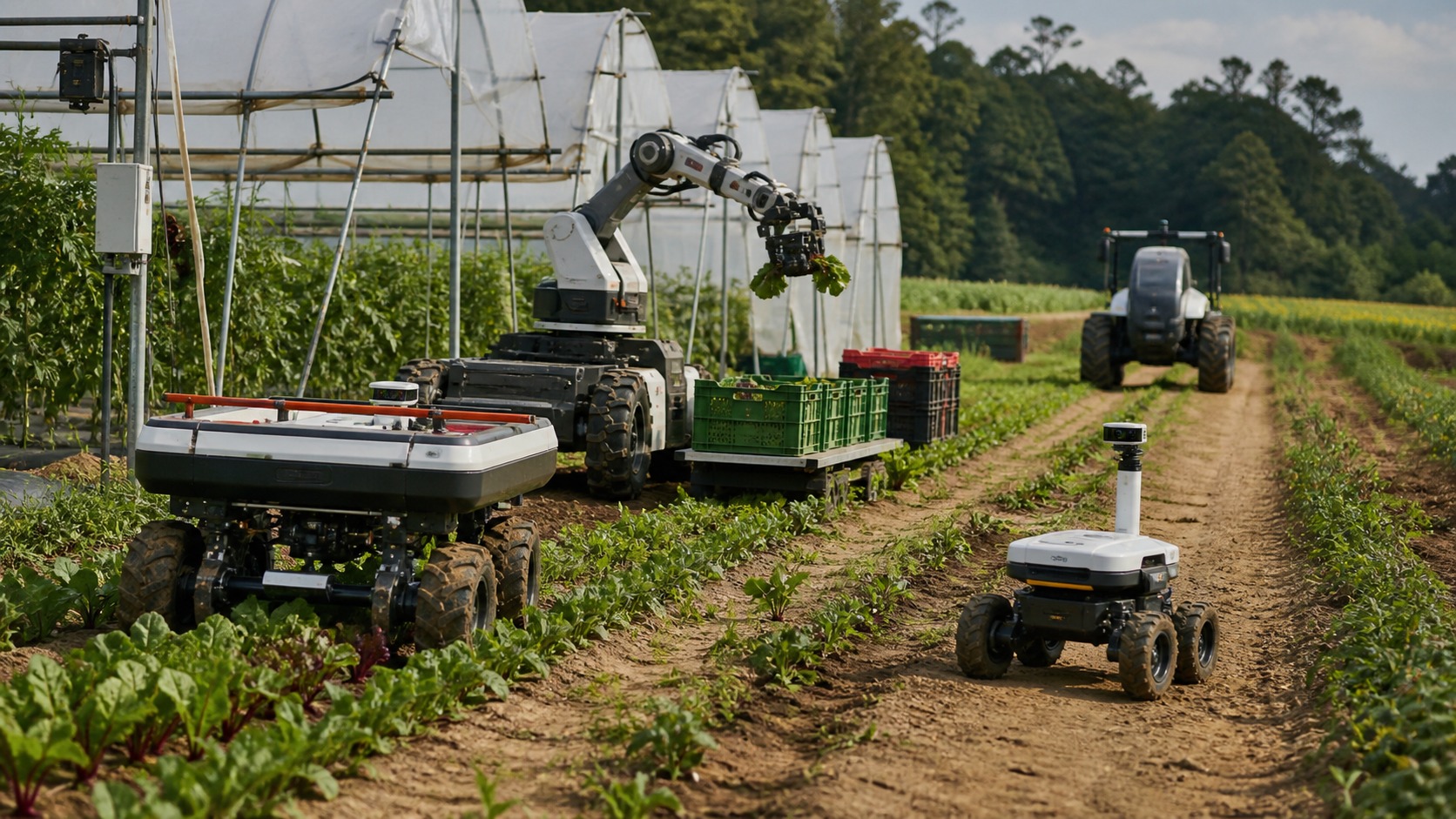
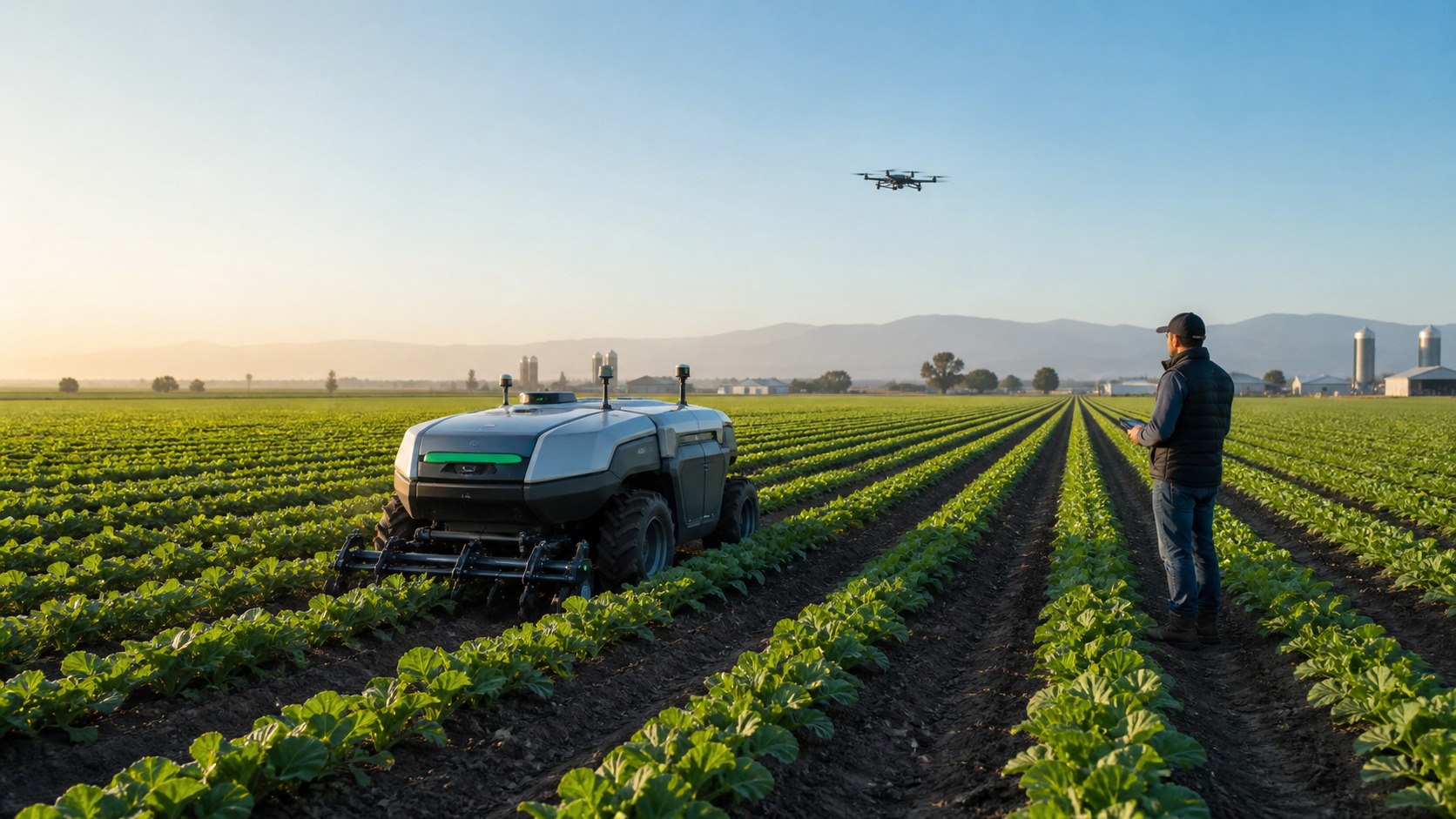
Agricultural robots already appear in several areas. Field scouting robots collect crop data. Weeding robots reduce manual labor and chemical use. Harvest robots target high-value crops where labor is difficult. Drones and ground vehicles support mapping, spraying, and inspection. Dairy robots help with milking and barn routines.
Greenhouses are especially promising because the environment is more controlled than open fields. Robots can move along known paths, inspect plants, transport trays, or assist with harvesting. Orchards and vineyards also attract robotics because rows provide structure, but branches and fruit visibility still create difficulty.
Not every farm needs the same robot. Large row-crop operations, specialty vegetable farms, orchards, vineyards, dairies, and greenhouses have different economics and constraints. Different uses also create different levels of autonomy. A drone might fly a planned survey while a person reviews the imagery later. A dairy robot might run many routine cycles with animal-specific data. A field robot might need a supervisor nearby because weather, people, animals, and equipment can change the scene quickly. Beginners should avoid treating autonomy as a single yes-or-no feature. Farm autonomy is usually a managed relationship between machine, operator, field, and season. Farm use also depends on integration with existing equipment. A robot may need to fit row spacing, bed width, irrigation layout, headlands, gates, trailers, wash stations, packing areas, and storage sheds. If the surrounding workflow is ignored, the robot may finish its task but still create bottlenecks. Practical robotics looks beyond the machine to the whole farm route. Safety also includes animals and visitors. Barn robots may work around cows or poultry, while field robots may encounter workers, contractors, children, or service vehicles. The robot's behavior should be understandable to people nearby. Clear lights, predictable stopping, defined zones, and training all help make automation fit a working farm.
Benefits Depend on Fit, Timing, and Reliability
Agricultural robots can reduce repetitive labor, improve timing, collect better data, apply inputs more precisely, and help farms manage difficult work. They can also support safer work by limiting exposure to chemicals, heat, repetitive bending, or hazardous equipment areas.
The benefits only appear when the robot fits the operation. A robot that requires perfect field preparation may struggle on a farm with varied beds. A harvester that works too slowly may miss the market window. A scouting robot that creates data no one uses may add complexity without improving decisions.
Reliability matters because farm work is seasonal. If a robot fails during a narrow weeding or harvest window, the farm may not get another chance. Support, spare parts, cleaning, charging, transport, and maintenance need to be part of the plan.
Farmers judge robots by useful work under real conditions, not by a polished demonstration. Reliability includes cleaning and transport. A robot that works in soil must be washed, inspected, charged, moved between fields, protected from weather, and repaired without delaying the crop schedule. Those practical details decide whether automation feels helpful or burdensome. Farms already run on tight windows, so downtime has a different meaning than it does in a showroom. A good agricultural robot must earn trust through ordinary days, not only through a successful demonstration. Service support is part of reliability. Farms need to know who answers when the robot stops, how quickly parts arrive, and whether repairs can happen during the season. A robot may be technically advanced but commercially weak if support is too far away. In agriculture, uptime is not just convenience. It protects the crop calendar. Beginners should therefore evaluate farm robots with plain questions. What task does it improve? What crop or animal system does it fit? What happens when it stops? Who cleans it, repairs it, supervises it, and uses the data? Those questions reveal whether the robot belongs in the operation. That is why pilots should include ordinary operating days, not only ideal trials.
Beginner Takeaway
Agricultural robots are best understood as farm-specific automation tools. They combine sensing, movement, software, and implements to help with jobs that are repetitive, time-sensitive, labor-intensive, or data-heavy. The right robot depends on the crop, environment, task, season, support model, and economics. A useful machine solves a farm problem better than the existing method.
The simplest beginner rule is to ask what farm job the robot improves.
That question keeps the technology grounded.