Agricultural Robots Are Changing the Timing, Precision, and Labor of Farm Work
Agricultural robots are transforming modern farming by helping farms perform difficult, repetitive, time-sensitive, and data-heavy tasks with more consistency. They are not changing every farm in the same way, and they are not removing the need for farmers. Their impact is more practical: better crop monitoring, more targeted spraying, robotic weeding, assisted harvesting, autonomous field work, dairy automation, and new ways to manage labor pressure. The transformation is happening where robots fit real farm constraints, especially when they help farms act at the right moment with better information and less waste.
A: Scouting, weeding, dairy routines, targeted spraying, greenhouse support, and selected harvest assistance are moving quickly.
A: No. They depend on farm knowledge for timing, crop context, safe operation, and useful interpretation.
A: Precision helps farms focus work, inputs, and attention where the crop actually needs them.
A: Cost, uptime, service access, weather, crop variation, training, and uncertain payback slow adoption.
A: People often shift toward supervision, maintenance, exception handling, data review, and higher-judgment tasks.
A: No. Data helps only when it supports a specific farm decision or timely action.
A: Farms with clear pain points, repeatable layouts, valuable crops, and service support often benefit earlier.
A: No. Smaller robots, drones, dairy systems, greenhouse tools, and harvest aids also matter.
A: They should demand reliable work, honest limits, practical support, safety, and measurable economics.
A: Robots help farms act with better timing, precision, records, and consistency under real conditions.
Robots Help Farms Work at the Right Time
Farm work is shaped by timing. Weeds need to be controlled while they are small. Fruit needs attention when it reaches the right ripeness. Irrigation problems need to be found before stress spreads. Pest pressure needs early detection. Agricultural robots help by making repeated observation and repeated action easier to schedule.
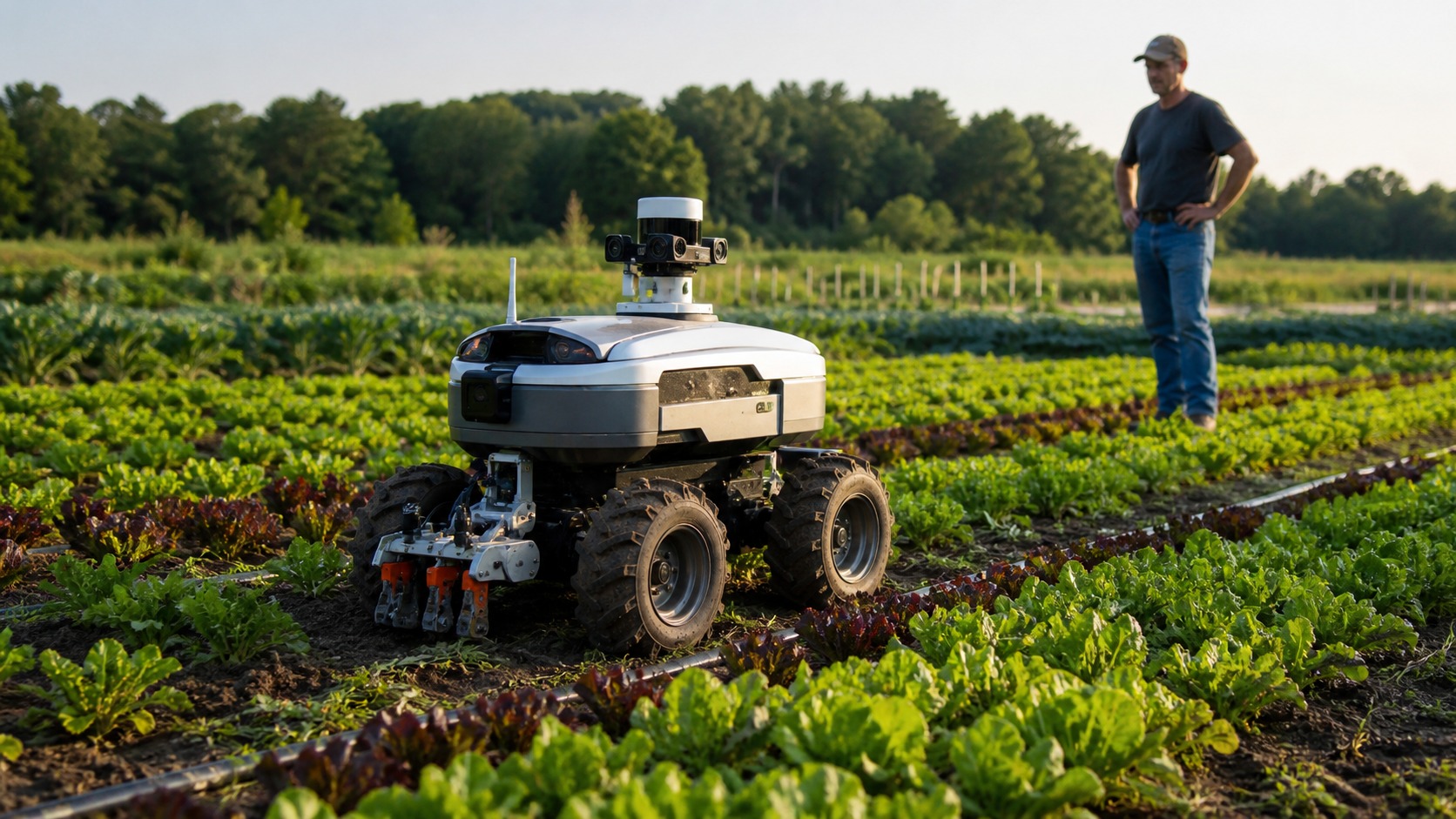
A scouting robot can move through rows and collect information more often than a person might manage during a busy week. A weeding robot can return to a field at the stage when mechanical control works best. A robotic milking system can support routines across the day instead of depending only on fixed labor windows.
This timing advantage is one of the quiet ways robotics changes farming. The robot does not need to be dramatic to matter. If it helps a farm act earlier, more consistently, or with fewer missed passes, the operation can change.
Modern farming increasingly rewards systems that notice problems early and respond before the window closes. Timing also changes risk. A delayed pass can mean weeds become too large, pests spread, fruit softens, or irrigation stress becomes visible too late. Robots that support frequent field attention can help farms move from reactive work toward earlier intervention. That shift is subtle but powerful. The farm still needs agronomic judgment, but the robot can help make the right observation or action happen before the cost of delay grows. Timing gains can also help with quality. Produce, forage, and specialty crops often lose value when operations happen too early or too late. Robots that help farms monitor conditions or complete repeated passes can support more consistent quality. That improvement may be less visible than a dramatic machine demonstration, but it matters in markets where timing and uniformity affect price. Transformation also appears in how farms think about scale. A small robot working every day may sometimes be more useful than a large machine used rarely. A fleet of smaller units can spread risk, reduce soil pressure, and work in tighter spaces. That does not make small robots universally better, but it widens the design choices available to farms.
Precision Reduces Waste and Rework
Many agricultural robots are designed for precision. Instead of treating a whole field the same way, a robot might identify individual weeds, target a small spray zone, map crop vigor, or handle produce one piece at a time. Precision matters because inputs, labor, fuel, soil health, and crop quality all affect profit.
Targeted action can reduce unnecessary chemical use, limit crop damage, and improve records. A robot that sees plant-level differences gives farmers more detailed information than a broad visual estimate from the field edge. That detail is useful only when it supports a decision, but the potential is important.
Precision also changes expectations. A farm may begin thinking less in terms of whole-field averages and more in terms of zones, rows, plants, and moments. Precision is also tied to accountability. When a robot records where it worked, what it saw, and what treatment it applied, the farm gains a better history of the season. That record can support food safety, input planning, sustainability reporting, and future field decisions. The value is not simply that the robot is accurate in the moment. It is that the farm can learn from many moments and improve the next pass. Precision can also reveal variability that farms already suspected but could not measure easily. One end of a field may drain differently, one block may show stress sooner, and one row may have a recurring weed problem. Robots that collect detailed observations help turn those suspicions into mapped evidence. The value appears when that evidence changes management. Precision has cultural effects too. When farms see more detailed evidence, teams may begin asking more detailed questions. Instead of asking whether a field is healthy, they ask which rows, zones, or growth stages need attention. That shift can make management more specific. The robot supports a more granular view of the farm.
Robots Support Labor Instead of Simply Replacing It
Labor pressure is one of the biggest reasons farms consider robotics. Many farm jobs are physically demanding, seasonal, repetitive, or difficult to staff. Robots can help with tasks that involve bending, carrying, monitoring, washing, milking, weeding, or working in heat and dust.
That does not mean every worker disappears. Farms still need people to plan, supervise, repair, interpret data, move equipment, manage crops, and make decisions. Robotics often changes labor rather than eliminates it. A person may shift from repeated manual passes to supervising several machines, maintaining equipment, or reviewing field information.
This shift requires training. A robot introduced without operator confidence, service planning, and workflow clarity can create new frustration. A robot introduced with the right support can make hard jobs more manageable and help farms use human skill where it matters most.
The transformation is therefore partly technical and partly organizational. Farms need machines that work, but they also need routines that make those machines useful. Labor transformation often begins with the least glamorous jobs. Repeated walking, bending, hauling, cleaning, or checking can drain time and attention from skilled work. A robot that handles part of that burden does not make people irrelevant. It can give people more room to manage quality, respond to exceptions, maintain equipment, and make choices that require judgment. This is especially important on farms where experienced workers are difficult to replace. Labor support is especially important when tasks compete for the same people. During busy windows, a crew may need to scout, weed, irrigate, move supplies, and prepare harvest at the same time. A robot that reliably handles one repeated task can free attention for the decisions and exceptions that require experience. That is a practical transformation, even without full autonomy. Training becomes part of modernization. A farm adopting robots may need people who understand equipment, crops, software, safety, and data. Those skills do not replace traditional farm knowledge; they build on it. The most successful operations often pair experienced growers with technically confident operators so the machine's output is interpreted in context.
Field Data Becomes More Actionable
Robots can collect data while they work. A scouting rover might record plant health, stand counts, weed locations, soil conditions, or irrigation issues. A robotic implement might document where treatment occurred. A dairy robot might track patterns in milk production or animal visits.
Data only transforms farming when it leads to action. A beautiful map is not enough if no one uses it to change irrigation, scouting, harvest planning, spraying, or labor allocation. The strongest robotic systems connect measurement to a practical next step.
This is why farm robotics often grows alongside farm management software, agronomy advice, and service support. The robot gathers evidence, but the farm still needs judgment. Actionable data also depends on presentation. A farm does not need endless files that no one has time to interpret. It needs clear signals: which rows need attention, which zone changed, which plants are stressed, which task should happen next, and how confident the system is. Robotics becomes more useful when data arrives in a form that fits existing farm decisions. Otherwise the robot simply moves the burden from the field to the office. Data also changes relationships with advisers and service providers. Agronomists, equipment dealers, software teams, and farm managers may all interpret information from robotic systems. That can improve decisions, but it also requires clear ownership. Someone must decide which alerts matter, which maps are trusted, and which actions follow. Without that discipline, data volume can rise without improving the farm. The transformation is also incremental. A farm may begin with a scouting tool, then add targeted treatment, then test autonomous transport or field work. Each step teaches the team what support, maintenance, and data habits are needed. Gradual adoption can be smarter than a dramatic overhaul.
Adoption Is Uneven but Meaningful
Agricultural robotics is not advancing evenly across all crops and regions. Some tasks are easier to automate because the environment is structured, the crop is valuable, or the labor problem is severe. Greenhouses, dairies, orchards, vineyards, and high-value vegetable operations often have clearer early use cases than highly variable low-margin tasks.
Costs, service, reliability, weather, field layout, and crop variability slow adoption. A robot that works in one region may need changes for another crop system. Farmers are right to be skeptical of technology that looks impressive but does not survive the season.
Still, the direction is clear. Agricultural robots are becoming part of a broader move toward precision, automation, and data-informed farming. The best systems earn trust through useful work, not novelty.
Transformation happens when the machine fits the farm. Meaningful adoption also requires trust over more than one season. A robot that performs well in dry conditions must still be evaluated after mud, heat, dust, crop residue, staff turnover, and maintenance cycles. Farmers often adopt slowly because they have seen tools fail when conditions change. That caution is rational. Agricultural robots transform farms only when they prove that the benefits survive real operating pressure. The farms that benefit most are often the ones that define the problem narrowly. Instead of asking for a robot to transform everything, they ask for help with a specific repeated pain point. That might be scouting a crop block, pushing feed, removing early weeds, or moving trays. Narrow success builds trust, and trust creates room for wider adoption later. Robots also force clearer thinking about tasks. When a farm tries to automate a job, it must define where the job starts, where it ends, what success looks like, and which exceptions matter. That clarity can improve the workflow even before the robot handles every part of it. The best changes are measurable, repeatable, and understandable to the people running the farm.
What the Future Looks Like
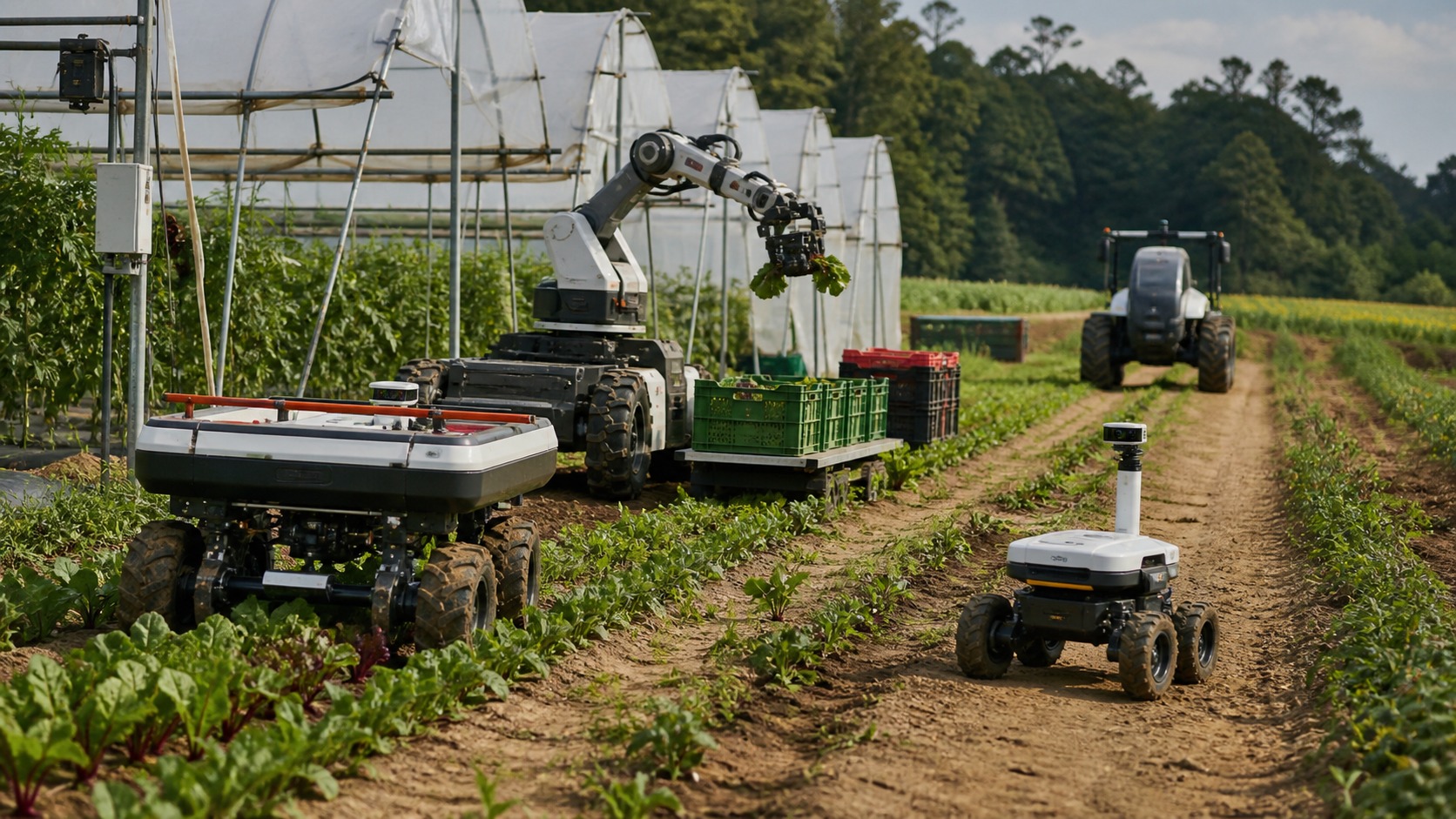
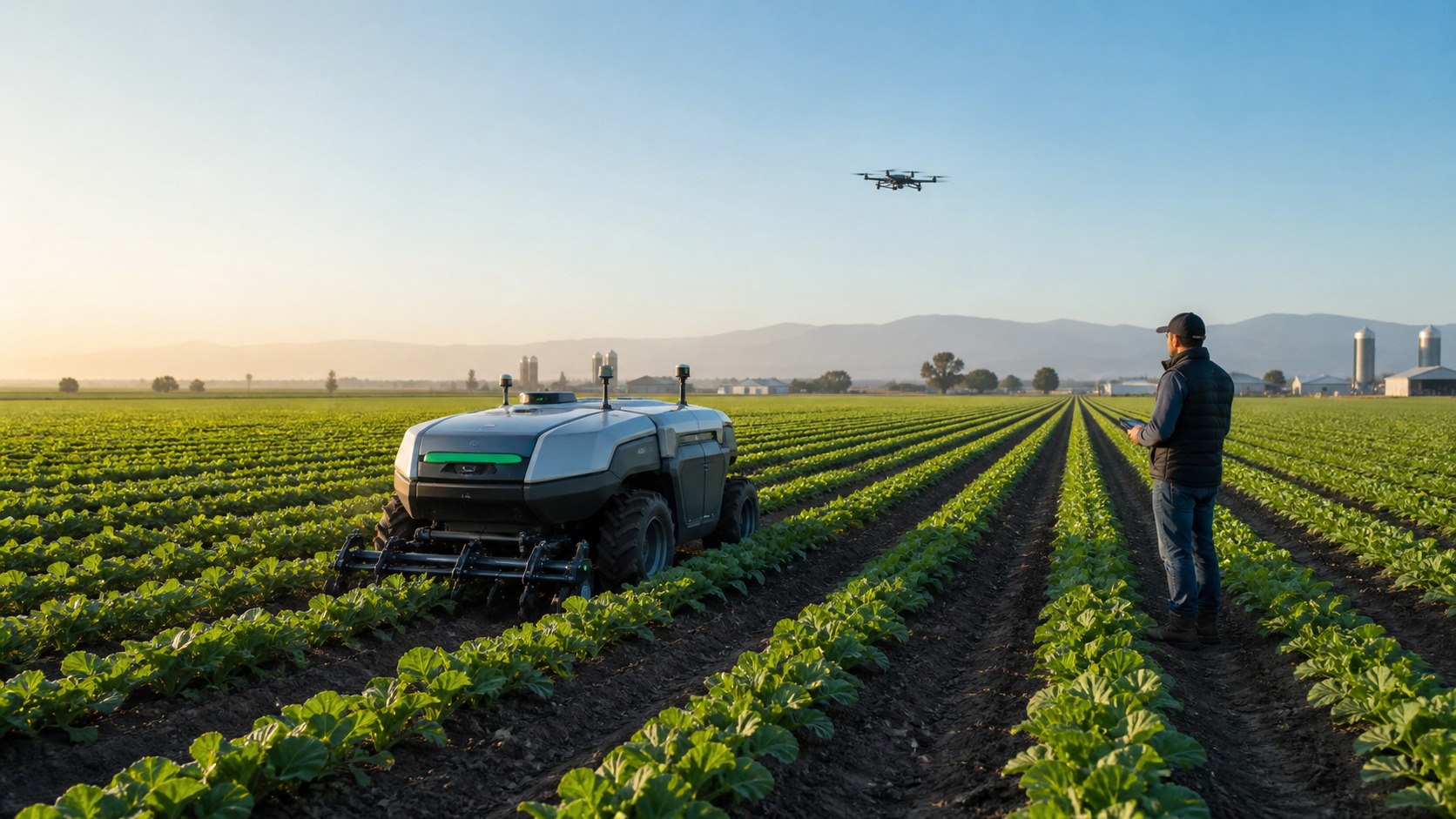
The future of agricultural robotics is likely to be mixed rather than dominated by one machine. Farms may use autonomous tractors for some operations, small robots for row tasks, drones for scouting, barn robots for routine animal care, and software that connects those activities. The most important progress may be practical: better uptime, simpler service, safer autonomy, clearer economics, and tools that fit real crops. Farmers do not need technology theater. They need dependable help during difficult windows.
Agricultural robots are transforming farming by making some jobs more precise, more repeatable, and easier to schedule.
The farm still sets the terms.