Educational Robots Teach Skills, While Research Robots Test Unknowns
Educational robots and research robots overlap, but they are built for different kinds of progress. Educational robots help students learn robotics concepts through hands-on activity. Research robots help researchers test new ideas where the answer is not known yet. Both can use sensors, motors, code, data, and mechanical design, but the expectations are different. A classroom robot should make learning approachable and reliable. A research robot should make experiments flexible, measurable, and repeatable. Understanding the difference helps schools, labs, parents, and buyers choose the right tool instead of treating every robot kit or lab platform as the same kind of machine.
A: Educational robots usually fit first lessons because they reduce setup friction and show concepts quickly.
A: Research robots fit experiments that require measurement, access, modification, and repeatable trials.
A: Yes, but the activity must clearly define whether learning or evidence is the lead purpose.
A: They expose more system detail and expect users to own calibration, software, and maintenance.
A: They hide selected details so learners focus on the concept being taught.
A: Only when teachers and students need deeper access and have support for technical setup.
A: A lab might use one for a cheap early test, outreach activity, or small controlled prototype.
A: Ask whether the robot needs to teach a concept or produce research evidence.
A: Neither. Each is serious when the robot fits the work it is meant to support.
A: Educational robots build understanding; research robots test robotics questions.
The Main Difference Is the Goal
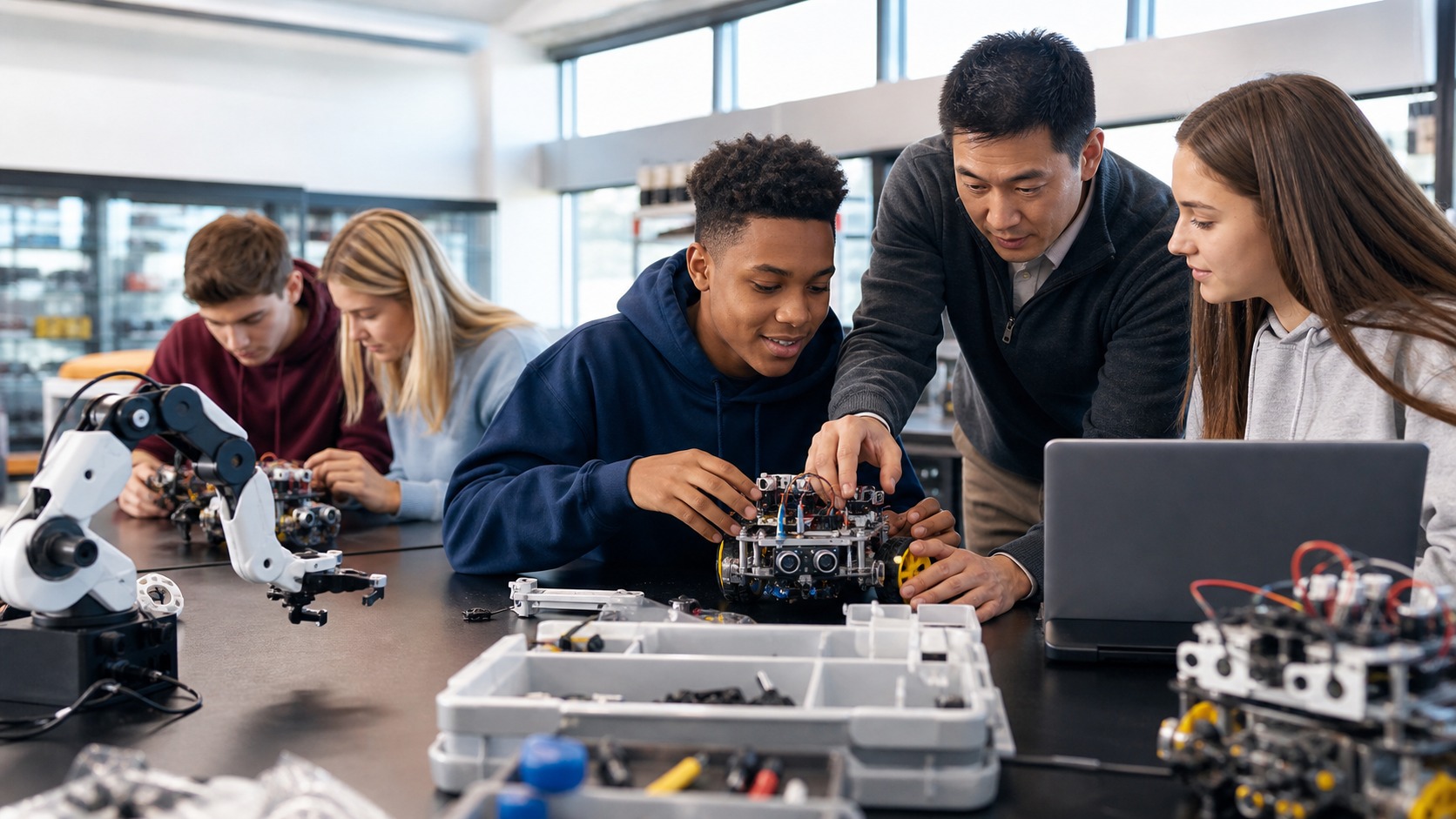
An educational robot is designed around learning. It should help someone understand sequencing, loops, sensors, movement, debugging, mechanics, teamwork, or systems thinking. The robot is a teaching medium. Its success is measured by whether learners become more capable and confident.
A research robot is designed around investigation. It helps a team answer a question that may not have a settled answer. The question might involve a new control method, navigation strategy, gripper, perception model, safety behavior, or human-robot interaction pattern. The robot is an experimental platform.
This goal difference changes almost everything. Educational robots need clarity, durability, lesson fit, and low frustration. Research robots need access, measurement, configurability, and room for failure. Both can be valuable, but they serve different stages of robotics work.
A beginner can sort the two by asking what the robot is supposed to produce: understanding in learners or evidence for a research question. This distinction matters because both categories can look similar on a table. A small wheeled robot with sensors could be a classroom kit in one room and a research prototype in another. The difference is the job it is asked to do. If the activity is designed so learners discover a concept with guided support, the robot is acting as an educational tool. If the activity is designed to test an uncertain method and produce evidence, the robot is acting as a research platform. The difference also affects assessment. In a classroom, success might be a student explaining why a sensor threshold changed the robot's path. In a lab, success might be a statistically useful comparison between two navigation methods. Both outcomes are meaningful, but they ask for different evidence. Educational assessment looks for understanding, while research assessment looks for supportable claims. Another practical clue is tolerance for ambiguity. Educational robots should reduce ambiguity enough that learners can connect cause and effect. Research robots often preserve ambiguity because the work is to investigate it. A class activity may ask students to make a robot stop at a line; a research project may ask why three stopping methods behave differently under changing light and floor conditions.
Educational Robots Prioritize Accessibility
Educational robots usually simplify parts of robotics so learners can engage without being overwhelmed. Younger students might use block coding, visible sensors, durable plastic parts, and immediate feedback. Older students might use Python, motor controllers, data logs, and modular hardware while still working inside a guided curriculum.
That accessibility is not a weakness. Good teaching tools remove unnecessary barriers while preserving the core lesson. A robot does not need every professional feature to teach cause and effect, iteration, calibration, or debugging. It needs enough openness for students to make decisions and see the results clearly.
Schools also care about practical classroom constraints. Charging, storage, repair, replacement parts, teacher documentation, device compatibility, and setup time affect whether the robot remains useful after the first few lessons. Accessibility also includes emotional design. Students need a robot that makes mistakes visible without making the whole lesson collapse. If every small wiring issue, software dependency, or calibration step becomes a blocker, learners spend more time fighting the system than understanding robotics. Good educational robots create a path from simple success to deeper exploration. They give beginners enough control to feel ownership while protecting the lesson from unnecessary technical noise. Teachers also need robots that work across many learners at once. A tool that is exciting for one advanced student may be too fragile or confusing for a full class. The best educational robot balances openness with repeatability so every group gets a fair chance to build, test, and improve. That classroom-scale reliability is a design requirement, not an optional convenience. Classroom durability also changes design priorities. Parts are handled repeatedly, batteries are shared, sensors are bumped, and students make unpredictable choices. A robot that survives those realities supports learning better than one that is technically impressive but fragile. The best educational systems are humble in the right ways: clear, repairable, safe, and ready for repeated use.
Research Robots Prioritize Flexibility and Measurement
Research robots often expose more of the system. A lab may need access to sensor streams, motor commands, robot state, timing, logs, middleware, mechanical mounts, and computing hardware. Researchers need to change the robot because the experiment itself might change after early results.
Measurement is central. A research platform should support repeatable trials, clear data collection, and comparison against earlier methods. If a navigation algorithm works in one hallway but fails in a crowded lab, the team needs enough evidence to understand why. The robot must reveal behavior rather than hide it.
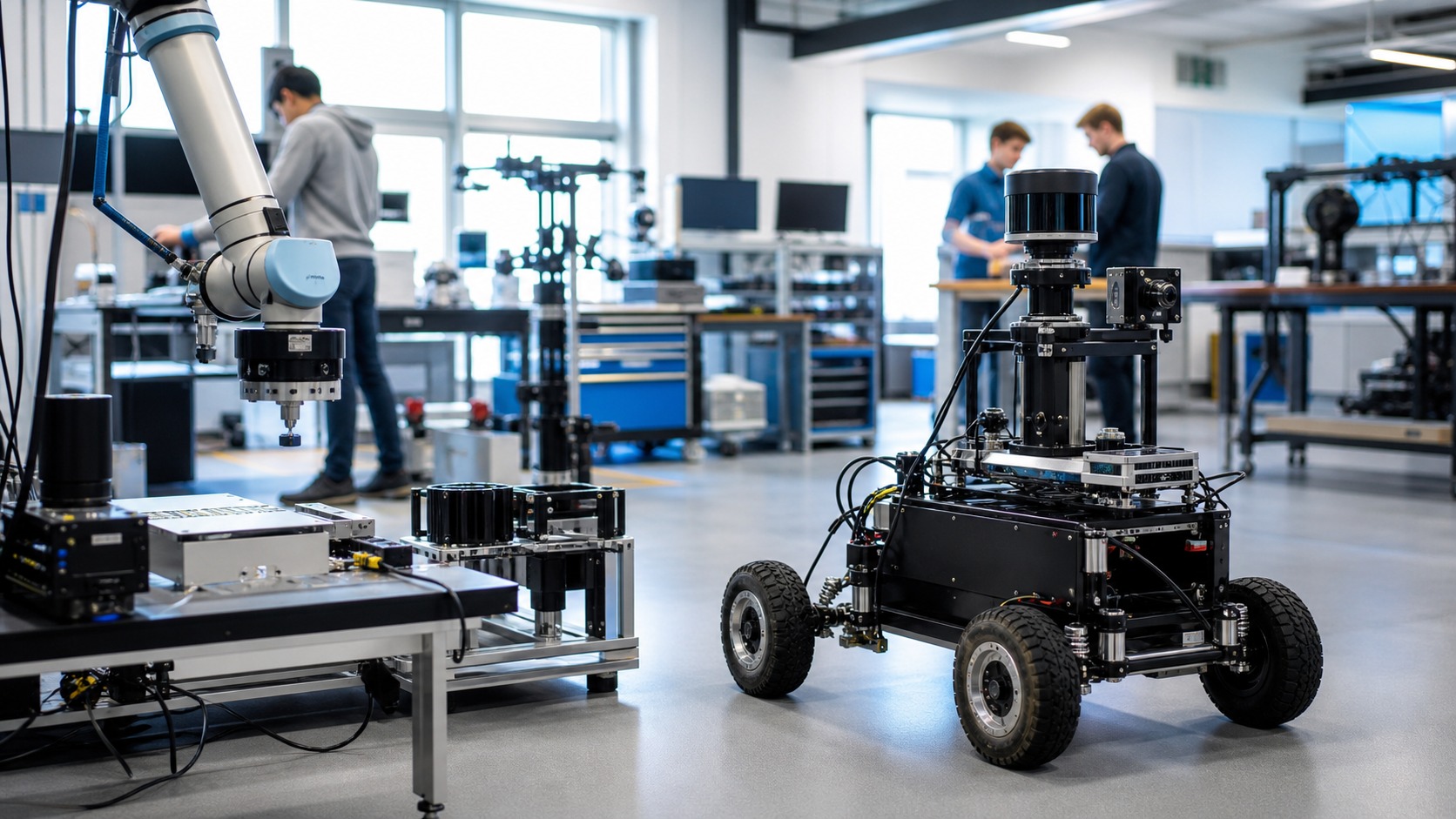
This is why research robots may look unfinished compared with educational robots. Exposed mounts, external sensors, and modular wiring can be intentional. They make the platform easier to adapt and inspect. A polished shell might be less useful if it blocks access to the parts being studied.
The tradeoff is complexity. Research robots often require more technical skill, more maintenance, more safety review, and more patience with failure. Research flexibility has a different rhythm. A lab may accept awkward setup, fragile parts, or complex software if those choices expose the variables being studied. A platform that requires careful calibration might still be the right tool when the experiment depends on high-quality data. The research team expects to maintain, modify, and sometimes repair the robot as part of the work. That ownership would be unreasonable in many classrooms but normal in an advanced lab. Research teams, meanwhile, often accept a steeper learning curve because the platform is part of the investigation. If a sensor driver needs adjustment or a mount needs redesign, that effort may be justified by the quality of the experiment. The platform is not just a teaching aid. It is part of the method, and method quality affects the value of the result. Labs may also need integration with external tools. A research robot might connect to motion capture, simulation environments, custom datasets, cloud training jobs, lab safety systems, or specialized test fixtures. Those connections are rarely necessary for beginner learning, but they can be essential for publishable or product-relevant experiments.
Users and Support Needs Are Different
Educational robots are often used by students, teachers, after-school programs, clubs, and beginners. The support model needs to work for people who may be learning robotics at the same time they are using the robot. Clear instructions, safe behavior, and forgiving setup matter.
Research robots are used by labs, graduate students, engineers, faculty, advanced students, and company research teams. The support model assumes deeper technical ownership. Users may read documentation, edit code, replace components, calibrate sensors, and design formal tests.
This difference affects buying decisions. A school should not choose a research platform just because it looks advanced if teachers cannot support it. A lab should not choose a sealed classroom robot if the experiment requires low-level access. Support also affects safety. Educational robots usually need safe default speeds, simple reset steps, and activities that teachers can supervise across a room. Research robots may require lab protocols, restricted workspaces, emergency stops, battery handling rules, and documented operating procedures. Neither approach is inherently better. The right support model is the one that matches the users, the environment, and the consequences of a mistake. Support materials also look different. Educational robots benefit from lesson plans, troubleshooting guides, teacher notes, sample projects, and age-appropriate activities. Research robots benefit from technical manuals, software repositories, calibration steps, hardware drawings, driver documentation, and issue tracking. Both types need documentation, but the reader and purpose are different. The user relationship is different as well. Students are usually meant to outgrow the robot as their understanding deepens. Researchers are often meant to reshape the robot as the question evolves. That difference explains why a good educational robot can feel guided, while a good research robot can feel unfinished.
The Categories Can Overlap
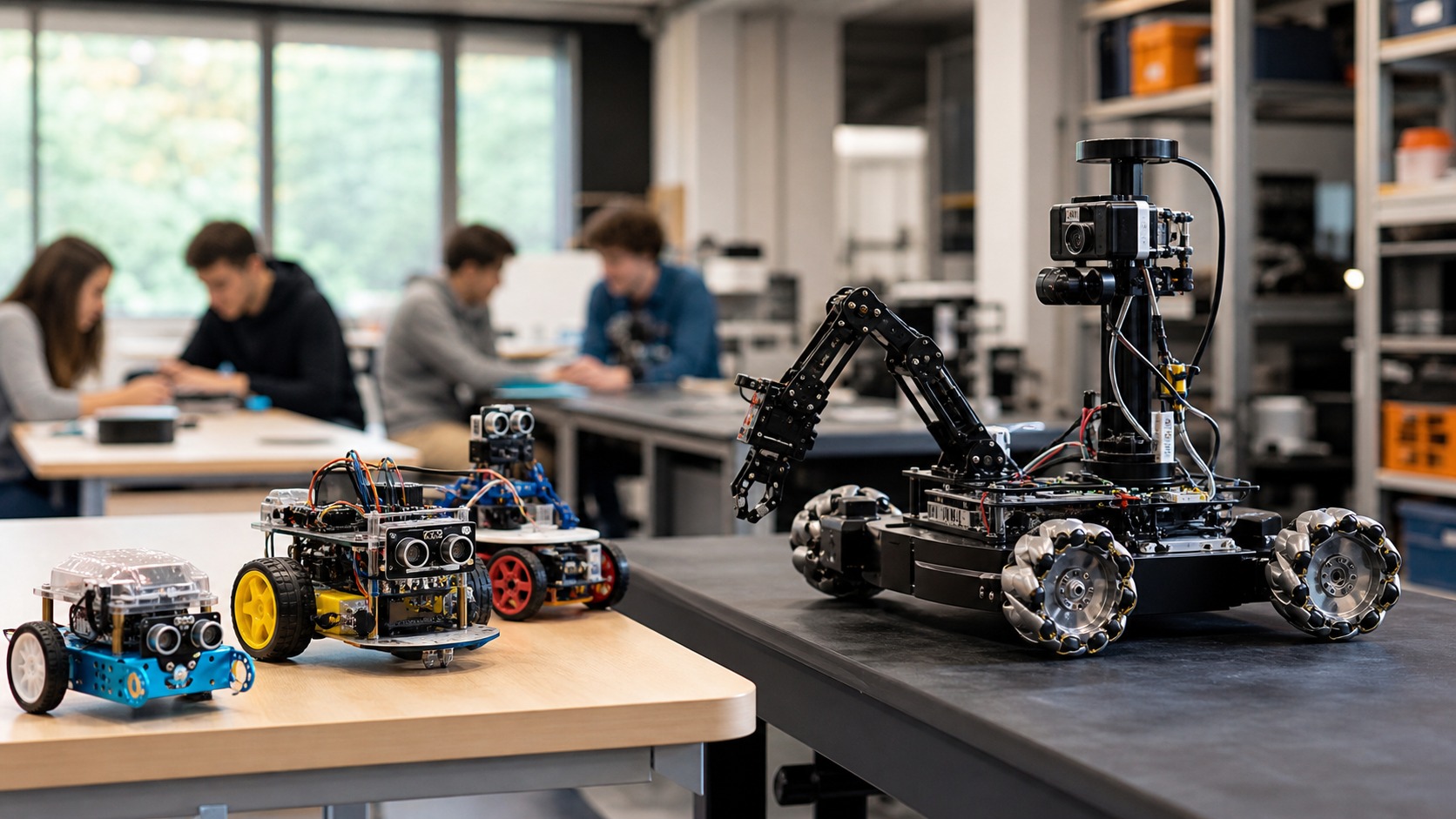
Some robots live between the two categories. A university course might use a research-style mobile platform for advanced teaching. A high school robotics club might use an educational kit for small experiments. A lab might begin with an educational robot to test an idea cheaply before moving to a more capable platform.
The overlap is useful, but it does not erase the distinction. The same physical robot can be educational in one setting and research-oriented in another if the task, users, and measurement expectations change. Context matters more than appearance.
The safest way to evaluate a robot is to define the job first. If the goal is teaching, ask whether learners can use the robot productively. If the goal is research, ask whether the platform exposes enough of the system to test the question properly.
A robot can support both learning and inquiry, but one purpose usually leads the design. Overlap becomes productive when expectations are explicit. A teacher using a more advanced platform can still create a structured learning path. A researcher using a simple kit can still design a careful experiment. Problems arise when the label is used as a shortcut. A robot sold as educational may not provide enough access for research. A robot sold as a research platform may bury beginners in setup. The buyer needs to name the purpose before judging the machine. The clearest purchases often start with a written use case. A school might write that students need to learn sensor-based line following, collaborative design, and basic Python. A lab might write that it needs synchronized camera and lidar data for navigation trials. Those statements point to different requirements. They also make it easier to reject impressive features that do not serve the actual work. In the end, the categories are not ranks. A research robot is not automatically more valuable, and an educational robot is not automatically less serious. Each is serious when it serves its purpose well. The comparison is useful because it keeps people from buying complexity when they need clarity, or buying simplicity when they need evidence.
How to Choose Between Them
Choose an educational robot when the main goal is learning, confidence, classroom workflow, structured projects, or beginner access. Choose a research robot when the main goal is experimentation, publication, product discovery, algorithm testing, or hardware investigation. Budget should follow purpose. Educational robots often need quantity, durability, and teacher support. Research robots often need expandability, precision, computing power, and technical documentation. Paying for the wrong strengths creates frustration.
The simplest distinction is that educational robots make robotics understandable, while research robots make robotics testable.
That difference keeps the choice clear.