An Iconic Movie Robot Is Remembered as a Character, Not an Effect
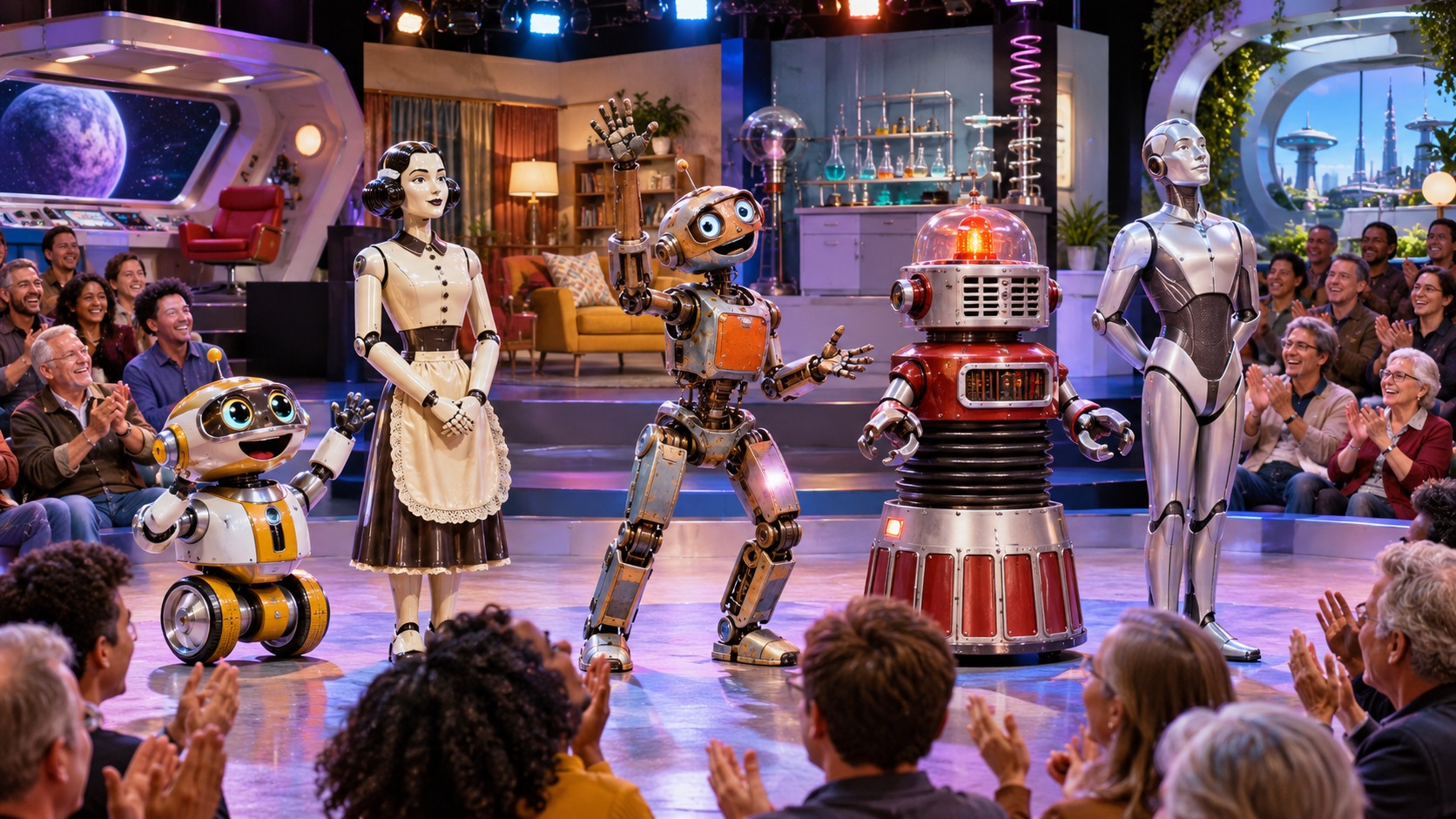
Cinema has given robots polished bodies, battered shells, human faces, single glowing eyes, and no visible body at all. The designs vary because “robot” is doing different dramatic work: servant, monster, child, soldier, conscience, mirror, or lonely survivor. What the icons share is legibility. Audiences can recognize a silhouette, infer intention from movement or sound, and understand what the machine wants even when it speaks in beeps. Technical spectacle may earn attention on opening weekend, but affection comes from story. A beloved robot changes, chooses, protects, fails, or reveals something uncomfortable about its human companions. The following characters are iconic not because they form an objective ranking, but because their visual and emotional languages continued to influence movies and audience memory.
A: Metropolis made Maria's metallic humanoid form one of cinema's foundational robot designs.
A: HAL is an embodied spacecraft AI rather than a mobile robot, but agency and environmental control place the character in robot-film history.
A: Their contrasting bodies, communication styles, temperaments, and abilities create a readable comic partnership.
A: Consistent pursuit, visible damage, and a mechanical body that ignores pain turn persistence into personality.
A: Expressive mechanics and intense curiosity allow audiences to interpret learning as an individual desire to live.
A: He is more accurately a cyborg because human identity and biological remains persist within a heavily mechanized body.
A: Attention, posture, timing, sound, habits, and choices create a coherent emotional performance.
A: Soft volume, minimal features, deliberate movement, and a healthcare purpose establish safety before armor appears.
A: No. Emotional and visual coherence often matter more, though believable physical rules strengthen performance.
A: They make human concerns about labor, control, care, identity, violence, and moral choice visible through machines.
Maria Made the Screen Robot a Modern Image
The Maschinenmensch in Fritz Lang’s Metropolis gave cinema one of its earliest indelible robot silhouettes. Its sculpted metallic body combines human proportion with hard geometric surfaces, making the figure both alluring and visibly manufactured.
The story uses the robot as a deceptive double, connecting machinery with class, spectacle, and fear of manipulated crowds. Audiences remember the transformation because design and theme arrive in the same image.
Later humanoid robots repeatedly return to this tension: a familiar body whose surface announces that something about identity has been engineered.
Gort Turned Stillness Into Overwhelming Power
In The Day the Earth Stood Still, Gort is memorable for restraint. The smooth, towering figure does not need frantic movement to feel dangerous. Scale, silence, and an unreadable visor imply capacity beyond human weapons.
Robby the Robot Made Machinery Personable
Forbidden Planet gave Robby a complex transparent-dome head, rotating components, and a sturdy humanlike frame. The design displays machinery instead of hiding it, yet voice and behavior make Robby approachable.
Robby became larger than one film through appearances, publicity, and imitation. Audiences could recognize the body immediately, proof that a robot silhouette can function like a star’s face.
HAL 9000 Proved a Robot Character May Barely Have a Body
HAL in 2001: A Space Odyssey is an artificial intelligence embedded throughout a spacecraft rather than a walking robot. The repeated camera eye and calm voice create physical presence across the ship. Consistency makes an invisible system feel like one character.
HAL’s politeness intensifies unease because performance remains controlled while intentions become threatening. Audiences respond to the gap between soothing delivery and irreversible authority.
The character expanded cinematic robotics beyond metal bodies. Interface, voice, environment, and control can form a robot identity when the story gives them agency.
R2-D2 Communicates Through Action and Sound
R2-D2 has no human face and speaks in electronic tones, yet posture, timing, dome movement, and relationships make emotion clear. The droid acts decisively, carries information, repairs systems, and often understands danger before human companions do.
C-3PO Turns Mechanical Rigidity Into Comedy
C-3PO’s restricted gait, formal posture, anxious voice, and elaborate etiquette create a personality from constraint. The polished humanoid body suggests sophistication while the character’s worry and social misjudgment make that sophistication fragile.
Together, R2-D2 and C-3PO demonstrate contrast design. One is compact and action-oriented; the other tall and verbal. Their disagreements allow audiences to read robotic behavior through a familiar comic partnership.
The T-800 Made the Robot an Unstoppable Physical Threat
The Terminator builds fear through persistence. The human disguise can be injured and removed, revealing a mechanical skeleton whose purpose does not weaken with pain or negotiation. The design turns endurance into character.
Later films complicate the icon by placing a related machine in a protective role. That reversal works because the original threat is so clear; audiences watch programmed purpose encounter attachment, sacrifice, and learned behavior.
The character remains influential because performance, prosthetic effects, stop-motion, animatronics, and digital imagery all serve one simple dramatic rule: it keeps coming.
ED-209 Uses Awkwardness to Satirize Automated Authority
In RoboCop, ED-209 is heavily armed and imposing, but its inability to handle stairs exposes the absurdity of corporate confidence. The robot is frightening and ridiculous at once.
Johnny 5 Makes Curiosity the Core of Machine Life
Short Circuit gives Johnny 5 expressive camera eyes, articulated brows, quick head motion, and busy hands. The design creates a readable face without imitating human skin.
The character’s hunger for “input” turns learning into enthusiasm rather than cold calculation. Audiences are invited to protect a machine whose personhood appears through curiosity, fear, humor, and preference.
Bishop Earns Trust Through Competence and Choice
In Aliens, Bishop enters a story where synthetic humans already carry suspicion. Calm technical competence, restraint, and willingness to take risk gradually distinguish the character from an earlier betrayal.
The design is largely human, so identity rests in performance and action rather than exposed machinery. The audience changes judgment by watching what Bishop chooses under pressure.
This is a recurring strength of android stories: the body may be familiar, but moral identity remains open until behavior supplies evidence.
The Iron Giant Makes Scale Gentle
The Iron Giant is enormous and potentially destructive, yet rounded shapes, expressive eyes, hesitant movement, and childlike learning make the machine vulnerable. Friendship with Hogarth gives the audience a human-scale path into that vulnerability.
WALL-E Makes Wear a Biography
WALL-E’s dented body, tracked movement, binocular-like eyes, and carefully kept objects communicate years of repetitive work. Surface damage is not decoration; it tells viewers that this small machine has persisted alone.
Movement supplies dialogue. A cautious approach, compressed posture, or delighted handling of an object reveals emotion before language. The animation treats mechanical limits as acting choices.
Audiences love WALL-E because usefulness grows into attention, companionship, and courage. The character’s modest body makes those changes feel earned rather than programmed by narrative convenience.
EVE Uses Precision as a Contrast to WALL-E
EVE’s clean floating form, rapid movement, and concealed tools contrast with WALL-E’s exposed mechanisms and accumulated wear. Their shapes immediately describe different origins and priorities.
Baymax Turns a Simple Volume Into Emotional Safety
Baymax in Big Hero 6 is built around healthcare rather than combat. The inflatable white body looks soft, slow, and nonthreatening; minimal facial marks leave room for audiences to project emotion.
Comedy comes from physical design: squeezing through spaces, handling armor, and maintaining literal clinical logic. Pathos comes when that same care routine becomes a vehicle for loyalty and sacrifice.
Ava Makes the Human Face Part of the Test
In Ex Machina, Ava combines a human face and hands with visibly mechanical and transparent body regions. The design refuses a simple reveal; viewers know she is artificial while still interpreting every glance and pause socially.
The character’s power comes from uncertainty about performance, captivity, manipulation, and desire. Audiences are made participants in the evaluation they are watching.
Ava represents a modern robot icon whose unforgettable feature is not a gadget but the moral instability of looking human enough to recruit empathy.
Icons Give Machines a Readable Want
Maria wants escape as performed through deception; HAL protects a mission logic; Johnny 5 seeks continued life; the Iron Giant resists a weapon identity; WALL-E seeks connection; Baymax fulfills care while learning its human meaning.
Sound Often Becomes the Robot’s Face
Voices, beeps, servo rhythms, footsteps, and warning tones tell audiences how to interpret metal. R2-D2’s electronic vocabulary, HAL’s measured delivery, and the Terminator’s mechanical persistence are inseparable from their images.
Good sound design creates continuity when a robot is portrayed through a costume, prop, miniature, animatronic, or digital model. The ear convinces the audience that these forms belong to one character.
Audiences Love Robots That Clarify Human Questions
Iconic movie robots ask whether intelligence creates moral worth, whether programming can be resisted, whether care can be genuine, and whether humans deserve the authority they give machines. Their bodies make abstract questions visible.
That is why technical realism is not the only standard. A robot can be impossible yet emotionally coherent. When silhouette, motion, sound, performance, and story express the same inner conflict, audiences remember the machine as someone rather than something.
Genre changes the question’s emotional temperature. Comedy makes machine literalness affectionate, horror turns control into threat, and family films use learning to make personhood accessible. The robot remains a flexible screen on which audiences examine themselves.
Practical Production Stories Deepen Audience Affection
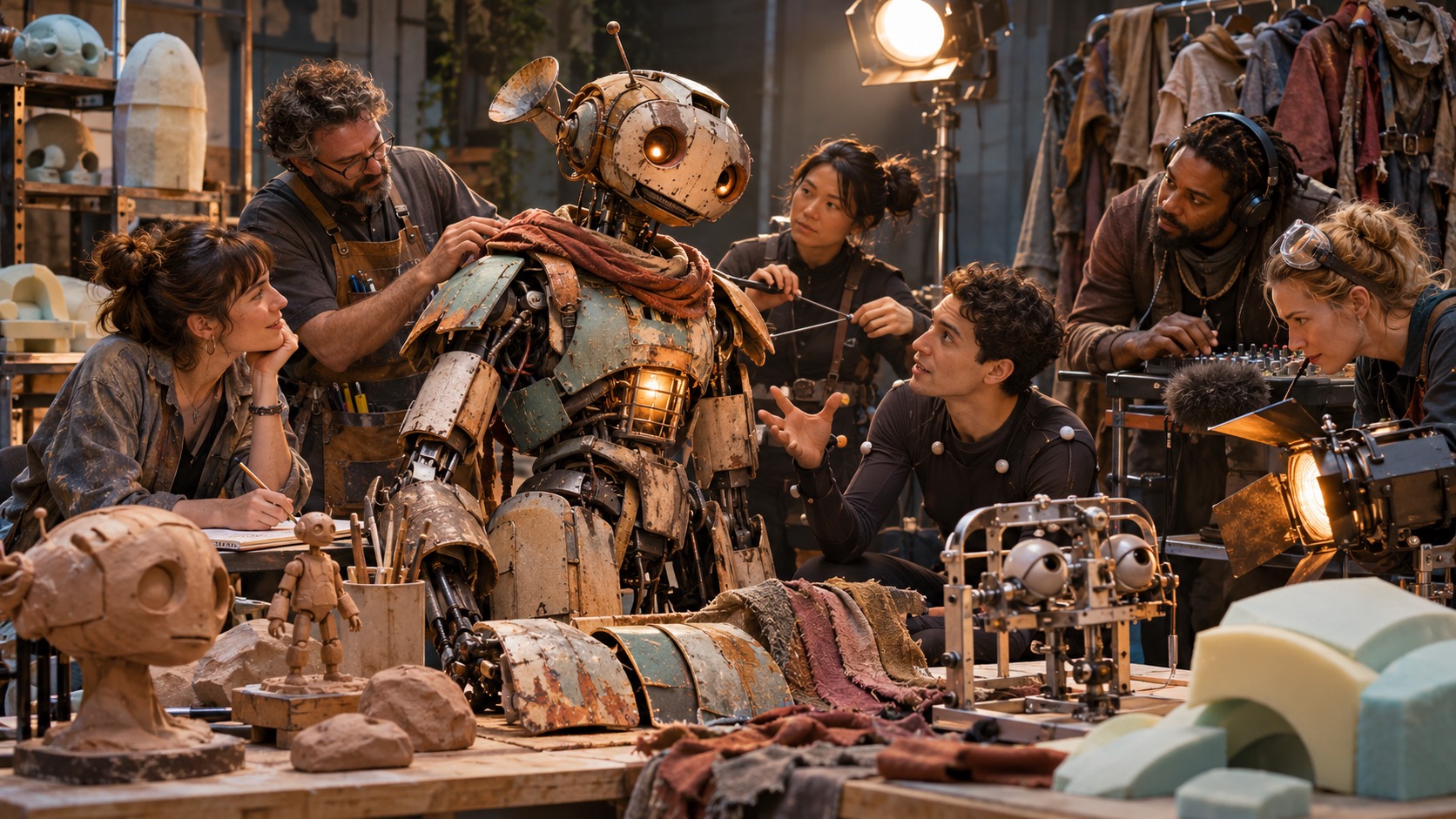
Fans often love the craft behind a robot as much as the fictional machine. Knowing that performers endured restrictive costumes, puppeteers coordinated several axes, builders solved unreliable terrain, or sound designers created a language adds another layer of character. The production struggle becomes part of the icon’s history without replacing the on-screen illusion.
A Strong Robot-Human Pairing Reveals Both Characters
R2-D2 and C-3PO sharpen each other’s personalities through contrast. WALL-E’s accumulated wear becomes more visible beside EVE’s pristine precision. The Iron Giant’s scale gains tenderness through Hogarth, and Baymax’s literal care becomes emotionally meaningful through Hiro’s grief.
A human companion also supplies interpretation. A glance, hesitation, or act of trust tells viewers when a mechanical behavior has changed. In return, the robot exposes the human character’s patience, prejudice, loneliness, ambition, or capacity for care.
Villainous Robots Become Icons Through Rules, Not Sympathy
Gort, the T-800, ED-209, and the T-1000 are not beloved in the same way as WALL-E. Their popularity comes from a precise threat language. Each has recognizable limits and methods: overwhelming stillness, relentless pursuit, militarized corporate incompetence, or fluid imitation.
Rules make danger anticipatable enough to create suspense. The audience understands what the machine will probably do, then watches humans search for the exception. A villain that can do anything at any time becomes less memorable than one whose terrifying logic remains consistent.
Design reinforces that logic. Exposed weapons, unreadable faces, heavy footsteps, or surfaces that refuse damage make purpose physical. The robot’s lack of ordinary emotion becomes expressive in itself.
Icon Status Is Proven by Reinterpretation
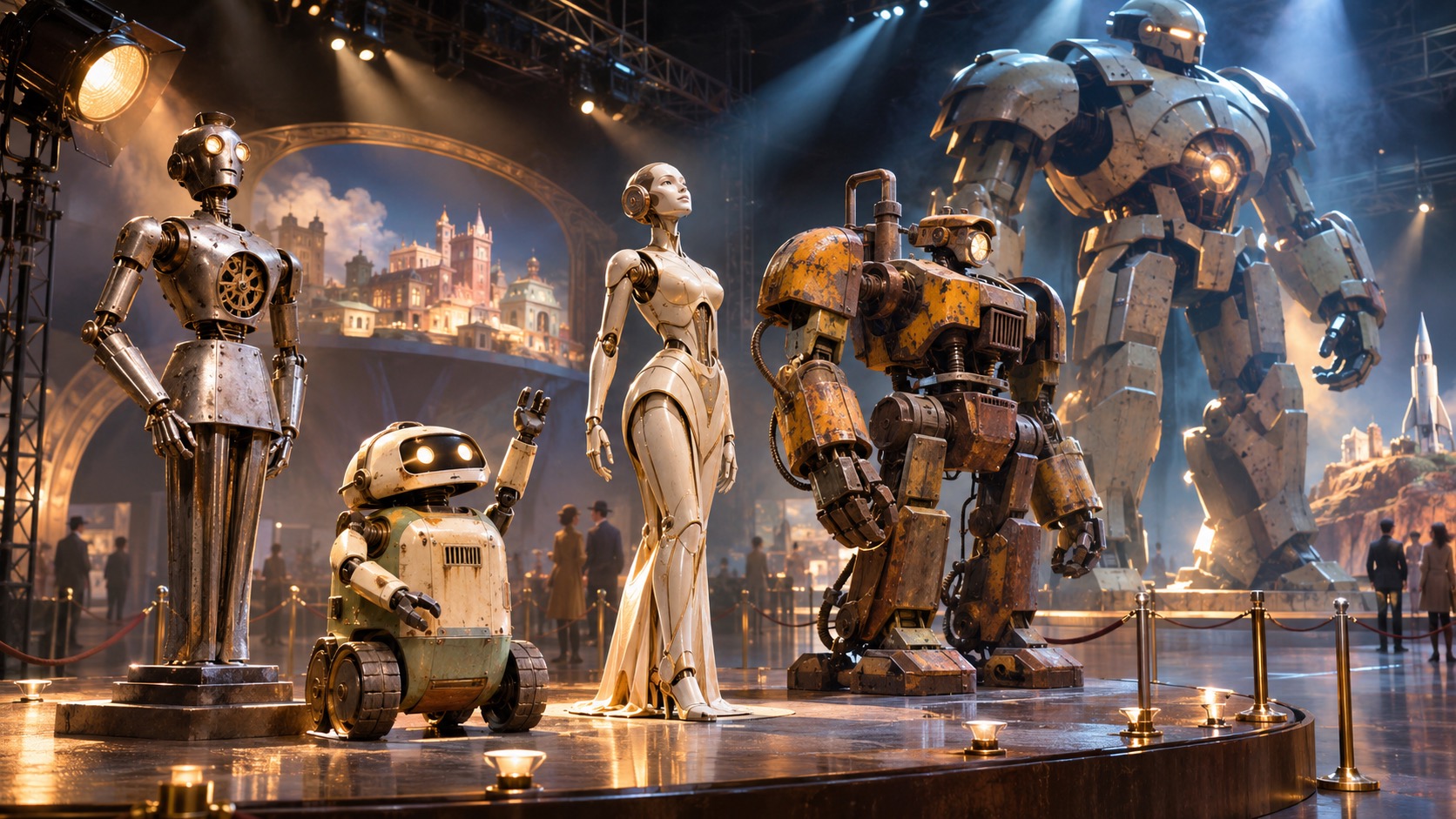
An iconic robot survives parody, homage, redesign, merchandise, museum display, and new production technology because a few core signals remain recognizable. Later artists can change detail while preserving silhouette, voice, relationship, or dramatic function. Continued reinterpretation is evidence that the character has entered a shared visual language.
Technology Changes, but Character Coherence Remains the Standard
Maria’s costume, Gort’s suit, Robby’s mechanisms, stop-motion endoskeletons, practical droids, puppets, and digitally animated characters come from different production eras. An icon is not made by whichever technique was newest. Each craft succeeds when it gives the audience consistent evidence about weight, attention, capability, and intention.
New effects can revise an old robot without strengthening it. Greater articulation or surface detail may weaken a silhouette, and effortless movement may erase a constraint that once created personality. The strongest redesigns ask which limitations and signals audiences already interpret as the character, then use new technology to deepen performance rather than replace its grammar. Restoration presents the same challenge. Cleaning, remastering, or digitally recreating a character can reveal craftsmanship, but excessive revision may remove the material qualities audiences remember. Icon preservation is therefore an act of interpretation: creators decide which scratches, sounds, proportions, and mechanical limits belong to the character’s identity rather than to obsolete production technology or any particular historical single effects era.