A Robot Becomes Unforgettable Before Its Final Surface Is Built
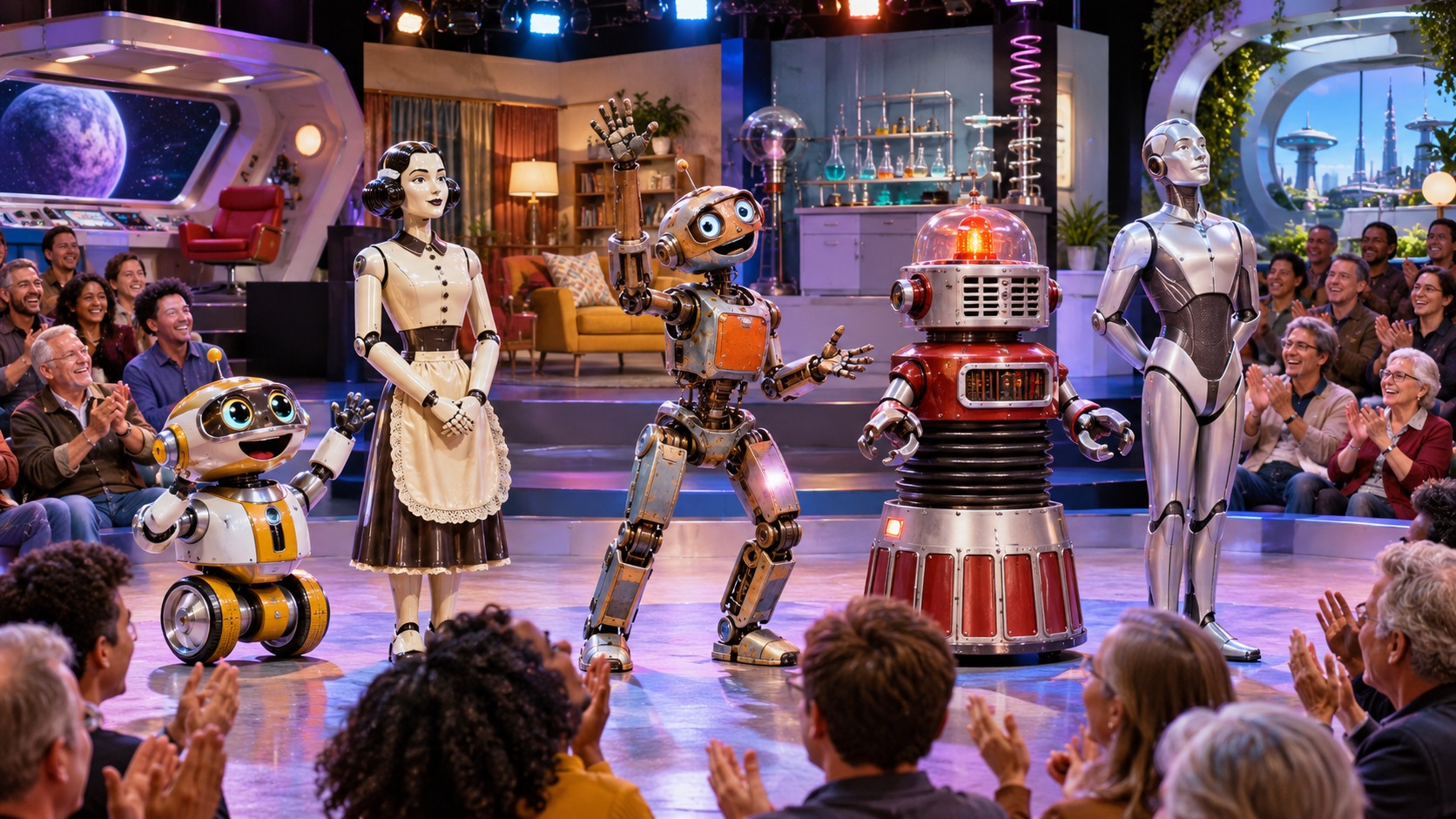
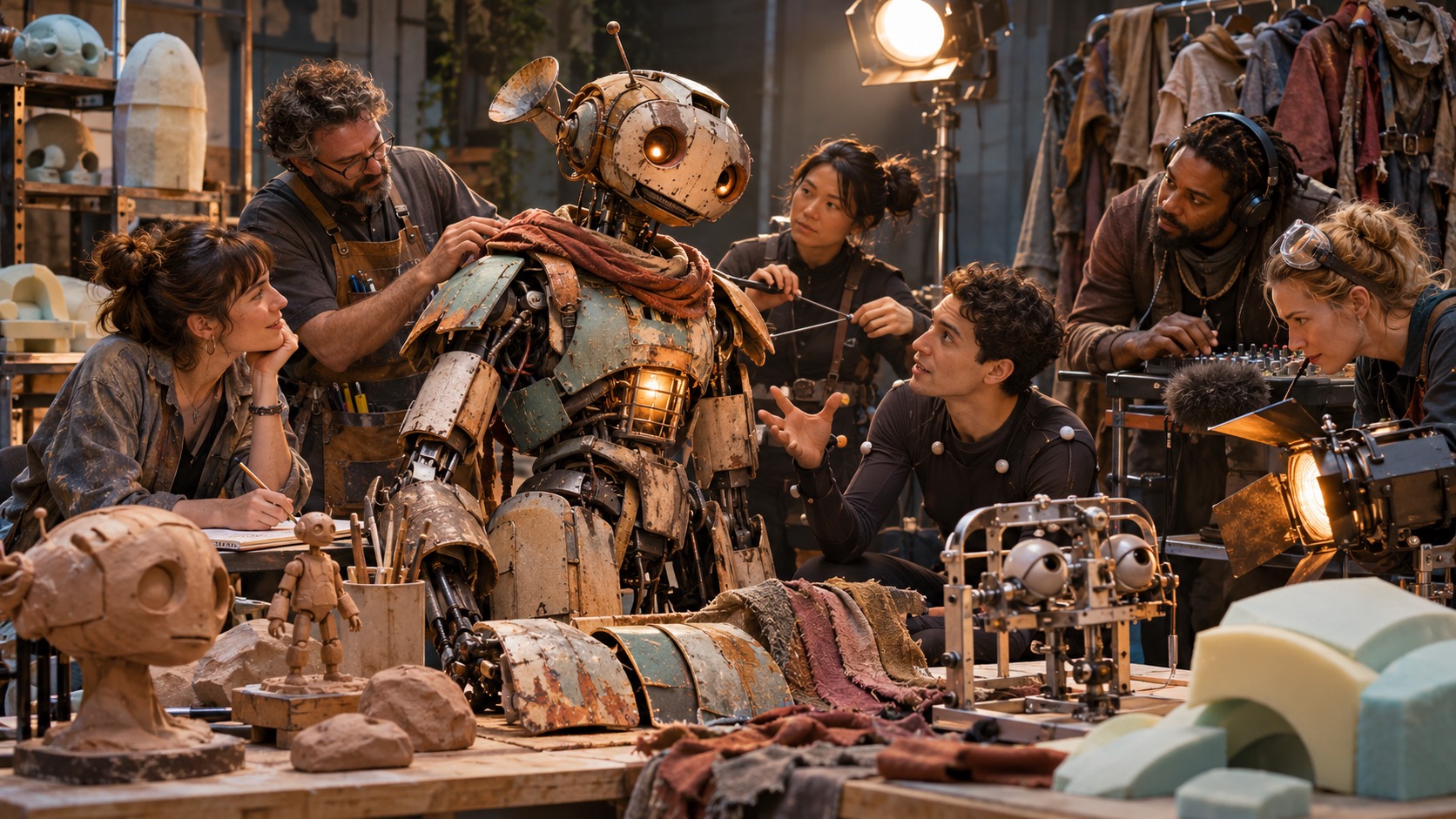
Memorable movie robots are not assembled by choosing a metallic body and adding glowing eyes. They begin with dramatic purpose. The production must know what the audience should feel when the character enters, what the robot wants, how it changes the human relationships around it, and which physical rules make its behavior believable. From there, writing, concept art, engineering, costume, puppetry, animation, acting, sound, lighting, and editing develop a shared performance language. Every choice teaches the audience how to read the machine. A narrow silhouette may imply fragility, a delayed head turn may suggest thought, and a damaged panel may carry more biography than dialogue. The unforgettable result is coherence: story and craft make many production techniques feel like one living character.
A: Define the character's dramatic purpose, desire, and relationship to the human story before choosing a surface.
A: Viewers recognize proportion and outline before faces, materials, or small mechanical detail.
A: No. Attention can be communicated through lenses, head direction, body timing, sound, or camera framing.
A: Wear records experience, reveals vulnerability, and makes the body's history visible.
A: Each method offers different strengths; coherent physics and performance matter more than choosing one technique exclusively.
A: Timing, attention, posture, effort, and consistent reactions turn physical restrictions into character behavior.
A: A repeatable voice and mechanical vocabulary imply scale, condition, emotion, and identity beyond the image.
A: Close-ups, stunts, remote movement, actor contact, and background shots impose different weight and control needs.
A: It should change capability, vulnerability, or identity rather than exist only as mechanical spectacle.
A: When writing and every craft department express one coherent character whose choices matter to the story.
Design Starts With the Robot’s Dramatic Job
A robot may be a protector, worker, witness, weapon, comic partner, child, double, or test of human morality. That role guides every later choice. A healthcare companion should not accidentally enter like a predator; a hidden threat should not reveal all of its danger in the first silhouette.
Designers ask what the character contributes that a human could not. The answer may be physical capability, innocence, literal thinking, durability, social ambiguity, or the ability to embody a system larger than one person.
A Clear Want Turns Machinery Into Character
Audiences follow desire. WALL-E seeks connection, the Iron Giant seeks an identity beyond weaponhood, HAL protects mission logic, and the Terminator pursues a target. The want does not need to be human, but it must organize behavior consistently.
Contradiction creates depth. A machine built for force may become gentle; a care system may become controlling; a perfect servant may develop preference. The design should leave room for that tension rather than announce one note.
Writers and designers often benefit from a character rule: what the robot never does at first, and what later change will therefore matter.
Silhouette Makes Recognition Instant
Before viewers see a face or surface texture, they read height, width, posture, limb length, and negative space. R2-D2, C-3PO, Robby, WALL-E, and Baymax can be identified in outline because their proportions are specific.
Proportion Tells the Audience How to Relate
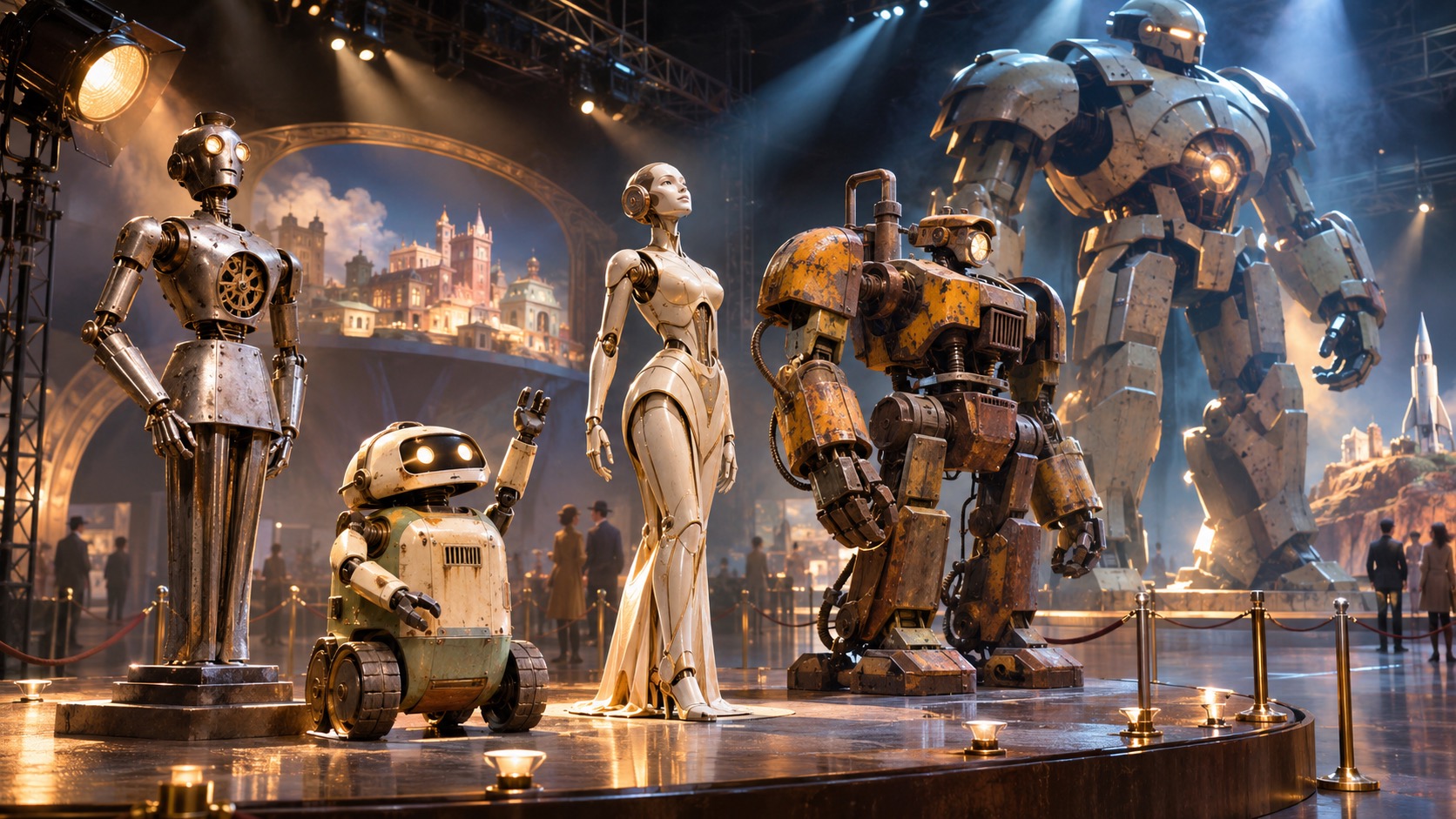
A small robot invites protection or intimacy. A human-height android allows social comparison. A towering machine creates awe and may require a child or other companion to supply emotional scale.
Designers can undermine expectation: a massive robot may move carefully, while a compact machine may be fearless. The contrast becomes character when repeated through story.
The Face Needs Only Enough Information
Humanlike faces provide subtle performance but risk discomfort when materials and motion fall short. Minimal faces ask the audience to project emotion onto eye direction, timing, and sound. Both strategies work when the film is consistent about what viewers can read.
Eyes are powerful because attention is narrative. A camera lens turning toward an object can communicate interest, suspicion, or care. Blinks, aperture changes, and head orientation should serve intention rather than decorate the surface.
A mouth is optional. Many beloved robots use beeps, posture, or a voice from elsewhere, avoiding lip synchronization while gaining a distinct form of expression.
Hands Reveal the Kind of Life the Robot Leads
Hands designed for lifting, surgery, combat, cleaning, or collecting tell different stories. Tool integration can make function immediately legible, while versatile fingers suggest a broader relationship with the environment.
Materials Connect the Robot to Its World
Polished ceremonial metal implies different makers and maintenance than scratched industrial paint. Plastic, fabric, rubber, glass, exposed wiring, and inflatable skin each create expectations about weight, cost, safety, and vulnerability.
Production design should explain where the robot belongs. A machine built in a garage, military program, luxury laboratory, or collapsing waste facility should carry that economy in fasteners, repairs, and finish.
Wear Functions as Visual Memory
Dents, stains, replaced panels, polished contact areas, and improvised repairs imply events before the current scene. Wear should accumulate where the character’s actions would produce it, not as a uniform texture.
Continuity teams track damage because changing surfaces alter story time. A new scratch can record a sacrifice; a repaired joint can show care from another character.
Digital models need the same history. Perfect geometry feels less present when the narrative claims years of use.
Movement Establishes Thought Before Dialogue
Does the robot look first and move second, or act before the head catches up? Does it anticipate a human hand, overshoot a target, or conserve motion? These timing rules tell the audience how perception and decision might work.
Constraint Gives Performers Something to Play
A costume may limit vision and stride; a puppet may have only a few controllable axes; an animatronic face may offer three expressions. Skilled performers turn those limits into consistent behavior rather than fight them.
Anthony Daniels’ constrained movement helped define C-3PO, while puppeteers and operators have made head tilts and pauses emotionally precise in many other robots. The performance belongs to teams, not merely mechanisms.
Practical Effects Supply Real Weight and Contact
A full-size prop or costume shares light with actors and can be touched, blocked, and framed on set. Physical presence gives performers an eyeline and cinematographers real reflections and shadows.
Practical builds also impose limits on speed, terrain, heat, battery life, and safety. Productions may create several versions: hero close-up, lightweight stunt, remote-control, partial rig, and static background shell.
The audience should not feel those versions as separate characters. Scale, surface, motion rules, and sound preserve continuity.
Digital Effects Expand Performance Without Erasing Physics
Computer graphics can create transformations, dangerous motion, facial nuance, and bodies impossible to build. The strongest digital robots still appear to have mass, joint limits, contact forces, and a relationship with the camera’s real environment.
Hybrid Methods Often Produce the Richest Result
A practical head may anchor a close-up while digital limbs complete the body. A performer may supply timing for an animated machine; a miniature may establish scale; an animatronic may provide contact for another actor.
Hybrid work demands shared reference. Lens data, lighting, color, dimensions, movement tests, and surface samples keep departments from inventing slightly different characters.
Sound Design Creates an Invisible Body
Motors, relays, airflow, impacts, electronic tones, footsteps, and room resonance tell the audience how large and powerful the robot is. Sounds can anticipate motion or lag behind it, making the mechanism feel precise, worn, playful, or dangerous.
Expressive tones work best as a limited vocabulary with performance rules. Random beeps become noise; repeated contours allow viewers to infer questions, objections, delight, or alarm.
Silence is also a choice. Removing expected machinery can make an android uncanny or reveal a moment when a damaged robot has stopped functioning.
Voice Performance Must Belong to the Body
A calm human voice from a distributed system, a filtered performer inside a rigid suit, and synthesized fragments from a utility machine create different identities. Processing should support the performance rather than flatten every emotion.
Cinematography Decides Whether the Robot Is Object or Subject
Camera height, lens, focus, and shot duration influence agency. Looking down can make a small robot vulnerable; holding on its reaction grants interiority; revealing a tool from a human viewpoint can make it threatening.
Lighting controls how much machinery viewers understand. A reflective surface can appear elegant or unreadable. Catchlights give minimal eyes attention, while silhouette preserves mystery.
Editing Gives Mechanical Pauses Meaning
An editor decides whether a head turn lands before or after a human reaction, whether a transformation feels laborious, and whether the audience sees a robot process information. A few frames can change hesitation into error or intention.
Reaction shots are essential. Humans teach the audience how extraordinary, dangerous, or lovable the robot is, while the robot’s response can expose human prejudice.
Rhythm must remain consistent across practical and digital shots. Otherwise, the character appears to acquire a different nervous system whenever the technique changes.
The Character Needs Rules for Failure
Perfect machines are dramatically flat. Designers decide how power loss, damaged sensors, blocked joints, confused perception, or conflicting instructions appear. Failure reveals priorities and gives other characters a chance to care, exploit, or misunderstand.
Unforgettable Robots Change While Remaining Recognizable
Character arcs may add damage, remove armor, alter posture, or change how quickly the robot responds to a companion. The audience should recognize both continuity and development.
The final test is not whether every mechanism could be manufactured. It is whether story, silhouette, material, movement, sound, performance, and camera communicate one coherent being. When all departments answer the same dramatic question, the robot survives beyond the effect that created it.
Concept Art Should Explore Behavior, Not Only Appearance
A useful design sheet shows the robot crouching, reaching, failing, interacting with props, and occupying space beside human characters. Beautiful neutral poses can hide collisions, unreadable eye lines, and impossible balance. Behavioral sketches let writers, performers, fabricators, and animators discuss the same moments before expensive construction begins.
Engineering Decisions Become Acting Decisions
Joint placement determines whether a robot can appear shy, proud, or exhausted. Motor speed affects comic timing. Battery location changes balance, and cooling needs may limit how long a performer can remain inside a suit. These are not merely technical constraints once cameras roll.
Early prototypes should therefore be filmed, not only measured. A cardboard volume, foam silhouette, or rough motion rig can reveal whether the character reads at lens distance and whether another actor knows where to look.
Engineers need access to story priorities, while directors need honest limits. When both sides understand which movement carries the scene’s emotion, resources can be concentrated on the mechanism that audiences will actually notice.
The Set Must Be Designed for the Robot’s Real Needs
Door widths, floor transitions, ramps, reflective surfaces, weather, dust, and wireless interference can defeat a practical robot. Sets may hide tracks, operator paths, support rigs, charging access, or safe zones while preserving the fictional environment.
Planning these needs early prevents the robot from being photographed only in restricted angles. It also keeps crew and performers safe when heavy machines, compressed systems, hot electronics, or limited-visibility costumes share the stage.
Testing With an Audience Can Expose the Wrong Reading
A design intended as gentle may appear vacant; a comic delay may read as malfunction; a menacing sound may overwhelm a sympathetic scene. Rough screenings show what viewers infer before the film has invested in every final shot.
The response should not lead to indiscriminate simplification. Designers can adjust timing, eye direction, sound, framing, or context while preserving ambiguity essential to the story. The goal is to know which interpretation the craft is producing.
Children, genre fans, and viewers unfamiliar with production conventions may read the same cues differently. Testing several audiences can reveal whether a reaction depends on knowledge the film has not supplied.
Memorability Comes From Selective Detail
Design teams can model every cable and fastener, but audiences remember a handful of signals: outline, eyes, voice, gait, tool, and relationship. Selective detail gives those signals hierarchy. When the film knows which features carry identity, close-ups, action, merchandise, and later reinterpretations can all preserve the same character without reproducing every part.