The Most Exciting Projects Make Collaboration Part of the System
A collaborative robotics project is more than a robot placed beside a person. The strongest projects connect operators, engineers, researchers, regulators, customers, and sometimes several kinds of machines around a task none could solve well alone. Their excitement comes from difficult real-world constraints: muddy crops, narrow sewer pipes, variable factory parts, fragile patients, damaged buildings, or spacecraft without a resident crew. These environments force teams to turn promising algorithms into maintainable operations. They also provide a better measure of transformation than a dramatic demonstration. A project matters when the people who own the problem help define success, field evidence changes the design, and the resulting capability can be transferred beyond one carefully prepared trial.
A: No. It can also mean human-machine teamwork, multi-robot coordination, or organizations jointly building and validating a system.
A: They contribute workflows, constraints, assets, and adoption pathways that laboratory evaluation cannot reproduce fully.
A: Representative conditions, a fair baseline, counted interventions, documented failures, and pre-agreed success criteria.
A: Sometimes, especially when different platforms contribute complementary mobility, sensing, endurance, or manipulation.
A: Confined geometry, water, debris, poor communications, uncertain maps, and difficult recovery combine in the same mission.
A: They define therapeutic goals, safe assistance, meaningful outcomes, and adjustments for individual patients.
A: Shared scenarios expose comparative strengths and failures while focusing different teams on measurable problems.
A: Disassembly evidence can change future fasteners, materials, access, and product data at the design stage.
A: No. Reuse also needs documented interfaces, dependencies, tests, hardware assumptions, and responsible support.
A: Sustained use or expansion that improves a real workflow after the special demonstration conditions are removed.
Judge Transformation by the Workflow That Changes
A robot project becomes industrially significant when it changes how work is planned, performed, checked, and recovered after failure. Faster motion alone may not matter if setup remains slow or exceptions require a specialist. Look for reductions in exposure, waste, downtime, physical strain, inspection delay, or inaccessible work.
The baseline must be explicit. Teams should compare the robotic workflow with current practice under representative conditions, including changeovers and bad days. Without that comparison, a polished pilot can disguise extra labor moved elsewhere in the process.
Flexible Manufacturing Projects Coordinate People and Multiple Robots
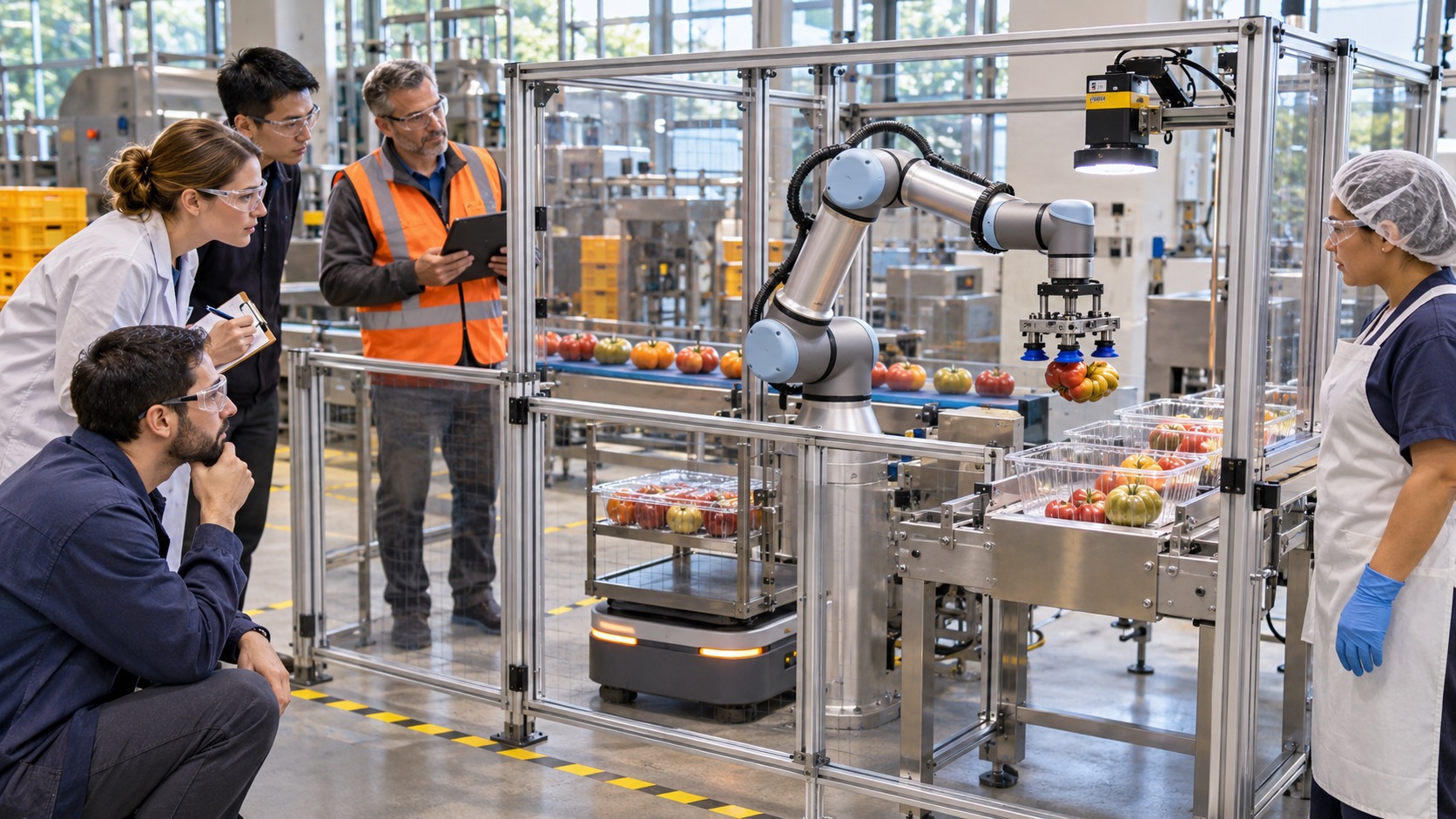
High-mix manufacturing challenges fixed automation because parts, tools, and schedules change frequently. Projects such as the European COROB initiative investigate cooperative multi-robot cells for welding, inspection, and additive repair. The important idea is not merely adding another arm; it is coordinating robots, sensing, process control, and human supervision so the cell can be reconfigured without becoming unpredictable.
Operators contribute process knowledge that simulation cannot supply. Weld access, fixture wear, heat distortion, cleaning, and inspection thresholds shape the useful system. When that knowledge enters requirements and trials early, automation supports the craft instead of hiding it behind an interface.
Successful cells also make recovery visible. A production team needs to know which robot stopped, what work remains valid, and whether the process can resume safely. Collaboration therefore includes shared state and understandable handoffs, not only collision avoidance.
Green Cobot Research Treats Sustainability as an Engineering Variable
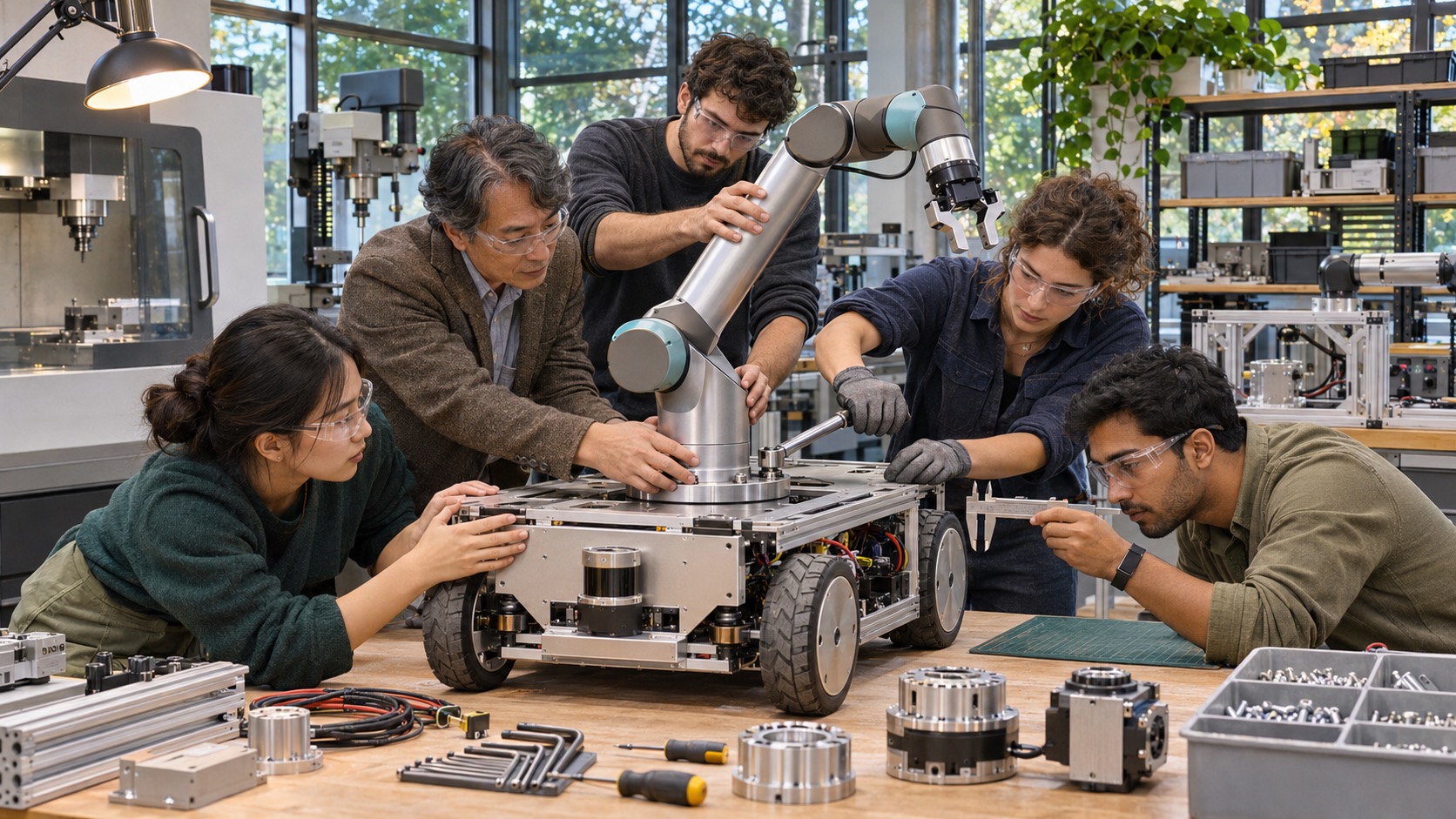
Projects developing lighter, reconfigurable collaborative robots connect mechanical design, control, manufacturing, and lifecycle analysis. Reducing moving mass can lower energy use, but it may also change stiffness, vibration, payload, and durability. Academic and industrial partners are useful because no single discipline owns all of those consequences.
Agricultural Robots Learn From Growers Before They Learn From Data
Field robots must handle crops that vary by season, weather, soil, and cultivation practice. Growers and farm workers identify which task is truly scarce, when intervention is permitted, and what damage is unacceptable. Roboticists then design perception and manipulation around biological variation rather than a laboratory object set.
Collaborative projects in weeding, harvesting, crop monitoring, and targeted treatment often combine ground vehicles, aerial sensing, and human scouting. The system becomes useful when observations flow into an agronomic decision, not when a robot merely crosses a field.
Long trials matter. A machine that succeeds for one afternoon may fail as light changes, foliage thickens, dust enters connectors, or the crop reaches a different stage. Seasonal partnerships reveal those failures before commercialization freezes the wrong assumptions.
Sewer Robotics Brings Autonomy Into Infrastructure People Cannot Easily Reach
Projects such as PIPEON join robotics, mapping, sensing, manipulation, and utility management to inspect and maintain sewer networks. The environment is dark, wet, confined, communication-limited, and geometrically inconsistent. That makes it a strong test of whether autonomy can produce trustworthy information in infrastructure designed long before robots existed.
Utility operators decide what evidence supports maintenance. A defect detector has limited value if its location cannot be reconciled with asset records or if the robot cannot return after losing communication. Collaboration connects the machine’s map with the institution’s map of risk, cost, and repair priority.
Disaster-Response Teams Combine Aerial and Ground Perspectives
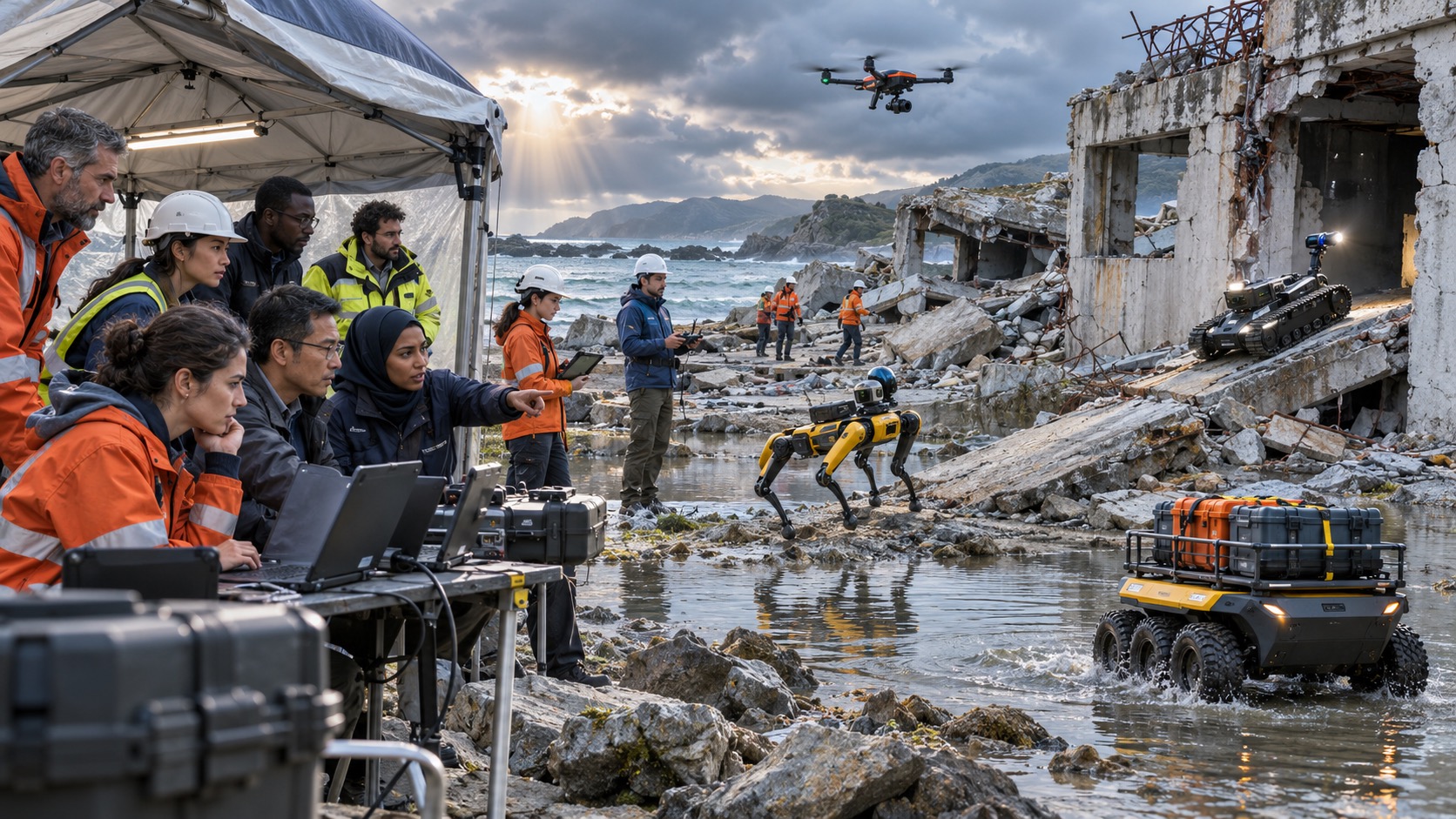
A drone can survey quickly while a ground robot approaches debris, carries sensors, or inspects a confined area. Multi-robot disaster projects coordinate those different strengths with human incident command. The central problem is not collecting maximum data; it is delivering credible, timely information without burdening responders.
DARPA challenges have repeatedly used shared field tests to expose gaps in mobility, communications, perception, and human supervision. Teams learn from a common scenario and measurable results. Even unsuccessful runs create value when failure evidence is published and changes later system design.
Ethical and operational boundaries are essential. Robots should support triage or reconnaissance without implying that uncertain sensor output is a medical judgment. Human authority, confidence reporting, and fallback procedures must be designed with the autonomy.
Hospital Logistics Projects Must Fit Clinical Priorities
Mobile robots can move linens, medication carts, samples, meals, or waste, but hospital corridors are not warehouses. Elevators, infection control, emergency traffic, privacy, and changing access rules make the workflow complex. Nurses, facilities teams, security, infection-prevention staff, and IT all hold requirements that affect navigation.
Rehabilitation Robots Turn Therapists Into Co-Designers
Rehabilitation projects combine robotic assistance with clinical judgment. A therapist chooses goals, observes compensating motion, and adjusts difficulty; the machine can deliver repeatable support and record measurements. The partnership is strongest when the robot expands therapeutic options rather than forcing every patient into one movement pattern.
Patients are collaborators too. Comfort, dignity, fatigue, donning time, and motivation influence adherence. A technically precise device that takes too long to fit or makes a person feel controlled may fail outside the study.
Meaningful trials separate a change in robot metrics from a change in daily function. Clinical teams help define outcomes that matter beyond the device, while engineers make sensing limitations and uncertainty visible.
Construction Robotics Connects Digital Plans With Unstructured Sites
Robotic layout, drilling, scanning, material movement, and inspection projects must reconcile a building model with the site as it actually exists. Contractors contribute sequence knowledge, tolerance practice, and safety planning. Robots contribute repeatable measurement and physical execution. The collaborative value is the feedback loop between planned and observed conditions.
Adoption depends on trade coordination. A robot cannot optimize one task by blocking another crew or creating a downstream correction. Field pilots should include setup, transport, dust, temporary power, and schedule changes rather than evaluating only the productive pass.
Ocean Robots Share Risk Across Heterogeneous Fleets
Marine science and inspection projects use surface vessels, underwater vehicles, fixed sensors, and human operators because no platform can cover every depth, endurance, and communication need. Coordinated fleets can map broad areas and send a specialized vehicle to investigate an anomaly.
Communication scarcity changes collaboration. Robots may need to summarize findings, reassign tasks, and return with incomplete contact. Scientists must state which observations are irreplaceable so autonomy allocates energy and time intelligently.
Shared data standards are as important as vehicles. Measurements from several platforms need synchronized time, location, calibration, and provenance before they can support environmental or maintenance decisions.
Energy Inspection Projects Place Robots Where Shutdowns Are Expensive
Wind turbines, solar fields, pipelines, tanks, and power facilities create repetitive inspection needs across difficult terrain and hazardous spaces. Collaborative projects pair domain inspectors with aerial, climbing, crawling, or mobile robots. The robot gathers consistent evidence; the expert interprets significance and determines intervention.
Circular-Economy Robots Must Recognize Value in Used Objects
Disassembly and sorting are difficult because returned products are damaged, dirty, incomplete, and built in many variants. Projects for circular manufacturing combine vision, manipulation, product data, and human exception handling. Their purpose is to recover components or materials without spending more labor and energy than the recovery is worth.
Designers can use the evidence in reverse. If robots repeatedly fail to access fasteners or identify materials, manufacturers can change future products for disassembly. Collaboration then links end-of-life automation with decisions made at the beginning of a product’s life.
Spacecraft Caretaking Makes Autonomy a Team Member
NASA’s ISAAC work has explored robots integrated with spacecraft systems for monitoring and caretaking when crews are absent. A free-flying robot is only one component; useful autonomy must interact with vehicle infrastructure, inventory, procedures, and ground operators. The project illustrates why collaboration is architectural rather than merely interpersonal.
Space testing also forces disciplined evidence. Communication delay, limited crew time, safety certification, and expensive access make improvisation costly. Simulation, ground facilities, incremental flight activities, and partner payloads create a chain of validation.
Technologies developed for that environment can inform remote facilities on Earth, but transfer is not automatic. Different regulations, economics, and maintenance access require new field evidence.
Open Repositories Let One Project Teach Another
Networks such as euROBIN aim to exchange software, data, and knowledge across laboratories and application domains. Reuse is hard because robots differ in sensors, coordinate frames, dynamics, and safety assumptions. A repository becomes valuable only when artifacts include dependencies, tests, interfaces, and limits.
Real Transformation Survives the End of the Demonstration
The strongest projects leave an operational capability, validated dataset, reusable component, trained workforce, standard, or procurement lesson. They identify who will maintain the system, own its data, respond to failures, and fund the next phase. Without that path, a prototype can be exciting yet institutionally temporary.
Ask whether operators request another deployment after living with the first. Expansion is stronger evidence than applause. It shows that collaboration converted robotics from an outside experiment into a tool the organization understands well enough to improve.
Workforce Redesign Belongs Inside the Technical Project
Robotics changes who monitors the process, clears exceptions, maintains sensors, and decides when automation should yield. Training cannot be postponed until installation because job knowledge affects interface design, alarm priorities, and the location of manual controls. Projects should observe current work, identify new responsibilities, and give affected employees authority to test the proposed workflow.
Shared Safety Cases Make Collaboration Auditable
When several organizations contribute hardware and software, no partner can defend safety by pointing only to its component. The complete project needs a hazard analysis that links assumptions across perception, control, tooling, environment, and human behavior. Each mitigation should have an owner, verification method, and configuration for which the evidence remains valid.
Changes must reopen relevant evidence. A new gripper, software model, payload, aisle layout, or operator task can invalidate earlier conclusions even if every component still functions. Configuration control prevents a successful pilot from becoming a blanket claim about systems that were never tested.
Transparent safety work improves trust with frontline users and regulators. It shows where the robot depends on procedures or infrastructure and where protection is inherent. That clarity supports responsible scaling because the next site knows which conditions it must reproduce and which risks require fresh analysis.
Procurement Can Preserve the Lessons of Collaboration
A project reaches well beyond its prototype when purchasing documents reflect what the field team learned. Requirements can specify measurable setup time, intervention reporting, interface access, training, spare parts, data ownership, cybersecurity updates, and acceptance tests under representative conditions. This turns tacit experience into leverage for future deployments. It also lets competing suppliers propose different technical solutions against the same operational evidence, reducing dependence on the original consortium while preserving the outcome that made the collaboration valuable.