The Right Conference Changes a Decision, Not Just a Calendar
A robotics conference can introduce a research field, reveal how products are actually deployed, connect a job seeker with a future colleague, or simply consume a week and a travel budget. The difference begins before registration. Instead of asking which event is universally best, define the career decision you need to make next: selecting a thesis direction, moving from academia to industry, finding a specialist community, evaluating employers, meeting customers, or learning how a technical standard is formed. That decision supplies a practical filter for programs, workshops, exhibits, and people. It also makes a smaller, focused meeting potentially more valuable than a famous gathering whose strongest community sits far from your work.
A: No. A specialist event, local workshop, or industry expo may fit the student's immediate question and budget better.
A: No. Workshops, tutorials, demonstrations, volunteering, mentoring, standards meetings, and prepared conversations can create substantial value.
A: Favor events with relevant employers, explicit recruiting access, technical sessions, and roles matching your demonstrated skills.
A: They offer more people but also more noise; structured smaller gatherings may produce deeper and more repeatable contact.
A: Begin before submission, grant, volunteer, visa, and discounted-registration deadlines, often many months ahead.
A: Propose a realistic output such as a technical landscape, supplier comparison, candidate list, or standards summary.
A: They can replace passive paper consumption, but not live hardware evaluation, detailed discussion, recruiting, or collaborative work.
A: Book only the number you can prepare for properly while leaving time for sessions, discovery, and rest.
A: Reference the actual discussion and provide a promised resource or clear next action without making an oversized request.
A: Review which prior activities changed decisions, skills, relationships, or opportunities, then fund formats that produced credible evidence.
Start With the Work You Want to Be Doing Next Year
Write a one-sentence description of the work you hope to perform twelve months from now. Name the environment, the robot capability, and the kind of responsibility you want. “I want to improve perception for warehouse manipulation” is more useful than “I want a robotics job” because it points toward specific technical sessions, companies, and researchers.
Then identify the evidence you still lack. You may need to learn whether a subfield is growing, whether your current skills transfer, or whether a doctoral degree is typical for the role. A conference should help close one of those gaps. If it cannot, its reputation alone is a weak reason to attend.
Keep the goal narrow enough to guide choices but open enough to permit discovery. The event may reveal a better adjacent path. A written starting point lets you recognize that change as new evidence rather than drifting from booth to booth.
Use the Program to Measure Technical Fit
Read the accepted-paper list, workshop titles, tutorials, and exhibitor categories from the most recent completed edition. Count how many sessions address your actual problem and inspect who organized them. A broad label such as autonomy can hide very different communities in field robotics, vehicles, aerial systems, or mobile manipulation. Technical fit lives in the details.
Choose a Research Flagship for Breadth and Peer Review
ICRA and IROS bring together many branches of robotics and can help a student see how a narrow project fits into the wider field. Their scale supports comparison: several groups may present different answers to the same planning, control, sensing, or interaction problem. That breadth is particularly useful before committing to a long research agenda.
The benefit comes with navigation cost. Parallel sessions force tradeoffs, and popular themes can be spread across workshops, oral presentations, posters, and informal meetings. Build a personal track around questions rather than trying to sample everything. Read a few papers beforehand so conversations can begin beyond the abstract.
Select a Specialist Meeting When Depth Matters More Than Range
A focused event such as CoRL, HRI, RSS, Humanoids, or a domain workshop can provide repeated contact with the people who share your technical language. Because the program is narrower, attendees often hear the same core results and can continue the discussion across several days. That continuity can be valuable when testing a thesis idea or finding a community of practice.
Specialization also exposes whether you truly enjoy the field’s daily questions. A compelling demonstration may look different after sessions on data collection, evaluation, failure analysis, and unresolved theory. That is useful career evidence, even if it leads you away from the specialty.
Check whether the meeting welcomes adjacent work and newcomers. A technically perfect program may still be difficult to enter if nearly every conversation assumes years of shared context. Tutorials, mentoring programs, doctoral consortia, and newcomer events reduce that barrier.
Attend an Industry Expo to Understand Deployment and Procurement
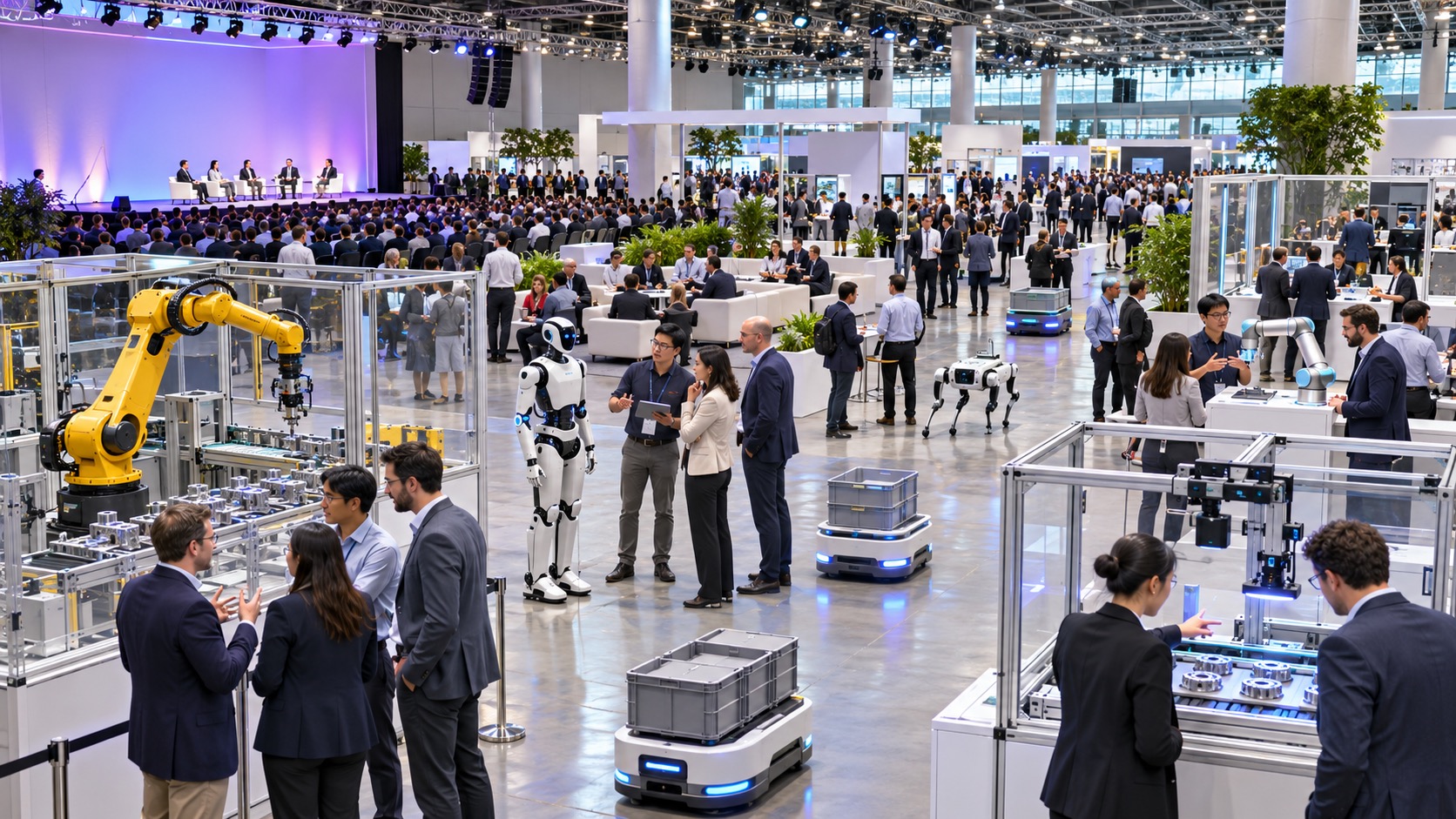
Events such as Automate and automatica concentrate vendors, integrators, components, and working cells. They are strong choices when your career question concerns product engineering, applications, sales engineering, manufacturing automation, or customer adoption. Side-by-side systems reveal tradeoffs that product pages rarely make visible.
Distinguish Recruiting Access From General Networking
A crowd of employers does not guarantee useful recruiting contact. Look for a career fair, talent program, student reception, scheduled interviews, or company technical sessions where hiring teams are present. Ask organizers what participation is open to someone without an accepted paper. Those details determine whether the event supports an active job search.
General networking serves a different purpose. It builds relationships through shared technical interest, often long before a position exists. A workshop discussion or volunteer shift can create a more credible connection than handing out résumés in a crowded aisle. Choose the event based on which kind of access you need.
Look for Ways to Participate Before You Arrive
Submitting a paper is only one route into a conference. Workshops may accept extended abstracts, late-breaking results, demonstrations, challenge entries, or position papers. Student committees recruit volunteers, technical groups host meetings, and standards activities may welcome observers. Participation gives strangers a reason to begin a substantive conversation.
Deadlines often arrive months before registration. Review the full calendar early and separate competitive submissions from open activities. If the main paper deadline has passed, a workshop or volunteer role may still create a useful path into the community.
Do not submit weak work merely to obtain a badge. A concise, honest contribution with a clear limitation is more valuable than an inflated claim. The goal is to join a technical exchange that you can sustain after the event.
Evaluate the People Behind the Program
Scan recent committees, keynote speakers, workshop organizers, and recurring authors. Ask whether they represent the laboratories, companies, regions, and career stages you hope to understand. A program concentrated in one slice of the field may still be excellent, but it should match the network you intend to build.
Use Published Proceedings to Avoid Paying for the Wrong Need
If your only goal is reading new papers, proceedings and recorded talks may satisfy much of it without travel. In-person attendance earns its cost when interaction changes the value: live demonstrations, detailed questions, recruiting conversations, standards work, collaborative planning, or exposure to hardware that cannot be evaluated from a video.
Make a list of experiences that require presence. If the list remains thin, attend remotely, follow the papers, and save the budget for an event where physical access matters. Career development is not measured by badge count.
Calculate the Full Cost, Including Time Away
Registration is only the visible expense. Add transportation, lodging, meals, visas, insurance, local transit, poster or demo shipping, and the work that will pause while you travel. For students and early-career engineers, lost laboratory time or missed project milestones may be more consequential than the ticket.
Search for travel grants, volunteer discounts, society support, employer education funds, and shared lodging before assuming the event is unaffordable. Read eligibility rules closely. Some awards require membership, accepted work, a recommendation, or an application well before registration.
Compare the full cost with a local workshop, summer school, user group, or targeted visit to a laboratory. The best option is the one that produces the needed evidence at a sustainable price, not automatically the largest trip.
Check Accessibility, Visa Risk, and Practical Inclusion
A conference is not career-building if you cannot participate fully. Review visa timelines, venue access, captioning, dietary information, childcare policies, quiet spaces, and remote options. Contact organizers when information is vague. Their response itself indicates how operationally serious the event is about inclusion.
Read the Social Architecture, Not Just the Technical Schedule
Large receptions can be difficult places for meaningful introductions. Smaller lunches, mentoring sessions, affinity-group gatherings, lab tours, standards meetings, and volunteer teams create repeated interaction around a shared purpose. These formats matter especially for newcomers without an existing network.
Choose two or three social structures that suit how you communicate. Someone who dislikes unstructured mingling may thrive in a workshop discussion or student volunteer role. Career growth does not require performing a personality that exhausts you.
Ask Your Employer or Adviser for a Defined Outcome
A funding conversation improves when the request names the benefit. Propose a supplier comparison, research landscape, recruiting target, standards update, tutorial summary, or set of candidate collaborations. Explain how you will share findings afterward and which decisions they could influence.
This agreement prevents a common mismatch. A manager may expect sales leads while an engineer plans technical learning; an adviser may expect paper feedback while a student prioritizes recruiting. Aligning expectations before booking protects both the trip and the relationship.
Keep the outcome realistic. One conference rarely delivers a signed partnership or a job offer. It can produce qualified contacts, sharper questions, and evidence that moves the next step forward.
Build a Schedule Around Conversations With Preparation
Mark a small number of essential sessions, then leave room for discussion and recovery. Ten rushed introductions are less useful than three prepared conversations. Before contacting someone, read enough of their work to ask a specific question and explain briefly why the answer matters to your project or career decision.
Treat Posters and Demonstrations as Working Sessions
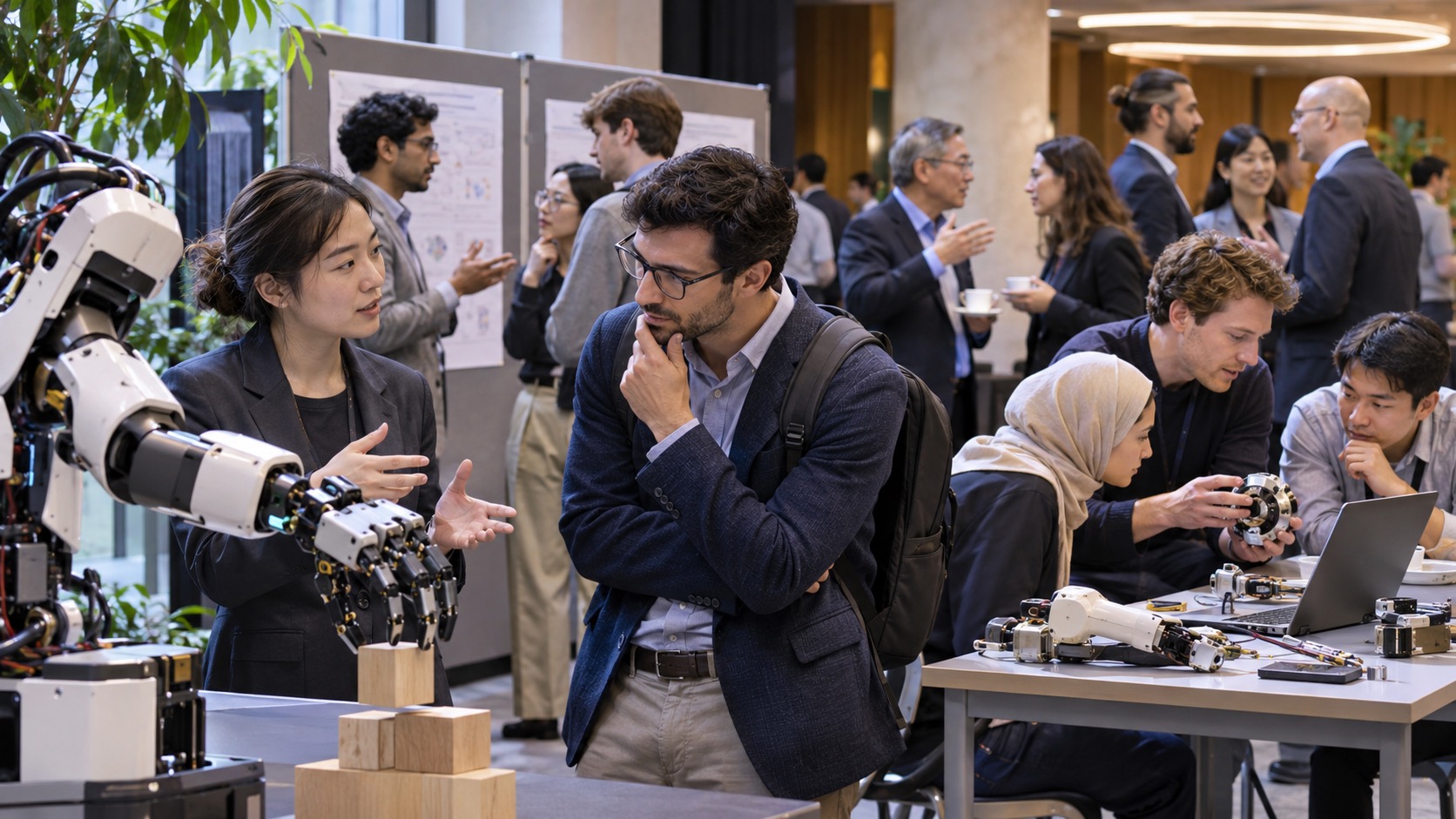
Posters make it possible to examine assumptions, limitations, and negative results that a short talk may omit. Demonstrations reveal calibration, reset time, operator intervention, and environmental constraints. Ask what failed during development, what the system cannot yet do, and which measurement changed the team’s mind.
These conversations also teach you how the field evaluates evidence. Notice which benchmarks, baselines, and deployment details knowledgeable attendees question. That observation can improve your own work long after the specific result is obsolete.
Follow Up With Evidence, Not a Generic Greeting
Within a few days, send a short message that recalls the technical point you discussed and supplies the promised paper, dataset, introduction, or experiment result. If there was no clear next step, do not invent one. A thoughtful note can preserve goodwill without demanding an immediate relationship.
Record what you learned while the context is fresh. Separate facts, opinions, and hypotheses that require checking. Add owners and dates to actions so valuable conference notes do not disappear into a folder.
Months later, evaluate which contacts and insights changed your work. That review helps choose the next conference using evidence from your own career rather than general rankings.
Let the Current Career Question Decide
No event is permanently right. A doctoral student exploring a field, a product engineer selecting components, a founder meeting integrators, and an experienced researcher forming a consortium need different rooms. Choose the conference that offers relevant work, reachable people, and a credible participation path for the decision in front of you. Then prepare deeply enough that attendance becomes part of the work rather than an interruption from it.
Build a Personal Conference Portfolio Over Several Years
Career value compounds when events serve complementary roles. A broad research conference can map the field, a specialist meeting can deepen technical identity, and an industrial expo can expose deployment economics. Returning occasionally to the same community also lets relationships mature beyond first introductions.
Avoid turning recurrence into habit. Review whether the program, your responsibilities, or the community has changed. The event that was ideal during graduate study may no longer fit after moving into product leadership, standards work, or customer-facing engineering.