Future Robot Hardware Will Be Modular, Instrumented, and Easier to Service
The future of robotics hardware engineering will be shaped by robots that need to work longer, adapt faster, operate closer to people, and survive more varied environments. Hardware will not simply become smaller or stronger. It will become more modular, more instrumented, more serviceable, and more closely tied to software and sensor feedback. The best future robots will be designed for repair, upgrades, thermal control, diagnostics, and safe contact from the beginning.
A: It uses replaceable units such as joints, batteries, grippers, sensors, compute trays, or drive modules.
A: Embedded measurements reveal heat, vibration, current, wear, and part identity close to the source.
A: No. Repair, durability, cost, manufacturing, and cleaning matter alongside performance.
A: Compact robots concentrate motors, batteries, compute, and electronics in limited space.
A: Faster repair and upgrade paths keep robots working longer with less downtime.
A: Hardware needs safer contact, clearer motion, quieter actuation, and predictable stops.
A: A robot must be built, tested, shipped, and repaired consistently, not just prototyped once.
A: Clear interfaces, diagnostics, calibration data, safe limits, and understandable replacement steps.
A: Toward robots that are modular, instrumented, repairable, and easier to improve.
A: Hardware that explains its condition and accepts service without drama.
Modular Platforms Will Speed Development
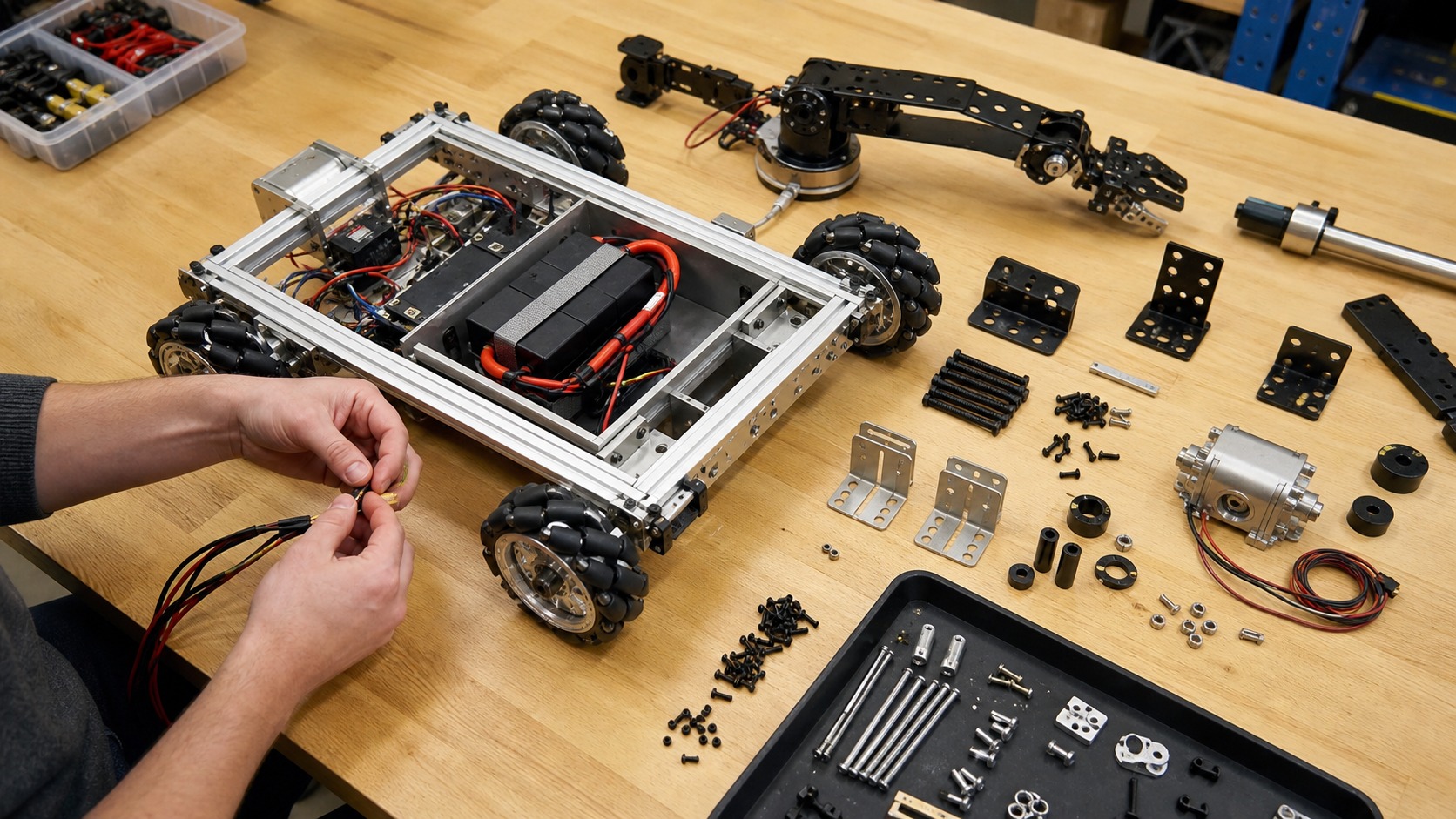
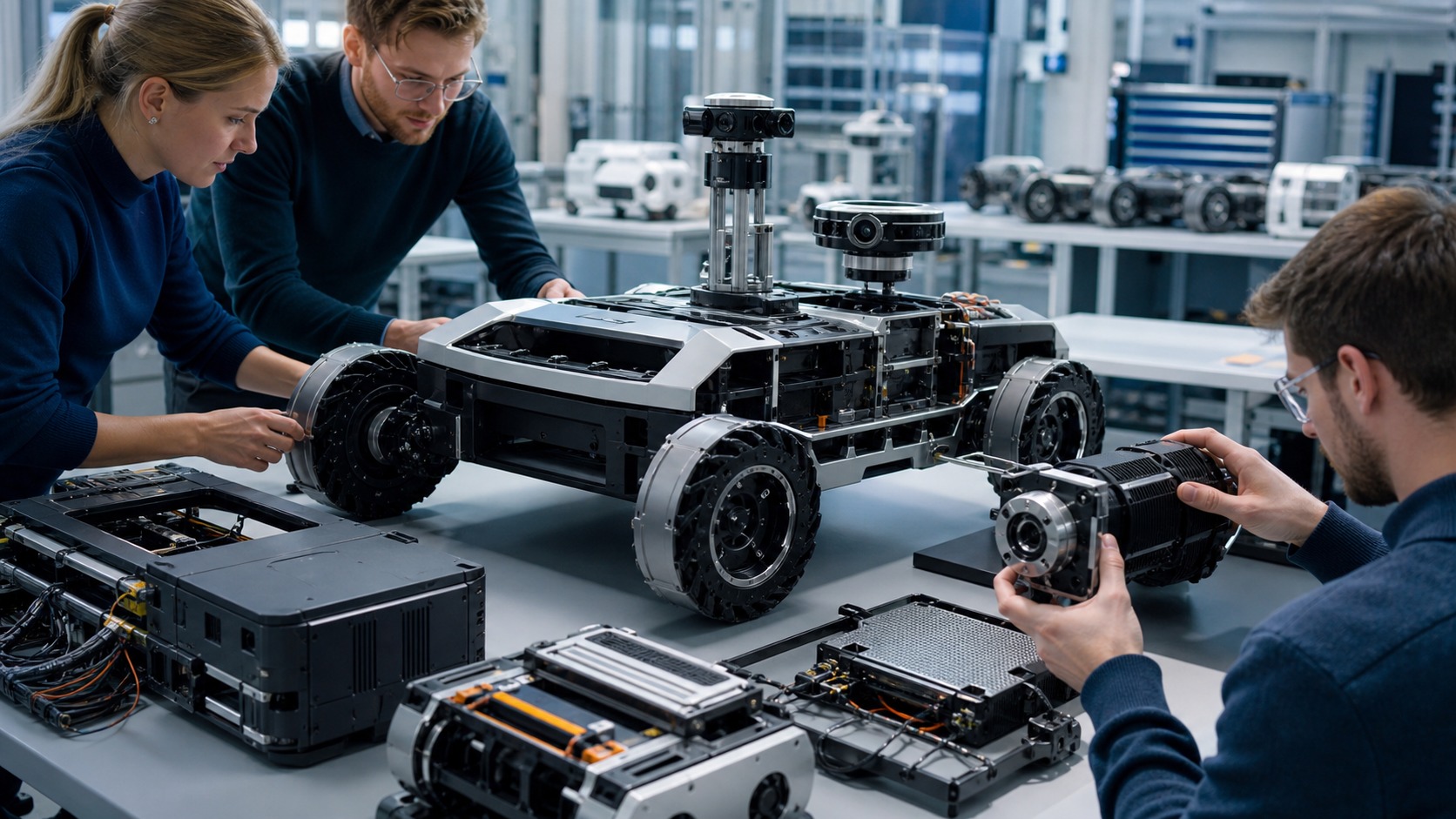
Future robots will use more modular drive units, actuator joints, grippers, sensor masts, battery packs, compute trays, and cable harnesses. Modularity helps teams develop faster, repair faster, and adapt robots to different jobs without redesigning every subsystem. Shared modules may also help smaller robotics teams compete because they reduce the amount of custom hardware that must be invented for every product. The engineering effort can move toward task-specific value rather than repeated reinvention.
The hard part is making modules that are useful rather than merely boxed. A good module needs mechanical interfaces, electrical limits, communication identity, thermal behavior, calibration data, safety constraints, and service instructions. Those details decide whether modular hardware feels elegant or frustrating.
The future belongs to modules that are easy to replace but still transparent enough for engineers to understand.
Modular platforms also make robot families easier to maintain. A company may use the same drive module across several robots, or the same battery pack across different payload versions. Shared modules reduce training, spares, and troubleshooting complexity.
The risk is false simplicity. A module that hides too much information can make diagnosis harder. Future hardware needs replaceable units that still expose the facts engineers and technicians need. Shared modules also encourage better testing. When one module appears across many robots, teams can justify deeper validation, better documentation, and stronger service procedures because the learning benefits several products. This shared foundation also helps teams train technicians once and apply that knowledge across a broader fleet.
Hardware Will Report Its Own Condition
Robotics hardware will increasingly include embedded diagnostics. Motors may report temperature, vibration, current, and bearing health. Battery packs may report aging under load. Cable harnesses may include continuity checks. Grippers may track cycle counts and contact wear. This evidence also helps robots improve after deployment. A fleet that reports hardware stress consistently gives engineers a clearer picture of which parts need redesign, which environments are hardest, and which maintenance intervals are realistic.
This self-reporting hardware helps fleets move from reactive repair to planned service. Instead of waiting for a robot to fail, teams can watch trends and replace parts before downtime spreads.
Condition-reporting hardware also changes warranties and support. Instead of arguing from symptoms alone, teams can review temperature history, load cycles, vibration patterns, and replacement records. That evidence helps separate misuse, wear, design weakness, and normal aging. Condition data may also change how robots are sold and supported. Service contracts, spare-parts planning, and upgrade decisions can be based on measured wear rather than fixed guesses. Measured history gives both builders and owners a calmer basis for deciding when to repair, replace, or redesign.
Advanced Materials Will Be Chosen More Carefully
Future robots will use lighter metals, composites, high-performance polymers, soft materials, coatings, seals, and additive-manufactured parts. These materials can reduce weight, improve stiffness, resist corrosion, or support safer contact with people. Material engineering will also have to consider end-of-life decisions. Robots that can be repaired, refurbished, recycled, or upgraded create less waste than platforms that become disposable when one sealed assembly fails.
Advanced materials also bring tradeoffs. A composite panel may be light but harder to repair. A soft cover may improve safety but wear faster. A printed part may enable complex geometry but require careful fatigue testing.
Hardware engineering will become more deliberate about matching material benefits to service life, manufacturing scale, cleaning, impact, and replacement.
Material choices will also reflect where robots work. Outdoor robots need impact, water, dust, and temperature tolerance. Medical or food robots need cleanable surfaces. Home robots need quiet, safe, durable materials that survive daily contact.
The future is not one miracle material. It is better matching between material properties, task demands, manufacturing methods, and service realities. Future material decisions will also consider supply stability. A brilliant material that is hard to source, difficult to inspect, or inconsistent across batches may create production risk. The best material is the one that fits the task, the factory, the repair plan, and the robot's expected life.
Thermal Design Will Move Earlier
Robots are packing more motors, computers, batteries, sensors, radios, and power electronics into compact bodies. Heat will shape hardware design earlier than ever. Cooling paths, vents, heat spreaders, thermal interfaces, workload scheduling, and enclosure geometry all matter. Thermal awareness may become a normal part of robot behavior. A robot could schedule heavy lifts when motors are cooler, reduce speed during hot conditions, or choose a charging pattern that protects battery life.
A robot that overheats loses performance, shortens component life, and creates safety concerns. Future hardware teams will design thermal behavior alongside motion and power rather than treating it as a late enclosure problem.
Thermal design will also shape robot intelligence. A planner may need to know when compute, batteries, or actuators are nearing heat limits. Hardware and software will coordinate so the robot can slow, rest, reroute, or change task priority before damage occurs. This coordination between heat and behavior will make robots more self-preserving. Instead of failing abruptly, a robot can explain that it is reducing load to protect a drive, battery, or processor. That behavior turns thermal limits into managed constraints instead of hidden failure points.
Serviceability Will Become a Competitive Feature
Future robot buyers will care about how quickly a machine returns to work after wear, damage, or upgrade. Serviceable hardware includes reachable fasteners, clear cable paths, replaceable modules, calibration references, durable connectors, diagnostic ports, and parts that do not require destructive disassembly. Upgrade paths also protect buyers from rapid obsolescence. If the chassis can accept new compute, sensing, or actuation without a full replacement, the robot becomes a longer-term platform rather than a short-lived appliance.
Serviceability also affects sustainability. Robots that can be repaired and upgraded stay useful longer. A platform that accepts new sensors, batteries, grippers, or compute modules can age more gracefully than a sealed machine with no practical repair path.
This shift will make maintenance design a core engineering skill rather than an afterthought.
Serviceability also supports field upgrades. If a robot can accept a better gripper, cleaner sensor mast, stronger battery, or revised drive module, the platform stays valuable longer. Hardware architecture becomes part of the product roadmap.
This does not mean every robot should be endlessly configurable. It means the most likely repairs and upgrades should be planned. Thoughtful limits are better than sealed complexity. Upgrade-ready design also requires discipline. Interfaces need to be stable, documented, and protected from accidental misuse, or upgrades can create as many problems as they solve. Stable interfaces also make certification, safety review, and fleet support less painful over time.
Human-Centered Hardware Will Matter More
Robots working near people need hardware that communicates intention and reduces risk. Rounded forms, compliant surfaces, quieter actuators, visible motion cues, safe stopping behavior, manageable weight, and predictable contact all shape trust. Human-centered design also includes sound, weight, cleaning, and visible access. A robot that is easy to live with and easy to maintain has a better chance of staying deployed after the novelty fades.
Human-centered hardware is not decoration. It affects how people approach, clean, repair, avoid, and collaborate with robots. A machine that is safe but confusing can still fail in practical settings.
Human-centered hardware also includes maintenance comfort. The person lifting a panel, replacing a module, cleaning a surface, or resetting a dock is part of the robot's real operating world. Future hardware needs to respect those interactions. A human-centered robot also needs to feel predictable during ordinary contact. Panels should not flex strangely, handles should be obvious, and service motions should not require awkward force. These details shape whether people treat the robot as a useful tool or an awkward machine to avoid.
Manufacturing Scale Will Shape Robot Design
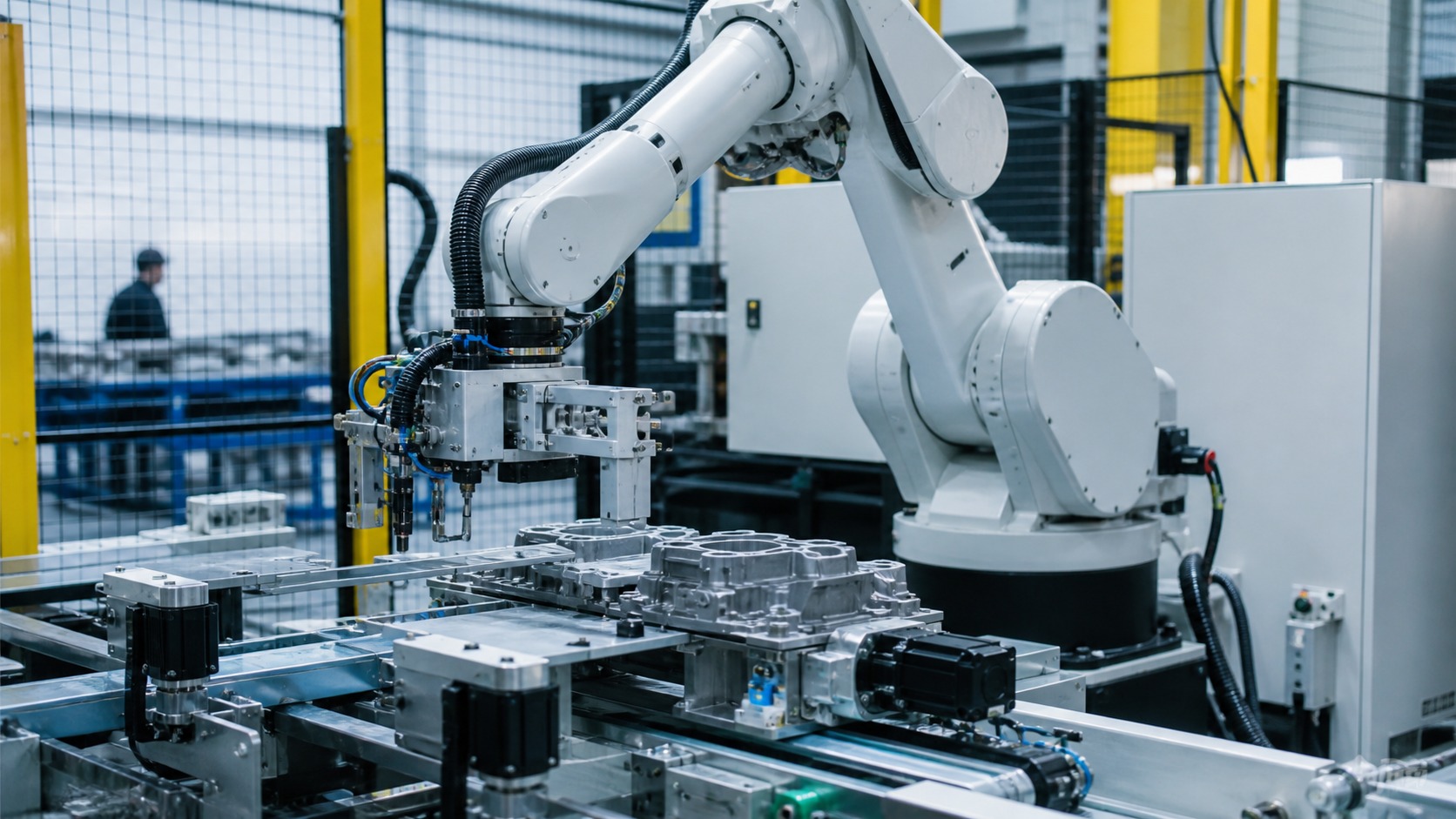
As robot deployments grow, hardware engineering will focus more on repeatable manufacturing. Parts need tolerances that factories can hold, assemblies that technicians can build consistently, supply chains that can support volume, and tests that catch defects before shipment. Manufacturing scale will reward designs that are easy to inspect. Clear references, repeatable fixtures, and measurable alignment points help teams find defects before customers do.
This is a different skill from building a prototype. A prototype proves an idea. Production hardware proves that the idea can be built, tested, shipped, repaired, and improved many times.
Future robotics companies will need hardware architectures that scale without becoming brittle.
Scale also rewards simple assembly checks. Fixtures, gauges, end-of-line tests, and clear pass-fail measurements help manufacturers catch physical variation early. Future robot hardware will need production discipline as much as invention. Production discipline will also reduce hidden variation between units. Two robots with the same model name should behave alike enough that software, service procedures, and spare parts remain trustworthy. Consistent production quality also makes field data easier to interpret because hardware variation is lower.
Where Hardware Engineering Is Going
The future of robotics hardware engineering is a move toward machines that are easier to build, easier to understand, and easier to keep alive. Modular hardware, embedded diagnostics, better materials, careful thermal design, safer surfaces, and planned service access all point in the same direction. The future therefore looks practical as much as futuristic. Better hardware engineering will make robots less fragile, less mysterious, and more capable of growing with the work they are asked to do.
Future robots will still need strong frames, accurate joints, reliable power, and durable sensors. What changes is the expectation that hardware should explain itself and accept improvement over time.
The most important hardware advances may therefore look practical rather than flashy. A replaceable actuator, a cleaner harness, a better cooling path, or a trustworthy health signal can matter more than a dramatic new shell. Robotics hardware engineering is becoming the discipline of long-lived capability. That practical future is still exciting. It means robots that spend less time waiting for specialists and more time doing useful work with evidence, service access, and room to improve. That is the kind of future hardware engineering that quietly makes ambitious robotics possible. It gives robots a longer useful life, a clearer service story, and a better chance of adapting as tasks, components, and customer expectations change. The result is less waste, less downtime, and more confidence in every deployed machine. Future platforms will be judged by how well they keep improving after installation, repair, relocation, changing customer demands, and years of ordinary field wear in real facilities. Good hardware keeps future options open for everyone involved long-term.