Modern Automation Depends on Hardware That Repeats Under Pressure
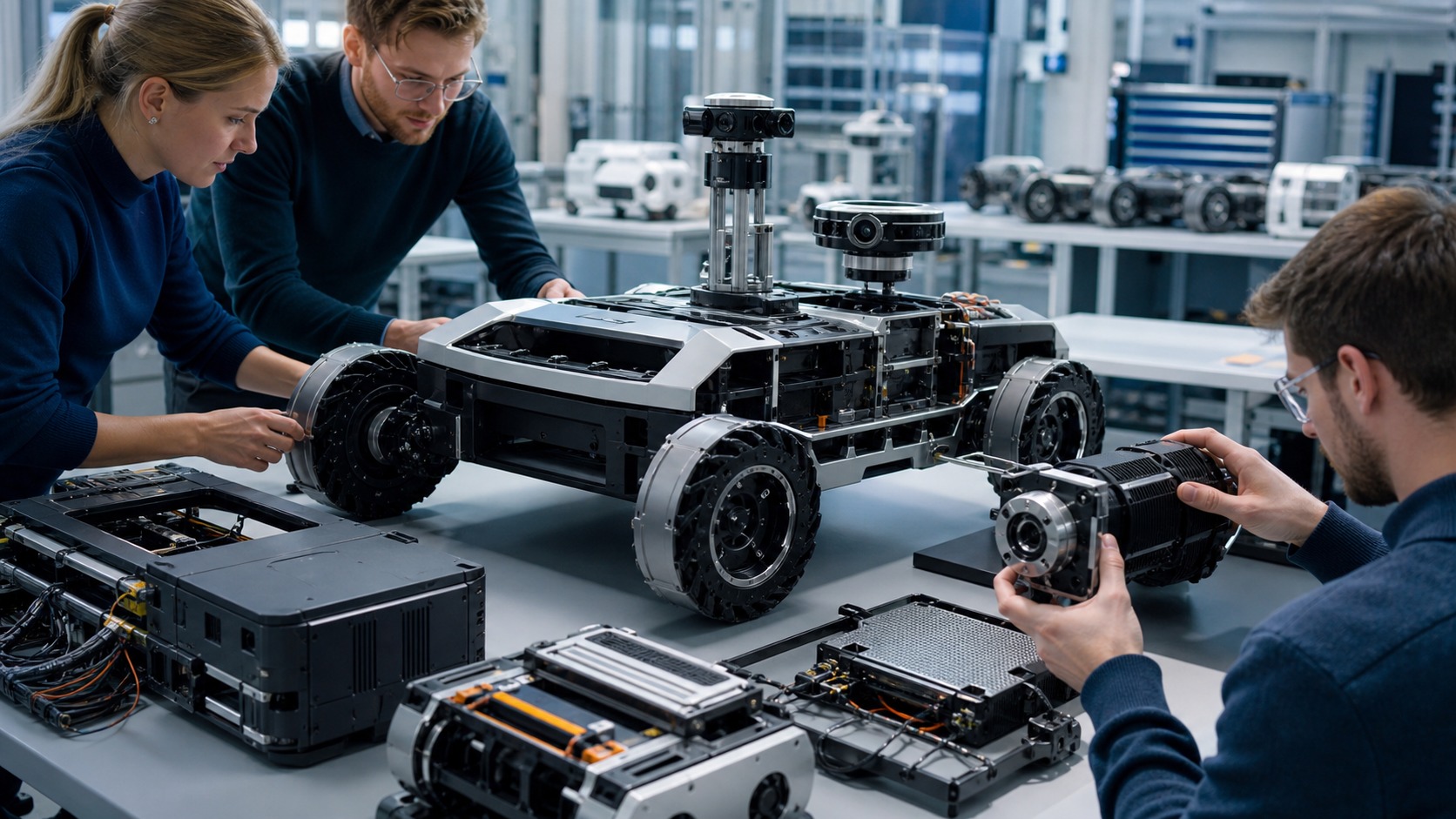
Robotics hardware powers modern automation by making repeatable physical work possible. Software plans the sequence, but hardware moves the part, holds the tool, senses contact, carries power, protects people, survives heat, and repeats the motion thousands of times. In factories, warehouses, labs, farms, and logistics sites, automation succeeds when robot hardware turns commands into dependable motion under real loads and real schedules.
A: Automation performs repeated physical work, so structure, motion, power, and tooling decide reliability.
A: It adapts a robot to a specific task through grippers, fixtures, tools, and contact surfaces.
A: They present parts consistently so robots do not fight random placement.
A: Stable motion, sensing, and tooling reduce variation during production.
A: Connectors, cables, heat, wear surfaces, loose fasteners, and overloaded actuators.
A: Accessible modules, clear cable routes, replaceable wear parts, and useful diagnostics.
A: Guards, brakes, stops, scanners, force limits, and physical layout support safe behavior.
A: Hardware that survives short demos may overheat or wear during production use.
A: The full cell, not just the robot arm.
A: Repeatable physical work with predictable uptime and safe recovery.
Precision Comes From Physical Stability
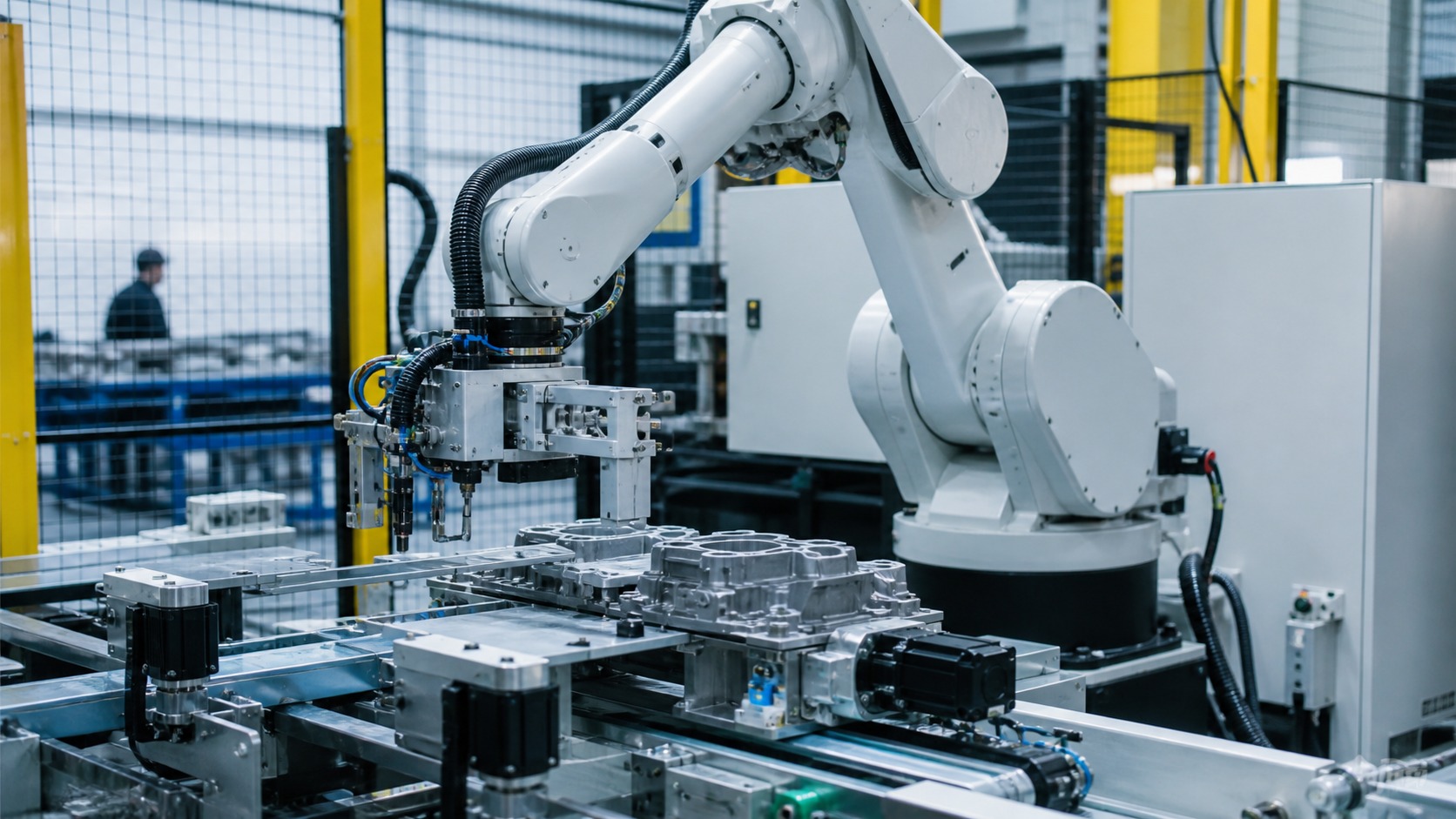
Automation depends on repeatability. A robot arm placing parts, a gantry moving tools, or a mobile robot docking with a cart needs hardware that preserves geometry. Stiff frames, accurate bearings, controlled backlash, solid fixtures, and stable sensor mounts all contribute to precision. In a working facility, small geometry changes have real cost. A loose fixture can create scrap, a flexible mount can blur inspection, and a worn guide can cause jams. Stable hardware protects the process from these quiet sources of variation.
A software path cannot fully overcome a weak mechanical base. If a fixture flexes, a camera mount vibrates, or a joint has too much play, the same command may produce different outcomes. Hardware stability gives automation the foundation for reliable control.
This is why production systems often look overbuilt compared with prototypes. They are designed for repeated accuracy, not one successful demonstration.
Physical stability also protects process knowledge. When hardware repeats the same motion in the same geometry, teams can tune speed, force, inspection, and timing with confidence. If the hardware drifts, every process setting becomes less trustworthy.
This is one reason automation cells use fixtures, stops, rails, and guides. They reduce random variation before the robot needs to solve it. Good hardware makes the automation problem smaller. The same stability also helps workers trust the cell. When motion, part presentation, and tool contact remain consistent, operators spend less time compensating for quirks and more time managing production. In repeated production, removing variation is often more valuable than adding complexity.
Actuators Supply the Work
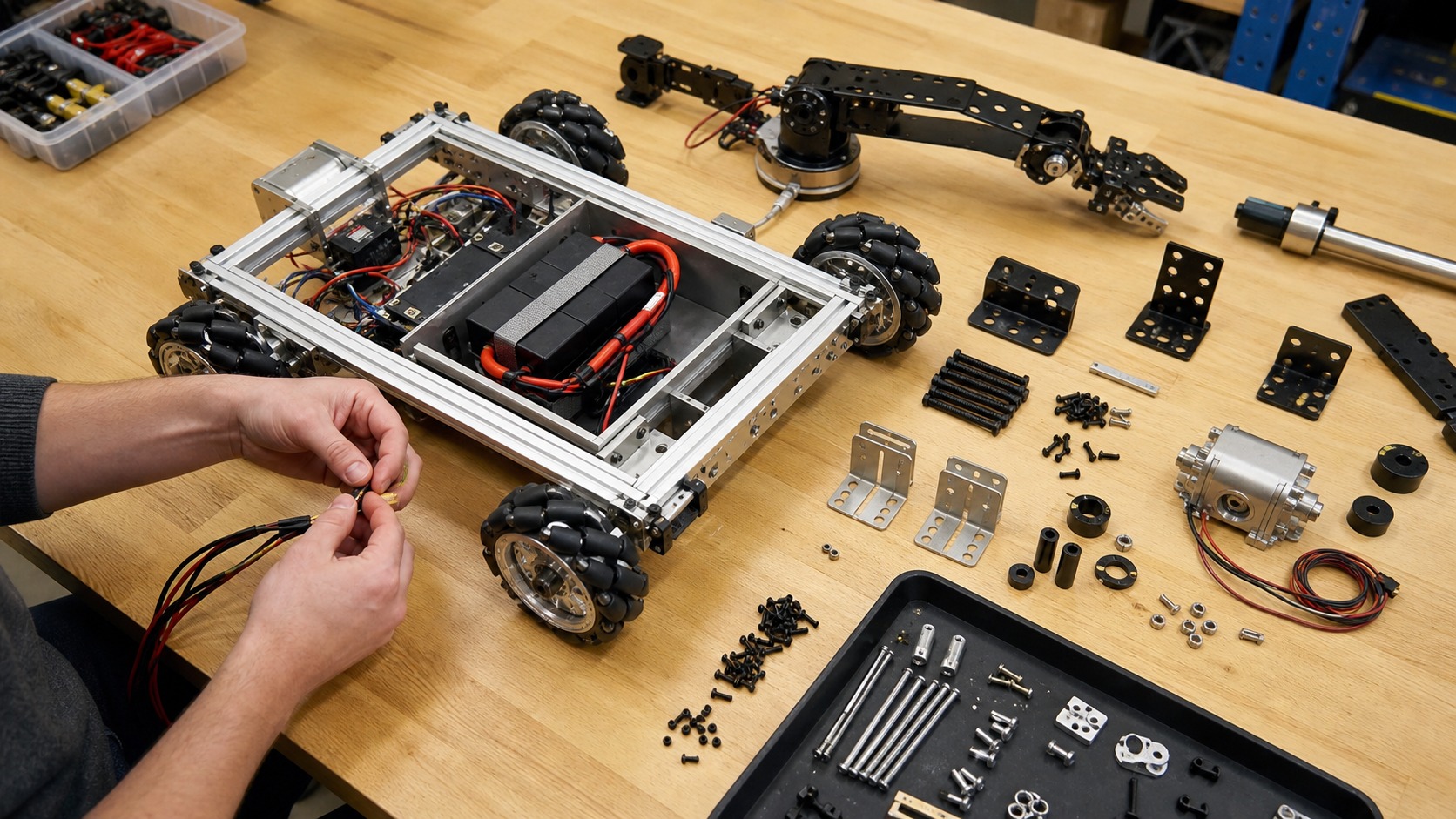
Actuators are the muscles of automation. Servo motors, linear slides, grippers, rotary tables, pumps, and conveyors create the motion that moves products through a process. Their sizing affects speed, payload, cycle time, heat, energy use, noise, and accuracy. Actuator choices also influence maintenance intervals. A drive that runs near its limit may meet the cycle time at first, but heat and wear can turn that success into frequent downtime. Automation hardware needs margin, not just capability.
Modern automation needs actuators matched to the task rather than chosen for headline power. A small precise actuator may outperform a larger one if the mechanism is balanced and the cycle is well designed. A motor with enough thermal margin can run longer with fewer interruptions.
Actuator hardware also sets the rhythm of production. Acceleration, braking, smoothness, and heat behavior determine how fast a cell can run without damaging parts or wearing itself out. The best cycle time is not only the fastest movement; it is the fastest movement the hardware can repeat reliably. This is why automation engineers care about acceleration profiles, duty cycle, and thermal limits. Hardware that moves beautifully for ten minutes may not be ready for two shifts of repeated work. That margin also gives maintenance teams time to notice wear before it becomes a stoppage.
Tooling Turns Robots Into Specialists
Robot hardware becomes useful through tooling. End effectors, grippers, suction cups, weld guns, dispensers, inspection heads, cutters, and fixtures adapt a general robot to a specific job. The tool often determines whether automation succeeds. Tooling often deserves as much attention as the robot itself because it touches the product directly. The contact surface, compliance, gripping angle, and release behavior decide whether the automated task feels natural or forced.
Good tooling controls the physical interaction between robot and workpiece. It guides parts into repeatable positions, distributes force, protects surfaces, and confirms contact. A sophisticated robot arm paired with poor tooling may still fail simple tasks.
Tooling also affects changeover. Modular grippers and fixtures help automation handle product variety without rebuilding the entire cell.
Tooling also carries process quality. A gripper jaw shape, suction cup size, weld fixture, or dispensing needle position may decide whether the output meets specification. The robot provides motion, but the tool provides the final physical contact with the product.
That is why hardware reviews for automation should include the part, the tool, the fixture, and the expected wear. A beautiful robot path cannot rescue tooling that presents the work inconsistently. Good tooling can also simplify sensing. If a fixture places a part consistently, the robot may need fewer perception tricks. Hardware that controls variation makes software easier. For this reason, tooling reviews should happen early, with real parts and realistic cycle expectations.
Sensors Close the Production Loop
Automation hardware includes sensors that confirm position, presence, force, alignment, temperature, pressure, and process completion. These sensors stop the system from assuming that every part arrived perfectly or every motion completed as expected. Production sensors also create traceability. When the system records alignment, grip confirmation, force, temperature, or process completion, teams gain evidence about quality rather than relying only on downstream inspection.
A sensor may confirm that a part is seated, a gripper has closed, a tool reached pressure, or a conveyor zone is clear. These checks protect quality and safety. They also help the system recover from small disturbances instead of producing bad output.
Sensors also help automation avoid waste. A missing part, misaligned fixture, weak grip, or incomplete operation can be caught before the next step compounds the problem. Hardware sensing turns small errors into recoverable events. Those checks also support faster recovery. The system can tell an operator whether a part is missing, a grip failed, or a station is blocked instead of stopping with no useful context. The best automation cells make error detection part of the physical workflow rather than an afterthought.
Power and Cable Systems Keep Cells Running
Automated systems move continuously, which places stress on power delivery and cable management. Cable carriers, flexible wiring, connectors, motor drives, cabinets, fuses, grounding, and thermal design all affect uptime. A cell can stop because of a small cable failure as easily as a major robot fault. Cable and power details become more important as motion repeats. A cable that survives a few cycles during setup may fail after thousands of bends. A connector that feels secure during installation may loosen under vibration.
Good hardware engineering treats cable paths and power margins as production-critical details. Wires need bend relief, connectors need vibration resistance, and drive electronics need cooling. These details rarely attract attention until they fail.
Reliable automation often comes from making the quiet hardware boring in the best possible way.
Cable and power design also influence safety. Moving cables should not snag, rub through insulation, or pull connectors loose near operators. Power circuits should fail in predictable ways. These details keep the cell stable during long shifts.
Automation hardware is often judged by uptime, and uptime is built from details that look ordinary. Connectors, bends, airflow, grounding, and strain relief may not appear in marketing photos, but they decide whether production keeps moving. Power design also affects process consistency. A voltage drop during peak load can change actuator behavior, sensor reliability, or controller stability just when the cell is working hardest. These choices do not look dramatic, yet they are often the difference between a stable cell and a frustrating one.
Safety Is Built Into the Hardware
Automation hardware protects people through guards, scanners, safe-rated stops, brakes, rounded surfaces, interlocks, force limits, and predictable mechanical behavior. Safety software matters, but the physical system must support safe states. Safety hardware also helps automation recover gracefully after a stop. Clear zones, reliable brakes, and predictable restart conditions reduce confusion when people need to intervene and return the cell to production.
A robot that loses power should not drop a heavy load unpredictably. A guarded cell should prevent access during dangerous motion. A collaborative system should limit speed and force in ways the hardware can actually deliver.
Safety hardware also supports confidence during recovery. Operators need to clear jams, change tools, inspect fixtures, and restart production without guessing what the robot might do next. Physical stops, guards, and interlocks make those recovery steps more predictable. Safety systems need to be understandable as well as compliant. Operators should know which zones are active, which motion has stopped, and how to return the cell to a safe ready state.
Durability Turns Automation Into Capacity
Automation pays off when systems run for long periods with predictable maintenance. Hardware durability comes from load margins, wear-resistant materials, sealed components, thermal management, vibration control, lubrication planning, and replaceable parts. Durable systems are not maintenance-free systems. They are systems whose maintenance is expected, scheduled, documented, and physically easy enough to perform correctly under production pressure.
A cell that produces accurately for a week but needs constant expert adjustment has weak automation value. Modern operations need systems that recover, report faults, accept service, and return to work quickly.
Durability also supports quality. Stable hardware creates stable processes, which reduces scrap, rework, and inspection surprises.
Durability is also about planned wear. Contact pads, belts, bearings, seals, and gripper surfaces should be replaceable before they damage more expensive parts. Good automation hardware accepts maintenance as part of production rather than treating it as an interruption. Planned wear parts also protect expensive hardware. Replacing a pad, belt, seal, or guide on schedule is cheaper than letting wear spread into motors, fixtures, or product quality. That approach turns maintenance from emergency work into part of the cell's normal rhythm.
Why Hardware Powers Automation
Robotics hardware powers modern automation because automation is physical work performed repeatedly. The robot must move real mass, handle real friction, tolerate heat, carry current, hold alignment, and survive maintenance. Hardware turns digital commands into dependable action. This is why a complete automation review studies the physical chain from incoming part to finished output. Every guide, gripper, sensor, cable, actuator, guard, and service step contributes to whether the system keeps its promise.
The strongest automation systems combine capable software with hardware that is stiff, serviceable, instrumented, protected, and matched to the job. That combination creates faster cycles, safer operation, better quality, and higher uptime.
For builders and buyers, the lesson is practical. Look past the robot arm alone and study the full hardware system: tooling, fixtures, sensors, wiring, power, guards, service access, and wear points. That is where modern automation earns its reliability. Modern automation is therefore less about one impressive robot and more about an engineered physical system. The hardware around the robot is what turns motion into production. When the whole hardware chain is strong, automation feels less like a fragile trick and more like dependable capacity. That is the reason mature automation teams study fixtures, service access, cables, sensors, guards, and wear surfaces with the same seriousness they give the robot controller. Hardware discipline keeps production from depending on luck, especially when volume rises and small weaknesses repeat all day across every shift, station, and process.