The Biggest Robotics Conferences Serve Different Professional Markets
No single attendance ranking can identify the world’s most important robotics conference. A vast automation exhibition may bring together more vendors, buyers, integrators, and working machines than an academic meeting, while a selective single-track research conference can shape technical direction far beyond its room count. Developer gatherings influence the software used in deployed robots; specialist human-robot interaction and robot-learning venues deepen particular fields; commercialization summits concentrate the people solving manufacturing, product, and financing problems. Industry professionals should therefore know the major event types before choosing where to spend time and travel budget. ICRA and IROS anchor the broad research calendar. Automate and automatica provide enormous solution-oriented marketplaces. RSS, CoRL, HRI, ROSCon, and product-focused summits create denser communities. Dates, venues, submission tracks, and access change every year, so current official sites remain the source of truth. The useful comparison is not fame alone, but who attends, what evidence appears, and which decision the event can improve.
A: The answer depends on whether size means attendance, exhibitors, research papers, venue area, or international reach.
A: They center peer-reviewed research, workshops, tutorials, and scientific exchange rather than primarily vendor procurement.
A: Manufacturers, integrators, engineers, suppliers, and buyers comparing deployed automation technologies gain direct value.
A: Its European manufacturing context, value-chain breadth, and regional ecosystem create different partnerships and requirements.
A: Direct access to software architecture, maintainers, tools, deployment lessons, and community direction.
A: Its single-track character keeps the community engaged in a shared sequence of technical work.
A: Yes, it covers learning for perception, control, planning, data, imitation, reinforcement, and real hardware.
A: Whenever human understanding, trust, workflow, collaboration, teleoperation, or public interaction affects product success.
A: Yes, they show robots inside complete processes and reveal what customers compare during procurement.
A: Track decisions improved, experiments initiated, qualified relationships, hires, partnerships, and evidence gathered.
ICRA Is the Flagship Broad Robotics Research Gathering
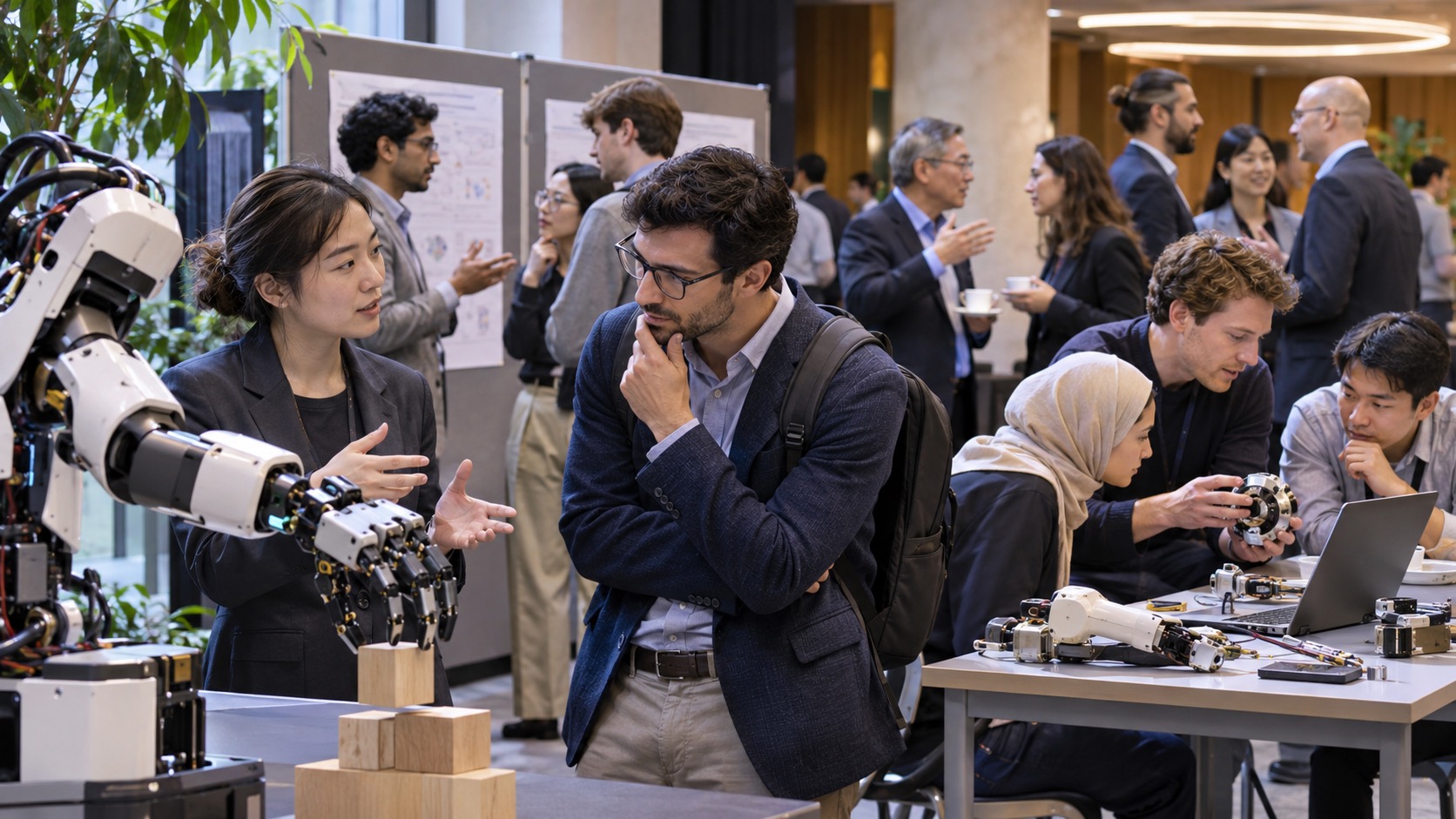
The IEEE International Conference on Robotics and Automation is the flagship conference of the IEEE Robotics and Automation Society. Its program spans papers, workshops, tutorials, competitions, keynotes, exhibitions, and social events. Researchers can encounter work from control and manipulation to perception, field systems, medical robotics, learning, and human interaction.
For industry, ICRA offers recruiting, technical scouting, partnerships, and a view of methods before they become products. The scale requires planning: parallel sessions make it impossible to see everything.
Professionals should build a targeted schedule around research groups, workshops, demos, and candidates relevant to a specific roadmap. Wandering the program without a question can turn breadth into noise.
IROS Combines Intelligent Systems With a Large International Community
The IEEE/RSJ International Conference on Intelligent Robots and Systems is another landmark global research event. Its international rotation and broad technical scope attract academic laboratories, companies, students, and robotics organizations.
IROS can be especially valuable for seeing integrated intelligent systems and regional research communities. Like ICRA, it offers many simultaneous tracks, so published proceedings and advance outreach matter as much as attendance.
Automate Is a Major North American Marketplace for Deployment
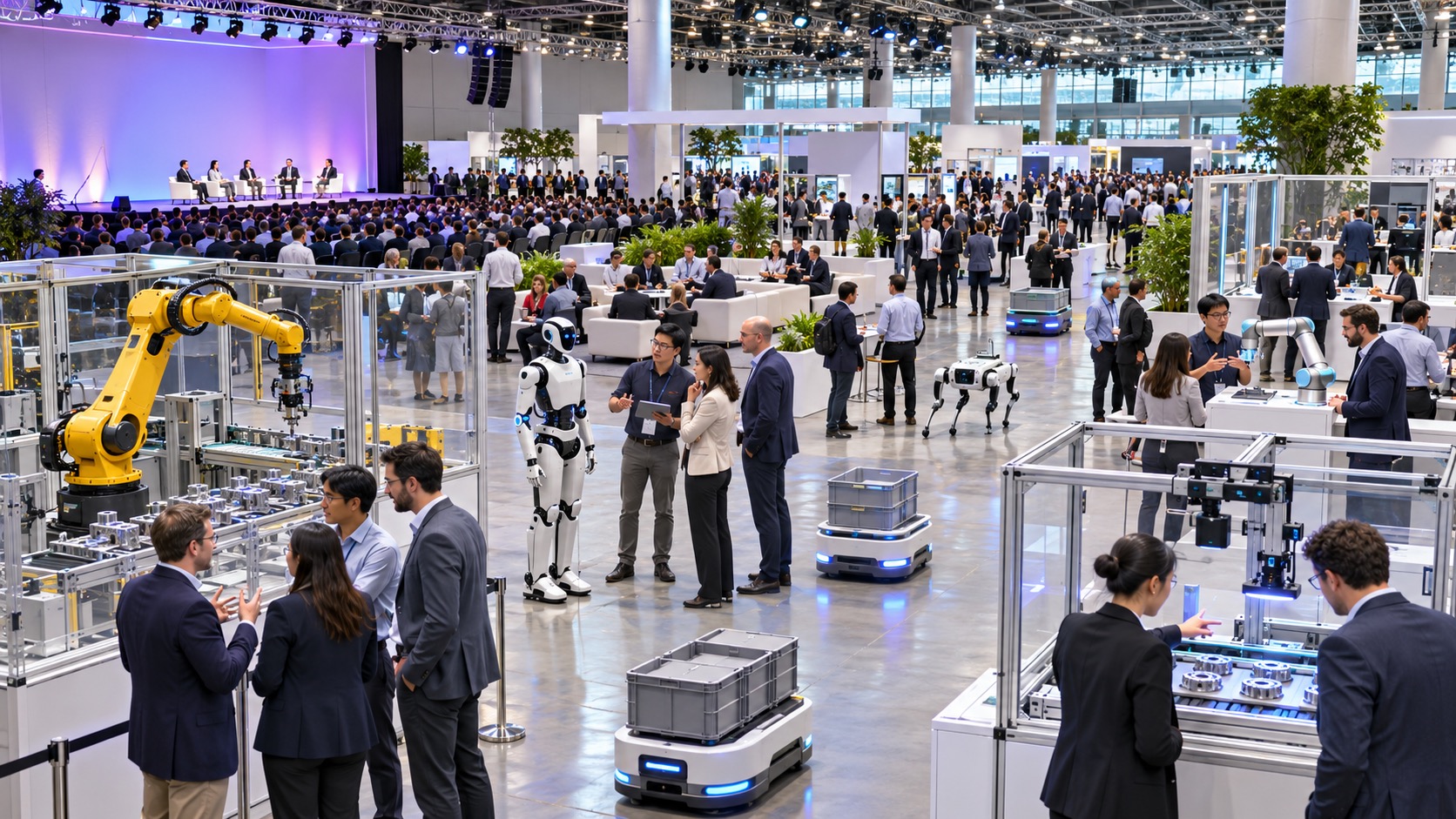
Automate brings robotics, machine vision, motion control, sensors, artificial intelligence, and industrial automation into a large exhibition and conference. The show floor emphasizes working products, integrators, components, and application conversations. Official information for 2027 describes more than a thousand exhibitors as typical and separates free show-floor access from paid conference elements.
Manufacturers can compare multiple vendors against the same process requirement. Integrators can find components and partners. Startups can study how established suppliers demonstrate reliability, safety, and support.
The scale rewards preparation. Bring cycle requirements, payloads, tolerances, environment, data interfaces, and maintenance questions. Otherwise every demo can look impressive without becoming comparable.
automatica Connects the Full Automation Value Chain in Europe
Held in Munich, automatica presents robotics and smart automation across industrial supply, integration, components, software, and emerging technology. Its position within European manufacturing makes it important for machine builders, automotive and electronics producers, safety specialists, and global vendors.
The event is useful for comparing regional market expectations, standards conversations, and supplier ecosystems. Professionals considering European deployment or partnerships can learn as much from integration details as from headline robots.
World Robot Conference Shows the Scale of China’s Robotics Ecosystem
Beijing’s World Robot Conference combines forums, exhibitions, and competitions around industrial, service, medical, mobile, and humanoid robotics. The event provides a concentrated view of Chinese manufacturers, supply chains, policy priorities, and domestic deployment ambitions.
Visitors should distinguish demonstration maturity from commercial evidence. A crowded humanoid showcase may reveal investment and component progress while leaving questions about uptime, cost, safety, and customer value.
For global strategy, the conference is important because China is a major robot market and manufacturing base. Partnerships, procurement, competition, and standards cannot be understood solely through Western events.
Robotics Summit & Expo Focuses on Building Commercial Robots
The Robotics Summit & Expo centers on engineering decisions required to design and manufacture robots. Sessions and exhibitors address motion, sensing, compute, software, testing, components, development tools, and product architecture.
The event’s value comes from concentration. A product team can discuss technical obstacles with suppliers and peers without navigating an exhibition dominated by unrelated factory equipment.
The emerging West counterpart emphasizes scaling products and companies after prototypes work. That separation reflects two distinct problems: making a robot function and building an organization that can ship and support it.
Its narrower product-development focus also makes follow-up easier. An attendee can arrive with a subsystem problem, compare several approaches, and leave with a short list of suppliers or design experiments. That is a different return from a research conference: less emphasis on surveying a field, and more emphasis on removing a concrete obstacle between prototype and dependable product.
ROSCon Brings the Open Robotics Software Community Together
ROSCon is a developer conference for the Robot Operating System ecosystem. Talks, workshops, lightning sessions, and informal discussion cover packages, architecture, tooling, deployment, security, simulation, middleware, community governance, and lessons from real robots.
Industry professionals attend because ROS and related projects influence research prototypes and commercial platforms. Maintainers and users can resolve questions that are difficult to address through documentation alone.
The conference is most valuable when teams arrive ready to contribute. A clear issue, benchmark, design proposal, or migration experience creates better conversations than passive brand promotion.
RSS Offers a Focused Single-Track Research Experience
Robotics: Science and Systems is known for a selective, focused program with single-track presentations, workshops, posters, and tutorials. The format keeps attendees in a shared technical conversation instead of scattering them across many parallel rooms.
For research leaders and advanced product teams, RSS can offer dense access to emerging work and the people behind it. Its smaller scale compared with ICRA or IROS changes the networking dynamic.
CoRL Concentrates Robotics and Machine Learning
The Conference on Robot Learning brings robotics and machine-learning communities together around representations, imitation, reinforcement learning, planning, control, foundation models, data, and real-world evaluation. It has become important as learning moves from perception modules into robot behavior.
Product teams should look for evidence beyond benchmark scores: hardware experiments, data requirements, failure modes, inference cost, safety constraints, and comparison with classical baselines.
CoRL can also reveal talent and research direction before methods stabilize. That makes it useful for recruiting and partnerships, but not every paper is ready for production.
HRI Makes Human Behavior Part of Robotics Engineering
The ACM/IEEE International Conference on Human-Robot Interaction is a premier venue spanning robotics, human-computer interaction, human factors, artificial intelligence, engineering, and social and behavioral sciences. Research covers trust, communication, collaboration, usability, ethics, social robots, teleoperation, and field deployment.
Companies building systems that share workplaces or public spaces need this community. Technical performance can fail commercially when people misunderstand intent, overtrust autonomy, reject workflow, or cannot recover from error.
IEEE CASE Connects Automation Science With Operational Systems
The IEEE International Conference on Automation Science and Engineering focuses on automation across manufacturing, logistics, healthcare, transportation, agriculture, and other systems. It often addresses scheduling, optimization, process design, digitalization, and human operations alongside robots.
Industry professionals can use CASE to examine the layer above one machine. A fast robot does not guarantee a productive system if queues, changeovers, information, or work allocation remain poorly designed.
The venue is valuable for operations researchers and automation architects whose problems span entire workflows.
Humanoids Serves a Specialized Whole-Body Community
The IEEE-RAS International Conference on Humanoid Robots concentrates locomotion, manipulation, balance, actuation, perception, interaction, design, and learning in humanlike machines. Its specialist focus makes technical comparisons deeper than a general expo spectacle.
Industry attendees can separate component progress from claims about general-purpose deployment. Hands, actuators, fall recovery, teleoperation, and whole-body control may have value even before broad humanoid economics are proven.
Industrial Trade Fairs Reveal Procurement Reality
Hannover Messe, IMTS, PACK EXPO, and regional manufacturing exhibitions are not solely robotics conferences, yet they can be crucial for automation professionals. Robots appear inside machine tools, packaging lines, metrology, material handling, and production software rather than as isolated attractions.
These events reveal buying context. A gripper competes with fixture redesign; a mobile robot competes with conveyors or process changes; a vision system must connect to quality and traceability.
Professionals should attend the event where their customers solve the whole process, not only the event where roboticists gather.
Large Conferences Are Most Useful With a Written Scouting Plan
Define three to five questions before registration. Identify exhibitors, papers, workshops, and people who can provide evidence. Book conversations early, because specialists may not remain at a booth throughout the event.
Create a comparison form for technical requirements, integration effort, support, lead time, cybersecurity, safety, and total cost. Photograph or collect material only with permission, and record context before memories blur.
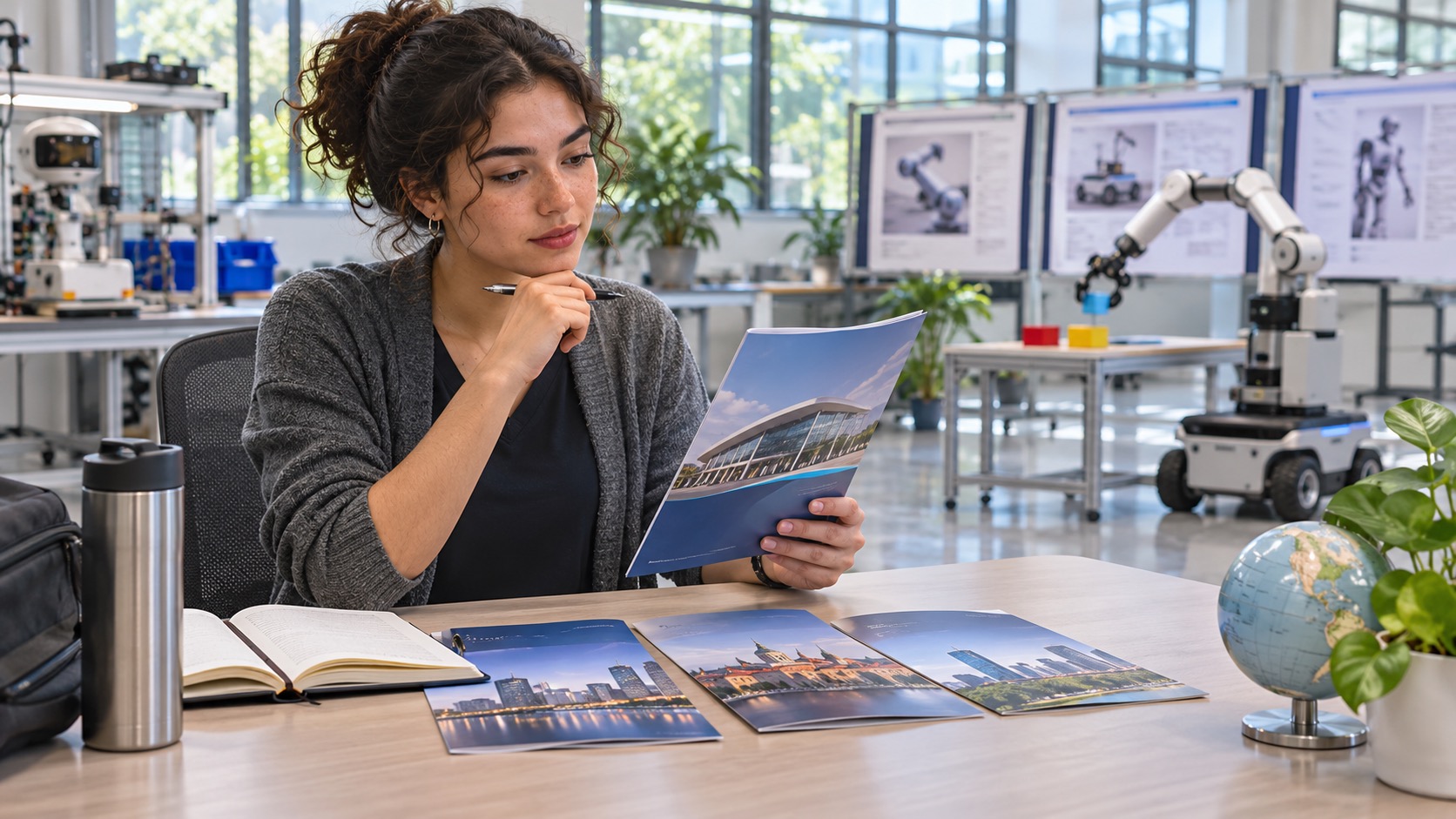
Leave open time for unexpected discoveries. A rigid schedule misses cross-disciplinary ideas, while a schedule with no priorities produces a bag of brochures and few decisions.
Assign owners to each scouting theme before travel. One person may compare safety scanners, another may track mobile manipulation, and another may interview integrators about commissioning time. A shared evidence template makes their notes comparable. It also prevents the post-event review from becoming a pile of photographs and business cards with no relationship to the decisions that justified attendance.
The Biggest Event Is the One That Advances the Current Decision
ICRA and IROS provide broad research scale. Automate and automatica expose commercial automation ecosystems. World Robot Conference offers visibility into China’s market. Robotics Summit addresses product engineering; ROSCon addresses software practice; RSS, CoRL, HRI, CASE, and Humanoids deepen selected communities.
An industry professional should choose based on the next decision: research direction, vendor selection, component sourcing, hiring, product architecture, standards, customer discovery, or international strategy. A conference creates value when conversations and evidence change that decision, not when an attendee merely enters the largest hall.
Conference Scale Should Be Measured in Relevant Access
Published attendance, exhibitor, and floor-space figures describe scale, but they do not guarantee access to the people or systems a visitor needs. A smaller specialist program may offer longer technical conversations, while a vast expo may provide unmatched side-by-side hardware comparison. Evaluate scale by relevant vendors, reachable experts, live demonstrations, and the time available for serious questions. That definition keeps headline numbers from substituting for practical fit.
A Global Conference Portfolio Needs an Explicit Budget Logic
Travel decisions become clearer when the budget is attached to expected learning rather than prestige. Estimate the cost of fares, lodging, registration, staff time, and work delayed during the trip. Then name the uncertainty the event should reduce: supplier capability, research direction, regulatory readiness, partner quality, or customer demand. A trip can be worthwhile without producing an immediate sale if it prevents an expensive technical commitment.
Afterward, compare results with that expectation. Document meetings completed, alternatives discovered, assumptions overturned, and actions assigned with deadlines. Keep claims modest: a conversation is not a partnership, and a crowded booth is not market validation. Over several events, this record shows which formats repeatedly produce evidence and which merely create activity, allowing the conference portfolio to improve instead of expanding automatically. That discipline protects future travel budgets.