Research Robots Turn Robotics Questions Into Testable Systems
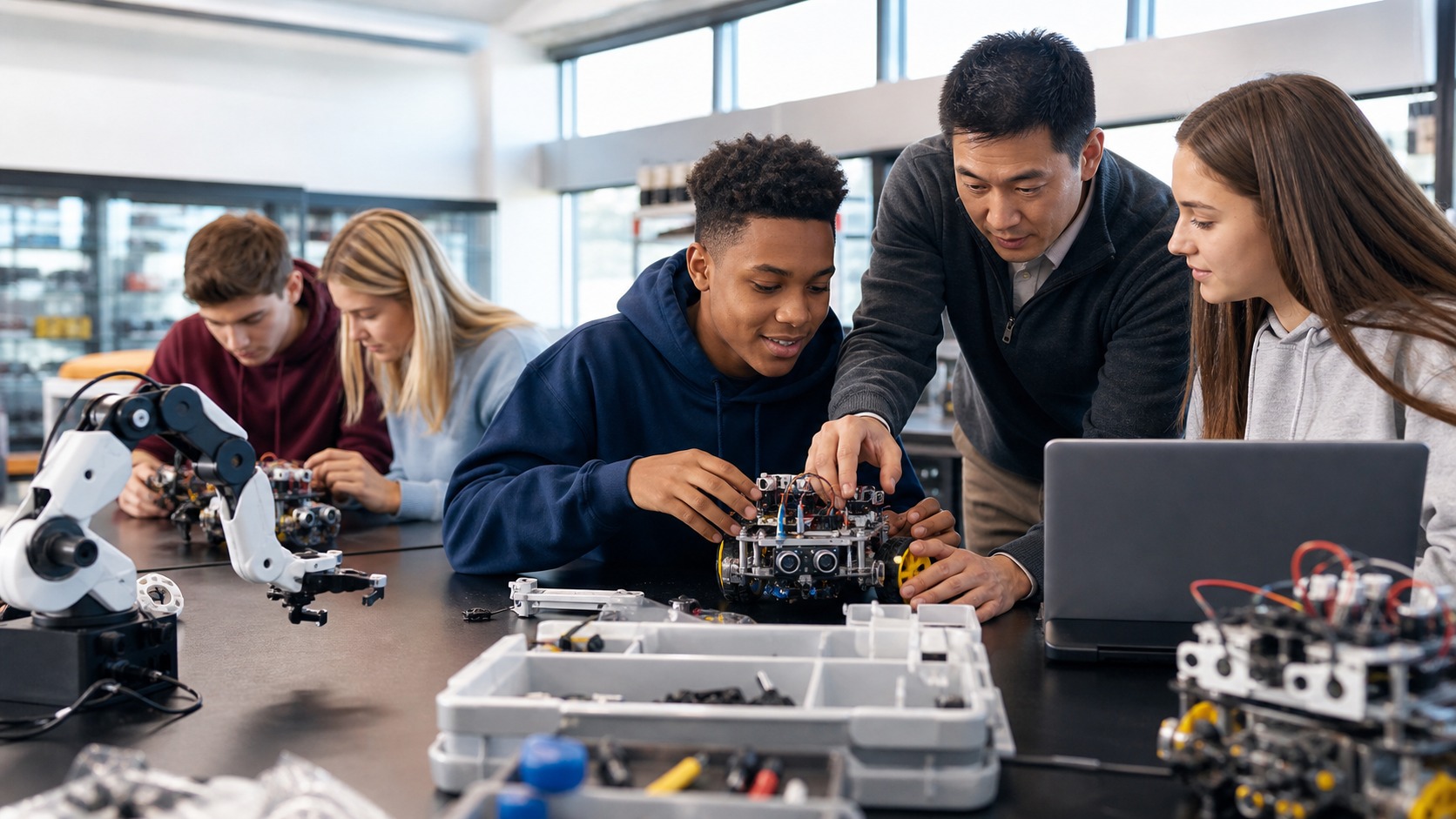
Research robots are robots used to explore, test, and improve robotics ideas before those ideas become mature products or field systems. They help researchers study navigation, manipulation, perception, control, machine learning, mobility, human-robot interaction, and hardware design in a physical setting. A research robot does not have to look finished or commercial. Its value comes from being measurable, adjustable, documented, and open enough for experiments. For beginners, the easiest way to understand research robots is to see them as moving laboratories: machines built to ask better questions about how robots sense, decide, move, and work around people.
A: Researchers often need exposed sensors, mounts, logs, and software access more than a polished shell.
A: A platform is built to test ideas, while a product is built for dependable routine use.
A: Real robots reveal friction, lighting changes, calibration drift, delay, wear, and awkward edge cases.
A: Teams compare measured outcomes across trials, baselines, environments, and documented failure patterns.
A: Simulation helps prepare experiments, but hardware shows whether the idea survives physical conditions.
A: Graduate students, engineers, lab staff, faculty, company researchers, and advanced robotics students.
A: Logs preserve what the robot sensed, decided, commanded, and experienced during the trial.
A: Sometimes a tested sensor, gripper, algorithm, or behavior later moves into a product.
A: Look for the question, the measurement, the environment, and the reported limits.
A: Research robots turn robotics ideas into physical evidence for teams to inspect and improve.
Research Robots Are Built for Experiments
A research robot is usually designed around investigation rather than routine service. A delivery robot in a hospital has a defined job, but a research robot might exist to test a new mapping method, a new gripper, a new walking gait, or a new way for humans to give instructions. The purpose is not only to complete a task. The purpose is to learn what happens when an idea meets real hardware.
That experimental role changes the way the robot is built. Researchers often need access to sensors, motors, software logs, control settings, mechanical parts, and data streams. A closed consumer robot might hide those details. A useful research platform exposes them so a team can measure behavior, modify assumptions, and repeat trials under similar conditions.
Research robots also make failure productive. If a robot loses localization, drops an object, confuses a reflection, or moves awkwardly, the failure becomes evidence. The team studies the log, changes the algorithm, adjusts the hardware, and tests again. This cycle is the heart of robotics research.
The robot is therefore a tool for discovery. It lets researchers move from theory to evidence, and from evidence to better design. That makes the platform different from a finished service robot. In a product, the goal is dependable routine use. In a research setting, the goal is controlled uncertainty. The team may intentionally push the robot into edge cases, change one variable at a time, or compare two approaches that look similar from the outside. A robot that fails clearly can be more valuable than a robot that hides the reason it failed. Good research hardware invites inspection, because every exposed assumption gives the team another way to learn. Research teams also use robots to make assumptions visible across disciplines. A controls engineer may care about stability, a perception researcher may care about noisy inputs, and a human-factors researcher may care about how people interpret motion. The same robot can expose all three concerns in one trial. That shared physical system helps teams notice conflicts earlier than they would in separate simulations or papers.
Sensors Give the Robot Evidence
Most research robots rely on sensors to understand their surroundings and their own motion. Cameras, depth sensors, lidar, inertial measurement units, encoders, force sensors, microphones, tactile sensors, and joint feedback all provide different kinds of information. The research question decides which sensors matter most.
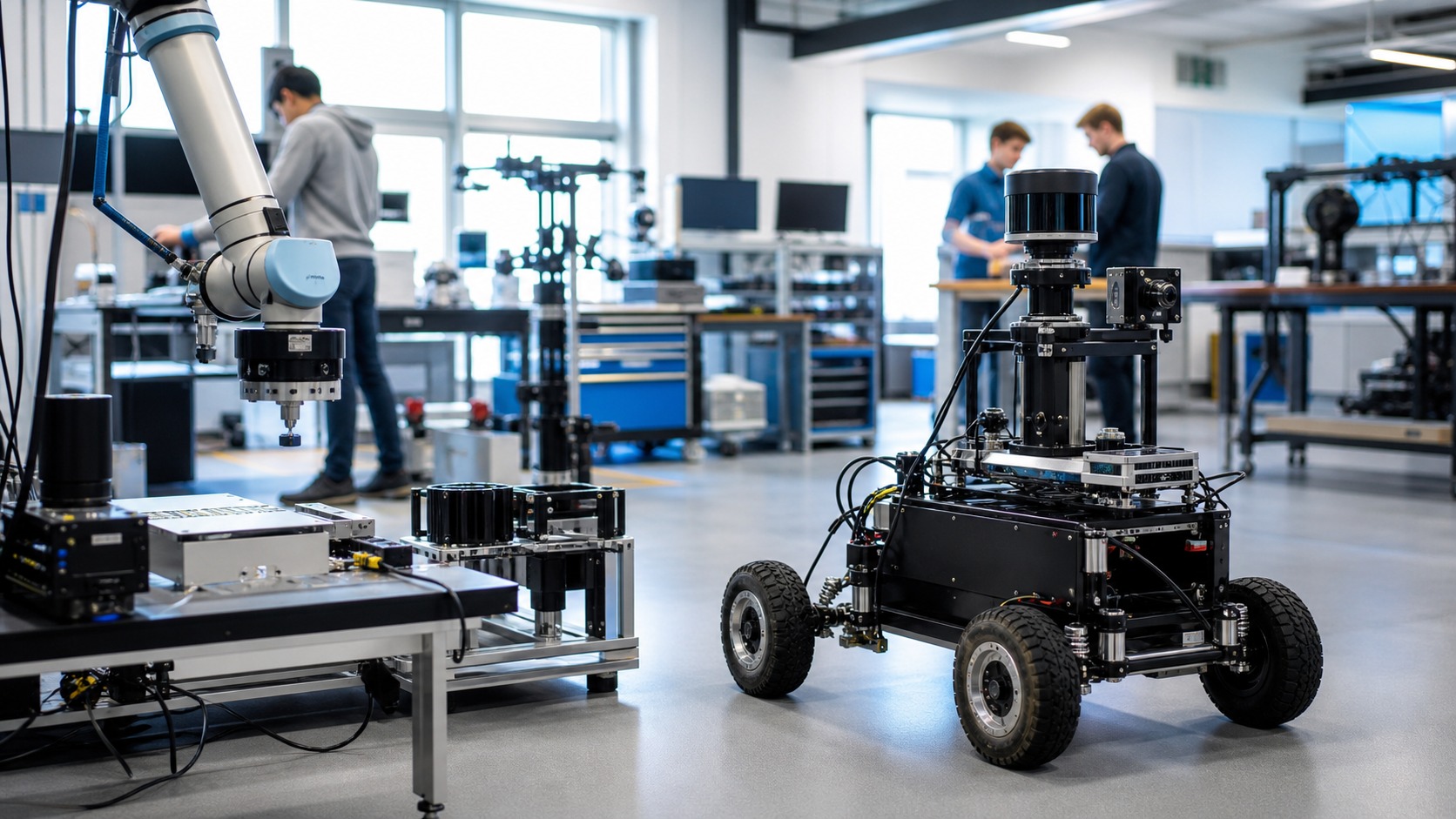
A mobile robot studying navigation might need lidar, wheel odometry, cameras, and mapping software. A manipulation robot might need joint encoders, wrist force sensing, object detection, and a camera view of the workspace. A human-robot interaction project might focus on speech, gesture, gaze, distance, and body language.
Sensor data is not perfect. Light changes, dust, reflections, vibration, occlusion, and calibration errors all affect what the robot sees. Research robots are useful because they reveal those imperfections directly. A model that works in simulation must still survive noise, delay, wear, and unexpected objects in the physical world. Sensors also create questions about trust. A camera may recognize an object but miss its depth. Lidar may map walls well but struggle with glass. Force sensing may detect contact but not fully explain whether the contact is safe or useful. Research robots let teams study these mismatches in detail. The goal is not only to gather more data. The goal is to understand which data matters, when it breaks down, and how the robot should behave when evidence is incomplete. The sensor setup also affects cost and practicality. A laboratory can test expensive sensors to learn what performance is possible, but a future product may need cheaper or more durable hardware. Research robots help teams compare those tradeoffs. They can ask whether a simpler camera is good enough, whether an added depth sensor changes the result, or whether the robot can still act safely when one sensor becomes unreliable.
Software Connects Perception, Planning, and Control
A research robot usually has software layers that turn raw signals into behavior. Perception software interprets sensor data. Planning software decides a route, motion, grasp, or sequence. Control software sends commands to motors and checks whether the robot is moving as intended. Data logging keeps a record of what happened.
Many research teams use robotics middleware, simulation tools, version-controlled code, and repeatable test routines. The exact tools vary, but the logic is consistent: the robot needs a way to collect information, make decisions, act, and preserve enough evidence for the team to understand the outcome.
This is why research robots often look less polished than commercial robots. A visible cable, exposed sensor, or modular mount might be intentional. Researchers need to swap parts, inspect signals, add sensors, compare algorithms, and change experiments quickly. A finished exterior is less important than access and repeatability.
The software is also where research robots bridge simulation and reality. A team might test a navigation system in a virtual environment first, then run it on the robot in a lab, hallway, field, or mock home. Differences between simulated success and physical performance teach the team what the model missed. The planning layer is where many research ideas become visible. A robot might choose a route through a hallway, select a grasp point on a tool, decide how close to stand near a person, or recover after a wheel slips. Each decision reveals the assumptions inside the software. Researchers can compare a cautious planner against a faster one, or a learned policy against a rule-based method. The physical robot makes those comparisons concrete because timing, friction, sensor delay, and imperfect calibration all affect the result. Software research also depends on timing. A robot may have the right plan too late, or a correct perception result after the moment has passed. Physical platforms reveal delays that are easy to ignore on a laptop. They show how computing speed, communication, motor response, and sensor refresh rates shape behavior. This is especially important for robots that interact with people, vehicles, tools, or fragile objects.
Research Robots Come in Many Forms
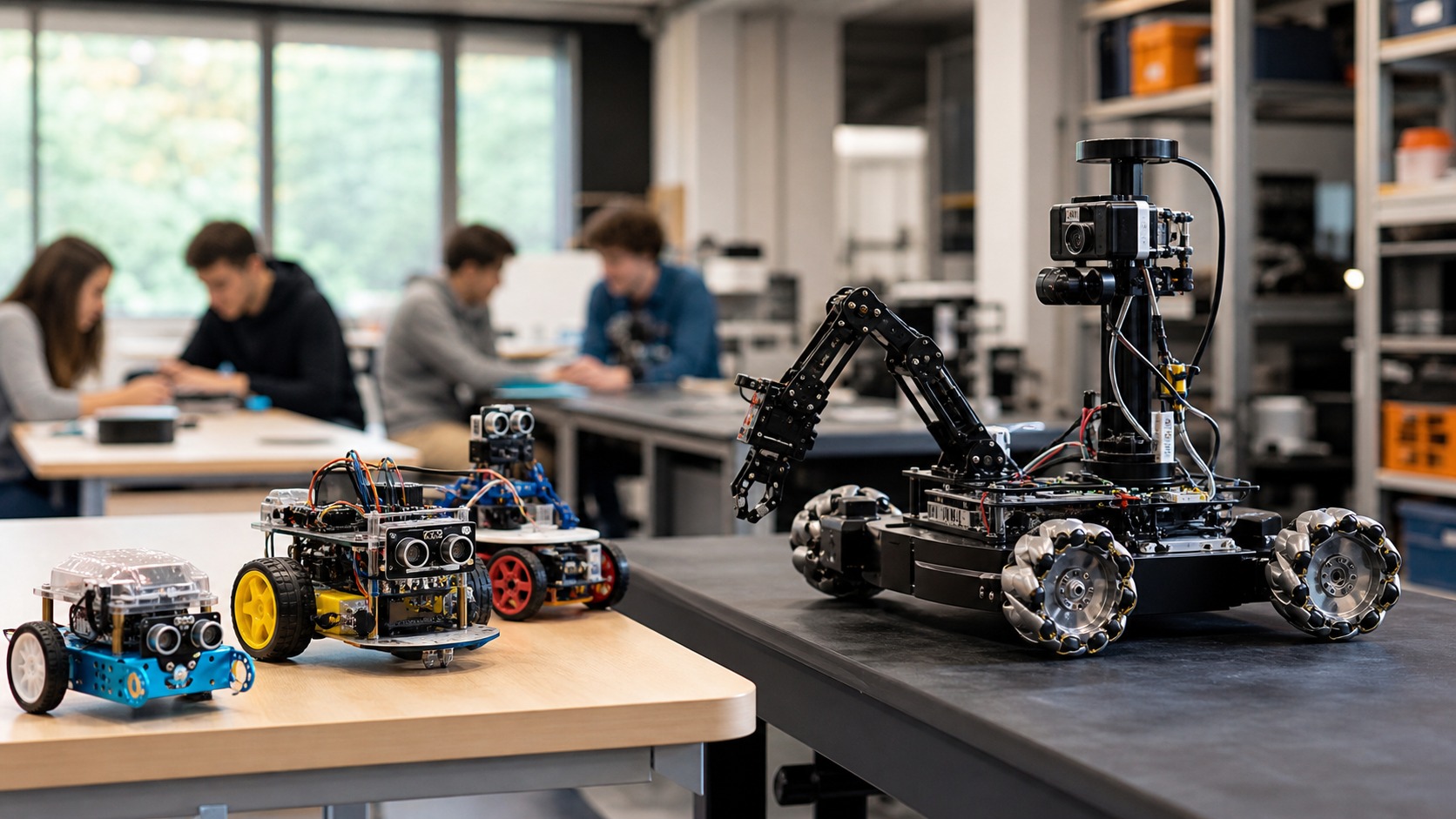
There is no single shape for a research robot. Some are wheeled platforms used for mapping, delivery, inspection, and human-space navigation. Some are robotic arms used for grasping, assembly, tool use, or manipulation research. Others are drones, legged robots, underwater vehicles, soft robots, swarm robots, or humanoid platforms.
The form follows the question. A lab studying warehouse navigation might use a mobile base with lidar and cameras. A lab studying prosthetics or rehabilitation might use wearable robotics or powered joints. A lab studying agriculture might use rugged field platforms that can handle soil, dust, and uneven ground.
This variety is one reason research robotics is so broad. The same discipline touches mechanical design, electrical systems, sensing, software, AI, controls, safety, human factors, and domain knowledge. Form also affects what can be studied responsibly. A small tabletop arm is safer for early manipulation tests, while a full-size mobile robot can reveal navigation issues that never appear on a desk. A drone exposes problems in airflow, localization, and battery limits. A soft robot raises questions about materials and control. Selecting the form is therefore part of research design. The platform should be capable enough to answer the question without creating unnecessary risk or complexity. Researchers also choose platforms based on available space and supervision. A small lab robot can run many trials safely in a controlled room. A field robot may need outdoor permissions, weather planning, emergency stops, and transport. A robot arm may require guarding and trained operators. These practical limits influence the science. The best experiment is not only interesting; it is possible to run safely and repeatedly.
Good Research Depends on Measurement
A research robot is only as useful as the evidence it produces. Teams need to define what they are measuring before the test begins. A navigation study might measure path accuracy, time, energy use, number of interventions, recovery behavior, and performance in crowded spaces. A grasping study might measure success rate, object damage, grip force, and time to complete a pick.
Careful measurement prevents vague conclusions. If a robot seems better, the team needs to know better at what. Faster motion might reduce accuracy. Stronger gripping might damage delicate objects. A more complex model might perform well in the lab but require too much computing power for a practical robot.
Repeatability matters too. A single impressive demo does not prove much if the robot fails in the next trial. Research teams often run many tests, vary conditions, record failures, and compare new methods against baselines. This disciplined process turns robot behavior into knowledge that others can inspect and build on.
The best research platforms therefore support logging, calibration, controlled experiments, and clear reporting. They help researchers make claims that are specific enough to be challenged. Measurement also protects the team from being fooled by a memorable demonstration. Robotics videos often show the best attempt, but research needs the whole pattern: successes, failures, partial recoveries, and cases where the robot needed help. A careful report might include the number of trials, the test conditions, the failure categories, and the limits of the setup. That honesty is not a weakness. It is how a research robot turns a promising idea into knowledge that another team can test. Measurement creates a bridge between curiosity and progress. Without it, a robot demo is only a story about what happened once. With it, the team can compare methods, publish results, identify weak points, and decide what to test next. A research robot earns its place by helping people learn with enough precision that the next experiment starts from firmer ground.
Research Robots Shape Future Products
Research robots are not always meant to become products themselves. Sometimes they test one idea that later appears inside a commercial robot, medical device, warehouse system, agricultural machine, or assistive tool. A perception method, gripper design, safety behavior, or interface lesson can move from a lab platform into a more finished system. This path takes time because a research result is not the same as a deployable product. Commercial robots need durability, support, cost control, safety certification, documentation, service plans, and user training. Research robots help find what is possible, while product engineering decides what is reliable enough for daily use.
For beginners, the key takeaway is simple: research robots help robotics move from interesting ideas to tested evidence. They make questions physical, measurable, and repeatable.
Their job is to teach the field what works.