Introduction: The Rise of Robots in Everyday Life
Robots are no longer confined to science fiction movies, research laboratories, or massive factory floors. Today, they are becoming a visible and increasingly important part of daily life. From autonomous warehouse machines and robotic surgical systems to self-driving vehicles, agricultural robots, delivery drones, and collaborative robots working alongside people, robotics technology is rapidly transforming how industries operate and how society functions. This growth has brought remarkable benefits. Robots improve productivity, increase precision, reduce operational costs, and perform tasks that would be dangerous, repetitive, or physically demanding for humans. Businesses around the world are investing heavily in automation, while governments and researchers continue exploring new applications for intelligent machines. However, as robots become more powerful, more autonomous, and more integrated into human environments, one issue has become increasingly important: safety. A robot that operates incorrectly can damage equipment, disrupt operations, compromise sensitive data, or, in extreme cases, cause serious injury. The more capable and widespread robotic systems become, the greater the responsibility to ensure they operate safely and reliably. Robot safety is no longer simply an engineering concern. It is a business priority, a legal requirement, an ethical responsibility, and a cornerstone of public trust. As society enters an era where humans and robots work more closely together than ever before, understanding why robot safety matters has become essential for organizations, workers, developers, policymakers, and consumers alike.
A: Robots are now working closer to people in more places, so safety must protect workers, customers, patients, pedestrians, and everyday users.
A: No. Cobots are designed for closer interaction, but they still need risk assessment, proper tooling, speed limits, and safe workflows.
A: It is a structured review of possible hazards, injury severity, likelihood, and protective measures.
A: It depends on the application, but emergency stops, guarding, sensors, safe programming, and training are all critical.
A: Yes. Bugs, bad maps, weak validation, poor updates, and cybersecurity failures can all make robots unsafe.
A: Review safety after installation, after changes, after incidents or near misses, and during regular inspections.
A: Mobile robots operate in changing spaces with people, obstacles, floor hazards, traffic patterns, and unpredictable behavior.
A: Manufacturers, integrators, employers, operators, maintenance teams, and users may all share responsibility.
A: Yes. A hacked or poorly secured robot can expose data, disrupt operations, or create physical hazards.
A: The goal is to make robots useful, reliable, predictable, and trustworthy while reducing the risk of harm.
The Evolution of Robotics and Safety Concerns
The relationship between robotics and safety has changed significantly over time.
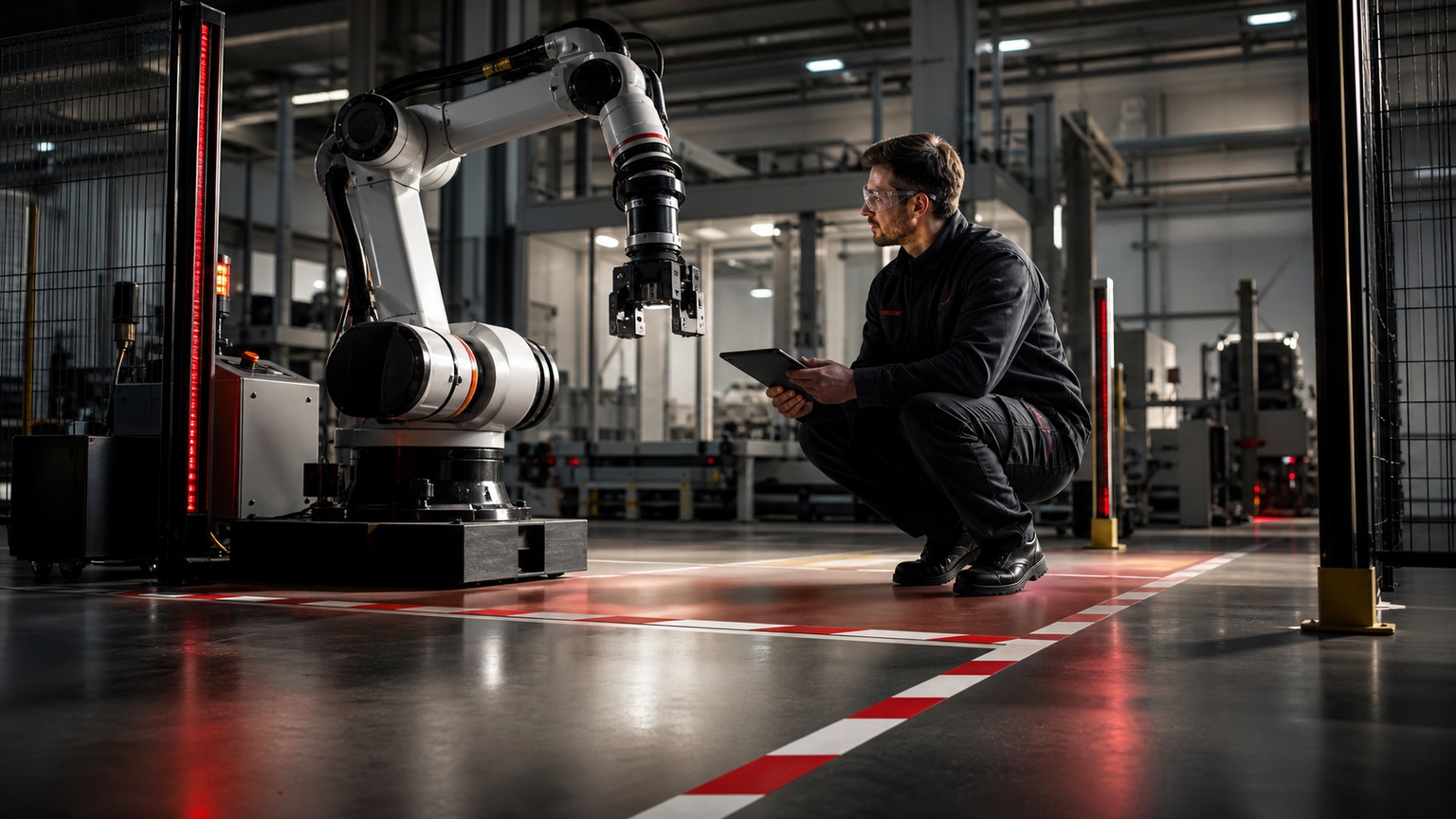
Early industrial robots were often large, powerful machines designed to perform repetitive manufacturing tasks. Because these robots operated at high speeds and exerted significant force, they were typically separated from workers using fences, barriers, cages, and restricted access zones.
In these environments, safety focused primarily on preventing human contact with robotic systems. The solution was simple: keep people and robots apart.
Today’s robots operate very differently. Modern systems increasingly share workspaces with humans. Collaborative robots assist workers directly on production lines. Autonomous mobile robots move through warehouses alongside employees. Service robots interact with customers in public spaces. Surgical robots assist physicians during medical procedures.
As robots move closer to people, traditional separation-based safety approaches are no longer sufficient. Modern safety strategies must address dynamic interactions, intelligent decision-making, real-time risk assessment, and unpredictable environments.
This evolution has transformed robot safety from a specialized industrial concern into a critical issue affecting nearly every area of robotics.
The Human Cost of Unsafe Robotics
At the heart of every safety discussion lies a simple reality: people can be harmed when robotic systems fail.
Robots are powerful machines. Even relatively small systems can exert significant force, move rapidly, or interact with hazardous materials. Without proper safeguards, accidents can result in injuries ranging from minor incidents to severe consequences.
Physical hazards may include collisions, crushing injuries, pinching hazards, unexpected movement, falling objects, or equipment malfunctions. Autonomous systems introduce additional challenges because they may make decisions based on sensor data and software algorithms.
The goal of robot safety is not simply regulatory compliance. It is protecting human lives and well-being.
Every safety protocol, engineering standard, and operational procedure exists because organizations recognize the importance of preventing accidents before they occur. Effective safety measures create environments where people can confidently work alongside advanced technologies without unnecessary risk.
As robots become more common in workplaces, public spaces, and homes, protecting human safety remains the industry’s highest priority.
Building Trust in Automation
Public trust plays a major role in the success of robotics technology.
People are more likely to adopt, support, and interact with robots when they feel confident that those systems are safe. Conversely, highly publicized accidents can damage confidence and slow adoption.
Consider autonomous vehicles. Their long-term success depends not only on technological performance but also on public acceptance. People must trust that autonomous systems can operate safely before they become widely embraced.
The same principle applies to healthcare robotics, delivery robots, collaborative manufacturing systems, and consumer automation products.
Trust is earned through consistent safety performance, transparent design practices, rigorous testing, and responsible deployment. Organizations that prioritize safety help create positive experiences that encourage broader acceptance of robotic technologies.
In many ways, safety serves as the foundation upon which public confidence is built.
Why Collaborative Robots Require New Safety Approaches
Collaborative robots, often called cobots, represent one of the fastest-growing segments of the robotics industry.
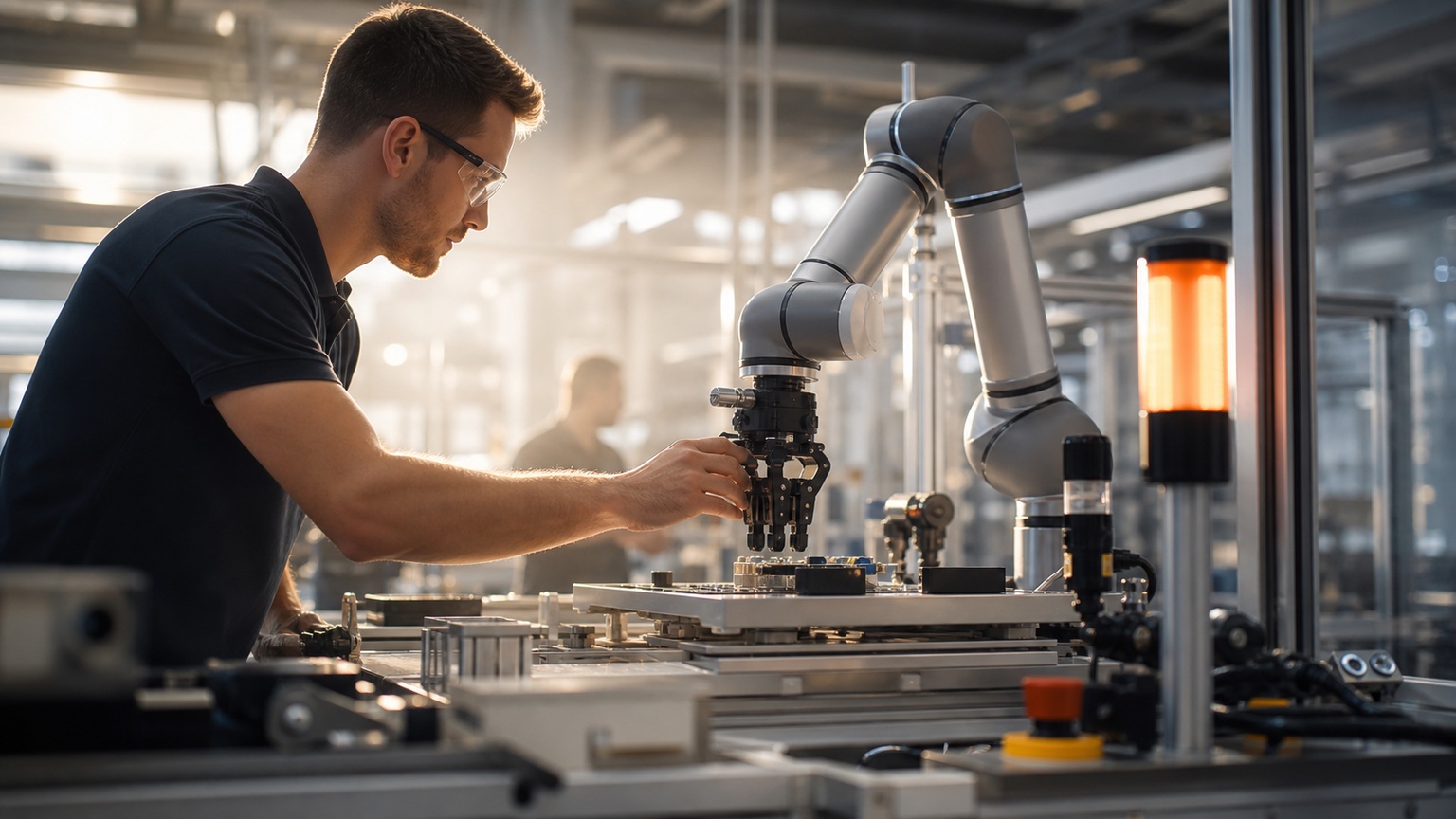
Unlike traditional industrial robots that operate in isolated environments, cobots are specifically designed to work alongside people. They assist with assembly, packaging, inspection, material handling, and countless other tasks.
This close interaction creates unique safety challenges. A collaborative robot must recognize human presence, limit force levels, adjust behavior based on environmental conditions, and respond appropriately to unexpected situations.
Modern cobots often incorporate advanced sensors, force-limiting technologies, vision systems, and intelligent control algorithms. These features allow them to detect contact, slow down when necessary, and stop automatically if a potential hazard is identified.
The growing popularity of collaborative robotics highlights why safety innovation is becoming increasingly important. As human-robot interaction becomes more common, safety systems must become more sophisticated and adaptable.
The Role of Safety Standards in Robotics
Safety standards provide the foundation for responsible robotics development and deployment.
These standards establish guidelines for risk assessment, hazard identification, emergency response systems, machine guarding, system design, and operational procedures. They help manufacturers, integrators, and operators create robotic systems that meet consistent safety expectations.
International standards organizations work closely with industry experts, researchers, and regulatory agencies to develop these frameworks.
Compliance with safety standards is often required by law, but their value extends beyond legal obligations. Standards provide proven methodologies for reducing risk and improving reliability.
By following established safety practices, organizations can avoid common mistakes, improve operational performance, and protect both workers and equipment.
Safety standards continue evolving alongside robotics technology, ensuring they remain relevant as new capabilities emerge.
Risk Assessment: Identifying Problems Before They Occur
One of the most important aspects of robot safety is risk assessment.
Risk assessment involves systematically identifying potential hazards, evaluating their likelihood and severity, and implementing measures to reduce or eliminate risks.
Before deploying a robotic system, engineers analyze how the robot will operate, where it will be located, who may interact with it, and what potential dangers could arise.
This process considers mechanical hazards, electrical risks, software failures, environmental factors, human error, and cybersecurity vulnerabilities.
Effective risk assessment helps organizations anticipate problems before accidents occur. Rather than reacting to incidents after they happen, proactive safety planning prevents many hazards from ever emerging.
As robotic systems become increasingly autonomous and complex, comprehensive risk assessment becomes even more essential.
Software Safety and Autonomous Decision-Making
Modern robots depend heavily on software.
Software controls movement, interprets sensor data, manages communication, supports navigation, and enables intelligent decision-making. As robots become more autonomous, software plays an increasingly central role in safety.
A software error can potentially cause a robot to behave unpredictably, misinterpret environmental information, or make incorrect decisions. This makes software quality a critical safety consideration.
Developers use extensive testing, simulation, validation procedures, and quality assurance practices to identify and correct issues before deployment.
Artificial intelligence introduces additional complexity because machine learning systems may behave differently than traditional rule-based software. Ensuring safe AI behavior requires ongoing monitoring, testing, and evaluation.
As robotics continues evolving, software safety will remain one of the industry’s most important challenges and priorities.
Cybersecurity and Robot Safety
Cybersecurity has become an essential component of robotics safety.
Many robotic systems are connected to networks, cloud platforms, and internet-based services. While connectivity offers significant benefits, it also creates potential security vulnerabilities.
A compromised robot could be manipulated by unauthorized users, causing operational disruptions, safety hazards, data breaches, or equipment damage.
Cybersecurity measures such as encryption, authentication, access controls, network monitoring, and software updates help protect robotic systems from threats.
Organizations increasingly recognize that cybersecurity and safety are closely interconnected. A secure robot is often a safer robot.
As connected robotics continues expanding, cybersecurity will play an increasingly important role in protecting both people and systems.
Safety in Autonomous Vehicles
Few robotics applications receive more public attention than autonomous vehicles.
Self-driving cars, delivery robots, and autonomous transportation systems operate in complex environments filled with unpredictable variables. Pedestrians, cyclists, weather conditions, road construction, and human drivers all contribute to operational challenges.
Safety is therefore the defining issue in autonomous transportation.
Manufacturers invest heavily in sensor technology, artificial intelligence, simulation testing, and real-world validation to improve safety performance. Regulatory agencies require extensive testing and reporting before autonomous systems can be deployed broadly.
The success of autonomous transportation ultimately depends on achieving safety levels that meet or exceed those of human-operated vehicles.
As development continues, safety remains the primary benchmark by which these technologies are evaluated.
Robot Safety in Healthcare
Healthcare robotics represents another area where safety is absolutely critical.
Surgical robots assist physicians during complex procedures. Rehabilitation robots help patients recover mobility. Service robots transport medications and supplies throughout hospitals.
In these environments, even minor errors can have serious consequences. Patient safety must remain the highest priority.
Medical robotics undergoes rigorous testing, certification, and regulatory review before deployment. Systems are designed with multiple safeguards, redundancy mechanisms, and monitoring capabilities.
Healthcare providers also receive specialized training to ensure proper operation and oversight.
The success of medical robotics demonstrates how robust safety practices can enable innovation while protecting vulnerable populations.
Workplace Safety and Automation
Many organizations adopt robotics specifically to improve workplace safety.
Certain tasks expose workers to repetitive strain injuries, hazardous materials, extreme temperatures, heavy lifting, or dangerous environments. Robots can perform these tasks while reducing human exposure to risk.
Manufacturing facilities use robots for welding, painting, material handling, and assembly operations. Mining companies deploy autonomous equipment in hazardous underground environments. Agriculture utilizes robotic machinery for demanding field operations.
By removing workers from dangerous situations, robots often contribute to safer workplaces overall.
However, achieving these benefits requires careful planning, training, and implementation. Safety improvements are most effective when human factors and technological considerations are addressed together.
Training and Safety Culture
Technology alone cannot guarantee safety.
Even the most advanced robotic systems require knowledgeable operators, technicians, engineers, and managers. Proper training is essential for safe operation.
Employees must understand system capabilities, limitations, emergency procedures, maintenance requirements, and operational protocols. Ongoing education helps ensure workers remain prepared as technologies evolve.
Beyond training, organizations benefit from cultivating strong safety cultures. In a positive safety culture, employees feel empowered to report concerns, identify hazards, and participate in continuous improvement efforts.
Safety becomes a shared responsibility rather than a regulatory obligation.
Organizations that prioritize safety culture often experience fewer incidents, higher productivity, and stronger employee engagement.
The Economic Value of Robot Safety
Investing in safety is not merely an ethical or legal responsibility. It also makes strong business sense.
Accidents can result in medical expenses, equipment damage, operational downtime, legal liabilities, regulatory penalties, and reputational harm. These costs can far exceed the investment required to implement effective safety measures.
Safe systems are often more reliable, productive, and efficient. They experience fewer disruptions and contribute to stronger organizational performance.
Customers, investors, and partners increasingly expect organizations to demonstrate responsible safety practices. Strong safety records can enhance competitiveness and support long-term growth.
For businesses adopting robotics, safety should be viewed as a strategic investment rather than an operational expense.
The Future of Robot Safety
The future of robotics will likely involve even closer collaboration between humans and machines.
Advances in artificial intelligence, computer vision, sensor technology, and machine learning are enabling robots to become more aware of their surroundings and more responsive to human behavior. These capabilities will support increasingly sophisticated safety systems.
Future robots may continuously assess risk, predict potential hazards, adapt behavior in real time, and communicate more effectively with human collaborators.
Regulatory frameworks and safety standards will continue evolving to address emerging technologies. Industry leaders, researchers, and policymakers will play important roles in shaping best practices for safe robotic deployment.
As robots become more capable, safety innovation will remain essential to ensuring that technological progress benefits society.
Conclusion
Robot safety matters more than ever because robots are becoming an increasingly important part of everyday life. From factories and hospitals to warehouses, roads, farms, and public spaces, robotic systems are performing tasks that directly affect people, businesses, and communities.
Protecting human well-being, building public trust, ensuring reliable operation, preventing accidents, securing connected systems, and supporting responsible innovation all depend on effective safety practices. Safety is not an obstacle to progress; it is the foundation that makes progress possible.
As robotics technology continues advancing, organizations that prioritize safety will be best positioned to realize the benefits of automation while protecting workers, customers, and society. The future of robotics is incredibly promising, but that future can only be fully achieved when safety remains at the center of every design, deployment, and decision involving intelligent machines.