From Lone Probes to Cooperative Infrastructure
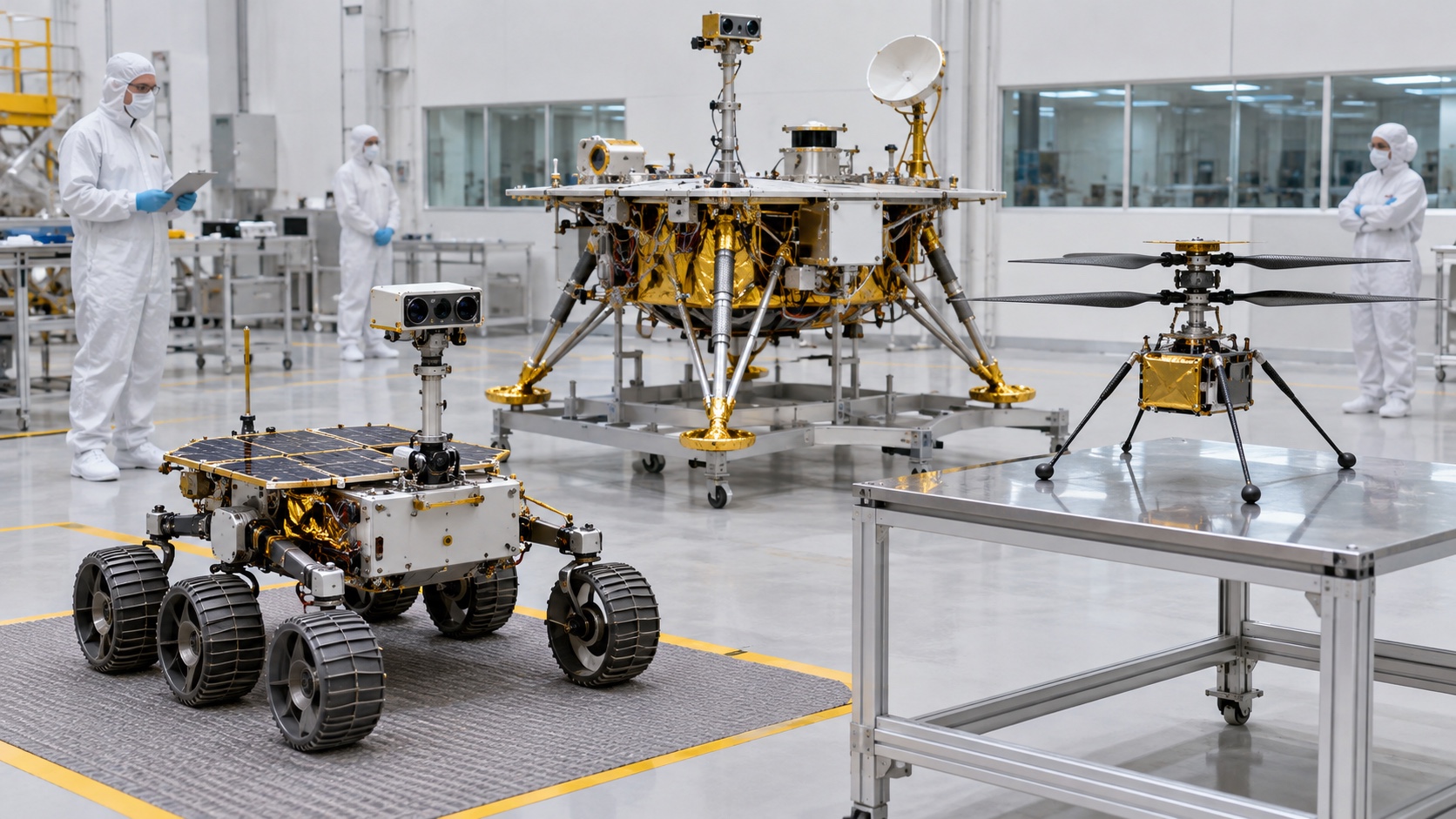
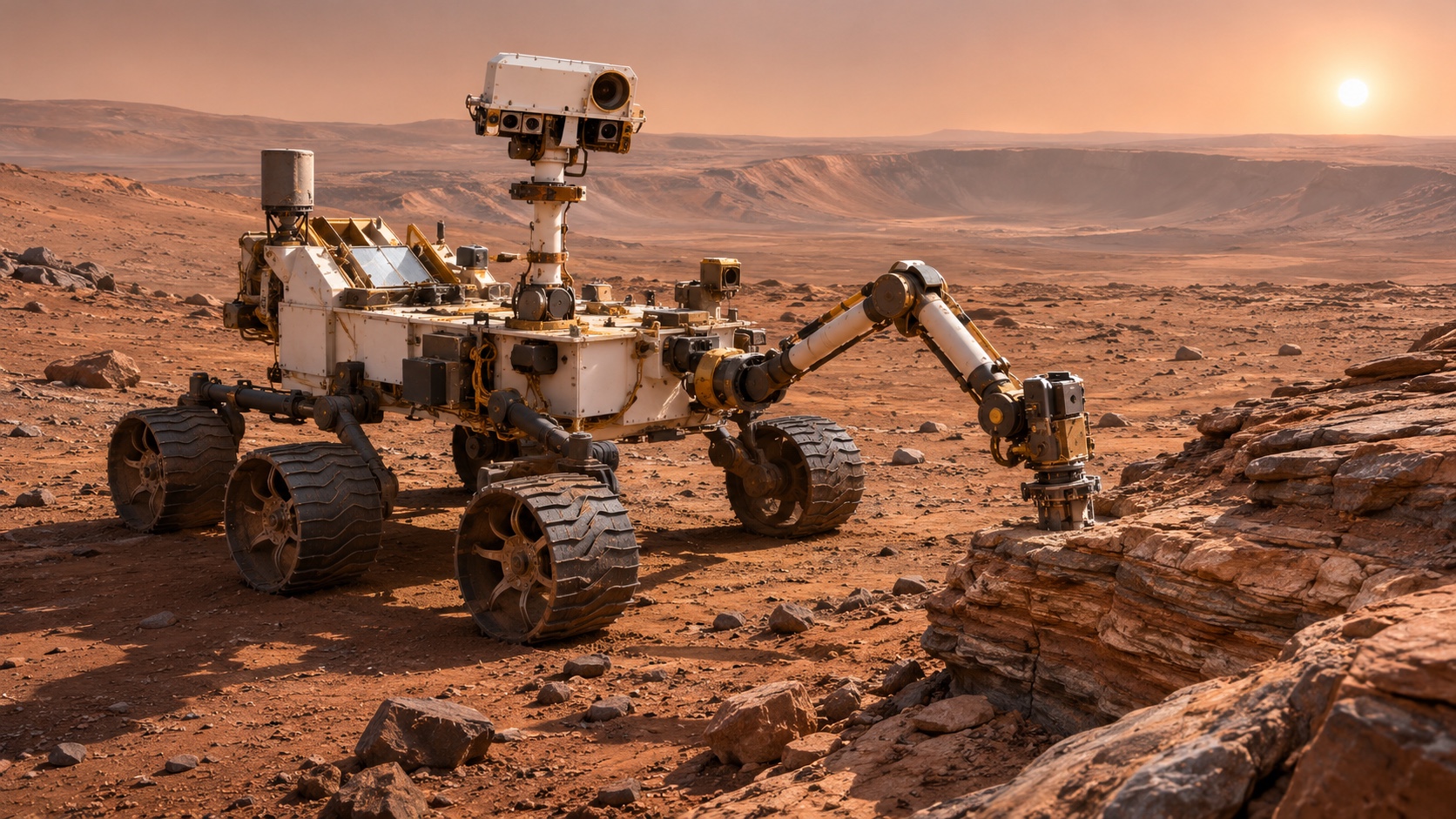
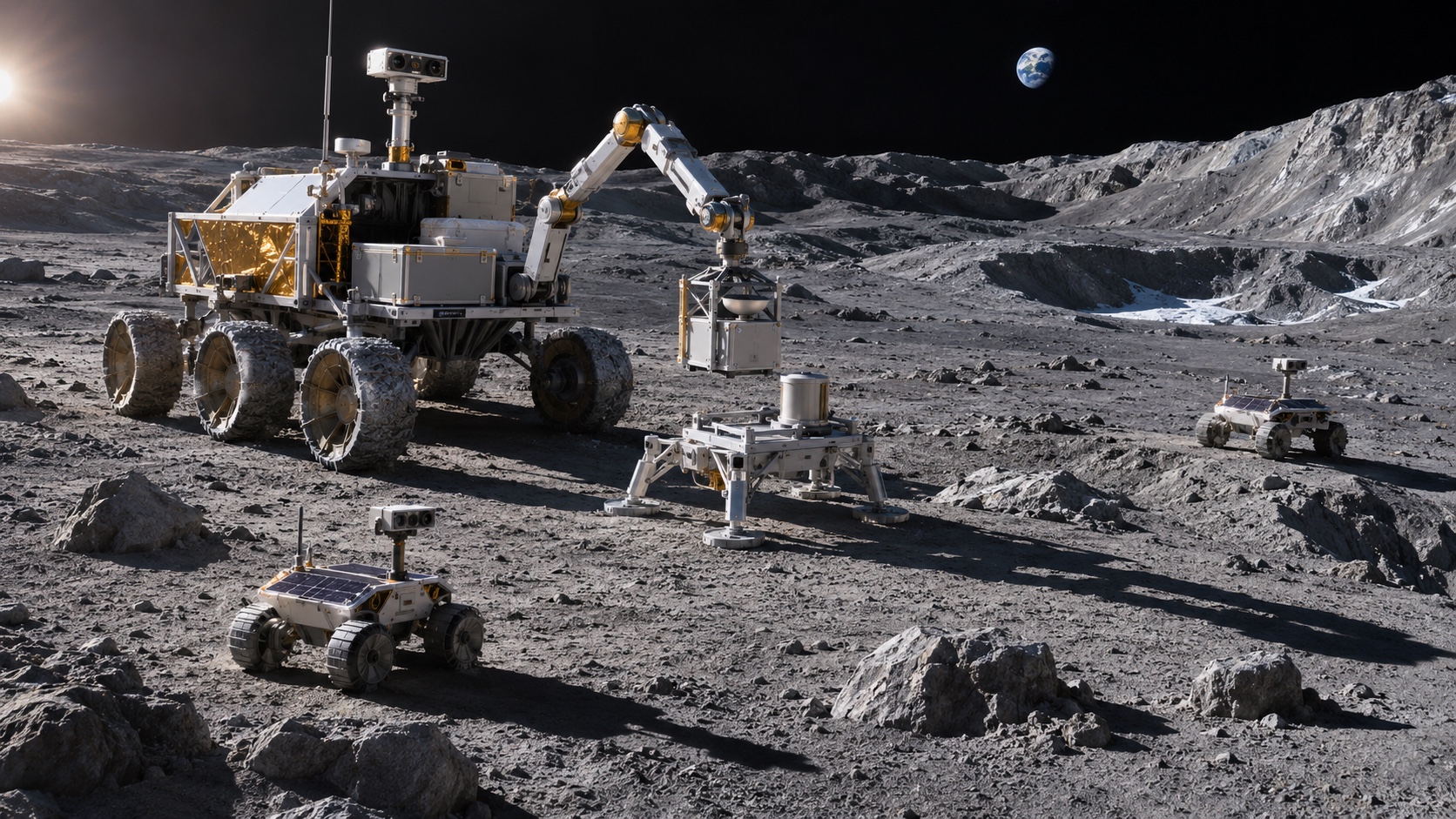
Space robots once followed a familiar pattern: travel to one destination, execute a carefully scripted sequence, and send home whatever the instruments could collect. That model produced extraordinary discoveries, but a new one is emerging. Robots are beginning to work as scouts, couriers, repair crews, construction machines, sample handlers, and members of coordinated fleets. They navigate more of a route without waiting for Earth, choose which observations deserve immediate attention, and combine measurements with orbiters, landers, and other surface vehicles. Robotic arms are extending the lives of spacecraft, while experimental machines prepare landing areas and test ways to use local soil as a resource. Smaller spacecraft distribute risk and revisit targets more frequently. These changes do not remove human direction; they move it upward. Instead of commanding every motor step, teams define scientific goals, operational boundaries, and priorities, then let the machine handle decisions that must be made locally. Space exploration is becoming less like sending a single instrument into the unknown and more like building an adaptable system that can learn, cooperate, and leave useful capabilities behind.
A: They may prepare terrain and deploy components, but complex construction will remain supervised.
A: They distribute measurements and risk while covering several locations at once.
A: Some servicing is already possible, and future designs may make repair routine.
A: It compares descent images with maps to estimate location and avoid hazards.
A: Processed water could support crews and contribute to oxygen or propellant production.
A: Effective fleets coordinate routine tasks locally and involve people for goals and exceptions.
A: Dust, low gravity, temperature extremes, uncertain soil, and delayed intervention complicate work.
A: Reliable relays increase data return and simplify later surface systems.
A: It can rank observations within tested rules while scientists retain mission priorities.
A: Missions are beginning to leave reusable capability rather than only completed experiments.
Autonomy Is Turning Delay Into Productive Time
Communication delay has always limited remote control beyond Earth orbit. A rover may wait many minutes for a command, and a probe in the outer Solar System waits far longer. New navigation software lets robots assess terrain, select a safe path, and continue toward a goal without asking about every rock. Spacecraft can recognize unusual instrument readings and preserve the most valuable data before storage fills.
The transformation is measured in useful work, not independence for its own sake. A robot that drives farther between planning cycles reaches more science targets. A lander that identifies a developing weather event can adjust measurements before a response arrives from Earth. Autonomy converts dead time into observation, movement, and protection.
Boundaries remain essential. Teams define slope limits, energy reserves, temperature ranges, keep-out zones, and conditions that trigger a pause. The software is trusted for specific choices it has been tested to make, not given unlimited authority over the mission.
Smarter Landing Makes More of the Solar System Reachable
Older landers often required broad, smooth target regions because they could not react much during descent. Terrain-relative navigation changes that constraint. Cameras compare the approaching surface with stored maps, estimate location, and guide the craft away from known hazards. Lidar or radar measures altitude and velocity, while divert thrusters adjust the final path.
More accurate landing allows scientists to aim near ancient river deposits, icy regions, rugged crater rims, or other features that would be too risky for a blind descent. It also helps cargo vehicles arrive near existing equipment. Precision matters for future operations because a supply container that lands many kilometers away may be practically unreachable even if it survives.
Robotic Scouts Are Preparing Human Destinations
Before people commit to a landing site, robots can map terrain, measure radiation, test communications, locate accessible ice, and observe dust. A scout reveals not only scientific value but operational conditions: slopes, soil strength, lighting, thermal cycles, and visibility. Repeated measurements show how those conditions change over seasons. Scouting continues after a human mission arrives. Small robots can inspect a route before a crewed rover travels it, enter a cave or crater that poses unacceptable risk, or place instruments beyond the safe walking range of astronauts. The goal is not to separate human and robotic exploration. It is to assign each participant the work that best matches endurance, judgment, mobility, and acceptable risk.
Multiple Robots Can Cover More Than One Excellent Machine
A single large rover carries capable instruments but can examine only one route at a time. A group of smaller robots can spread across a region, compare conditions simultaneously, or surround a feature with several viewpoints. If one unit fails, others may continue. Distributed missions can also be launched in stages, allowing later robots to incorporate lessons from the first.
Coordination is difficult. Each robot needs power, communication, localization, and collision avoidance. A fleet can overwhelm operators if every member demands constant attention. New approaches let robots divide areas, share compressed map updates, and request help only for exceptions. The practical breakthrough is not simply multiplying machines; it is keeping the human workload from multiplying at the same rate.
Aerial Robots Add a Vertical Layer to Planetary Science
Ground vehicles see horizons shaped by nearby terrain. Aerial robots rise above those limits, survey routes, and visit isolated features. A rotorcraft can cross a sand field that would trap wheels, examine a cliff face, or photograph a rover’s path from above. Balloon concepts could drift for long periods through the atmospheres of other worlds, sampling chemistry and weather across broad distances. Planetary flight requires unfamiliar engineering. Thin air demands large, fast-moving blades. Dense atmospheres change buoyancy and drag. Temperatures challenge batteries and lubricants. Because flight time is precious, aerial robots benefit from onboard landing assessment and efficient selection of targets.
Robotic Servicing Could Change the Life of Spacecraft
Most satellites are launched with a fixed amount of fuel and limited options after a component fails. Servicing robots aim to inspect, reposition, refuel, or repair spacecraft in orbit. A servicer must approach safely, match motion, identify a stable grasp point, and manipulate hardware while both objects move at orbital speed.
Even limited servicing can create value. An inspection can reveal why a deployment failed. Repositioning can move an aging satellite into a safer orbit. Refueling may extend useful life, while attaching a propulsion module can provide control when the original system is exhausted.
Future spacecraft may be designed with standard fixtures, accessible connectors, and modular parts specifically for robotic work. That design change could matter as much as the servicing robot itself. Repair becomes practical when the client was built to be repaired.
Construction Machines Are Moving Beyond Demonstrations
Sustained exploration will require landing pads, power systems, antennas, shelters, roads, and protective berms. Transporting every finished structure from Earth is expensive. Robots can grade soil, move rocks, deploy flexible components, assemble trusses, or prepare foundations before people arrive. They can work slowly without consuming crew time or life-support resources.
Lunar and Martian soil behaves differently from ordinary construction material. Dust is abrasive, gravity is lower, and extreme temperatures change machinery. A bulldozer cannot simply be copied from Earth. Robotic construction systems need sealed joints, careful traction control, autonomous surveying, and tools that tolerate uncertain material properties.
Using Local Resources Changes Mission Economics
In-situ resource utilization means obtaining useful material at the destination. Robots may excavate icy soil, separate water, collect regolith for shielding, or process minerals into construction feedstock. Water can support life and, when split into hydrogen and oxygen, contribute to propulsion or power systems. Local soil can cover habitats to reduce radiation exposure. Resource work links prospecting, excavation, processing, storage, and quality control. Finding a promising signal does not prove that material can be extracted economically. Robots must measure concentration, depth, hardness, energy demand, and contamination. Early missions will focus on proving each step and exposing hidden costs before anyone relies on production.
Sample Return Is Becoming a Robotic Relay
Returning material from another world involves more than collecting an interesting rock. A robot documents context, obtains the sample, seals it, and tracks the container. Another vehicle may retrieve the cache. A launch system sends it from the surface, an orbiter captures it, and a protected capsule carries it through Earth’s atmosphere.
This chain is transforming exploration by connecting field geology with the full power of terrestrial laboratories. Researchers can use instruments that would never fit on a lander and preserve material for future techniques. The complexity also forces robots to perform precise handoffs, rendezvous, and contamination control without direct human handling at the source.
New Instruments Let Robots Ask Finer Questions
Miniaturization places increasingly capable laboratories aboard smaller spacecraft. Robots can analyze organic molecules, map minerals at fine scales, look beneath surfaces with radar, and monitor seismic motion. Improved detectors gather more information from less light, while onboard processing removes noise and compresses data efficiently. Instrument intelligence changes observing strategy. A camera can notice a transient plume, a spectrometer can flag an unexpected composition, and a seismometer can increase recording detail when an event begins. The robot becomes an attentive observer rather than a passive recorder following a clock.
Small Spacecraft Make Exploration More Frequent
Standardized small satellites reduce the cost and schedule required for some missions. Several can fly together, measure different parts of an environment, or test technology before it is trusted on a flagship spacecraft. Frequent missions give students, universities, smaller nations, and specialized research groups more opportunities to participate.
Small size imposes limits on power, antennas, propulsion, and thermal control. A compact mission succeeds by asking a focused question and using coordination or modern electronics to compensate. It does not replace every large observatory. Instead, it fills gaps, accepts targeted risk, and creates a faster path from idea to flight.
Communication Networks Are Becoming Part of the Destination
One robot can relay data for another, but sustained operations need dependable networks. Orbiters can provide scheduled links to surface assets. Landed relays can bridge crater walls or terrain shadows. Optical communication promises higher data rates when precise pointing and clear geometry are available. Networks change mission design. Surface robots can carry smaller antennas if a nearby relay handles the long link. More data can reach scientists, and commands can be delivered through alternate paths. The network itself must be maintained, synchronized, and protected against cascading failures. Infrastructure becomes a scientific enabler.
Digital Twins and Earth-Based Testbeds Speed Recovery
Mission teams maintain high-fidelity models and physical replicas to investigate behavior. When a wheel draws unexpected current or an arm encounters resistance, engineers reproduce conditions on Earth. A digital twin combines design information, telemetry, and environmental models to explore likely causes before sending a command.
These tools help teams extend missions beyond original expectations. They can discover new operating modes, compensate for aging components, and rehearse risky maneuvers. The robot in space changes over time, so the model must be updated rather than treated as a perfect copy.
Exploration Is Becoming a System That Accumulates Capability
Traditional missions often ended with little physical capability left for the next visitor. A networked, serviceable, construction-oriented approach can accumulate assets. One mission places a relay. Another maps resources. Later robots prepare power and landing infrastructure, while service vehicles maintain orbital equipment. Each arrival begins with more than the last. This vision will develop gradually and unevenly. Standards must survive harsh environments, organizations must share interfaces, and investments must remain useful across changing plans. Still, the direction is significant. Robots are shifting from disposable emissaries toward infrastructure that supports repeated science and eventual human presence.
The Human Role Becomes More Strategic, Not Less Important
As robots handle navigation, monitoring, and routine coordination, people focus on goals, interpretation, exception handling, and ethical choices. Scientists decide which mysteries justify limited mission time. Engineers set safety boundaries and determine when evidence supports a new maneuver. International institutions address contamination, debris, access, and responsible resource activity.
Space robots are transforming exploration because they let human curiosity operate through increasingly capable physical partners. The achievement is not autonomy alone. It is a widening partnership in which machines manage distance and danger, while people supply purpose, accountability, and the ability to recognize why a discovery matters.