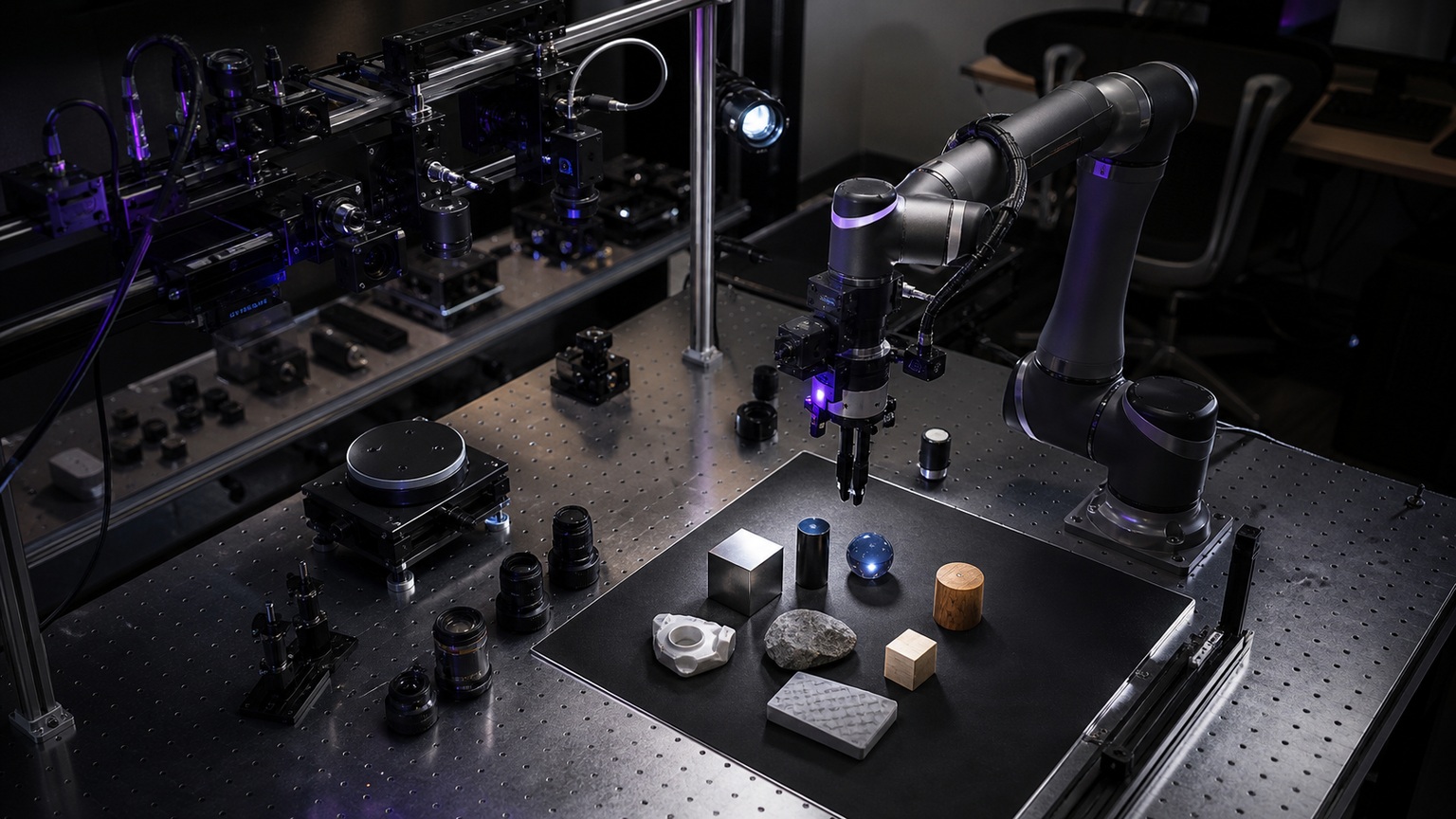
Teaching Robots to See the World
Robots are no longer blind machines following rigid scripts. Thanks to computer vision, modern robots can interpret the world visually, understand their surroundings, and make decisions based on what they see. Computer vision in robotics is the technology that allows machines to transform raw images into meaningful information—detecting objects, recognizing patterns, estimating depth, and navigating complex environments. For beginners, it can sound intimidating, but at its core, computer vision is about teaching robots to “see” in a useful, actionable way. This visual intelligence powers everything from warehouse robots and self-driving cars to surgical assistants and household devices. Unlike traditional automation, which relies on pre-programmed paths, vision-enabled robots can adapt, react, and learn. They can recognize obstacles, identify parts on an assembly line, track human movement, or inspect surfaces for defects. As robotics continues to merge with artificial intelligence, computer vision becomes the foundation that connects perception to action. This guide breaks down computer vision in robotics from the ground up. We’ll explore how robotic vision works, the hardware and software behind it, the challenges engineers face, and where the technology is headed. Whether you’re a student, builder, entrepreneur, or simply curious, this beginner’s guide will give you a clear, practical understanding of one of robotics’ most important capabilities.
A: No, but it’s essential for autonomous and adaptive robots.
A: Not yet—robot vision is data-driven, not intuitive.
A: Modern systems rely heavily on AI and machine learning.
A: Lighting, data quality, and processing speed.
A: Costs vary, but hardware and AI models are becoming more affordable.
A: Some systems use LiDAR or depth sensors instead.
A: Yes, when properly designed and tested.
A: Yes, but outdoor conditions are more challenging.
A: Absolutely—many tools and frameworks are beginner-friendly.
A: No, it works best as part of a sensor ecosystem.
What Computer Vision Means in a Robotics Context
Computer vision refers to a robot’s ability to acquire visual data, process it, and extract meaning that can influence behavior. In robotics, vision is not just about identifying objects in an image. It is about understanding space, motion, scale, and context in real time. A robot uses cameras or sensors to capture visual input, then applies algorithms to determine what those pixels represent in the physical world.
Unlike human vision, which is intuitive and learned over years of experience, robotic vision relies on mathematics, statistics, and machine learning. A robot does not “see” a chair; it recognizes edges, shapes, textures, and patterns that match a learned representation of a chair. This difference makes computer vision both powerful and fragile—it can outperform humans in consistency but struggle in unfamiliar conditions.
In robotics, computer vision is tightly integrated with control systems. The robot must not only interpret images but also decide how to move, grasp, or respond. Vision without action is data; vision with robotics becomes intelligence in motion.
How Robots Capture Visual Information
At the foundation of robotic vision is image acquisition. Most robots use cameras similar to those found in smartphones, but industrial and research robots often rely on more specialized hardware. These include stereo cameras for depth perception, infrared cameras for low-light environments, and depth sensors such as LiDAR or structured light systems.
- A single camera provides a flat, two-dimensional view, which can be limiting. To understand distance and spatial relationships, robots often use multiple viewpoints or depth-sensing technologies.
- Stereo vision mimics human eyesight by comparing two images from slightly different angles.
- Depth cameras calculate distance directly by measuring reflected light.
The choice of sensor depends on the task. A warehouse robot navigating aisles needs wide-angle vision and depth awareness, while a robotic arm assembling electronics requires high-resolution, close-range imaging. Visual data quality directly affects how well the robot can interpret its environment.
Turning Pixels Into Understanding
Once visual data is captured, the real work begins. Images are converted into numerical representations that algorithms can analyze. Early computer vision systems relied on handcrafted rules—edge detection, color thresholds, and geometric assumptions. While effective in controlled environments, these methods struggled with variability.
Modern robotics relies heavily on machine learning and deep learning. Convolutional neural networks are trained on thousands or millions of images so robots can recognize objects, faces, gestures, or defects. These models learn patterns automatically, improving accuracy and flexibility.
Beyond recognition, robots use vision to estimate position and movement. Techniques such as visual odometry and simultaneous localization and mapping allow robots to build maps of unknown environments while tracking their own location within them. This capability is essential for autonomous navigation.
Object Detection and Recognition in Robotics
One of the most visible applications of computer vision in robotics is object detection. Robots must identify and locate items before interacting with them. In manufacturing, this means recognizing parts on a conveyor belt. In healthcare, it could involve identifying surgical instruments. In homes, it might be recognizing furniture or pets.
Object recognition in robotics goes beyond labeling. The robot must understand orientation, size, and distance to manipulate objects safely. Grasping a cup requires knowing where its edges are, how it is positioned, and whether it is moving. Real-time performance is critical. Unlike static image analysis, robots operate in dynamic environments. Vision systems must process frames quickly enough to guide immediate decisions, often under strict hardware constraints.
Computer Vision and Robot Navigation
Navigation is where computer vision truly shines. Vision-enabled robots can move through complex spaces without predefined paths. By analyzing visual cues such as landmarks, edges, and textures, robots determine where they are and where they can go.
Autonomous vehicles are the most well-known example. Cameras combined with vision algorithms help cars detect lanes, signs, pedestrians, and other vehicles. Indoor robots use vision to avoid obstacles, recognize doors, and align themselves with charging stations.
Vision-based navigation is often combined with other sensors for reliability. When lighting conditions change or visual data becomes noisy, robots can fall back on inertial sensors or wheel encoders. This sensor fusion creates robust autonomy.
Challenges of Computer Vision in Robotics
Despite its promise, computer vision in robotics faces significant challenges.
- Lighting variations, shadows, reflections, and occlusions can confuse vision systems. A robot trained in one environment may struggle in another with different visual characteristics.
- Processing power is another constraint. Vision algorithms are computationally intensive, and robots often operate on limited hardware. Engineers must balance accuracy with speed and energy consumption.
- Safety is also critical. A misinterpreted image can lead to incorrect actions, potentially damaging equipment or harming people. This is why robotic vision systems undergo extensive testing and often include redundancy.
Real-World Applications of Vision-Enabled Robots
Computer vision has transformed robotics across industries.
- In warehouses, robots use vision to sort packages, scan labels, and navigate crowded spaces.
- In agriculture, vision-guided machines identify ripe crops, detect weeds, and monitor plant health.
- Healthcare robotics relies on vision for precision and safety.
- Surgical robots use visual feedback to assist doctors, while rehabilitation robots track patient movement.
- Service robots use vision to interact with humans naturally.
Even creative fields benefit. Robots equipped with vision can create art, inspect architecture, or assist in filmmaking. The ability to see expands what robots can do beyond repetitive tasks.
The Role of AI in Advancing Robotic Vision
Artificial intelligence has accelerated progress in computer vision. Deep learning allows robots to generalize from experience, improving performance over time. Instead of relying solely on rules, robots can learn from data, adapting to new scenarios.
Self-supervised learning and simulation environments are reducing the need for labeled data. Robots can train in virtual worlds before deploying in real ones, refining their vision models safely and efficiently.
As AI models become more efficient, vision capabilities are moving closer to real-time autonomy on smaller devices. This trend opens the door to more affordable and accessible robotics.
The Future of Computer Vision in Robotics
The future of robotic vision is moving toward deeper understanding and collaboration. Robots will not only recognize objects but also infer intent, predict motion, and understand context. Vision will become more semantic, allowing robots to reason about scenes rather than just detect elements. Advances in hardware, such as neuromorphic cameras and edge AI chips, promise faster and more energy-efficient vision systems. These technologies will enable robots to operate longer and in more challenging environments. Ultimately, computer vision is what allows robots to move from tools to partners. As robots learn to see the world more like humans do, their usefulness, safety, and creativity will continue to grow.