The Science Behind Every Robotic Movement
One of the most fascinating aspects of robotics is movement. Whether it is a robotic arm assembling a car, an autonomous warehouse robot transporting inventory, a surgical robot performing delicate procedures, or a humanoid robot walking across a room, movement is what transforms a machine from a passive device into an active participant in the world. To the average observer, robotic movement often appears effortless. A robot turns, reaches, lifts, rolls, climbs, or navigates through an environment with remarkable precision. Behind every smooth motion, however, lies a sophisticated combination of hardware, software, mathematics, sensors, and engineering principles working together in perfect coordination. The technology responsible for making robots move is known as motion control. Motion control serves as the foundation of robotics, enabling machines to perform tasks accurately, efficiently, and safely. Without effective motion control systems, robots would be unable to position themselves, manipulate objects, navigate environments, or interact with people. As robotics continues expanding into industries such as manufacturing, healthcare, agriculture, logistics, aerospace, and consumer technology, understanding motion control has become increasingly important. Whether you are a student exploring robotics, a professional entering the industry, or simply curious about how intelligent machines operate, learning the basics of robot movement provides valuable insight into one of the most essential areas of modern automation. This guide explores how robots move, the technologies that make movement possible, and the motion control principles that allow robots to perform complex tasks with extraordinary precision.
A: Motion control is the system that commands and corrects robot movement using actuators, sensors, and control algorithms.
A: Actuators such as motors, servos, pneumatics, hydraulics, or linear drives create physical movement.
A: Feedback control uses sensor measurements to compare actual motion with desired motion and correct errors.
A: PID control is a common method that adjusts commands based on present, past, and predicted motion error.
A: Encoders measure rotation so robots can estimate position, speed, and movement accuracy.
A: Kinematics studies motion geometry, while dynamics studies the forces and torques that cause motion.
A: Jerky movement can come from poor tuning, loose parts, high acceleration, bad feedback, delays, or mechanical vibration.
A: They use motion planning, joint sensors, kinematics, and control loops to reach target positions.
A: They may use differential drive, steering wheels, mecanum wheels, tracks, legs, or other drive systems.
A: The goal is movement that is accurate, smooth, stable, efficient, safe, and repeatable.
What Is Motion Control?
Motion control refers to the process of managing and directing the movement of a machine. In robotics, motion control involves controlling position, speed, acceleration, direction, force, and timing to achieve specific objectives.
At its simplest level, motion control allows a robot to move from one point to another. However, modern robotic systems often require much more sophisticated capabilities. A robot may need to pick up fragile objects, navigate crowded environments, coordinate multiple joints simultaneously, or perform highly precise operations that demand exceptional accuracy.
Motion control systems determine how movement occurs, when it occurs, and how adjustments should be made in response to changing conditions.
These systems continuously monitor the robot’s behavior and make corrections as necessary. The result is smooth, predictable, and reliable movement that enables robots to accomplish complex tasks.
Motion control serves as the bridge between a robot’s decision-making processes and its physical actions.
Why Motion Control Is Essential in Robotics
Every useful robot depends on movement.
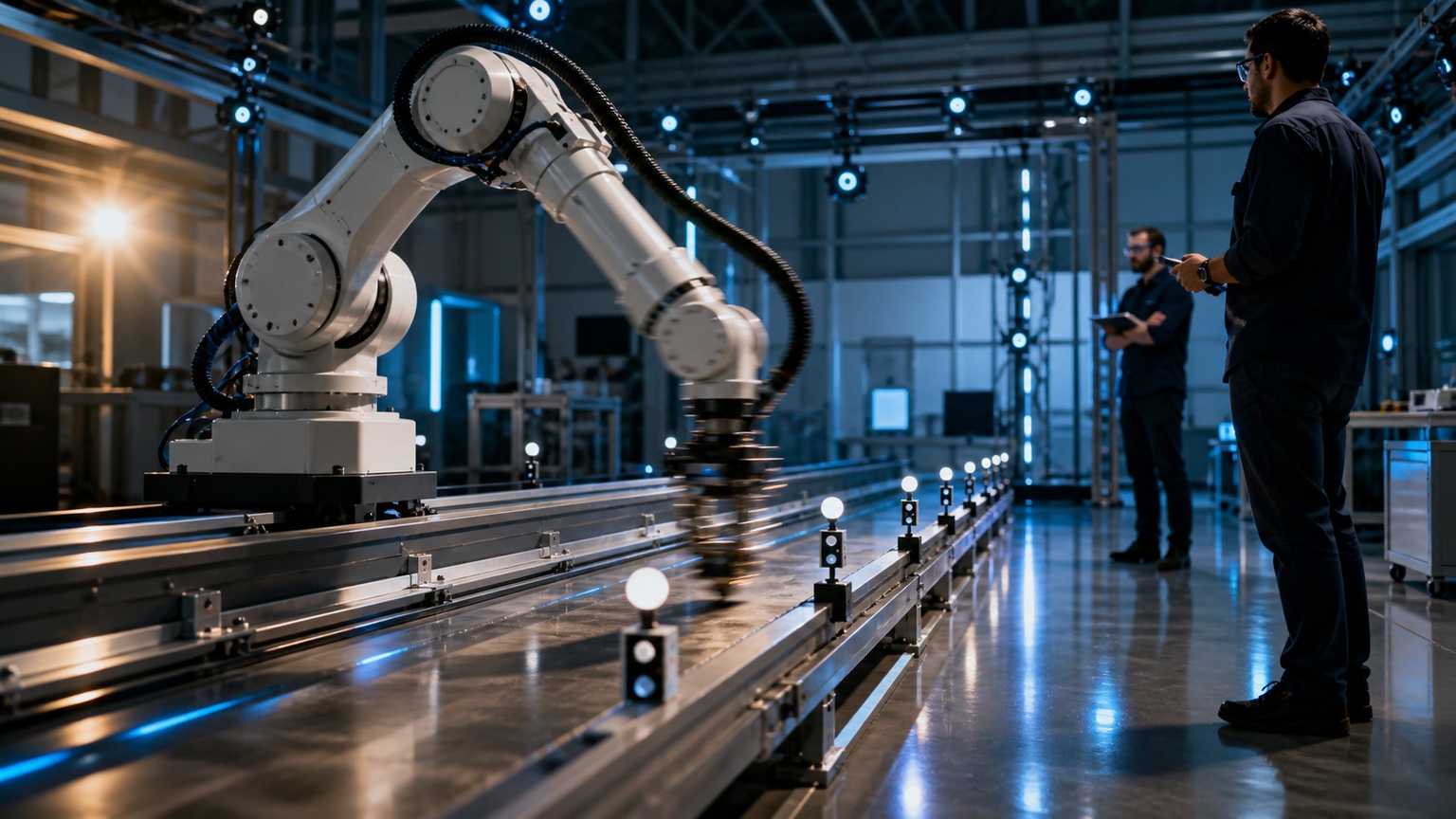
Industrial robots move parts during manufacturing. Autonomous vehicles travel through road networks. Drones fly through the air. Warehouse robots transport inventory. Surgical robots manipulate instruments with microscopic precision.
Without motion control, these machines would be incapable of performing their intended functions.
Motion control influences not only movement but also safety, efficiency, productivity, and reliability. A robot that moves inaccurately may damage products, create safety hazards, or fail to complete tasks successfully.
Precision becomes especially important in applications involving delicate operations. A robotic surgeon cannot tolerate large positioning errors. An automated manufacturing system must place components accurately. A drone navigating a complex environment requires precise control to avoid obstacles.
Effective motion control allows robots to perform these tasks consistently and dependably.
The Basic Components of Robot Motion
Several key components work together to enable robotic movement.
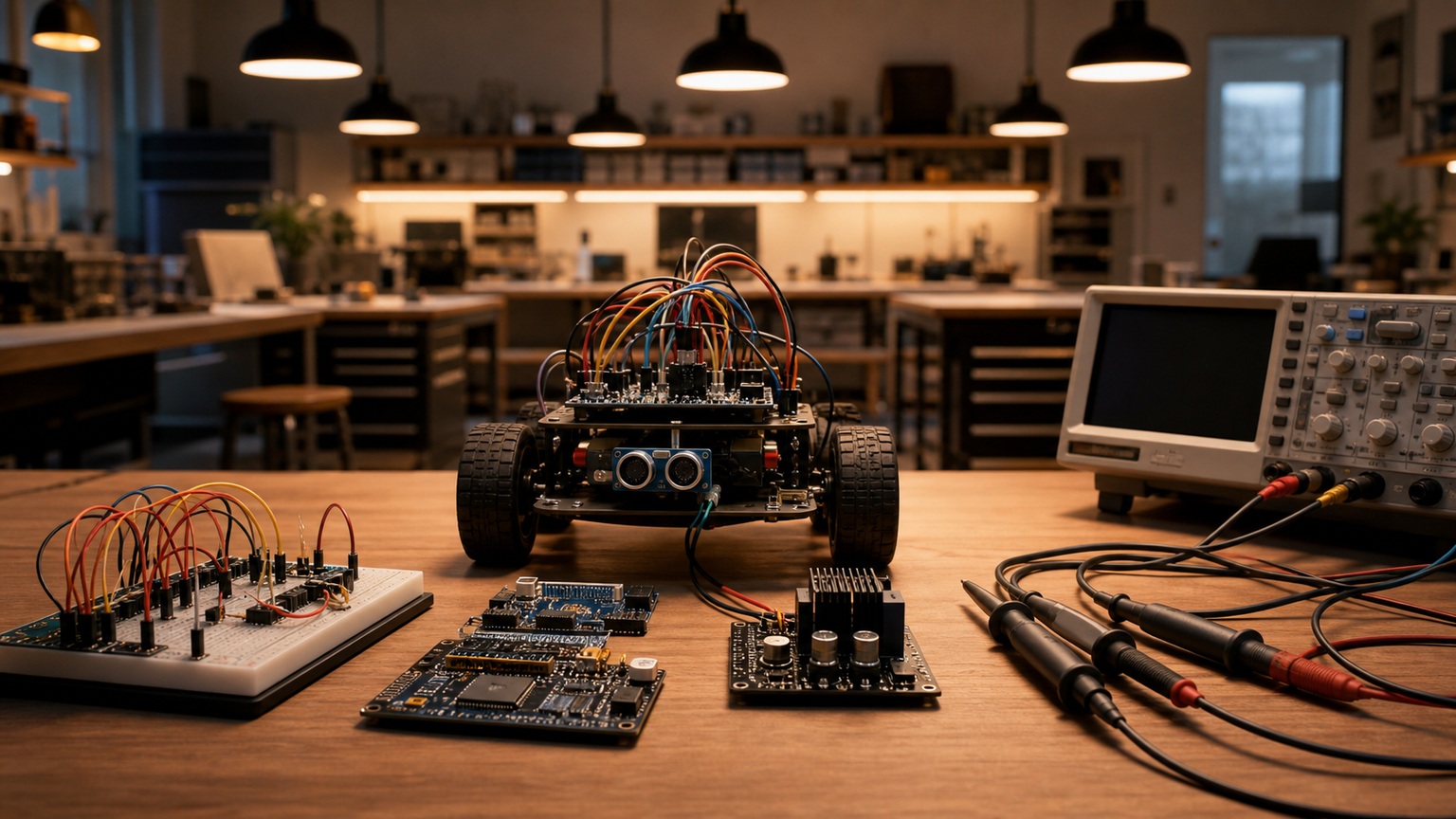
Actuators generate physical motion. Sensors monitor position, speed, and environmental conditions. Controllers process information and calculate movement commands. Mechanical structures transmit forces and guide motion.
Software coordinates all of these elements, ensuring they operate together as a unified system.
Think of a robot as similar to the human body. Actuators function like muscles. Sensors resemble senses such as vision and balance. Controllers act like the brain, making decisions and coordinating actions. Mechanical structures serve as the skeleton that supports movement.
Each component plays a critical role in creating controlled and purposeful motion.
Understanding these building blocks provides a foundation for understanding more advanced motion control concepts.
Actuators: The Muscles of a Robot
Actuators are the devices responsible for producing movement.
When a robot moves an arm, rotates a wheel, opens a gripper, or changes direction, actuators generate the forces required to perform those actions.
Electric motors are among the most common actuators used in robotics. These motors convert electrical energy into mechanical motion and can provide precise control over speed and position.
Servo motors are especially popular because they allow accurate positioning. Stepper motors move in discrete increments, making them useful for applications requiring precise control.
Some robots use hydraulic actuators, which rely on pressurized fluid to generate powerful movements. Hydraulic systems are common in heavy machinery and industrial equipment.
Pneumatic actuators use compressed air to create motion and are frequently found in manufacturing environments.
The choice of actuator depends on factors such as force requirements, precision, speed, cost, and operating conditions.
Understanding Degrees of Freedom
One of the most important concepts in robotics is the degree of freedom.
A degree of freedom refers to an independent direction in which a robot can move.
For example, a simple wheel that rotates has one degree of freedom. A robotic arm with multiple joints may have six or more degrees of freedom.
Human arms provide a useful comparison. The shoulder, elbow, wrist, and hand all contribute to movement capabilities. Together, these joints allow a wide range of motions.
Robotic systems operate similarly. Additional degrees of freedom increase flexibility and allow robots to perform more complex tasks.
However, greater flexibility also increases control complexity. Motion control systems must coordinate multiple movements simultaneously while maintaining accuracy and stability.
Managing degrees of freedom effectively is a central challenge in robotics engineering.
Sensors: Helping Robots Understand Movement
Robots cannot move accurately unless they know how they are moving.
Sensors provide the information necessary for monitoring position, speed, acceleration, orientation, and environmental conditions.
Encoders are among the most common motion-related sensors. They measure motor rotation and provide feedback about position and movement.
Gyroscopes track rotational motion and help robots maintain orientation. Accelerometers measure acceleration and support balance and navigation functions.
Vision systems provide environmental awareness, allowing robots to identify obstacles, landmarks, and targets.
Force sensors detect contact and pressure, enabling robots to interact safely with objects and people.
By continuously gathering information, sensors allow motion control systems to adjust behavior and maintain desired performance.
Open-Loop and Closed-Loop Control
Motion control systems generally fall into two categories: open-loop control and closed-loop control.
Open-loop control operates without feedback. The controller sends commands and assumes the robot responds as expected.
For example, a controller may instruct a motor to rotate a specific amount without verifying the actual result.
Open-loop systems are relatively simple but can be affected by disturbances, wear, and environmental changes.
Closed-loop control incorporates feedback from sensors. The system continuously measures actual performance and compares it to desired performance.
If differences are detected, corrections are made automatically.
Closed-loop control provides greater accuracy, reliability, and adaptability. Most modern robotic systems rely heavily on closed-loop control because of its superior performance.
The Importance of Feedback
Feedback is one of the most powerful concepts in motion control.
Imagine driving a car while blindfolded. Without visual feedback, maintaining direction and speed would be nearly impossible.
Robots face similar challenges. Feedback provides information about what is actually happening during movement.
Sensors continuously report position, speed, orientation, and environmental conditions. Controllers use this information to evaluate performance and make adjustments.
If a robotic arm overshoots its target position, feedback allows corrective action. If a mobile robot encounters a slippery surface, feedback helps maintain stability.
Feedback transforms robotic movement from guesswork into precise and adaptive control.
Position Control and Precision
Many robotic tasks require accurate positioning.
Position control focuses on moving a robot or component to a specific location and maintaining that location reliably.
Industrial robots often perform tasks requiring millimeter-level precision. Surgical robots may operate with even greater accuracy.
Achieving precise positioning requires careful coordination among actuators, sensors, controllers, and mechanical systems.
Position control algorithms calculate movement trajectories and continuously adjust behavior to minimize errors.
The ability to position accurately is one of the defining characteristics that separates robotic systems from many conventional machines.
Speed and Velocity Control
Position alone is not enough. Robots must also control how quickly they move.
Velocity control focuses on maintaining desired movement speeds while adapting to changing conditions.
A warehouse robot may need to move rapidly through open areas while slowing near workers. A robotic arm may require different speeds during assembly and inspection tasks.
Motion control systems regulate speed by adjusting actuator outputs and monitoring feedback from sensors.
Effective velocity control improves efficiency, safety, and task performance.
Balancing speed with accuracy remains one of the central challenges in robotics.
Trajectory Planning: Mapping a Path
Moving from one position to another involves more than simply traveling in a straight line.
Trajectory planning determines the path a robot should follow while considering speed, acceleration, obstacles, and task requirements.
A robotic arm assembling electronic components must move smoothly between locations while avoiding collisions. A mobile robot navigating a warehouse must select efficient routes while maintaining safety.
Trajectory planning algorithms calculate optimal paths based on available information and operational goals.
Advanced systems continuously update trajectories as conditions change, enabling robots to adapt dynamically to their environments.
Trajectory planning plays a major role in creating natural and efficient robotic movement.
Kinematics: The Mathematics of Motion
Kinematics is the branch of robotics that studies motion without considering forces.
Kinematic models describe how joint movements translate into overall robot movement. Engineers use these models to calculate positions, orientations, and movement relationships.
Forward kinematics determines where a robot’s end component will be located based on joint positions.
Inverse kinematics works in the opposite direction. It calculates the joint movements required to reach a desired location.
These calculations are fundamental to robotic manipulation, navigation, and task execution.
Although highly mathematical, kinematics forms the foundation of modern motion control systems.
Dynamics: Understanding Forces and Motion
While kinematics focuses on movement, dynamics examines the forces that create movement.
Dynamics considers mass, inertia, gravity, friction, acceleration, and other physical factors that influence robotic behavior.
Understanding dynamics allows engineers to design control systems capable of handling real-world conditions effectively.
For example, lifting a heavy object requires different force calculations than moving an empty robotic arm. Operating on uneven terrain introduces additional dynamic challenges.
Dynamics becomes increasingly important as robotic systems grow larger, faster, and more complex.
Motion Control in Autonomous Robots
Autonomous robots combine motion control with perception and decision-making.
These systems must continuously evaluate their surroundings, determine appropriate actions, and execute movements safely.
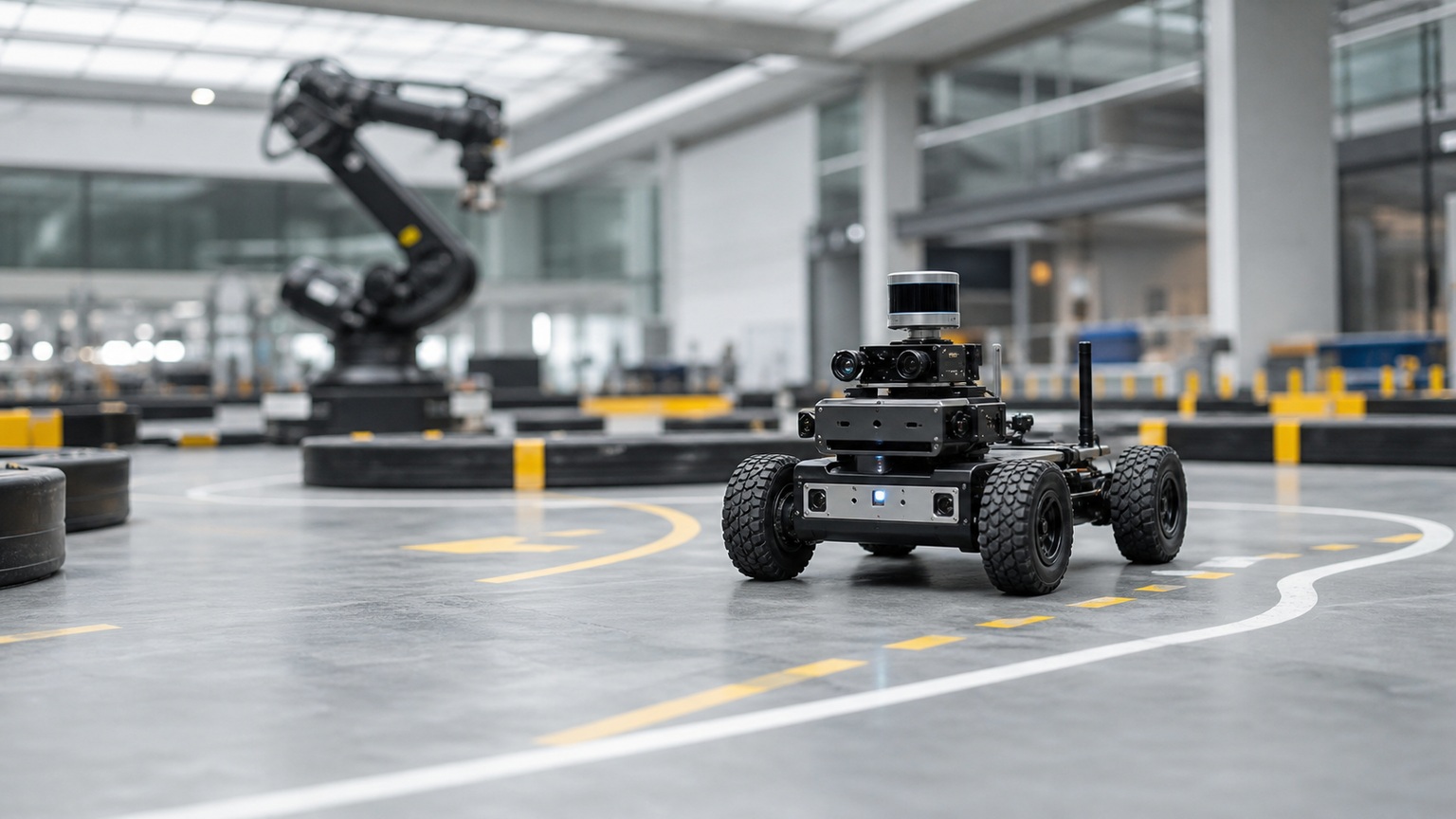
Autonomous warehouse robots navigate crowded facilities. Agricultural robots traverse fields. Delivery robots operate on sidewalks. Self-driving vehicles travel through complex traffic environments.
In each case, motion control translates decisions into physical actions.
The integration of navigation, perception, planning, and control represents one of the most sophisticated achievements in modern robotics.
Artificial Intelligence and Motion Control
Artificial intelligence is increasingly influencing robotic movement.
Machine learning algorithms help robots adapt to changing conditions, optimize performance, and improve decision-making.
AI can enhance trajectory planning, obstacle avoidance, balance control, object manipulation, and autonomous navigation.
Humanoid robots, robotic assistants, and advanced autonomous systems often rely on AI-driven control strategies that allow more natural and flexible movement.
As artificial intelligence continues advancing, motion control systems are becoming increasingly capable and adaptable.
Challenges in Robot Motion Control
Despite decades of progress, motion control remains a challenging field.
Robots must operate in unpredictable environments, respond to disturbances, and maintain performance under varying conditions.
Sensor noise, mechanical wear, communication delays, environmental complexity, and computational limitations can all affect control performance.
Engineers continuously develop new algorithms, hardware technologies, and control strategies to address these challenges.
The pursuit of more intelligent, efficient, and reliable movement continues driving innovation throughout the robotics industry.
The Future of Robotic Movement
The future of robot motion control is incredibly exciting.
Advances in artificial intelligence, sensor technology, computing power, and materials science are enabling new forms of movement and interaction.
Future robots may move with agility comparable to humans, adapt instantly to changing conditions, and collaborate seamlessly with people.
Applications ranging from healthcare and manufacturing to logistics and space exploration will benefit from increasingly sophisticated motion control systems.
As robotics technology evolves, motion control will remain one of the most important disciplines shaping the future of intelligent machines.
Conclusion
Motion control is the foundation of robotic movement. It allows robots to position themselves accurately, navigate environments, manipulate objects, and perform complex tasks with precision and reliability. Through the coordinated efforts of actuators, sensors, controllers, software, and mathematical models, robots transform decisions into physical actions.
Understanding motion control provides valuable insight into how robots operate and why they are capable of accomplishing such remarkable feats. Concepts such as feedback, position control, trajectory planning, kinematics, dynamics, and autonomous navigation form the backbone of modern robotic systems.
As robots continue becoming more intelligent, autonomous, and integrated into everyday life, motion control will remain at the heart of robotics innovation. The machines of the future will move more naturally, respond more intelligently, and operate more safely than ever before, thanks to the ongoing advancement of motion control technology.