The Hidden Intelligence Behind Every Robot
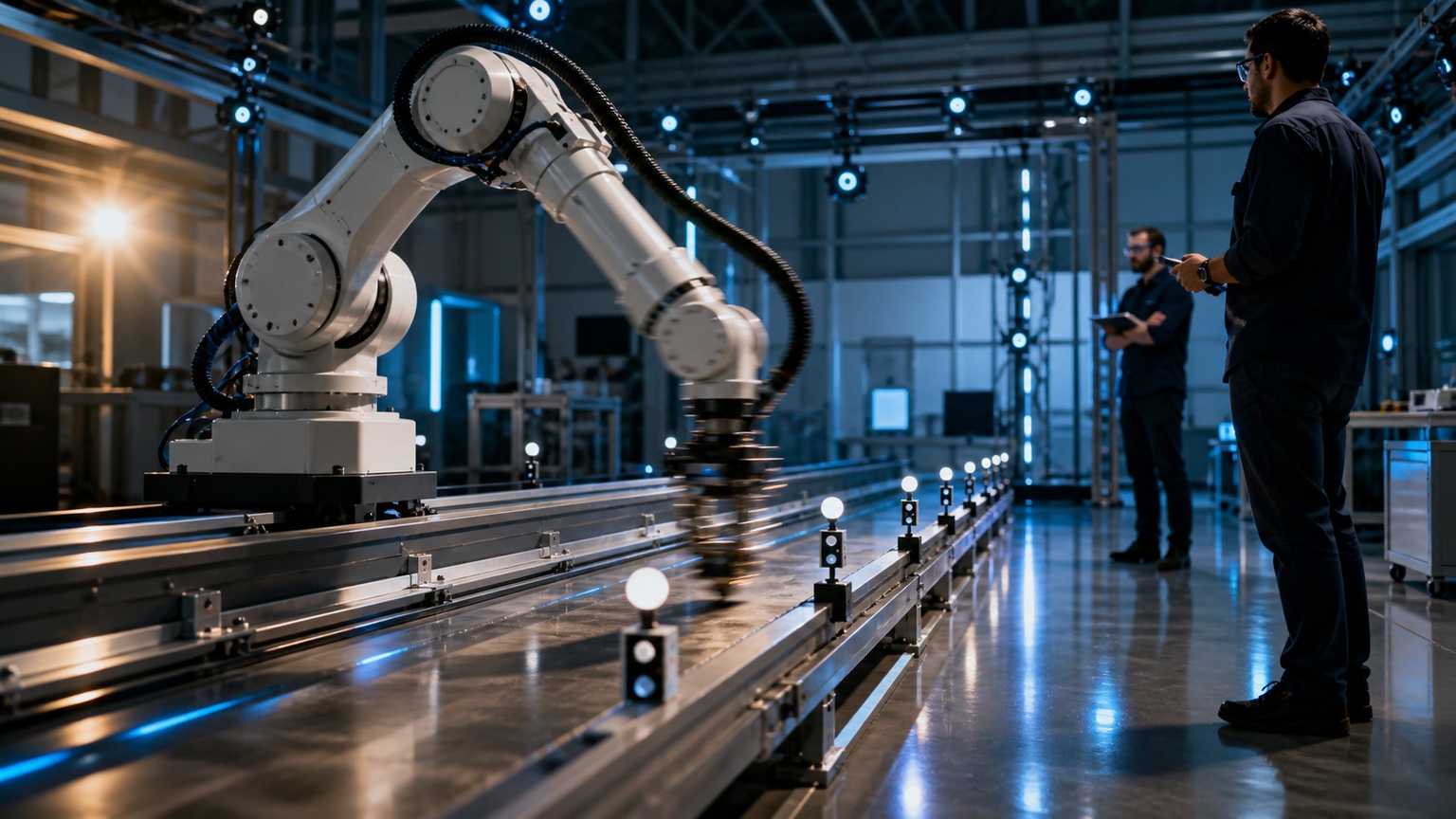
When most people think about robots, they imagine moving arms on factory floors, autonomous vehicles navigating busy streets, drones soaring through the sky, or humanoid machines performing complex tasks. What many people do not realize is that movement alone does not make a robot intelligent. Behind every action a robot performs lies a sophisticated control system that determines what the robot should do, how it should do it, and how it should respond when conditions change. A robot control system serves as the brain and nervous system of a robotic machine. It processes information from sensors, analyzes environmental conditions, makes decisions, and sends commands to motors and actuators. Without a control system, a robot would simply be a collection of mechanical and electronic components incapable of performing meaningful tasks. As robotics continues expanding into industries such as manufacturing, healthcare, agriculture, logistics, aerospace, and consumer technology, understanding robot control systems has become increasingly important. These systems are what transform hardware into intelligent machines capable of interacting with the world. For beginners entering robotics, control systems can initially seem intimidating because they involve concepts from engineering, mathematics, software development, electronics, and artificial intelligence. However, the fundamental principles are surprisingly approachable once broken down into manageable concepts. This guide explains what robot control systems are, how they work, why they are important, and how they enable robots to perform everything from simple movements to advanced autonomous behaviors.
A: It is the combination of software, sensors, controllers, and actuators that makes a robot move and respond correctly.
A: Feedback is sensor information that tells the robot what actually happened after it made a movement.
A: Open-loop control sends commands without measuring whether the robot reached the desired result.
A: Closed-loop control uses feedback to adjust motion and reduce error.
A: PID stands for proportional, integral, and derivative control.
A: Sensors help robots measure position, speed, force, angle, distance, and orientation.
A: Overshoot can happen when the controller is too aggressive, the robot moves too fast, or the system has delay.
A: Tuning is adjusting controller settings until the robot moves smoothly, accurately, and safely.
A: No. They are used in drones, mobile robots, humanoids, grippers, vehicles, and industrial machines.
A: Start with sensors, motors, feedback, open-loop control, closed-loop control, and simple PID examples.
What Is a Robot Control System?
A robot control system is the collection of hardware and software responsible for managing a robot’s behavior.
Its primary function is to receive information, process that information, make decisions, and control the robot’s actions. In essence, the control system tells the robot what to do and ensures that those actions are performed correctly.
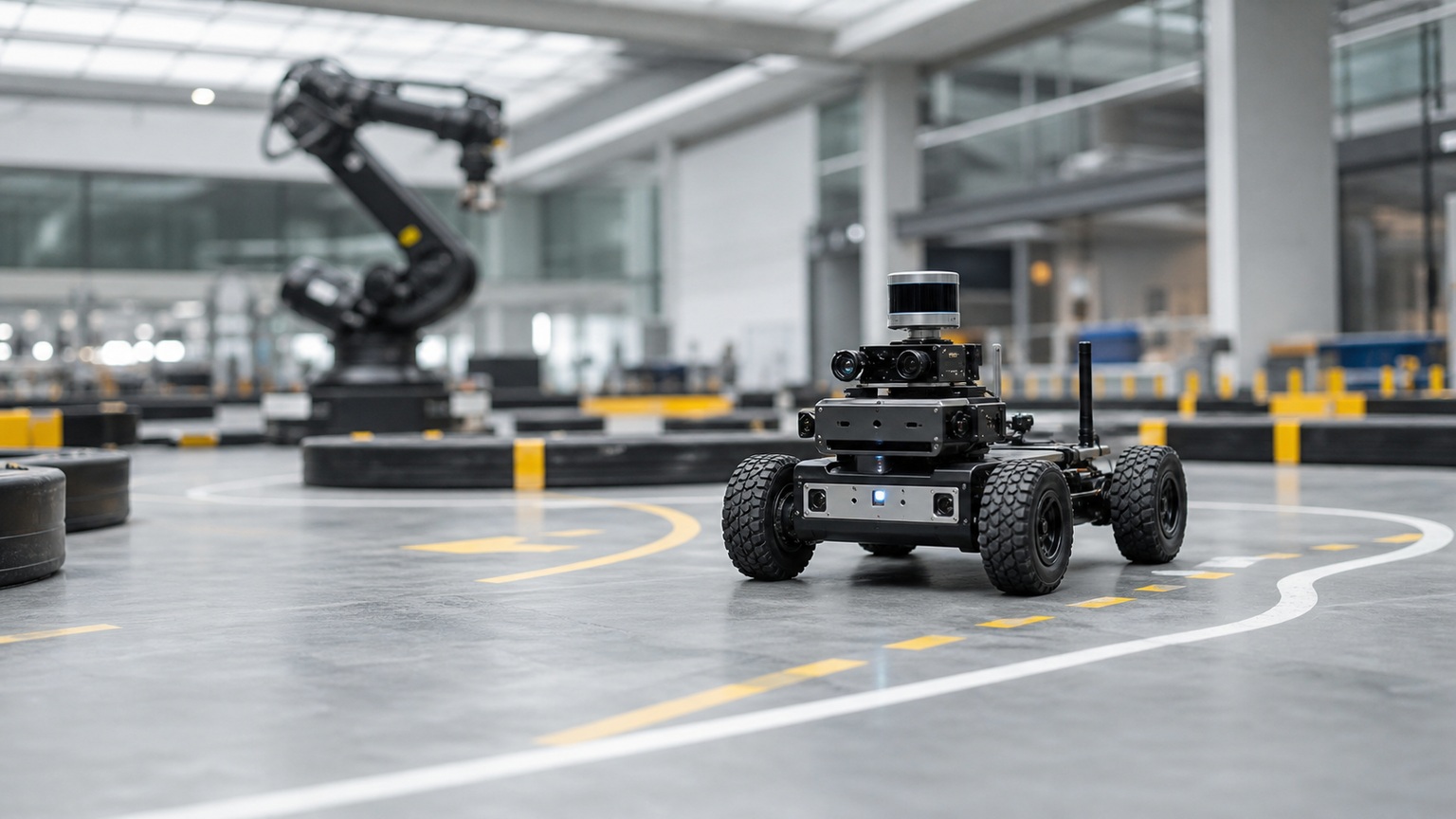
Imagine a robot moving through a warehouse. Sensors detect obstacles, cameras capture images, navigation software determines the robot’s location, and motors move the machine along a planned route. The control system coordinates all these activities.
Without a control system, the robot would have no way to interpret sensor data, plan movements, avoid collisions, or complete tasks.
Every robot, regardless of size or complexity, depends on some form of control system to function effectively.
Why Robot Control Systems Matter
Control systems are arguably the most important part of any robotic platform.
The most advanced sensors, motors, and artificial intelligence algorithms are useless if they cannot work together effectively. The control system serves as the central coordinator that integrates all components into a unified machine.
Control systems influence accuracy, efficiency, safety, reliability, and performance. They determine how smoothly a robotic arm moves, how precisely a drone maintains altitude, how safely an autonomous vehicle navigates traffic, and how effectively a warehouse robot avoids obstacles.
As robots become more intelligent and autonomous, control systems become increasingly sophisticated. Modern robotic control systems can process enormous amounts of information, adapt to changing environments, and make complex decisions in real time.
Understanding control systems is therefore essential for understanding robotics itself.
The Basic Control Loop
At the heart of nearly every robotic system is a concept known as the control loop.
A control loop follows a simple sequence. First, the robot gathers information from its environment through sensors. Next, the control system processes that information and determines what action should be taken. Then, commands are sent to actuators such as motors. Finally, sensors monitor the results, and the process repeats continuously.
This cycle may occur hundreds or even thousands of times every second.
Consider a self-balancing robot. Sensors detect that the robot is leaning forward. The control system calculates the necessary correction and instructs the wheels to move appropriately. Sensors then measure the new position and provide updated feedback.
This constant cycle of observation, decision-making, and action allows robots to maintain stability and perform tasks accurately.
The control loop is one of the most fundamental concepts in robotics.
Sensors: Providing Information to the Control System
Every control system depends on information.
Sensors serve as the robot’s eyes, ears, and other senses, providing the data necessary for decision-making. Without sensors, a control system would have no understanding of the robot’s condition or environment.
Different robots use different types of sensors depending on their purpose.
Position sensors measure location and movement. Cameras capture visual information. Lidar systems create three-dimensional maps of surroundings. Ultrasonic sensors detect nearby obstacles. Force sensors measure pressure and contact. Temperature sensors monitor environmental conditions.
These sensors continuously gather information and send it to the control system for analysis.
The quality of a robot’s decisions depends heavily on the quality of the information provided by its sensors.
Controllers: The Brain of the System
The controller is the component responsible for processing information and generating actions.
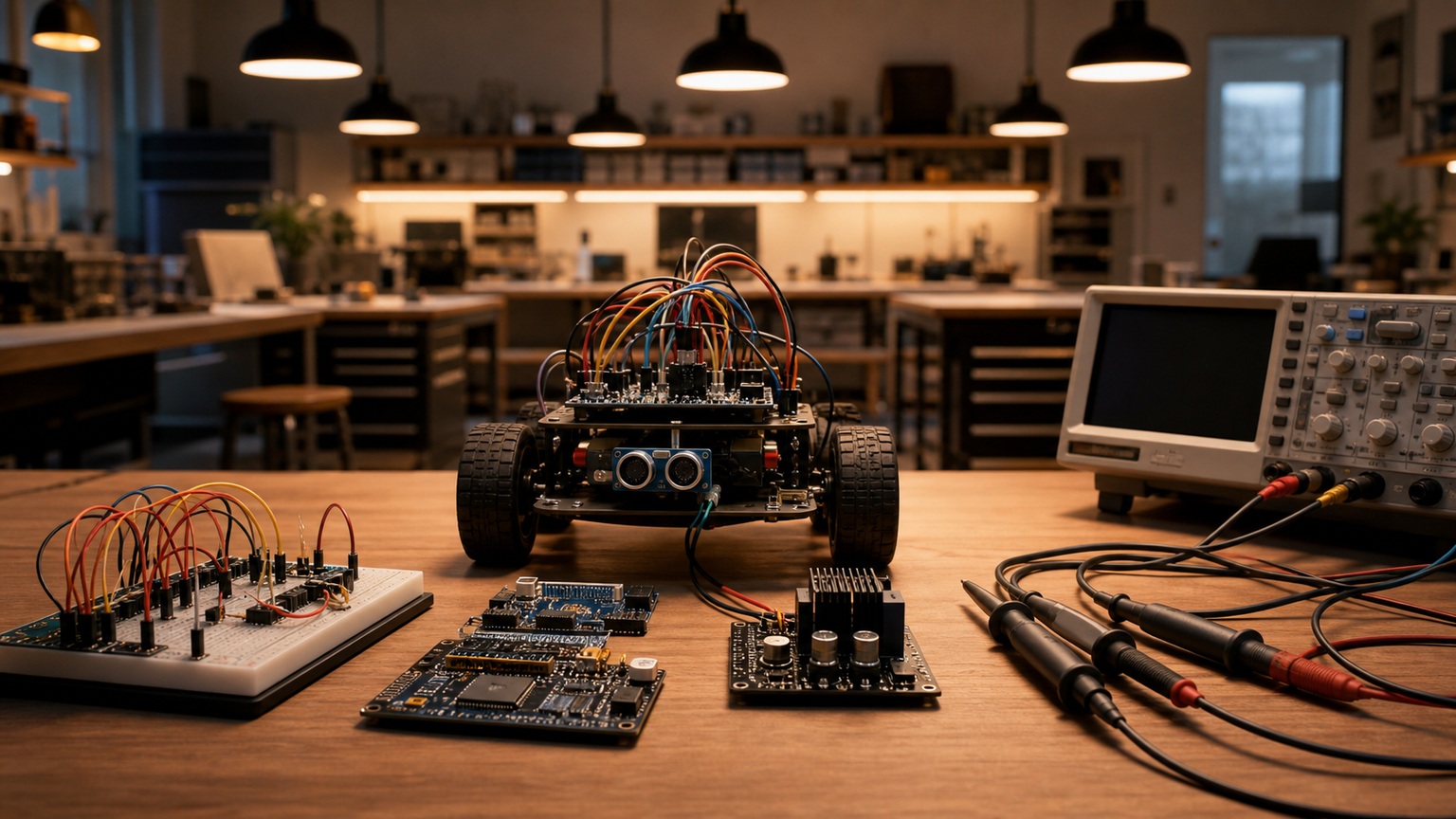
Controllers can range from simple microcontrollers in educational robots to powerful industrial computers in autonomous vehicles and advanced robotic systems.
When sensor data arrives, the controller analyzes the information and determines the appropriate response. It may calculate movement trajectories, adjust motor speeds, activate safety mechanisms, or initiate entirely new behaviors.
Controllers often execute sophisticated algorithms that account for environmental conditions, task requirements, safety constraints, and operational objectives.
In many ways, the controller functions like the human brain, transforming sensory input into coordinated actions.
The effectiveness of a robot’s control system depends largely on the capabilities of its controller.
Actuators: Turning Decisions Into Movement
Once the controller determines what action should occur, the robot must physically execute that action.
Actuators perform this role by converting control signals into mechanical movement.
Electric motors are among the most common actuators used in robotics. They drive wheels, move robotic arms, operate grippers, and control countless other mechanisms.
Hydraulic actuators generate powerful movements using pressurized fluid and are often used in heavy industrial equipment. Pneumatic actuators use compressed air and are common in manufacturing environments.
Actuators represent the final stage of the control process. They transform digital decisions into physical actions that affect the real world.
Without actuators, a robot could think but not move.
Open-Loop Control Systems
One of the simplest forms of robot control is known as open-loop control.
In an open-loop system, commands are issued without verifying whether the desired result was achieved. The controller assumes the robot responds exactly as expected.
For example, a controller may instruct a motor to rotate for a specific duration without measuring the actual position reached.
Open-loop control can work effectively in predictable environments where disturbances are minimal.
The primary advantage of open-loop systems is simplicity. They require fewer sensors and less computational processing.
However, they are generally less accurate because they cannot compensate for unexpected changes, wear, or environmental influences.
As a result, most advanced robotic systems rely on more sophisticated approaches.
Closed-Loop Control Systems
Closed-loop control is the foundation of modern robotics.
Unlike open-loop systems, closed-loop control continuously monitors performance through feedback sensors. The controller compares actual behavior to desired behavior and makes adjustments when necessary.
For example, if a robotic arm is supposed to move to a specific position, sensors verify the actual position achieved. If errors exist, corrective actions are applied automatically.
This feedback-driven approach provides much greater accuracy, reliability, and adaptability.
Closed-loop control allows robots to operate effectively in dynamic environments where conditions may change unexpectedly.
Most industrial robots, autonomous vehicles, drones, and advanced automation systems depend heavily on closed-loop control.
Understanding Feedback
Feedback is one of the most important concepts in robot control systems.
Feedback refers to information about the robot’s current state that is returned to the controller for evaluation.
Imagine driving a car. You constantly monitor speed, steering direction, and road conditions. This information helps you make adjustments and stay on course.
Robots operate similarly. Sensors provide continuous feedback regarding position, speed, orientation, and environmental conditions.
The controller uses this information to determine whether the robot is performing correctly. If discrepancies exist, corrective actions are implemented.
Feedback transforms robotic control from simple command execution into intelligent, adaptive behavior.
Without feedback, precise and reliable robotic operation would be extremely difficult.
PID Control: The Most Common Control Method
One of the most widely used control techniques in robotics is PID control.
PID stands for Proportional, Integral, and Derivative. These three elements work together to minimize errors and improve system performance.
The proportional component responds to current errors. The integral component considers accumulated errors over time. The derivative component predicts future behavior based on current trends.
Together, these mechanisms create a balanced and responsive control strategy.
PID controllers are used in robotic arms, autonomous vehicles, drones, manufacturing systems, and countless other applications.
Although advanced control methods continue emerging, PID control remains one of the most important and widely applied techniques in robotics.
Motion Control and Robot Movement
Motion control focuses specifically on managing robotic movement.
Robots must control position, speed, acceleration, direction, and force to perform tasks effectively. Motion control systems coordinate these factors to achieve desired outcomes.
A warehouse robot navigating aisles requires smooth and accurate movement. A surgical robot demands exceptional precision. A drone must maintain stability despite wind disturbances.
Motion control systems use mathematical models, feedback mechanisms, and control algorithms to achieve these objectives.
Motion control represents one of the most visible and important applications of robot control systems.
Autonomous Control Systems
As robotics technology advances, autonomous control systems are becoming increasingly common.
Autonomous robots make decisions independently rather than relying entirely on human operators. These systems combine sensing, perception, planning, and control capabilities.
An autonomous delivery robot, for example, must identify obstacles, determine its location, plan routes, and navigate safely without direct supervision.
Autonomous control systems process large amounts of information and continuously adapt to changing conditions.
The ability to operate independently is one of the defining characteristics of modern robotics.
Artificial Intelligence and Control Systems
Artificial intelligence is transforming robot control.
Traditional control systems rely primarily on predefined rules and mathematical models. AI-enhanced systems can learn from experience, recognize patterns, and adapt to new situations.
Machine learning algorithms allow robots to improve navigation, optimize movement, enhance object recognition, and make more sophisticated decisions.
Artificial intelligence is particularly valuable in environments where conditions are difficult to predict or model precisely.
As AI technology continues advancing, intelligent control systems are becoming increasingly capable and versatile.
Safety and Robot Control
Safety is a critical consideration in robot control design.
Control systems must prevent dangerous behavior, detect failures, and respond appropriately to unexpected situations.
Safety mechanisms may include emergency stop functions, collision detection systems, speed limitations, redundant sensors, and fault-monitoring algorithms.
Collaborative robots that work alongside humans rely heavily on safety-focused control systems. These robots continuously monitor their surroundings and adjust behavior to reduce risk.
Effective safety control protects people, equipment, and operational processes.
Challenges in Robot Control
Despite significant advancements, robot control remains a challenging field.
Robots often operate in unpredictable environments where conditions change rapidly. Sensor noise, communication delays, hardware limitations, and environmental disturbances can complicate control efforts.
Designing systems that remain stable, responsive, and reliable under varying conditions requires careful engineering and extensive testing.
As robots become more complex, control systems must manage increasing amounts of information while maintaining real-time performance.
These challenges continue driving research and innovation throughout the robotics industry.
The Future of Robot Control Systems
The future of robot control systems is incredibly promising.
Advances in artificial intelligence, edge computing, sensor technology, cloud robotics, and machine learning are enabling new levels of intelligence and autonomy.
Future control systems will likely be more adaptive, predictive, and collaborative. Robots may learn continuously from experience, coordinate with other machines, and respond more naturally to human behavior.
Emerging technologies such as digital twins, swarm robotics, and advanced human-robot interaction will further expand the capabilities of control systems.
As robotics becomes increasingly integrated into daily life, control systems will continue serving as the foundation that makes intelligent behavior possible.
Conclusion
Robot control systems are the invisible force behind every successful robotic application. They gather information from sensors, process that information through controllers, and direct actuators to perform meaningful actions. Through feedback, motion control, autonomous decision-making, and artificial intelligence, control systems transform machines into capable and intelligent robots.
Understanding robot control systems provides valuable insight into how robots move, navigate, interact with their environments, and accomplish complex tasks. Concepts such as feedback loops, closed-loop control, PID controllers, motion planning, and autonomous operation form the foundation of modern robotics.
As robots become more advanced and widespread, control systems will remain at the heart of technological innovation. For beginners entering the field, mastering these concepts is one of the most important steps toward understanding the exciting and rapidly evolving world of robotics.