The Programs Shaping Robotics Are Changing How Students Learn to Build It
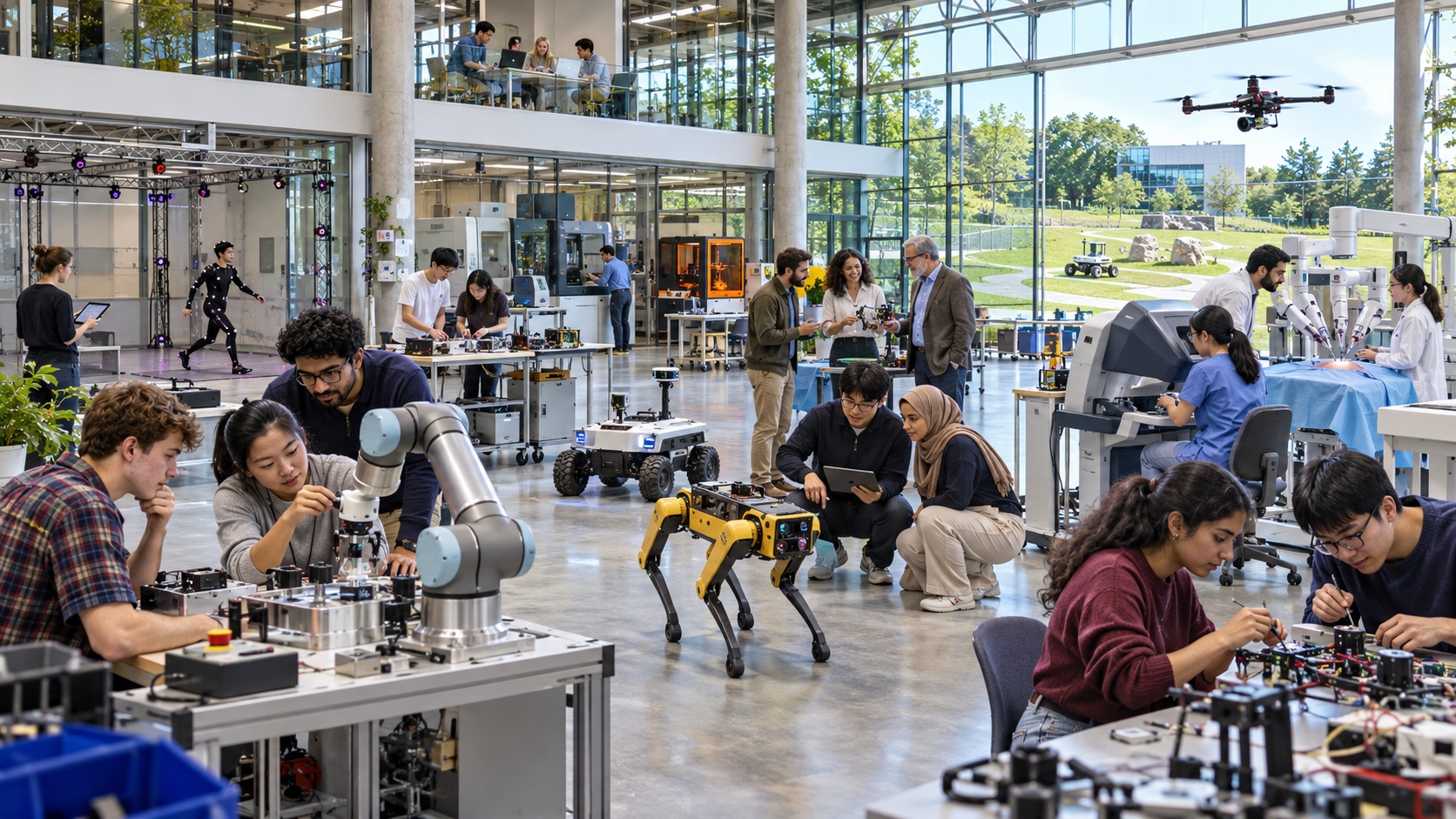
University robotics programs influence the future through more than research discoveries. They decide which foundations every student learns, which problems receive laboratory space, how hardware is shared, when industry enters the curriculum, and whether social consequences are examined before deployment. The leading programs are moving away from a simple model in which students take separate courses in mechanics, controls, and artificial intelligence and integrate them only at the end. They are building continuous system experiences, outdoor and clinical testbeds, open platforms, interdisciplinary doctoral structures, and project sequences that expose failure early. They are also responding to embodied AI, where powerful models must operate through limited sensors and actuators in uncertain environments. No university has perfected this educational model. The most important programs are those experimenting deliberately, measuring what students can actually build, and creating approaches that other institutions can adapt.
A: It studies intelligent models acting through physical sensors, bodies, and environments.
A: Students need repeated practice diagnosing interactions among technical layers.
A: No, both models can work when foundations and laboratory access are strong.
A: They expose environmental and operational constraints absent from benchtop work.
A: It joins materials, fabrication, sensing, mechanics, and control in new ways.
A: Not alone; rules, reliability, documentation, and reflection affect educational value.
A: They make advanced exercises more reproducible and easier to adapt.
A: Learning, evidence, independence, and clear data or publication terms remain protected.
A: Dedicated study helps, but ethical questions should also enter technical projects.
A: They can integrate systems, analyze failure, and work responsibly across disciplines.
Embodied AI Is Pulling Software Back Toward the Physical World
Recent AI advances can interpret images, language, and demonstrations, but a robot must connect those representations with timing, geometry, force, energy, and risk. Leading programs are adding embodied learning without abandoning state estimation, control, and mechanics. The educational challenge is to let students use modern models while still understanding what happens when a camera saturates, an object slips, or a policy encounters a state absent from training.
Programs shape the future when they teach model uncertainty as an operational property. Students need ways to constrain actions, request help, preserve logs, and compare learned behavior with simpler baselines. Physical AI becomes credible when it is evaluated like engineering rather than staged like a software demo.
System-Building Courses Are Becoming a Spine, Not a Finale
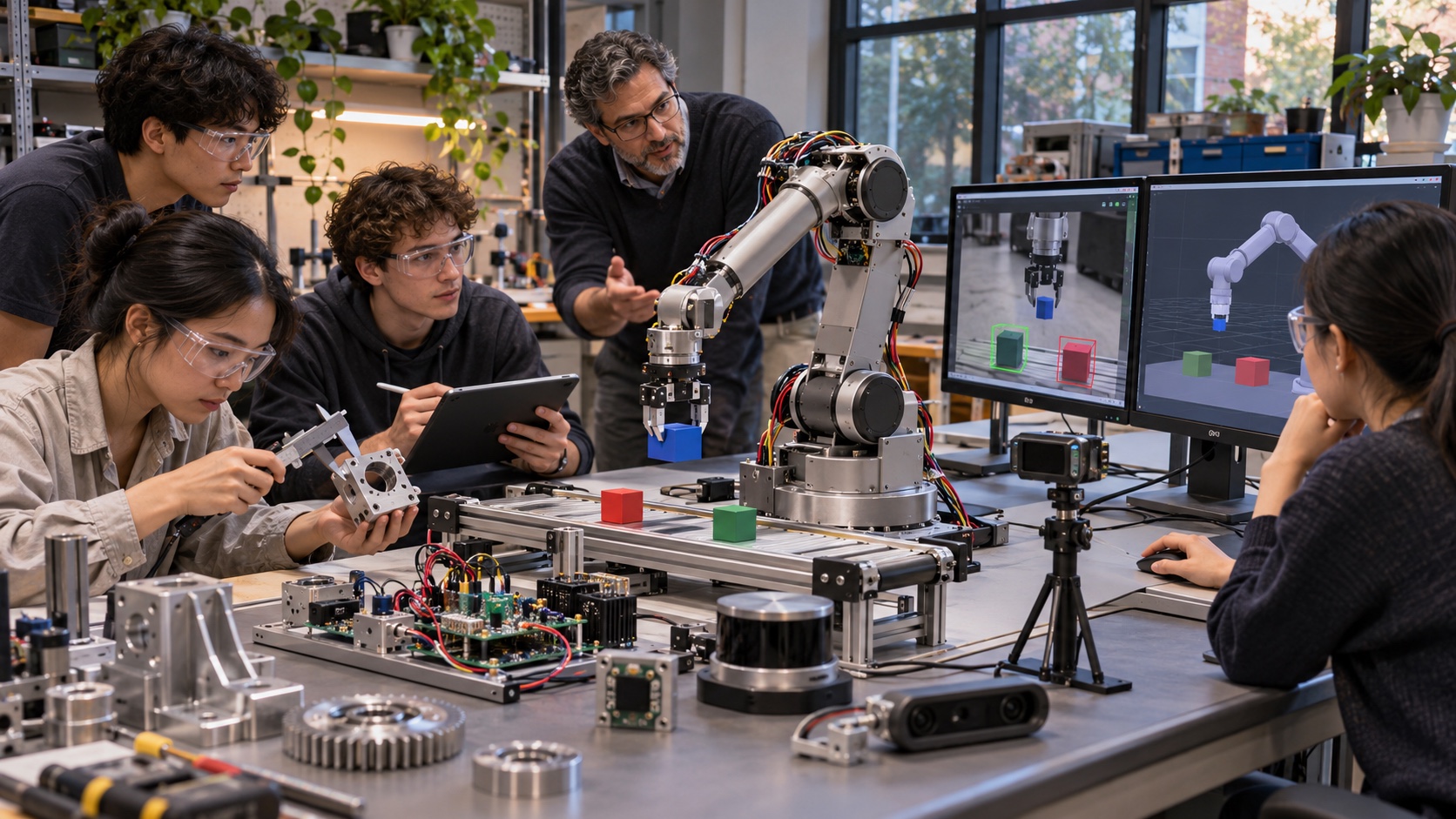
Traditional curricula sometimes postpone integration until a capstone. By then, students may know advanced theory but have little experience diagnosing interfaces among sensors, computers, networks, motors, and mechanical assemblies. Programs such as Michigan’s full-stack approach and Carnegie Mellon’s systems-development pathway make integration a repeated practice.
Dedicated Robotics Degrees Are Expanding Undergraduate Options
Robotics was once mostly a graduate specialization entered through mechanical engineering, electrical engineering, or computer science. Dedicated bachelor’s programs now offer an integrated identity earlier. Carnegie Mellon and Michigan provide prominent examples, with courses and projects that span sensing, cognition, action, and interaction.
The opportunity comes with a risk: breadth can become shallowness. Strong undergraduate programs protect mathematics, programming, circuits, mechanics, and control while giving students enough electives to develop depth. They also preserve routes into traditional engineering professions if a student’s interests change.
The best model may vary by institution. Some universities can sustain a complete robotics faculty and laboratory sequence; others should build an excellent concentration inside an established department. Program design should follow real resources rather than the popularity of the label.
Field Testbeds Are Turning Campus Into Part of the Laboratory
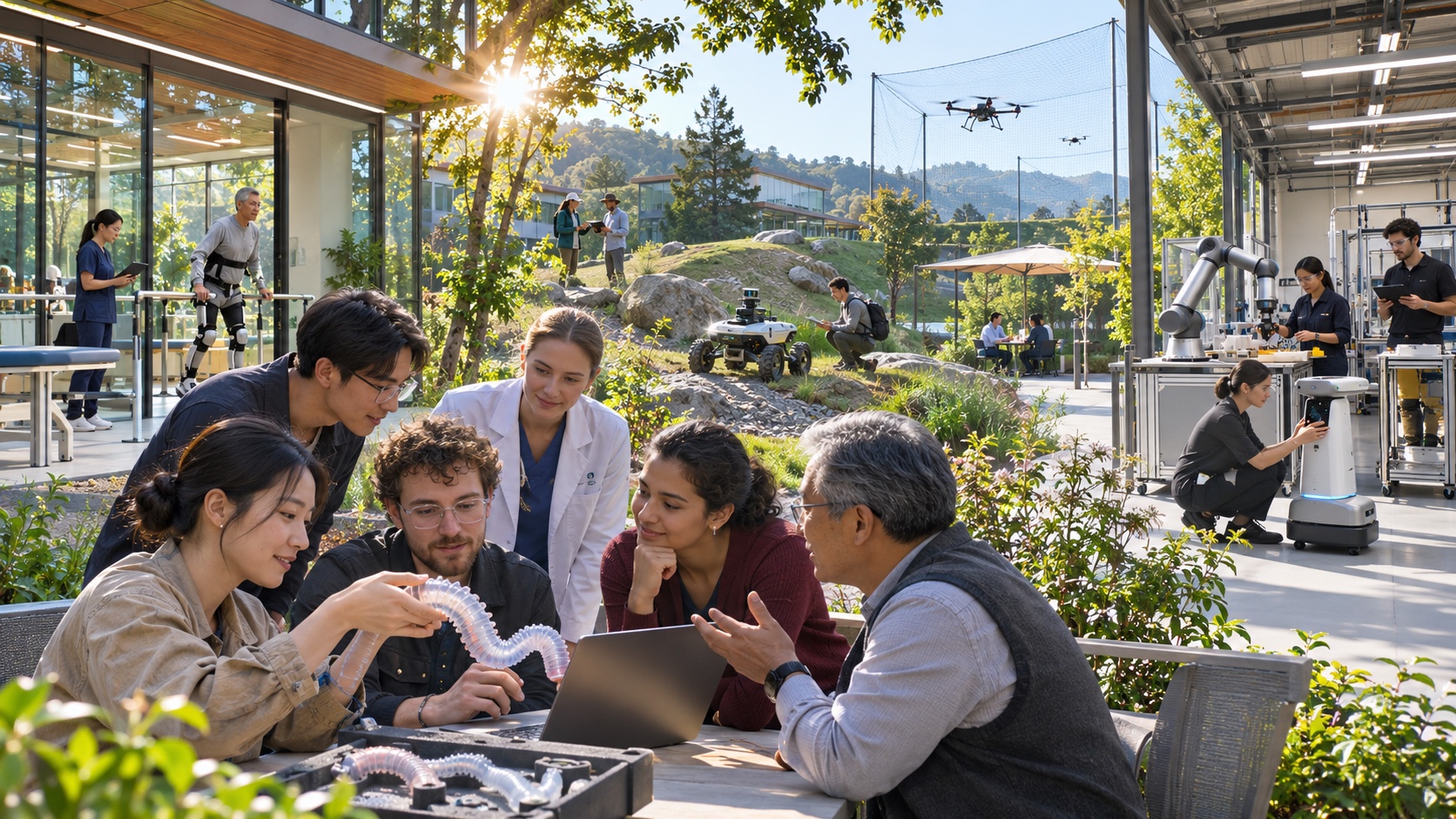
Robots designed for farms, mines, oceans, roads, disaster sites, airspace, or public buildings cannot be validated entirely on a benchtop. Universities are developing outdoor courses, mock environments, instrumented buildings, and partnerships that let students encounter weather, terrain, traffic, communication gaps, and people.
Field education changes technical priorities. Ruggedization, power, transport, maintenance, permissions, data collection, and recovery become part of the design. Students learn that an autonomous mission begins before launch and continues through inspection, charging, and analysis.
Clinical Partnerships Are Reshaping Medical Robotics Education
Medical and rehabilitation robots require collaboration with clinicians, patients, therapists, regulatory specialists, and hospital operations teams. EPFL’s medical orientation, Johns Hopkins’ surgical-robotics ecosystem, and programs embedded near major medical centers demonstrate how engineering education can connect with clinical needs.
Soft Robotics Is Merging Materials With Computation
Soft robots make material selection and fabrication part of behavior. A compliant gripper can adapt to an object’s shape without sensing every contact point, but its deformation is difficult to model and control. Programs strong in microengineering, mechanical design, materials, and bioinspiration are building courses where students co-design body and controller.
This approach broadens the definition of computation. Geometry, stiffness, fluid channels, and passive response can perform functions that a rigid mechanism would assign to software. Students must learn to measure those properties and understand how they change through wear, temperature, and manufacturing variation.
Soft robotics also invites new applications in medicine, wearables, food handling, and human contact. Leading programs treat those domains as sources of requirements, not merely illustrations after a device is built.
Competitions Continue to Provide Difficult Shared Tests
RoboCup, autonomous racing, aerial challenges, planetary rover events, and field-robotics competitions force teams to integrate under fixed schedules and comparable rules. The educational value comes from repeated failure, rapid repair, and operating in front of other teams. Students discover whether their software, wiring, documentation, and decision process survive pressure.
Competitions are strongest when reflection follows performance. A win can hide fragile engineering, while a failed run can expose a valuable systems lesson. Programs should assess design reasoning, evidence, and teamwork rather than trophies alone.
Open Platforms Are Making Advanced Courses Reproducible
Shared robot hardware, simulation environments, open-source software, datasets, and documented assignments reduce the work required for every instructor to rebuild a course. They also let students continue experimenting after the term and allow smaller institutions to adapt material created by larger laboratories.
Industry Projects Are Moving From Sponsorship to Co-Development
An industry logo on a laboratory does not guarantee educational value. Strong partnerships provide authentic requirements, data, technical mentors, test environments, and feedback while preserving the university’s responsibility for learning and independent inquiry. Carnegie Mellon’s systems-development projects illustrate how product planning and integration can be taught alongside robotics.
Students benefit when they must negotiate scope, define acceptance tests, and communicate with stakeholders who care about operational outcomes. They also need protection from projects that become unpaid feature development without room for learning, publication, or critical analysis.
Future-shaping programs make the relationship explicit. Intellectual property, data access, publication, safety, and sponsor influence should be clear before a project begins.
Entrepreneurship Is Becoming a Designed Educational Path
Robotics startups face hardware financing, manufacturing, service, certification, and long deployment cycles. University incubators and technology-transfer programs can help students understand these differences from software entrepreneurship. EPFL’s startup ecosystem and the Pittsburgh robotics cluster show how research institutions can seed companies and local expertise.
The goal should not be to make every student a founder. Entrepreneurship education is also useful to product engineers and researchers because it forces them to define users, value, cost, and the work required after a prototype succeeds.
Human-Robot Interaction Is Moving Into Core Engineering
As robots leave isolated cells, interaction is no longer a niche specialty. Motion legibility, interface design, trust calibration, accessibility, privacy, and work organization affect safety and adoption. Georgia Tech’s multidisciplinary core explicitly recognizes human-robot interaction alongside mechanics, control, perception, and AI.
Ethics Is Strongest When Attached to Design Decisions
A standalone ethics lecture can introduce important concepts but may remain separate from the choices students make in a laboratory. Leading programs embed questions into projects: who appears in the dataset, what a camera records, how a robot signals uncertainty, which worker bears new monitoring, and who can stop the system.
This approach makes ethics concrete without reducing it to a checklist. Students connect values with sensor selection, data retention, interface behavior, task allocation, and evaluation populations. Those choices can be tested and revised like other engineering decisions.
Programs also need institutional practices for research with people, field safety, cybersecurity, and responsible partnerships. Students learn as much from how a university governs robotics as from what a syllabus says.
New Credentials Are Serving Learners Beyond Full-Time Degrees
Robotics changes too quickly for education to end at graduation. Certificates, professional master’s programs, modular courses, and employer-supported study give working engineers ways to add perception, autonomy, safety, or systems skills. Carnegie Mellon’s range of research and professional programs demonstrates how one institution can serve different career stages.
Short credentials should state prerequisites and outcomes honestly. A brief course can help an experienced controls engineer understand robot learning, but it cannot replace a complete foundation in mechanics, software, and mathematics. Programs shape the future when they make those boundaries clear.
Research Culture Determines Whether Innovation Becomes Education
A university can publish landmark robotics papers while undergraduate students rarely touch a maintained robot. Leading educational programs translate research into courses, project platforms, open materials, and mentoring. They create roles for technicians and teaching staff who make ambitious laboratory experiences dependable.
The Future Program Will Be Judged by What Its Graduates Can Integrate
Robotics employers and research laboratories need people who can cross boundaries without pretending to master everything. Graduates should diagnose whether a failure comes from mechanics, calibration, networking, estimation, planning, learning, control, or interaction. They should know when to seek a specialist and how to communicate evidence across disciplines.
Programs can measure this ability through sustained projects, design reviews, failure reports, field tests, and demonstrations with declared conditions. Publication counts and course catalogs do not show whether students can build a traceable, maintainable system.
The university programs shaping the future will keep adapting as robot capabilities and applications change. Their enduring contribution will be a culture of integration: rigorous foundations, real machines, accountable experimentation, open exchange, and respect for the people and environments that robots enter.
Program Resilience Will Matter as Robotics Changes Faster
A future-facing program cannot rebuild its identity around every new model or robot form. It needs stable foundations and a process for updating tools, examples, and electives without making prior learning obsolete. Mathematics, mechanics, estimation, control, software engineering, experimentation, and human factors remain useful even as compute platforms and AI methods change. Curriculum committees should identify which concepts endure, which practices need frequent refresh, and which experimental technologies belong in seminars before they become requirements.
Resilience also depends on people and infrastructure that outlast a grant. Technicians, research software engineers, teaching faculty, documented platforms, and shared safety procedures keep student projects functioning while professors and hardware generations change. Programs that value this maintenance can adopt innovation more quickly because they know what must remain compatible. The future will favor universities that treat educational continuity as part of robotics engineering rather than invisible support work.
Alumni Feedback Can Keep Programs Honest
Graduates discover which skills transfer when they enter research laboratories, startups, manufacturers, hospitals, and public agencies. Programs should collect structured feedback after enough time has passed for alumni to encounter real system responsibilities. Did they understand testing and version control? Could they diagnose interactions between hardware and AI? Were they prepared to communicate risk, maintain deployed systems, and learn an unfamiliar platform? Employers can add evidence, but their immediate hiring preferences should not dictate an entire curriculum. The most useful review compares alumni experience with enduring educational goals and identifies gaps that multiple cohorts share. Closing that loop helps a program evolve through outcomes rather than fashion. Programs should publish the resulting changes and preserve room for long-horizon research that an annual employment survey may not capture. That balance keeps education responsive without turning it into short-term tool training. It also respects alumni whose most important preparation may become visible only after they lead complex projects, mentor teams, or enter emerging application areas.