Edge Robotics vs Cloud Robotics: Key Differences Explained
The robotics industry is evolving at an extraordinary pace. As automation becomes increasingly intelligent, businesses are searching for ways to make robots faster, smarter, and more responsive. Two of the most important technologies driving this transformation are edge robotics and cloud robotics. While both approaches aim to enhance robotic capabilities through advanced computing and data processing, they do so in fundamentally different ways. For manufacturers, logistics companies, healthcare providers, agricultural operations, and technology innovators, understanding the distinction between edge robotics and cloud robotics is essential. The choice between these architectures can impact performance, reliability, security, scalability, operational costs, and overall business success. As artificial intelligence, machine learning, Internet of Things (IoT) devices, and 5G networks continue to advance, the debate between edge robotics and cloud robotics has become increasingly relevant. Rather than viewing them as competing technologies, many organizations are discovering that each offers unique advantages depending on the application. This comprehensive guide explores edge robotics versus cloud robotics, examining how they work, where they excel, and how they are shaping the future of modern automation.
A: Edge robotics means the robot processes important data locally, either onboard or near the machine.
A: Cloud robotics connects robots to remote servers for computing, storage, coordination, and shared learning.
A: Edge robotics is usually faster for immediate actions because it avoids cloud round-trip delays.
A: Cloud robotics is better for fleet-wide coordination, shared updates, analytics, and centralized monitoring.
A: Yes. Many advanced robots use edge computing for instant control and cloud computing for broader intelligence.
A: Edge robotics is safer for split-second decisions like stopping, balancing, avoiding collisions, or controlling motion.
A: Cloud robotics is better for training large models because it can use more data and more computing power.
A: Edge-capable robots can continue basic or critical functions locally, while cloud-dependent features may pause.
A: Often yes, because sensitive sensor data can be processed locally instead of being sent to remote servers.
A: Choose edge for speed and resilience, cloud for scale and learning, and hybrid for the strongest overall system.
Understanding the Evolution of Robotic Computing
For many years, robots relied entirely on onboard computing systems. Every sensor reading, movement calculation, and decision-making process occurred inside the machine itself. While effective for basic automation, this approach created limitations.
As robotic systems became more sophisticated, they required greater processing power to handle computer vision, machine learning, autonomous navigation, and real-time decision-making. This demand led to the emergence of cloud robotics, where robots could access remote computing resources through internet connectivity.
However, cloud-based processing introduced new challenges, particularly when low latency and immediate responses were critical. To address these concerns, edge robotics emerged as a complementary approach that moves computational power closer to the robot.
Today, organizations must determine whether cloud robotics, edge robotics, or a hybrid combination provides the best solution for their automation needs.
What Is Cloud Robotics?
Cloud robotics is an architecture that connects robots to cloud-based computing infrastructure. Instead of performing all calculations locally, robots send data to remote servers where powerful processors analyze information and return instructions.
In a cloud robotics system, robots can access vast computational resources, large-scale databases, artificial intelligence models, and shared learning platforms. This allows relatively inexpensive robots to perform highly sophisticated tasks without requiring extensive onboard hardware.
For example, a warehouse robot may capture images of products and transmit them to cloud servers for object recognition. The cloud processes the information using advanced AI models and sends navigation instructions back to the robot.
One of the defining characteristics of cloud robotics is collective intelligence. When one robot learns a new task or identifies a problem, that information can be shared instantly across an entire network of connected robots.
Cloud robotics effectively transforms individual robots into members of a larger intelligent ecosystem.
What Is Edge Robotics?
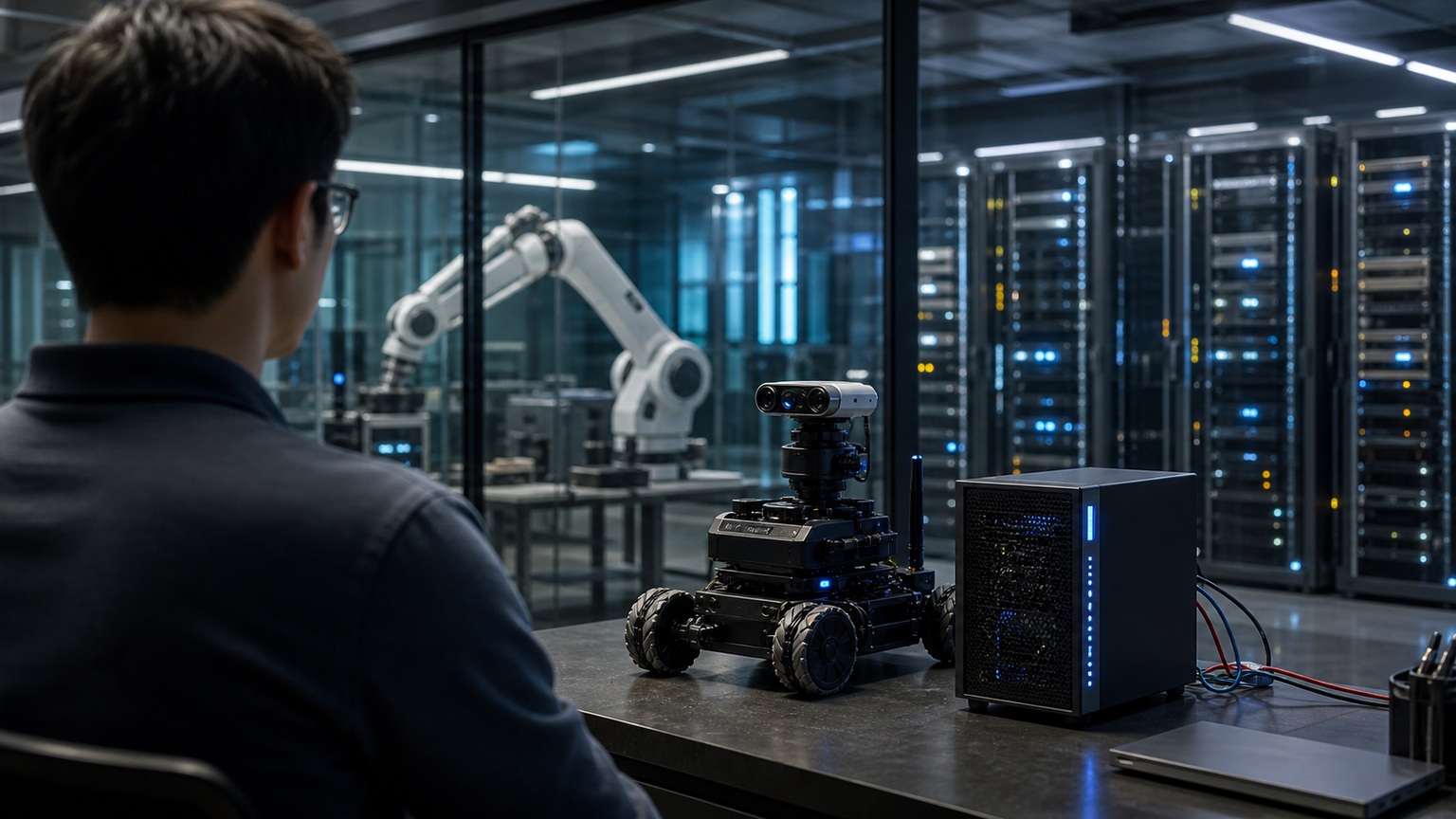
Edge robotics takes a different approach by performing most data processing close to the robot itself. Instead of sending information to distant cloud servers, computations occur directly on the robot or on nearby edge computing devices.
Edge computing infrastructure may include local servers, industrial gateways, micro data centers, or advanced onboard processors located within the operational environment.
When a robot encounters a situation requiring immediate action, edge systems can process sensor data almost instantly. This minimizes delays and enables rapid decision-making.
For example, an autonomous robot operating in a manufacturing facility may use edge computing to analyze camera feeds, detect obstacles, and adjust movements in real time without relying on internet connectivity.
Edge robotics prioritizes speed, responsiveness, and reliability by reducing dependence on external networks.
The Fundamental Difference Between Edge and Cloud Robotics
The primary distinction between edge robotics and cloud robotics lies in where data processing occurs.
Cloud robotics sends data to centralized cloud servers for analysis and decision-making. The cloud acts as the brain of the system, while robots serve as connected endpoints.
Edge robotics processes data locally or near the robot. The intelligence resides closer to the operational environment, reducing the need for constant communication with remote systems.
This difference affects nearly every aspect of robotic performance, including latency, scalability, security, connectivity requirements, and operational efficiency.
Understanding these differences helps organizations choose the right architecture for specific automation goals.
Speed and Latency: Why Location Matters
One of the most significant advantages of edge robotics is reduced latency.
Latency refers to the time required for data to travel between a robot and a processing system. In cloud robotics, data must travel through networks to remote servers and then return with instructions. Even with high-speed internet connections, this process introduces delays.
For many applications, these delays are negligible. However, for systems requiring split-second reactions, latency can become a critical issue.
Industrial robots avoiding collisions, autonomous vehicles navigating traffic, and surgical robots assisting medical procedures often require near-instant responses. Edge robotics excels in these situations because data processing occurs locally.
Cloud robotics, while generally slower, offers sufficient performance for applications that do not require immediate decision-making.
As a result, edge robotics is often preferred in environments where reaction speed directly impacts safety, efficiency, or performance.
Computing Power and Resource Availability
Cloud robotics offers a clear advantage when it comes to computational capacity.
Major cloud platforms provide access to virtually unlimited processing power, storage, and artificial intelligence resources. Robots can leverage advanced machine learning models, analyze massive datasets, and perform complex calculations that would be difficult to execute locally.
Training sophisticated AI systems often requires enormous computing resources. Cloud environments make this possible without requiring expensive hardware on every robot.
Edge robotics, on the other hand, is limited by the capabilities of local hardware. While modern edge devices are becoming increasingly powerful, they cannot always match the scalability of cloud infrastructure.
Organizations performing intensive AI training, large-scale simulations, or complex analytics often benefit from cloud robotics because of its superior computational flexibility.
Connectivity Requirements
Connectivity is another major difference between the two architectures.
Cloud robotics depends heavily on reliable internet connections. If connectivity is lost, robots may experience reduced functionality or become unable to access essential cloud services.
This dependency can create challenges in remote locations, industrial environments, underground facilities, or areas with inconsistent network coverage.
Edge robotics is far less dependent on internet access. Because most processing occurs locally, robots can continue operating even when external connectivity is unavailable.
This makes edge robotics particularly attractive for applications in mining, agriculture, offshore operations, military environments, and disaster response scenarios.
In situations where connectivity cannot be guaranteed, edge robotics often provides greater operational reliability.
Scalability and Expansion
Cloud robotics excels in scalability.
Organizations can easily add new robots, deploy software updates, expand storage capacity, and access additional computing resources through cloud platforms. Infrastructure can grow dynamically as business needs evolve.
Cloud providers handle much of the complexity associated with system expansion, reducing the burden on internal IT teams.
Edge robotics can also scale, but doing so often requires additional local hardware investments. Each deployment location may need dedicated edge servers, gateways, or processing units.
For large organizations operating thousands of robots across multiple regions, cloud robotics frequently offers a more flexible and cost-effective path to expansion.
However, edge deployments can still scale effectively when designed with distributed infrastructure strategies.
Security and Data Privacy Considerations
Security remains a critical concern in modern automation systems.
Cloud robotics involves transmitting data between robots and remote servers. While cloud providers invest heavily in cybersecurity, data moving across networks may create additional attack surfaces.
Organizations handling sensitive information must carefully evaluate security protocols, encryption standards, and compliance requirements.
Edge robotics often provides enhanced privacy because data can remain within local environments. Sensitive information does not necessarily need to leave the facility, reducing exposure risks.
Industries such as healthcare, defense, and financial services frequently favor edge computing for applications involving confidential data.
That said, both edge and cloud systems require robust cybersecurity measures to protect against evolving threats.
Artificial Intelligence and Machine Learning Capabilities
Artificial intelligence plays a central role in both cloud robotics and edge robotics.
Cloud robotics offers access to powerful AI models capable of processing vast amounts of data. Machine learning algorithms can be trained centrally and deployed across entire robot fleets.
This centralized learning approach enables rapid improvements and shared intelligence among connected robots.
Edge robotics supports AI as well, but focuses on inference rather than large-scale model training. Once AI models are developed, they can be deployed to edge devices for real-time execution.
For example, a robot may use an edge-based computer vision model to identify objects instantly while relying on the cloud for periodic model updates and retraining.
Many organizations combine both approaches to achieve optimal AI performance.
Reliability in Mission-Critical Applications
Reliability is often a deciding factor when selecting a robotic architecture.
Cloud robotics depends on network infrastructure, cloud availability, and external service providers. While modern cloud systems are highly reliable, outages can still occur.
Edge robotics reduces this dependency by allowing robots to operate autonomously within local environments.
Manufacturing facilities, hospitals, transportation systems, and critical infrastructure often prioritize reliability because operational disruptions can be costly or dangerous.
In these settings, edge robotics provides a level of resilience that cloud-only systems may struggle to match.
This is one reason why many mission-critical applications incorporate edge computing as part of their overall automation strategy.
Cost Considerations
Cost comparisons between edge robotics and cloud robotics can be complex.
Cloud robotics often reduces upfront hardware costs because robots require less onboard computing power. Organizations can access advanced capabilities through subscription-based cloud services.
However, ongoing cloud usage fees, data transfer costs, and storage expenses can accumulate over time.
Edge robotics typically requires greater investment in local computing infrastructure. High-performance processors, industrial gateways, and edge servers can increase deployment costs.
On the other hand, edge systems may reduce long-term cloud expenses and bandwidth requirements.
The most cost-effective solution depends on workload characteristics, deployment scale, connectivity needs, and operational priorities.
Real-World Applications of Cloud Robotics
Cloud robotics is particularly effective in applications involving large-scale data sharing and centralized intelligence.
Warehouse automation systems use cloud platforms to coordinate thousands of robots simultaneously. Retail operations leverage cloud robotics for inventory management and customer analytics. Healthcare providers utilize cloud-based AI tools for diagnostics and robotic assistance.
Agricultural robots benefit from cloud analytics that process environmental data collected across multiple farms. Autonomous delivery systems rely on cloud-hosted navigation databases and route optimization algorithms.
These applications highlight the strengths of cloud robotics in environments where scalability, data aggregation, and collective learning are valuable.
Real-World Applications of Edge Robotics
Edge robotics thrives in environments demanding real-time performance.
Autonomous vehicles use edge processing to make immediate navigation decisions. Industrial robots perform precision manufacturing tasks with minimal latency. Security robots analyze surveillance feeds locally for rapid threat detection.
Medical devices leverage edge computing to support time-sensitive procedures. Energy facilities use edge robotics to inspect infrastructure in remote locations where connectivity may be limited.
These examples demonstrate why edge robotics is becoming increasingly important for applications where speed and reliability are critical.
The Rise of Hybrid Robotic Architectures
The future of automation is not necessarily edge versus cloud. Increasingly, organizations are adopting hybrid architectures that combine both technologies.
In a hybrid system, robots perform time-sensitive tasks at the edge while leveraging cloud platforms for advanced analytics, machine learning training, software updates, and fleet management.
For example, a warehouse robot may use edge computing to avoid obstacles and navigate safely while simultaneously sharing operational data with cloud systems that optimize overall logistics strategies.
This approach delivers the best of both worlds: low-latency responsiveness and virtually unlimited cloud-based intelligence.
Hybrid architectures are rapidly becoming the preferred solution for many advanced automation deployments.
The Future of Edge and Cloud Robotics
As robotics technology continues to evolve, both edge and cloud computing will play increasingly important roles.
Advancements in semiconductor design are making edge devices more powerful and energy efficient. At the same time, cloud platforms continue expanding their AI capabilities and computational capacity.
The rollout of 5G networks is further reducing communication delays, making cloud robotics more responsive while enabling stronger integration between edge and cloud environments.
Future robotic systems will likely operate within highly interconnected ecosystems where intelligence is distributed across robots, edge infrastructure, and cloud platforms.
Rather than competing technologies, edge robotics and cloud robotics are becoming complementary components of next-generation automation strategies.
Conclusion
The debate between edge robotics and cloud robotics is not about determining a single winner. Instead, it is about understanding how each approach addresses different operational challenges.
Cloud robotics provides unmatched scalability, powerful AI capabilities, centralized management, and access to vast computing resources. It excels in applications that benefit from collective intelligence, large-scale analytics, and flexible infrastructure.
Edge robotics delivers low latency, enhanced reliability, improved privacy, and independence from constant connectivity. It is ideal for environments where immediate decision-making and operational resilience are essential.
As automation becomes more sophisticated, organizations are increasingly combining both approaches to create intelligent, responsive, and highly efficient robotic systems. By leveraging the strengths of edge and cloud technologies together, businesses can unlock new levels of performance, innovation, and competitive advantage.
The future of robotics will not be defined by edge or cloud alone. It will be shaped by how effectively these technologies work together to power the next generation of smart automation.